E-Bikes are legal throughout the US, but the rules governing their use vary by state and locality. Most states use the three-class system, while requirements for helmets, age, trail access, licensing, and registration differ.
Electric Bike Laws by State: Complete U.S. Guide (2026)
Before you hit the bike path or trail, check the rules. E-Bike laws can change by state, city, trail, and even the federal agency managing the land.
The US doesn’t have a unified set of e-Bike regulations governing every road and trail; instead, federal, state, and local authorities each make their own rules. Most states now use the three-class system to define and regulate e-Bikes, but requirements for helmets, rider age, licensing, and trail access can vary significantly.
This guide breaks down electric bike laws across the US, from the basics of Class 1, 2, and 3 e-Bikes to the nitty-gritty letter of the law, so you can understand where your e-Bike is legal (and where it isn’t) and ride with confidence that a ticket isn’t coming your way.
👋 Welcome to Upway!
Upway is your top destination for buying and selling e-Bikes online. Discover your next e-Bike at up to 60% off retail prices, available in new or like-new condition.
What Qualifies As a Legal Electric Bike?
A legal electric bike in the US must have:
- Fully operable pedals
- Two or three wheels
- Motor rated at less than 750 watts (1 horsepower)
- Maximum speed of 28 mph via pedal-assist
- Top speed of 20 mph, if there’s a throttle
Three-Class System For E-Bikes
All e-Bikes sold in the US are divided into three classes based on their top speed and type of motor assistance. The three-class system was created to bring consistency to e-Bike regulations, which helps brands ensure their bikes are legal and customers know what they’re looking at right away. Today, more than 40 US states have adopted the three-class framework in some form.
The three-class system and its clear definitions have gained broad support from riders, cycling advocates, and e-Bike manufacturers, with Trek recently adopting voluntary e-Bike speed standards for its Class 1 e-MTBs. Many trails and bike paths restrict throttle-equipped Class 2 e-Bikes or the higher-speed Class 3 models. Riders should always check local rules before heading out.
Federal Electric Bike Laws
There are important rules about electric bikes at the federal level. However, the local e-Bike laws in your area are more relevant to day-to-day riding. The federal government has still not officially adopted the three-class system for electric bikes and has a largely outdated understanding of pedal-assist bikes compared to the states. But federal e-Bike laws apply to places like public lands and national parks.
Federal definition of electric bicycles
In 2002, Congress passed H.R. 727, establishing a federal definition for “low-speed bicycles.” Under the law, these e-Bikes must have fully functional pedals, an electric motor rated below 750 watts (equivalent to 1 horsepower), and a top assisted speed of 20 mph.
The legislation clarified that qualifying e-Bikes would not be classified as motor vehicles under federal transportation safety regulations. Instead, regulatory authority was placed with the Consumer Product Safety Commission (CPSC), treating e-Bikes more like consumer products than motorized vehicles like mopeds or motorcycles.
Federal vs. state e-Bike laws
The federal government has fairly sparse legislation regarding electric bikes, though new regulations and tighter wording may be on the way as e-Bikes grow in popularity. As you may have noticed, the federal definition of electric bikes doesn’t actually allow for Class 3 models that go faster than 20 mph, despite the fact that this type of bike is legal in all states. The federal government will catch up to the widely adopted state and city laws at some point (proposed bills have been sitting in Congress for a while), but there’s not a huge rush since this type of regulation and enforcement mostly happens at the state level anyway.
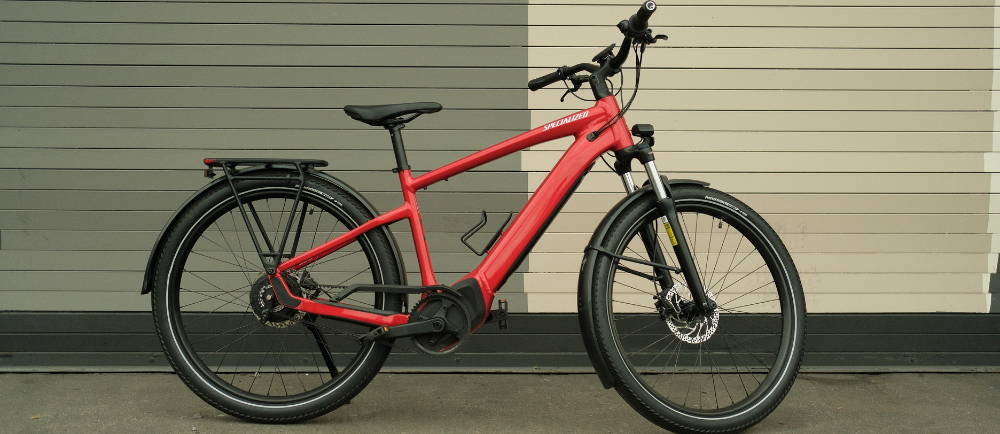
State Electric Bike Laws
In the US, e-Bike regulations are largely decentralized, with most rules established at the state and local levels rather than federally— the majority of states use the three-class system to categorize and regulate e-Bikes.
Most states share similar e-Bike rules, typically specifying that electric bikes:
Most states share similar e-Bike rules, typically specifying that electric bikes:
- Follow normal traffic laws
- Can use bike lanes and most shared-use paths
- Follow the same trail rules as bicycles where permitted
- Comply with bicycle equipment requirements relating to brakes, lights, and product safety
- Typically have no requirement for a driver's license, registration, or insurance
States may have additional e-Bike-specific rules, including:
- Helmet requirements
- Minimum rider ages
- Class-specific trail access
- Restrictions on Class 2 throttle bikes and Class 3 e-Bikes on shared-use paths
No results found.
Electric Bike Helmet Laws
Whether you’re required to wear a helmet while riding a bike depends on where you are, but the rules are almost always stricter for electric bikes. E-Bikes pose a higher risk for riders because of their increased speed and higher mass that can raise the severity of an accident. It’s a smart idea for all cyclists to wear helmets and even more important for e-Bike users.
That said, electric bike helmet requirements vary by state. Some states make helmets obligatory for young riders or only for certain faster models, such as Class 2 or Class 3 electric bikes. For example, Utah passed a new law this year requiring all e-Bike riders under 21 to wear a helmet.
All bicycle helmets sold in the US meet the federal CPSC helmet certification standard. And there’s an optional helmet standard aimed specifically at e-Bike riders— the NTA 8776 standard is more rigorous, since bike helmets with this certification are designed to withstand crashes on electric bikes, including high-speed Class 3 models.
Find out the specific electric bike helmet laws in your state here:
That said, electric bike helmet requirements vary by state. Some states make helmets obligatory for young riders or only for certain faster models, such as Class 2 or Class 3 electric bikes. For example, Utah passed a new law this year requiring all e-Bike riders under 21 to wear a helmet.
All bicycle helmets sold in the US meet the federal CPSC helmet certification standard. And there’s an optional helmet standard aimed specifically at e-Bike riders— the NTA 8776 standard is more rigorous, since bike helmets with this certification are designed to withstand crashes on electric bikes, including high-speed Class 3 models.
Find out the specific electric bike helmet laws in your state here:
| State | Class 1 | Class 2 | Class 3 |
|---|---|---|---|
| Alabama | Under 16s | Under 16s | All ages |
| Alaska | No | No | No |
| Arizona | No | No | No |
| Arkansas | None | None | 20 or younger |
| California | Under 18s | Under 18s | All ages |
| Colorado | No | No | All ages |
| Connecticut | All ages | All ages | 16+ |
| Delaware | Under 18s | Under 18s | Under 18s |
| Florida | Under 16s | Under 16s | Under 16s |
| Georgia | Under 16s | Under 16s | Under 16s |
| Hawaii | Under 16s | Under 16s | Under 16s |
| Idaho | No | No | No |
| Illinois | No | No | Under 18s |
| Indiana | No | No | Under 18s |
| Iowa | No | No | No |
| Kansas | No | No | No |
| Kentucky | No | No | No |
| Louisiana | Under 12s | Under 12s | Under 12s |
| Maine | Under 16s | Under 16s | Under 16s |
| Maryland | Under 16s | Under 16s | Under 16s |
| Massachusetts | Under 16s | Under 16s | Under 16s |
| Michigan | No | No | 14–18 years |
| Minnesota | No | No | No |
| Mississippi | No | No | No |
| Missouri | No | No | No |
| Montana | No | No | Under 18s |
| Nebraska | No | No | No |
| Nevada | No | No | No |
| New Hampshire | Under 16s | Under 16s | Under 18s |
| New Jersey | All ages | All ages | All ages |
| New Mexico | Under 18s | Under 18s | Under 21s |
| New York | Yes, if working | Yes, if working | All ages |
| North Carolina | Under 16s | Under 16s | All ages |
| North Dakota | No | No | Yes |
| Ohio | No | No | Yes |
| Oklahoma | No | No | 16+ |
| Oregon | Under 16s | Under 16s | Under 16s |
| Pennsylvania | 12 | 12 | 12 |
| Rhode Island | 21 | 21 | 21 |
| South Carolina | No | No | No |
| South Dakota | No | No | 18 |
| Tennessee | No | No | 16 |
| Texas | No | No | No |
| Utah | 21 | 21 | 21 |
| Vermont | No | No | No |
| Virginia | Under 14s | Under 14s | All ages |
| Washington | No | No | No |
| Washington, D.C. | No | No | No |
| West Virginia | Under 14s | Under 14s | All ages |
| Wisconsin | No | No | No |
| Wyoming | No | No | 18 |
No states found.
E-Bike Age Restrictions
Age requirements for e-Bike riders vary considerably by state. In some states, children can legally ride lower-speed Class 1 and Class 2 e-Bikes with no specified minimum age, while others set minimum ages of 14, 15, or 16. The rules are typically most strict for Class 3 e-Bikes, which can reach higher speeds.
Children are often permitted to travel as passengers on an e-Bike, even if they are too young to ride one themselves, assuming the bike is set up safely for it. Check your state and local area’s electric bike rules about minimum ages, and for the parents out there, use your discretion when deciding whether your child is ready for an electric bike.
In my view, throttle-equipped Class 2 e-Bikes aren’t suited for very young riders since they handle differently to traditional bikes and can bypass fitness and skills development, plus can be just straight-up more dangerous for inexperienced riders.
Children are often permitted to travel as passengers on an e-Bike, even if they are too young to ride one themselves, assuming the bike is set up safely for it. Check your state and local area’s electric bike rules about minimum ages, and for the parents out there, use your discretion when deciding whether your child is ready for an electric bike.
Now, when it comes to the question of whether kids should ride electric bikes, that’s another discussion. Even in areas where children are legally permitted to ride e-Bikes, there are good reasons to approach these boosted bikes with caution. Regular bicycles allow young riders to develop fitness, balance, bike-handling skills, and cycling etiquette independently by riding under their own power— this reduces the risk of traveling too fast beyond their own abilities.
For most kids, there isn’t much need for pedal assistance when rides are relatively short and it’s more of a recreational activity than something like, say, a long commute or all-day ride. Before upgrading to a pedal-assist bike, children should be confident and responsible cyclists who understand the rules of the road. There are some kid-specific e-Bikes out there, with smaller-sized frames and pedal-assistance limited to around 15 mph or less and no throttle.
E-Bike Licensing Requirements
In nearly all US states, riders do not need to have a license to use an electric bike. E-Bikes are regulated separately from motor vehicles and aren’t subject to the same rules; however, New Jersey recently introduced a controversial new law that requires all e-Bike riders to have either a driver’s license or an e-Bike-specific permit, along with registration.
E-Bike Registration Requirements
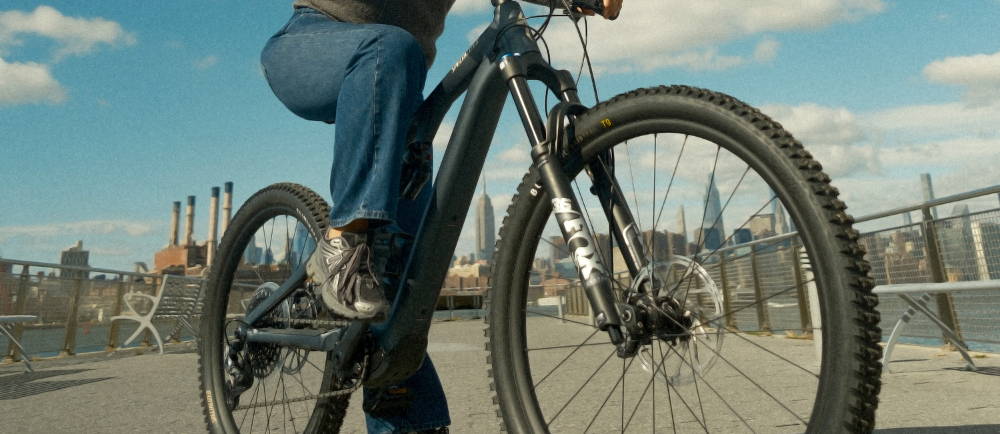
Similar to rules around e-Bike licensing, only a couple of states require electric bike registration. States that use the three-class system exempt e-Bikes from vehicle registration, licensing, and insurance requirements since they aren’t classified as motor vehicles. That said, Hawaii and New Jersey do require registration for electric bikes.
- Hawaii: E-Bikes must be registered with the state, with a one-time $30 registration fee.
- New Jersey: As of July 2026, New Jersey requires e-Bikes to be registered with the Motor Vehicle Commission. The new rules also introduced licensing and, for certain e-Bikes, insurance requirements.
Supporters of additional restrictions on e-Bikes propose something called “Priscilla’s Law”. This contentious rule would impose registration requirements on electric bikes as well as displaying a license plate, similar to that of cars. This concept is widely opposed by cycling advocacy groups such as PeopleForBikes.
Now, there’s a different type of e-Bike registration that is always a great idea. Submitting information about your bike to a national or local bike registry can help locate your bike in case it’s ever stolen. There are nationwide registries like Project529 or BikeIndex as well as local registries run by police departments. I recommend you upload your bike’s specs, serial number, and photos so local authorities have a better chance of tracking down the bike, and you can prove that a found bike is yours.
Where You Can Ride an E-Bike in the US
Are electric bikes allowed everywhere regular bicycles are permitted? For the most part, the answer is yes (especially in cities), but e-Bikes are subject to additional rules when the terrain turns more natural, such as trails, public lands, and national parks. Keep reading for general information on where electric bikes are allowed, but remember to follow the specific rules of your local riding area.
Click a state to view its e-Bike laws...
Bike Lanes and Bike Paths
All legal electric bikes— meaning Class 1, 2, or 3 models— are allowed in bike lanes and dedicated bike paths, just like traditional bikes. Some paths may post a speed limit that e-Bikes must abide by as well.
“Shared-use” paths refer to paths that allow pedestrians, bikes, push scooters, skateboards, and the like and may have extra restrictions on e-Bikes, since the speed differential is so much greater when there are people walking. Pay attention to any signs posted along the path you’re on and follow the rules.
E-motos or illegally fast or high-powered e-Bikes are prohibited from bike lanes and paths since they can travel so much quicker, posing a higher risk of accidents. These contentious electric-powered vehicles can typically only be legally ridden on private property. However, in recent years, there are rising numbers of e-motos being ridden in the same places as bikes and e-Bikes, overtaking riders at high speeds or riding irresponsibly.
💸 Want to sell your electric bike?
- In case you didn't know yet, you can sell your e-Bike to Upway and get your cash in 3 simple steps.
- Want an estimation -> It takes only 2 minutes to complete this form.
Sidewalk Riding
Riding on the sidewalk is generally discouraged for all cyclists since there are typically many pedestrians and the riding path isn’t as suitable for a bike as, say, a dedicated bike path or street lane (sidewalks have more people, planters, trees, signs, storefronts, doors opening, etc. that can aren’t conducive to smooth riding). However, sometimes going onto the sidewalk is the safest option, especially near heavy car traffic with little to no cycling infrastructure.
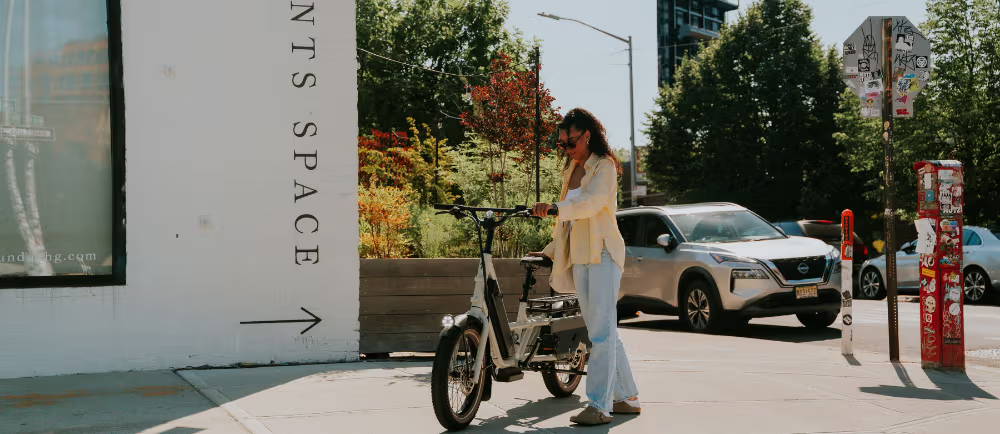
Riding a bike on the sidewalk is typically regulated at the city level, and it varies widely across the US. In general, though, if a city allows regular bikes to use the sidewalk in certain areas, it probably also bestows the same permission on e-Bikes. Check out your local rules, but always prioritize using dedicated bike infrastructure when available and yield to pedestrians.
Trail Access
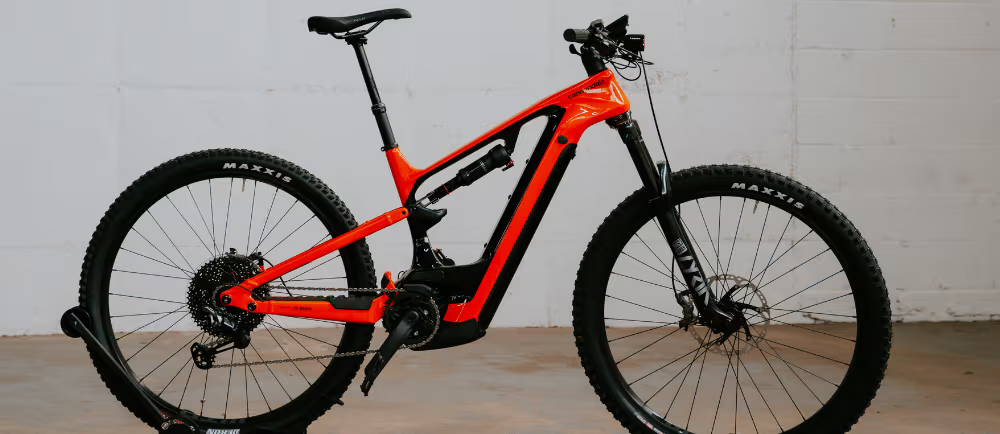
The most common restriction for electric bikes is on mountain bike trails or shared trails in natural areas. These areas may exclude electric bikes entirely or only allow Class 1 electric bikes, with a top speed of 20 mph and no throttle.
The reason behind this is to promote safety on the trails, which are typically much narrower than paved bike paths and encourage a riding style that’s more similar to human-powered pedaling, i.e., safer speeds and lower possibility of trail erosion (though the myth that Class 1 e-Bikes damage trails more than regular bicycles has largely been busted). Pedal-assisted e-Bikes open up trails to more riders than before, who may have been unable to make it up the technical steep climbs, and allow seasoned riders to get more miles in on every ride.
If you have a Class 2 or 3 bike, you may be able to get away with deactivating your throttle or limiting the top speed, but this legal gray area may still get you into hot water. In general, if you’re riding responsibly and treating the trail and its users with respect, you’re unlikely to run into any problems— but I do recommend following the specific rules of the trail.
National Parks and Public Lands
National Parks and public lands are managed by the federal government, with additional rules set by the individual land managers. These natural spots are popular destinations for cyclists, and it’s important to follow the law to protect the environment and avoid any fines.
National Park Service
Within the US National Parks, e-Bikes are generally treated much like conventional bicycles, allowing them on paved roads, paved or hardened trails, and dirt routes where traditional bikes are permitted. However, individual park superintendents can impose additional restrictions, including limits on specific e-Bike classes. Pedestrian-only trails generally prohibit e-Bikes. Class 2 e-Bikes face an additional limitation: riders can’t use the throttle without pedaling unless they are traveling on a route where motor vehicles are permitted.
Bureau of Land Management
The Bureau of Land Management (BLM), which oversees tens of millions of acres of public land, regulates e-Bike use through site-specific land-use plans, making its approach somewhat more restrictive than the National Park Service. In general, e-Bikes may be ridden on routes designated for motorized vehicles, including dirt roads, double-track trails, and areas open to off-highway vehicles such as ATVs and dirt bikes. However, e-Bikes do not automatically have access to trails reserved for non-motorized use. Opening these routes to e-Bikes typically requires an environmental review and a formal written decision from the responsible land manager.
U.S. Forest Service
The U.S. Forest Service takes an even more restrictive approach to e-Bikes under its Travel Management Rule, which separates motorized and non-motorized recreation. All e-Bike classes are classified as motorized vehicles, meaning they are generally limited to roads and trails designated for motorized use. This includes roughly 60,000 miles of motorized routes that may also be shared with dirt bikes, ATVs, and other off-highway vehicles. Conventional hiking and mountain-bike trails typically prohibit e-Bikes unless the local Ranger District completes an environmental review and provides an opportunity for public input before changing the designation.
Are There Speed Limits For E-Bikes?
The fastest speed permitted for electric bikes in the US is 28 mph. Any e-Bike that can go faster than 28 mph is illegal, simple as that. Every e-Bike must also fall into Class 1, Class 2, or Class 3 categories, as explained above. Class 1 and Class 2 bikes have a top speed of 20 mph, via pedal-assist or throttle, respectively— and Class 3 bikes can travel up to 28 mph on pedal-assist only. These are manufacturer requirements and the highest allowed speed of the actual bike, not necessarily the allowed speed limit in a specific riding area.
Even combining the capabilities across categories— like a Class 2 bike with a throttle that can go Class 3 speeds of 28 mph— is being cracked down on, including in places like California. New York City limits electric bikes to a maximum of 25 mph, while they are only actually allowed to ride according to the 15 mph speed limit in the city.
There aren’t often posted speed limits specifically for electric bikes, or even bicycles in general. Posted speed limits on roads aren’t often surpassed by legal e-Bikes, even fast Class 3 models, though shared-use paths may have speed limit signs to encourage safety and slow bikers around pedestrians.
Electric Bike Motor Power Limits
Legal electric bikes are limited to 750 watts, equivalent to one horsepower. This is defined federally and implemented across all the states, as well. The number represents the nominal power output of the e-Bike motor— what it can generally sustain for a while— not the peak output level. An electric bike with a 1000W motor is not considered a legal electric bike. Many quality mid-drive motors are rated at 250W, and there are plenty of 350W, 500W, or 750W hub motors out there, too.
Is It Legal to Modify an Electric Bike?
Riders are allowed to modify their electric bikes so long as the alterations don’t exceed the legal speed and power limits for e-Bikes. Specifically, the bike won’t be considered legal if it can travel faster than 20 mph via throttle mode or 28 mph pedal-assist. And, as mentioned above, a 750W motor is the upper limit of e-Bike power. Of course, e-Bike owners can modify other parts of their bikes, including the display, lights, mechanical components, and accessories.
Frequently Asked Questions
Are electric bikes legal in all 50 states?
Do you need a license to ride an electric bike in the US?
In nearly every state, you do not need a driver's license to ride a legally classified e-Bike. New Jersey is an important exception, requiring riders to have either a driver's license or an e-Bike-specific permit.
Do electric bikes need to be registered?
Most e-Bikes do not require registration because they are generally treated separately from motor vehicles. Hawaii and New Jersey are exceptions that require e-Bike registration.
What is the maximum legal speed for an e-Bike in the US?
Under the standard three-class framework, Class 1 and Class 2 e-Bikes assist up to 20 mph, while Class 3 e-Bikes can provide pedal assistance up to 28 mph. Local riding areas may impose lower speed limits.
Can you ride an e-Bike on bike trails and public lands?
It depends on the trail and land manager. E-Bikes are generally allowed where bicycles are permitted on many paved paths, but natural trails, national parks, BLM land, and Forest Service land can have additional class-specific or motorized-use restrictions. Always check the rules for the specific trail before riding.
Key Takeaways
- E-Bike laws vary by state and locality: Rules for helmets, age, licensing, registration, speed, and trail access can all differ.
- Widely adopted three-class system: Class 1, 2, and 3 e-Bikes are regulated differently, with Class 2 and 3 often facing additional trail restrictions.
- Always check where you're riding: Rules can change between roads, bike paths, trails, national parks, and other public lands.