Not necessarily. A standard Class 3 e-Bike in California and Florida provides pedal assistance up to 28 mph. New York’s Class 3 category allows throttle-capable assistance up to 25 mph and is restricted to New York City. A 28 mph Class 3 bike may therefore not fit New York’s definition, even though it is legal in California or Florida.
How E-Bike Laws Differ Among California, Florida, and New York
Written by: Kazim Ladimeji | July 18, 2026 | Time to read 6 min
California, Florida, and New York are three of the biggest e-Bike markets in the US, and while there are many similarities in how they manage e-Bike usage, their respective electric bike laws are surprisingly different in some instances.

More about the Author: Kazim Ladimeji
Kazim is a UK-based cyclist and writer who discovered his passion for riding during lockdown six years ago and hasn’t looked back since. He now rides around 100 miles a week, exploring road and light gravel routes from his base in the Cotswolds, a cycling paradise. When he’s not riding or writing about e-Bike trails in the US, he’s exploring cafés, cooking, and keeping busy as a soccer dad
California, Florida and New York demonstrate just how varied e-Bike laws can be. All three states recognize lower-powered electric bicycles, but they differ in how they define Class 3 e-Bikes, where riders can use them, minimum age requirements, helmet laws, and the powers given to local authorities.
In this article, I compare the key e-Bike laws in California, Florida and New York in a practical, easy-to-understand format.
👋 Welcome to Upway!
Upway is your top destination for buying and selling e-Bikes online. Discover your next e-Bike at up to 60% off retail prices, available in new or like-new condition.
Table of Contents
What are the main similarities between e-Bike laws in California, Florida and New York?
What are the main differences in e-Bike law between California, Florida and New York?
How do minimum age laws differ for e-Bike operation between California, Florida and New York?
How do e-Bike helmet laws differ between California, Florida and New York?
How do e-Bike speed limits differ between the three states?
How do e-Bike sidewalk access rules differ between California, Florida and New York?
How does the three-class system differ between California, Florida and New York?
Frequently Asked Questions
What are the main similarities between e-Bike laws in California, Florida and New York?
Before delving into the differences, I will quickly summarize the similarities.
All three states recognize Class 1, Class 2 and Class 3 low-powered e-Bikes, although New York’s legal definition of Class 3 differs from the system used in California and Florida, and I will explain later.
Legal low-powered e-Bikes generally have:
- Fully operable pedals
- A motor of no more than 750 watts
- A maximum assisted speed determined by their class
- Pedal assisted speed limit of 20 mph and throttle-assisted speed limit of 25-28mph.
Low-powered e-Bikes are generally treated much like conventional bicycles under e-bike law in Florida, California and New York and do not require a driver’s license, vehicle registration or motor insurance.
Electric bikes that breach the relevant state performance limits are generally considered high-powered electric vehicles. The exact legal name differs by state, but they may be treated as mopeds, motor-driven cycles or motorcycles and require licensing, registration and insurance
What are the main differences in e-Bike law between California, Florida and New York?
Check out this table summarizes the main differences:
Feature
California
Florida
New York
Minimum age
16 for Class 3
No general statewide minimum; local authorities may introduce extra rules
16 for all e-Bike classes
Helmet requirements
Under 18 for Classes 1 and 2; all Class 3 e-Bike riders and passengers
Generally under 16 under the bicycle helmet law
Riders aged 16 and 17; all Class 3 e-Bike riders; extra rules for commercial riders
Road access
Generally wherever conventional bicycles are permitted
Generally wherever conventional bicycles are permitted
Streets and highways with posted speed limits of 30 mph or less
New York City speed rule
Not applicable
Not applicable
Citywide 15 mph operating limit for e-Bikes from 24 October 2025
Bike lanes
Classes 1 and 2 generally permitted; Class 3 access can depend on the bikeway
Generally permitted wherever conventional bicycles are allowed
Generally permitted on roads where e-Bikes may legally operate
Sidewalks
Decided mainly by cities and counties
Generally permitted under state bicycle law, although local restrictions may apply
Prohibited unless specifically authorised by local law
Trail access
Class 1 has the widest access; agencies and park managers can restrict any class
Broad access, but local trail and land-manager rules still apply
Class 1 and 2 access varies; Class 3 faces substantial restrictions
Class 3 definition
Pedal assist up to 28 mph
Pedal assist up to 28 mph
Throttle-capable assistance up to 25 mph; legal only in New York City
How do minimum age laws differ for e-Bike operation between California, Florida and New York?
New York State has the most stringent age-related e-Bike law, requiring riders of all e-Bike classes to be at least 16 years old.
Florida e-bike laws are the most permissive of the three, with no general statewide minimum age for a legal Class 1, Class 2 or Class 3 e-Bike, although local authorities may introduce additional restrictions.
California e-bike law sits between the two. Riders of Class 1 and Class 2 e-Bikes are not subject to a general statewide minimum age, but Class 3 e-Bike riders must be at least 16.
How do e-Bike helmet laws differ between California, Florida and New York?
California generally requires riders under 18 to wear helmets on Class 1 and Class 2 e-Bikes. All Class 3 riders and passengers must wear helmets regardless of age.
Florida requires all e-Bike riders and passengers under 16 to wear a helmet.
In New York, e-Bike riders aged 16 and 17 must wear helmets, while all Class 3 e-Bike riders must wear one regardless of age. New York City also imposes helmet requirements on commercial cyclists and delivery riders.
This means California has one of the strictest statewide Class 3 helmet rules, while Florida mainly bases helmet use on age. New York combines age-related helmet rules with additional requirements for Class 3 and commercial riding.
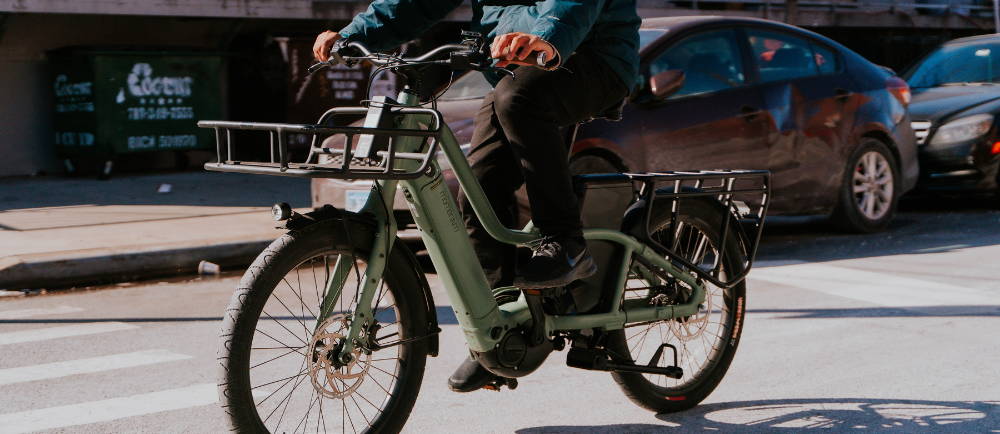
How do e-Bike speed limits differ between the three states?
California and Florida follow the standard electric motor-assisted speed limits built into the three-class system:
Class 1: 20 mph pedal assist
Class 2: 20 mph throttle assist
Class 3: 28 mph pedal assist
New York’s Class 1 and Class 2 limits are also 20 mph, but its Class 3 category only allows throttle-assisted speeds of up to 25 mph, and Class 3 e-Bikes are only legal in New York City.
New York City introduced a separate citywide 15 mph speed limit for e-Bikes, e-scooters, and pedal-assist bicycles on 24 October 2025. This applies across all five boroughs, even though some legal e-Bikes are technically capable of providing assistance above that speed.
How do e-Bike sidewalk access rules differ between California, Florida and New York?
California and Florida do not have a simple statewide rule allowing or prohibiting e-Bikes on sidewalks. Cities and counties are generally permitted to establish their own rules, meaning sidewalk access can change as you move between municipalities.
New York State prohibits e-Bike riding on sidewalks unless it has been specifically authorized by a local law or ordinance.
How does the three-class system differ between California, Florida and New York?
California and Florida follow the standard three-class system. Their Class 3 e-Bikes provide pedal assistance only and stop assisting at 28 mph.
New York’s Class 3 category is very different. It permits throttle and pedal assistance up to 25 mph and is only legal within New York City. This distinction is important because a bike sold as a legal 28 mph Class 3 e-Bike in California or Florida may not fit New York’s legal Class 3 definition.
Frequently Asked Questions
Can I take the same Class 3 e-Bike to all three states?
Can I ride an e-Bike on the sidewalk in all three states?
No. California and Florida generally permit sidewalk riding, subject to local rules and pedestrian priority. New York prohibits e-Bikes on sidewalks unless a local ordinance specifically permits them.
Does New York State have a 15 mph e-Bike speed limit?
The 15 mph rule applies specifically to New York City, not the whole of New York State. It took effect across all five boroughs on 24 October 2025. Outside New York City, riders must follow New York State law and any local operating restrictions.
Key Takeaways
- California and Florida follow the standard Class 1, 2 and 3 system, while New York uses a different 25 mph, throttle-capable Class 3 definition.
- California and Florida allow Class 3 pedal assistance up to 28 mph, while New York’s Class 3 category is restricted to New York City.
- New York requires all e-Bike riders to be at least 16, while California mainly applies its minimum-age rule to Class 3 e-Bike riders and Florida has no general statewide minimum.