Most areas allow all classes in the three-class system of electric bikes, but do not allow speeds of over 20 mph without pedaling. This means you can not use just the throttle on a Class 2 electric bike and surpass the speed limit.
Guide to Federal E-Bike Laws In The US (2026)
Written by: Nick Cowie | August 2, 2026 | Time to read: 5 min
States and cities are allowed to make their own electric bikelaws, but when safety standards are not established, or it is federal land, the standard defaults to federal law. Learn the federal guidelines so you can ride safely anywhere.

More about the Author: Nick Cowie
Nick is a writer with seven years of experience in the cycling industry. In his free time, he enjoys swimming, Jiu Jitsu, and spending time outdoors.

Electric bike laws are different all over the United States. In such a diverse country, each state has a different landscape and different needs. Most laws are created by the states themselves, but federal electric bike laws are still in play, especially when riding on public land like national parks.
Things like helmet requirements, light laws, and specific labeling regulations are all left to the discretion of state laws. Laws also vary depending on whether it is a Class 1, Class 2, or Class 3 bike. Consult your specific state’s laws to make sure you abide by those regulations.
👋 Welcome to Upway!
Upway is your top destination for buying and selling e-Bikes online. Discover your next e-Bike at up to 60% off retail prices, available in new or like-new condition.
Table of Contents
What does the federal government consider an e-Bike?
To be considered an electric bike, it must have fully operational pedals and no more than 750 watts of electric motor power. The motor is also not allowed to surpass 20 mph on throttle-only power, but can go higher when pedaling. All e-Bikes must have a permanent label that states the manufacturer along with the month and year it was made. State laws dictate what is considered an electric bike in their area, and most use this three-class system.
- Class 1: Assistance only when pedaling; electric motor cuts off at 20 mph
- Class 2: Throttle assistance; motor can function without pedaling; cuts off at 20 mph speed limit
- Class 3: Pedal assistance only (no throttle); motor assistance stops at 28 mph speed cap
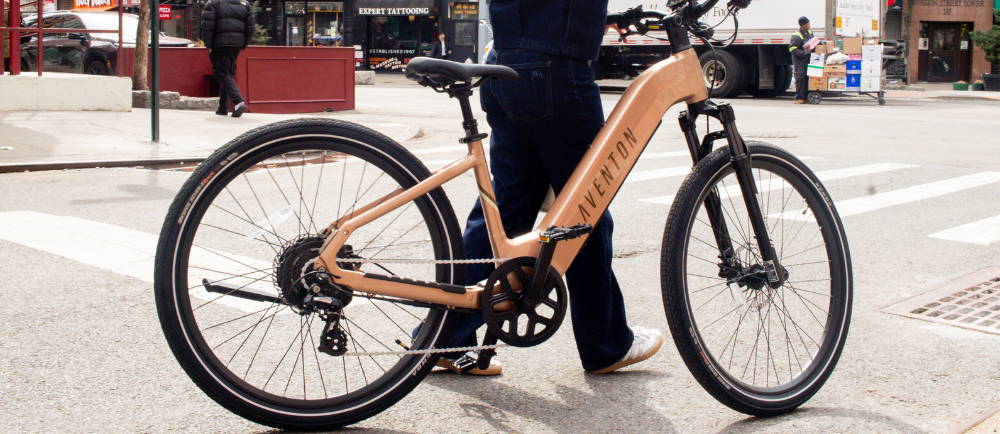
National Park Service electric bike laws
In most cases, electric bikes are considered the same as traditional bicycles when riding in a national park. Note that the superintendent of any individual national park has the authority to limit e-Bike usage by class at their discretion.
- Where to ride: In a national park, you can ride your electric bike on paved roads, paved or hardened paths, and any dirt path where regular bikes are allowed. Single-use pedestrian trails usually do not allow electric bikes, but that is at the discretion of the park superintendent.
- Throttle restrictions: In a national park, Class 2 e-Bikes are under the most scrutiny. You are not allowed to use the throttle by itself without pedaling unless you are on a path that allows motor vehicles.
💸 Want to sell your electric bike?
- In case you didn't know yet, you can sell your e-Bike to Upway and get your cash in 3 simple steps.
- Want an estimation -> It takes only 2 minutes to complete this form
Bureau of Land Management electric bike laws
The Bureau of Land Management is a federal agency that owns tens of millions of acres of public land. They make formal land-use plans that designate rules for electric bicycles. Their laws are a bit different than the National Park Service, restricting where they can ride.
- Where to ride: Electric bicycles are allowed where other motor vehicles can go. This includes dirt bikes, ATVs, and other off-highway vehicles. These areas include endless miles of desert and double-track roads.
- Where can’t I ride? Unlike national parks, motorized bicycles do not have blanket approval on non-motorized trails. For approval, the land manager must conduct an environmental assessment and issue a formal written decision.
U.S. Forest Service electric bike laws
Things get stricter with the U.S. Forest Service due to their Travel Management Rule. This law strictly distinguishes between motorized and non-motorized recreation. All classes of electric bikes are considered motorized vehicles under this law.
- Where to ride: Electric bikes can be ridden on roads that cars are allowed on. There are also about 60,000 miles of designated motorized vehicle trails that you can ride on. Just know that it will be shared with other vehicles like dirt bikes and OHVs.
- Regular Trails: Generally, electric bicycles are prohibited on standard hiking or mountain bike trails. For that to change, the local Ranger District needs to conduct an environmental assessment and allow public discourse before changing the rule.
Frequently Asked Questions
How fast can my e-Bike go on federal land?
When can federal law change?
Sometimes, the government gives authority to the local regulator of a specific piece of federal land, allowing them to change where e-Bikes can ride as that community sees fit.
What is an OHV?
OHVs are “off-highway vehicles” like ATVs and dirt bikes. This applies to motorized vehicles that you would not typically see on a traditional roadway. Electric bikes can be categorized as UHVs in strict scenarios.
Key Takeaways
- Know who governs the land you are riding on: Even when you know you are on federal land, find out if it is the National Park Service, U.S. Forest Service, or any other agency controlling it since they all have different rules.
- See if your community has made changes: Sometimes, local regulating bodies or a land manager can allow electric bikes in additional trails or zones. See if you have more riding space open than you might think.
- Upway sells legal e-Bikes: Upway sells refurbished electric bikes. We divide them into categories so you can get a great deal on a bike that is compliant with your local regulations.