No. All three classes are treated as bicycles and don't require a driver's license, registration, or insurance.
Wisconsin E-Bike Laws and Regulations (2026 Update)
Written by: Tom Fortune | June 29, 2026 | Time to read 5 min
Wisconsin’s e-Bike rules are straightforward, but one DNR policy catches a lot of riders off guard. Here’s everything you need to know before you head out.

More about the Author: Tom Fortune
Tom is a Brit living in the French Alps. When he's not creating written and video content for various brands, he's either pedalling or snowboarding around his local mountains. E-Bikes have unlocked the potential for Tom to explore Alpine terrain and get away from the crowded bike parks. He is only too keen to share his knowledge and experience with other riders.
With 43 state trails, most of them converted rail corridors, and popular bike routes, Wisconsin has fantastic cycling infrastructure. E-Bikes are welcome on the majority of them, but the state’s Department of Natural Resources access rules have a quirk that sets Wisconsin apart from every other state. Here’s what you need to know about electric bike laws.
How Wisconsin Defines an E-Bike
Under Wisconsin law, an electric bicycle is a bicycle with fully operative pedals and an electric motor of 750 watts or less. If your bike fits those criteria, it’s treated as a bicycle under state law, giving you the freedom you want from any kind of bike.
Cross either of those lines and the bike stops being an e-Bike in Wisconsin's eyes. At that point, you have to comply with moped or motorbike rules, visit the DMV, and deal with a lot more paperwork than anyone wants to.
You also need to know that every e-Bike sold in Wisconsin must carry a permanent label showing the class, top assisted speed, and motor wattage. Class 3 bikes must also have a speedometer.
The Three E-Bike Classes
| Class | Motor type | Max assisted speed | Speedometer required | Min age |
|---|---|---|---|---|
| Class 1 | Pedal-assist only | 20 mph | No | None |
| Class 2 | Pedal-assist + throttle | 20 mph | No | None |
| Class 3 | Pedal-assist only | 28 mph | Yes | 16 |
There are no statewide helmet rules for any class or age in Wisconsin. In all three classes, the motor must cut out when you reach the class speed limit.
License and Registration Requirements
Wisconsin doesn't require a driver's license, registration, title, or insurance for any class of e-Bike. If the bike checks all the boxes, you're free to ride without any motor vehicle formalities.
👋 Welcome to Upway!
Upway is your top destination for buying and selling e-Bikes online. Discover your next e-Bike at up to 60% off retail prices, available in new or like-new condition.
Where You Can Ride
You can ride Class 1 and Class 2 e-Bikes anywhere traditional bicycles are allowed. That includes public roads, bike lanes, and multi-use paths across the state.
Class 3 is more restricted off-road. It's generally limited to roadways and on-street bike lanes, and local agencies can prohibit Class 3 on specific paths. On public roads, Class 3 rides like any other bicycle.
One useful but strange rule that I’ve found is that if you switch the motor off, your e-Bike (no matter what class it is) is treated as a regular bicycle and can go anywhere traditional bikes are allowed. It rather defeats the point, but it's worth knowing for situations where trail access is restricted; however, it might be challenging to convince a park ranger you’re not using the motor.
When it comes to riding on sidewalks, it depends on where you are. Wisconsin doesn't have a statewide sidewalk rule for e-Bikes, but several cities have their own policies. For example, Milwaukee bans bike riding on sidewalks in most areas. Madison allows sidewalk riding in most places, but not in commercial areas where the pavement runs directly alongside shops and businesses. Always check local rules before riding on sidewalks in an unfamiliar city.
E-Bikes on Wisconsin State Trails and DNR Lands
Wisconsin's Department of Natural Resources (DNR) trail rules are where the state differs most from others, and it's worth reading carefully.
The Wisconsin DNR allows Class 1 and Class 3 e-Bikes on most bicycle touring trails in the state park system, subject to a 15 mph speed limit. Class 2 e-Bikes are not permitted on these trails. This is different from most other states, and it's something you need to know if you're riding a throttle-assisted bike. On mountain bike trails and off-road trails, e-Bikes with the motor engaged are not allowed.
A state trail pass is also required for all riders aged 16 and over who use state trails. These are available daily or annually from the DNR.
Here's how access works on some of the more popular trails:
Elroy-Sparta State Trail: Class 1 and Class 3 are permitted, with a 15 mph limit. Wisconsin's most famous rail-trail and the first rail-trail in the country. The three rock tunnels are a highlight, but riders must dismount and walk through them.
Glacial Drumlin State Trail: You can ride Class 1 and Class 3 e-Bikes, also with a 15 mph limit. It runs 52 miles through farmland, prairies, and stunning glacial terrain in southeastern Wisconsin.
Capital City State Trail: Class 1 and Class 3 are allowed, up to a 15 mph limit. It connects Madison's west side to the city center and links to other regional trails.
Great River State Trail: Classes 1 and 3 electric bikes are permitted up to a 15 mph limit. It follows the Mississippi River bluffs in western Wisconsin.
Mountain bike and off-road trails: E-Bikes with the motor engaged are not permitted on DNR mountain bike or off-road trails. Check the DNR bicycle trails page for the full current list of trails that allow e-Bikes.
Chequamegon-Nicolet National Forest: This is under federal jurisdiction, so e-Bikes are permitted on roads open to motorized vehicles. Non-motorized singletrack is off limits for e-Bikes with the motor engaged.
Helmet Requirements
Wisconsin has no statewide helmet requirement for e-Bike riders of any age or class. There is no mandate in state law, and the Wisconsin DOT recommends helmets but does not require them.
Individual trails, parks, and events may require helmets as a condition of access, but wearing one anyway is always the sensible choice.
Age Requirements
Class 1 and Class 2 electric bikes are not subject to a minimum age requirement under Wisconsin state law. But class 3 e-Bikes require riders to be at least 16 years old. No one under 16 can operate a Class 3 e-Bike under Wisconsin law.
Equipment Requirements
For riding after dark, Wisconsin requires a white front lamp and a red rear lamp or reflector. Class 3 e-Bikes must also have a speedometer. All e-Bikes must comply with Consumer Product Safety Commission manufacturing standards.
Local Rules Worth Knowing
- Milwaukee: Sidewalk riding is prohibited for bicycles and e-Bikes in most parts of the city, with limited exceptions. Check the city code before riding on Milwaukee's sidewalks.
- Madison: Sidewalk riding is generally allowed, except in commercial areas where the pavement runs directly alongside shops and businesses. Pedestrians always have the right of way. Madison is one of the most e-Bike-friendly cities in the state.
- Wausau: Class 1 e-Bikes are allowed on city park trails. Class 2 and Class 3 are not. A 15 mph speed limit applies in all city parks.
- State trail pass: Riders aged 16 and over must purchase a state trail pass to use Wisconsin state trails for bicycling. Daily and annual passes are available from the DNR.
There are no statewide or major utility e-Bike rebate programs in Wisconsin as of 2026. Check with your local utility or municipality for any regional incentives.
Buying an E-Bike in Wisconsin
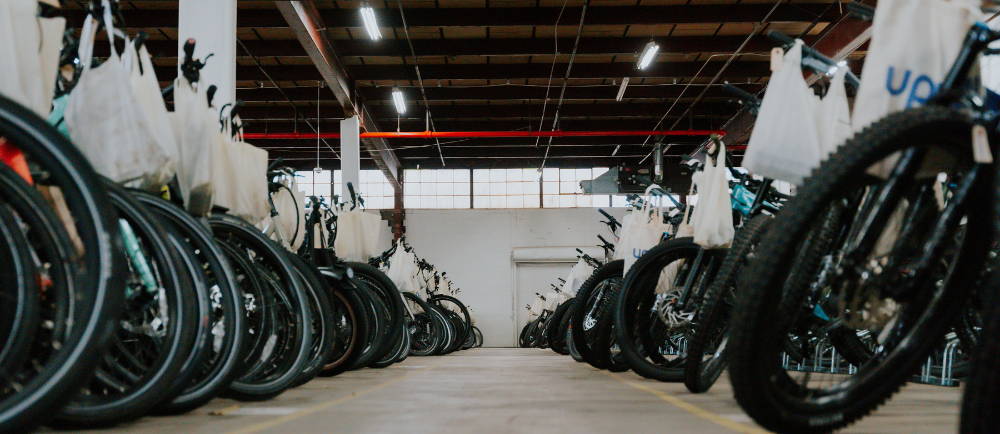
Wisconsin's rail-trail network is among the best in the Midwest, and most of it is open to Class 1 and Class 3 e-Bikes. A pre-owned bike is one of the smartest ways to get out on it without paying full retail price. Every e-Bike on Upway goes through a 50-point inspection before going on sale, and each listing shows the class label, motor wattage, and completed charge cycle count.
Wisconsin is more permissive than many states on licensing and registration, but the DNR's Class 2 trail ban and the 15 mph speed limit on state trails are worth understanding before you head out.
Browse Class 1 e-Bikes, Class 2 e-Bikes, or Class 3 e-Bikes on Upway, or explore electric mountain bikes and the full range of certified pre-owned e-Bikes on Upway.
Frequently Asked Questions
Do I need a license or registration to ride an e-Bike in Wisconsin?
What is the minimum age to ride a Class 3 e-Bike in Wisconsin?
16 years old. There is no minimum age for Class 1 or Class 2.
Are Class 2 e-Bikes allowed on Wisconsin state trails?
No. The Wisconsin DNR only permits Class 1 and Class 3 on bicycle touring trails, subject to a 15 mph speed limit. Class 2 is not permitted.
Do I need a trail pass to ride state trails in Wisconsin?
Yes. Riders aged 16 and over need a Wisconsin State Trail Pass for bicycling on state trails. Daily and annual passes are available from the DNR.
Is there a helmet law for e-Bikes in Wisconsin?
There’s no statewide requirement. Wisconsin has no helmet mandate for any age or class. Individual trails and events may require one.
Can I ride my e-Bike on sidewalks in Wisconsin?
It depends on the city. Milwaukee prohibits sidewalk riding in most areas. Madison generally allows it outside commercial districts. Check local rules wherever you ride.
Key Takeaways
- Wisconsin treats e-Bikes as bicycles under state law, with no license, registration, or helmet requirements. Class 3 riders must be at least 16 and carry a speedometer.
- The Wisconsin DNR allows Class 1 and Class 3 e-Bikes on most bicycle touring trails with a 15 mph speed limit. Class 2 e-Bikes are not permitted on DNR touring trails.
- A Wisconsin State Trail Pass is required for riders aged 16 and over on state trails. Local rules on sidewalks and park trails vary by city, so always check before riding somewhere new.