No. E-Bikes can be allowed only where traditional bicycles are allowed, and only where the superintendent has opened that road or route to e-Bike use.
Can You Ride an E-MTB in US National Parks?
Written by: Chris Van Leuven | February 27, 2026 | Time to read 7 min
National park e-Bike rules vary by park and class. Learn how to check access fast, with examples from Yosemite, Zion, and Yellowstone.

More about the Author: Chris Van Leuven
Chris is a writer, climber, and founder of Yosemite E-Biking in Mariposa, CA. When he’s not tackling Sierra Foothills trails or scaling rock walls, he’s crafting adventure stories with his boxer, Fenster. His work has appeared in Outside, Men’s Journal, Gripped, and Best American Sports Writing.
US National Parks are among the best places to ride a bike in America, but they're also where riders get tripped up the most. Not because the rules are impossible, but because e-Bike access is a national rule layered on top of a park-specific map. The National Park Service defines what an e-Bike is and gives superintendents the authority to manage them. Still, each park decides exactly where e-Bikes are allowed, which class is allowed, and what conditions apply.
If you want the “don’t get surprised at the gate” version, think like this: An electric mountain bike can be legal and totally normal on park roads and paved bike paths, while the same bike is illegal two turns later if you roll into a closed zone, a no-bike trail, or a wilderness boundary.
In this blog, you’ll get a practical riding plan: How NPS e-Bike rules work, how to check access in minutes (before you drive), and what the policies look like in real parks like Yosemite National Park, Zion National Park, and Yellowstone National Park, plus the Moab reality of mixing national parks with nearby public lands.
👋 Welcome to Upway!
Upway is your top destination for buying and selling e-Bikes online. Discover your next e-Bike at up to 60% off retail prices, available in new or like-new condition.
Table of Contents
What to Know Before E-Biking in National Parks
Yes—you can ride an e-MTB in many US national parks. The catch is that most legal riding is still “bicycle-style access”: Park roads, parking areas, and specifically designated routes where bicycles are allowed. Under NPS regulations, e-Bikes don’t unlock new terrain inside a park. They can be allowed only in places where pedal bicycles are allowed, and only when the park has opened those areas to e-Bike use.
The other non-negotiable is wilderness. Even if a trail looks perfect for an electric mountain bike, wilderness areas are closed to bikes and e-Bikes. So the clean way to plan is to treat wilderness boundaries as “hard walls” and focus on the bike routes the park has already designated.
The NPS rules
NPS defines an electric bicycle as a two- or three-wheeled cycle with fully operable pedals and an electric motor of not more than 750 watts, using the Class 1, Class 2, Class 3 system.
Here’s the class breakdown riders actually need:
Two policy details matter more than most people realize:
- Parks can restrict access by class. Superintendents have discretion to allow, limit, or close e-Bike use based on safety, congestion, and resource protection. So “Class 1 is usually easiest” is a good starting assumption, not a guarantee.
- Class 2 motor-only use is constrained. NPS rules limit the use of the motor to propel an e-Bike without pedaling for an extended period, except where motor vehicles are allowed. That’s one reason Class 2 can draw more scrutiny on multi-use paths and in crowded zones.
One more practical point: Devices that don’t fit the three-class system (or go beyond it) can be managed as motor vehicles under NPS rules, meaning they’re treated more like “road-only where cars are allowed,” not like bicycles.
A fast way to verify access before you ride
You don’t need to overthink this. You need the right order of operations.
- Start with the park’s official bicycling and biking page and look for e-Bike class limits and where bicycles are allowed.
- If you’re aiming for anything beyond the obvious paved loop, check the superintendent’s compendium and closures language for that park unit (it’s where the specific restrictions live).
- When it’s still unclear, call and ask one clean question: “Are Class 1 electric bikes allowed anywhere bicycles are allowed in this park, and which routes are included?”
That keeps you out of “my friend rode it” territory and in actual policy.
How it plays out in Yosemite, Zion, Yellowstone, and Moab-area parks
Yosemite National Park
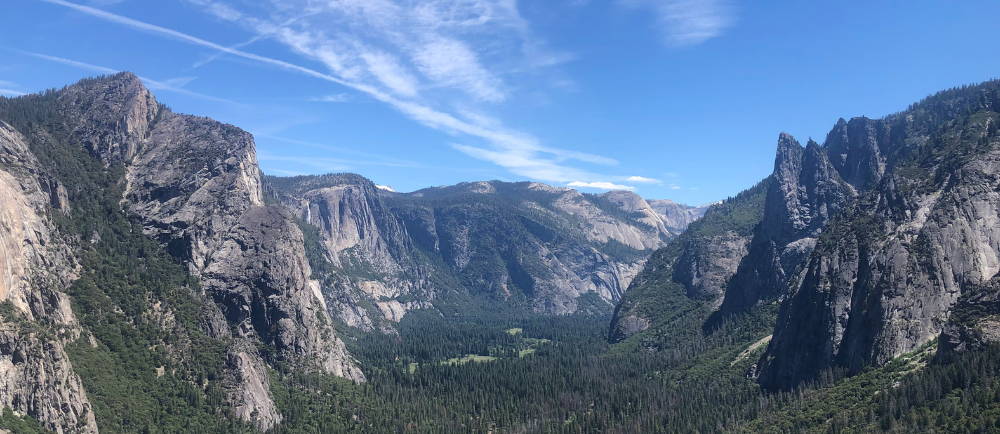
Yosemite is a classic “allowed, but specific” park. Yosemite’s bicycle and e-bicycle policy complies with NPS rules (e-Bikes are allowed where bikes are allowed). Still, it adds very clear limits that affect how an e-MTB day actually feels.
The most important Yosemite detail is speed: On paved trails designated as “paved bikeways,” speed may not exceed 15 mph, regardless of the mode of transportation (including bicycles, electric city-bicycles, and electric cargo bikes).
Yosemite also spells out named restrictions that catch people off guard when they’re trip-planning. For example, e-Bikes are prohibited on the surface of O’Shaughnessy Dam (in Hetch Hetchy), and there are additional area-based limits, including certain closures and specific restrictions involving rentals near Mirror Lake.
Bottom line: Yosemite can be a great electric bike destination for scenery, valley loops, and paved bike path logistics, but it rewards riders who respect the posted system and ride at “shared-space speed,” not “trail-network speed.”
Zion National Park
Zion is very clear: Only Class 1 pedal-assist e-Bikes are allowed in Zion National Park, and they can go where regular bicycles are allowed, provided they follow the same rules.
If you’re bringing an electric bike to Zion, this is the practical filter: If it isn’t Class 1 (pedal-assist only, assistance stops at 20 mph), it’s not the right tool for the park.
Yellowstone National Park
Yellowstone’s bicycling page is clear about both access and exclusions. Bikes are prohibited on backcountry trails, boardwalks, and oversnow routes.
For e-Bikes specifically, Yellowstone permits Class 1, 2, and 3 e-Bikes on established public roads, parking areas, and designated routes when those roads are open to motor vehicles during the summer season. It also authorizes bikes on certain established roads when they are closed to public motor vehicles during spring and fall, creating a unique (and very legal) road-ride window if you time it right.
Translation: Yellowstone is absolutely doable for a legal electric bike day, but it’s a road-and-route park, not a singletrack e-MTB park.
Moab-area parks and the “real” Moab e-MTB plan
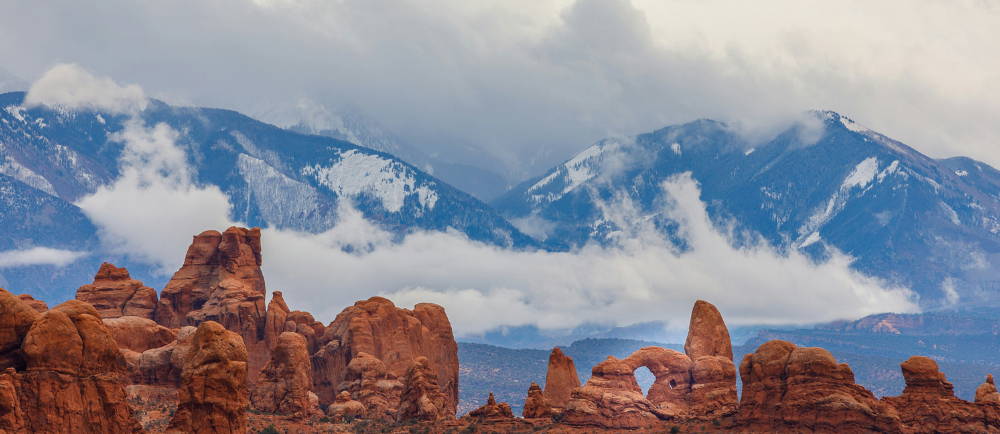
Inside Arches and Canyonlands, biking is largely road-based, which is why many Moab-area electric mountain bike trips end up being a mix: National parks for iconic scenery rides, and nearby public lands for the true trail-network experience. (Different land manager, different rulebook.)
A major current example is the BLM Moab Field Office decision to open more than 200 miles of mountain bike trails around Moab to Class 1 e-Bikes, beginning March 1, 2026.
This is why “Moab” can be amazing for e-MTB riding, but only if you confirm the designation for the exact trail system you plan to ride. The legal distinction between “yes” and “no” often comes down to which agency manages that specific network.
Ride etiquette that keeps access open
National parks are high-visibility riding. If e-Bike use appears fast, unpredictable, or unsafe around families and foot traffic, access is restricted.
Ride at a pace that fits the setting, yield early, pass wide, and stay on designated routes. If you’re on a Class 2 e-Bike, be extra careful with motor-only behavior—NPS rules are written to keep e-Bikes operating like bicycles in bicycle-allowed areas, not like quiet mopeds.
🤝 Why you can trust us for buying an e-Bike?
- Great prices: Get your next e-Bike for up to 60% off retail prices, in new or like-new conditions.
- Quality Guaranteed: Every e-Bike is rigorously certified by a team of professional mechanics, and comes with a 1-year warranty.
- Delivered to Your Door: Delivered to your home within a week. Change your mind? Return it thanks to our 14-day return policy.
🚲 We also buy e-Bikes. Click here for an estimation!
Upway: Compare E-MTBs or Try Upway Flex
National parks reward the “right tool for the job.” If your riding is mostly roads and paved bike paths, a comfort-forward electric bike can be the best fit. If your plan is “park roads in the morning, public-land singletrack in the afternoon,” an e-MTB (hardtail, fat-tire, or full-suspension) makes more sense.
Upway helps because you can compare certified pre-owned electric bikes by style and brand in one place. Upway Flex is a monthly subscription option designed for riding, swapping, returning, or applying part of the payment toward a purchase. Flex is available for pickup in Redondo Beach.
Frequently Asked Questions
Are e-Bikes allowed everywhere in national parks?
What e-Bike class is the easiest for national parks?
Class 1 is usually the cleanest starting point because it’s pedal-assist-only and caps assistance at 20 mph, but parks can still restrict access by class and location.
Are e-Bikes allowed in Yosemite National Park?
Yes, in bike-legal areas, with specifics. Yosemite sets a 15 mph limit on paved bikeways and lists named restrictions, including O’Shaughnessy Dam in Hetch Hetchy.
Key Takeaways
- Most national park e-MTB riding is legal on roads, parking areas, and designated routes, not on backcountry singletrack or in wilderness areas.
- Verify the park’s current rules because superintendents can manage access by e-Bike class, closures, and crowding conditions.
- Zion is a good reminder that “e-Bike friendly” can still mean Class 1 only—so matching your bike’s class to the park’s rules is the best rule of thumb.