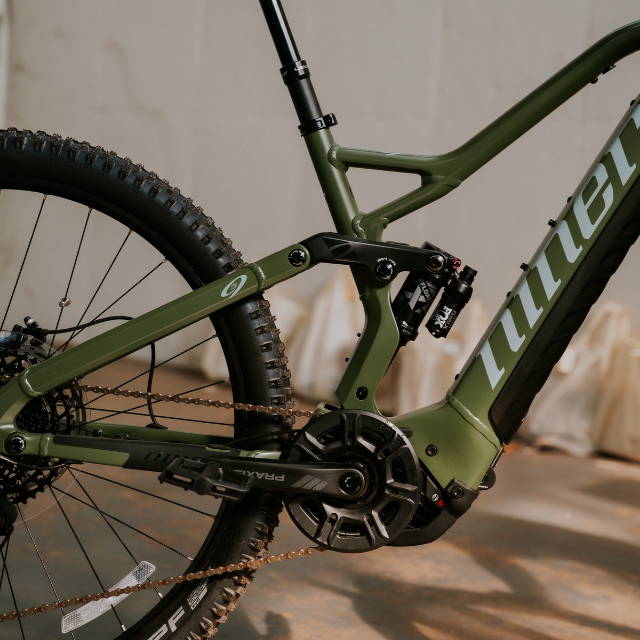
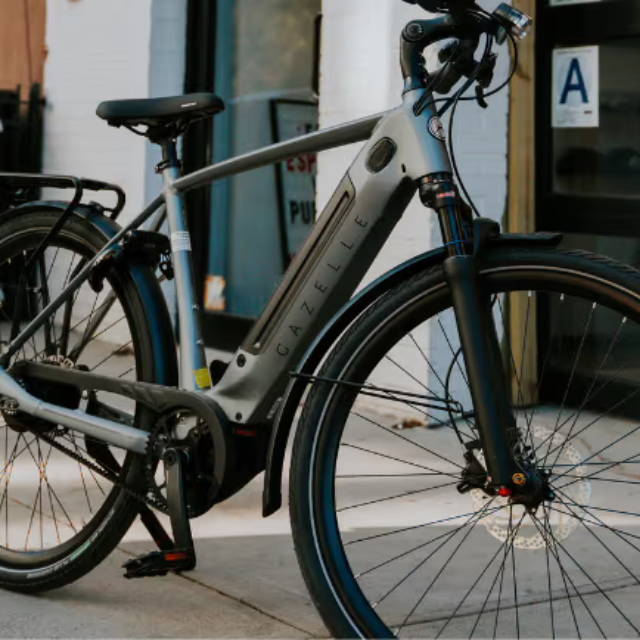
Anyone under the age of 16 is required to wear a bicycle helmet in Georgia when riding or travelling as a passenger on an electric bike.
Georgia e-Bike Rules and Regulations (2026)
Written by: Kazim Ladimeji | June 8, 2026 | Time to read 6 min
As a resident or visitor in Georgia, it's important to understand the state's electric bike laws. From sidewalk riding and helmet requirements to Class 3 restrictions and trail access, these regulations directly affect where and how you can legally ride your e-Bike.

More about the Author: Kazim Ladimeji
Kazim is a UK-based cyclist and writer who discovered his passion for riding during lockdown six years ago and hasn’t looked back since. He now rides around 100 miles a week, exploring road and light gravel routes from his base in the Cotswolds, a cycling paradise. When he’s not riding or writing about e-Bike trails in the US, he’s exploring cafés, cooking, and keeping busy as a soccer dad

Georgia has developed specific legislation covering electric bicycles, low-speed vehicles, mopeds, and alternative forms of transportation. Depending on the class of e-Bike you ride, the rules can vary significantly, particularly when it comes to licensing requirements, trail access, and how the vehicle is classified under state law.
In general, Class 1 and Class 2 e-Bikes are treated much like traditional bicycles, while Class 3 e-Bikes in Georgia are classed as motor driven cycles and may face additional regulations.
In this article, I will summarize the key Georgia e-Bike laws in a practical, easy-to-understand way so you can stay compliant and ride safely.
👋 Welcome to Upway!
Upway is your top destination for buying and selling e-Bikes online. Discover your next e-Bike at up to 60% off retail prices, available in new or like-new condition.
Table of Contents
What are the electric bike laws in Georgia in 2026?
What labeling is required for e-Bikes under Georgia state law?
Do I need a license or registration to ride an e-Bike in Georgia?Where can I ride my electric bicycle in Georgia?
What equipment is legally required on electric bikes in Georgia?
Frequently Asked Questions
What is an e-Bike in Georgia?
Georgia has developed a specific code for alternative forms of transportation and low-speed vehicles, and bicycles and electric bikes fall under this.
Electric Assisted Bicycles (Class 1 and 2 E-Bikes)
Under this code, electric-assisted bicycles are defined as a device with two or three wheels that has a saddle and fully operative pedals for human propulsion and also has an electric motor. When in operation, the electric bike motor should fulfill the following conditions:
- Disengage or cease to operate when a brake is applied.
- Have a power output of 1000 watts or less.
- Be incapable of propelling the device (via throttle assist) faster than 20 mph on level ground.
- Be incapable of further increasing the speed of the device (with pedal assist) when human power alone is used to propel the device at or more than 20 mph.
- In short, pedal assist and throttle assist must disengage at 20 mph.
Motor Driven Cycles (Class 3 E-Bikes)
Due to its 28 mph top speed the Class 3 e-Bike does not fit into Georgia's Electric Assisted Bicycle category above which is limited to vehicles with a 20 mph speed limit.
It does fit into Georgia's 'Motor 'Driven Cycle' classification with a 30 mph speed limit as it is a 'bicycle with a motor attached'.
This is my interpretation of how the three class system maps onto the Georgia vehicle code. It is a bit of a gray area, and I'd recommend checking with local authorities if in any doubt.
What are the electric bike laws in Georgia in 2026?
Electric bicycles are generally treated the same as normal bicycles if meeting the state definition of an e-Bike, set out above. I have summarized the main points below in an easy-to-digest question and answer format.
What labeling is required for e-Bikes in Georgia?
E-Bike manufacturers and distributors in Georgia must place a permanent label, printed in at least 9-point Arial type, in a prominent location on all their e-Bikes containing the following information:
It is against Illinois law to tamper with the speed capability or engagement of the motor unless the above labelling is updated to reflect the new specifications.
Do I need a license or registration to ride an e-Bike in Georgia?
In Georgia, electric bicycles are treated like normal bicycles, and therefore, e-Bike operators do not need a driver's license, vehicle registration, or liability insurance.
Class 3 bikes, which fall under the classification of mopeds and motor scooters (under motor driven cycles), do not need to be registered and licensed. However, in order to operate motor-driven cycles on Georgia roads and highways, operators must meet the following conditions:
Class 3 bikes, which fall under the classification of mopeds and motor scooters (under motor driven cycles), do not need to be registered and licensed. However, in order to operate motor-driven cycles on Georgia roads and highways, operators must meet the following conditions:
- Must be 15 years of age and have a driver's license, instructional permit, or limited permit.
- Can be operated on roadways and highways, following the same traffic laws as motor vehicles.
Where can I ride my electric bicycle in Georgia?
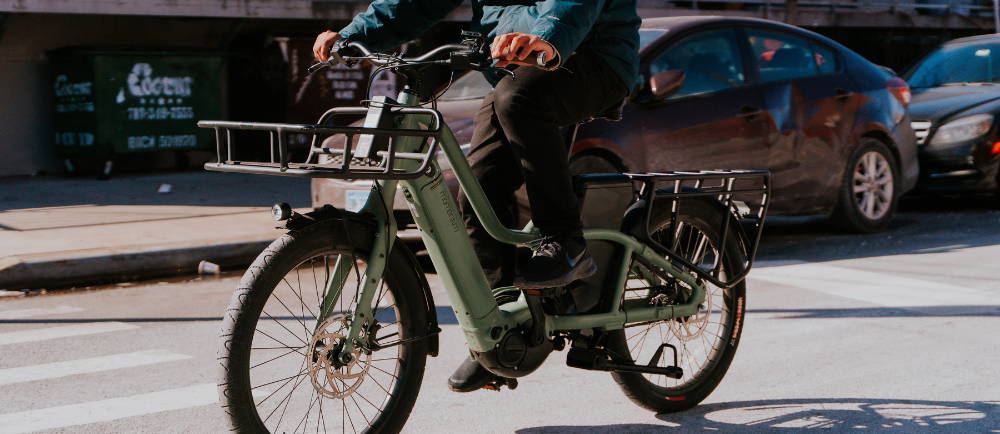
Bicycles and electric bicycles are legally classified as vehicles in Georgia, meaning that general traffic law applies to their operation. Electric bicycles can generally be ridden anywhere that normal bicycles can go in Georgia, and this includes highways, roadways, bicycle lanes, and bike paths. Class 3 e-Bikes are restricted to roadways, but not bike paths and trails, (unless otherwise noted)
Georgia does not have a statewide policy on sidewalk access to electric bicycles, but allows local municipalities to set their own policy.
Sidewalks
For example, the City of Woodstock, Georgia, prohibits riding electric bicycles in the downtown district, and riders must dismount and walk in these pedestrian-heavy public spaces.
Yet in Atlanta, electric bicycles may be ridden on sidewalks at a walking pace and must yield to pedestrians, but cyclists must dismount when approaching crosswalks or intersections. It is prohibited to ride on sidewalks between 9pm and 6am.
From my experience, sidewalk riding is heavily restricted across the US, especially in downtown areas, so always check local signage before attempting to ride on sidewalks in Georgia.
Georgia State Parks
Class 1 e-Bikes (e-mountain bikes and e-gravel bikes) are permitted on roadways and trails that also allow bicycles, but check local signage and ordinances before riding.
What equipment is legally required on electric bikes in Georgia?
Georgia law requires bicycles and electric bikes ridden at night to have the following equipment:
Brakes
Working brakes that enable the electric bike rider to stop with a skid on dry, level, clean pavement.
Lights and Reflectors
- A white front headlight (visible from 300 feet to the front)
- A red rear light (visible from 300 feet to the rear)
- A bicycle with a reflector on the rear does not have to have a light on the rear.
Frequently Asked Questions
What are the rules around bicycle helmets in Georgia?
Can I ride my electric bike on sidewalks in Georgia?
Possibly. Georgia leaves sidewalk access largely to local municipalities. Some cities permit sidewalk riding under specific conditions, while others prohibit it entirely in busy downtown districts. Always check local signage and ordinances before riding.
Can I ride an e-Bike on Georgia State Park trails?
Class 1 e-Bikes are generally permitted on trails and roadways where traditional bicycles are allowed. Trail access can vary by location, so always check local park signage before riding.
Key Takeaways
- Georgia treats Class 1 and Class 2 e-Bikes as electric-assisted bicycles.
- Class 3 e-Bikes are generally treated more like motor-driven cycles under Georgia law.
- Class 1 and 2 e-Bike riders do not need a driver's license, registration, or insurance.