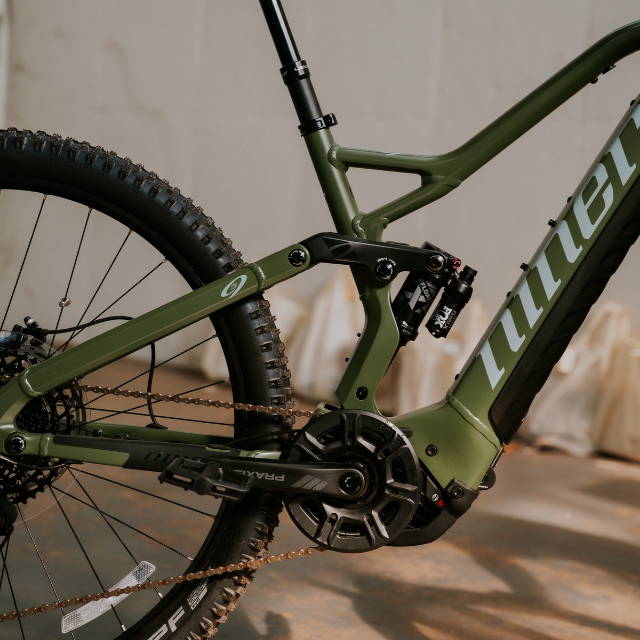
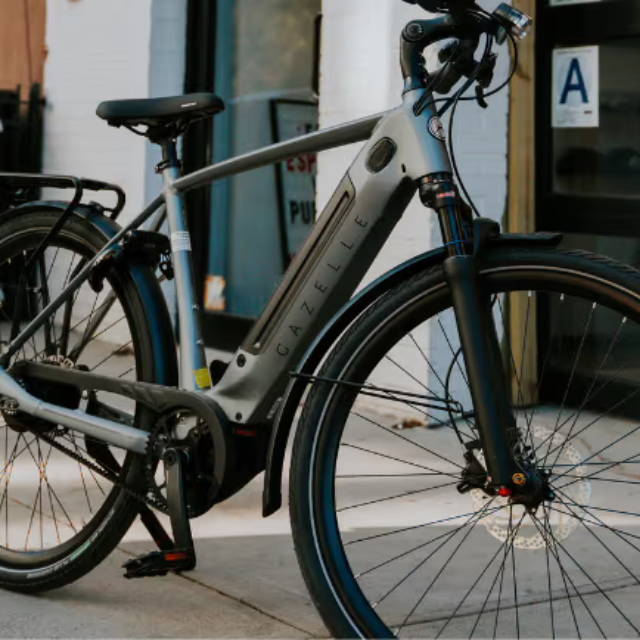
Individuals must be 16 years or older to operate a Class 3 e-Bike in Connecticut unless they are riding as a passenger on an e-Bike designed to carry a passenger.
Connecticut E-Bike Rules and Regulations (2026)
Written by: Kazim Ladimeji | June 4, 2026 | Time to read 6 min
If you ride an electric bike in Connecticut, it’s worth understanding the state’s e-Bike laws before you head out on the road or trail. Recent updates introduced in October 2025 have changed where certain classes of e-Bikes can be ridden and strengthened rules around labeling, safety, and vehicle classification.

More about the Author: Kazim Ladimeji
Kazim is a UK-based cyclist and writer who discovered his passion for riding during lockdown six years ago and hasn’t looked back since. He now rides around 100 miles a week, exploring road and light gravel routes from his base in the Cotswolds, a cycling paradise. When he’s not riding or writing about e-Bike trails in the US, he’s exploring cafés, cooking, and keeping busy as a soccer dad

Connecticut has recently updated its electric bike laws to create a clearer distinction between legal e-Bikes and more powerful electric motorcycles. The state continues to use a three-class e-Bike system, but new rules introduced in October 2025 affect trail access, labeling requirements, age restrictions, and enforcement.
Class 1 electric bikes continue to enjoy many of the same rights and privileges as traditional bicycles, although Class 2 and Class 3 e-Bikes now face additional restrictions in some areas. In this article, I summarize the key Connecticut e-Bike laws in a practical, easy-to-understand way so you can stay compliant and ride safely.
👋 Welcome to Upway!
Upway is your top destination for buying and selling e-Bikes online. Discover your next e-Bike at up to 60% off retail prices, available in new or like-new condition.
Table of Contents
What is an e-Bike in Connecticut?
How does Connecticut classify e-Bikes?
What are the electric bike laws in Connecticut in 2026?
What labeling is required for e-Bikes in Connecticut?What are the rules around modifying the electric power system on an e-Bike?
Where can I ride my electric bicycle in Connecticut?
What are Connecticut’s rules on bicycle lights?
Frequently Asked Questions
What is an e-Bike in Connecticut
Recent new laws in Connecticut, which came into effect on October 1, 2025, clearly define an e-Bike as follows
- The motor is less than 750 watts.
- Top speed is capped at 28 mph when the bike is pedal-assist only.
- Top speed is capped at 20 mph if the bike has a throttle.
- Once the maximum speed is reached, the motor must shut off.
How does Connecticut classify e-Bikes?
In Connecticut, e-Bikes are generally treated the same way as traditional non-motorized bicycles with regard to road and trail access, as long as they fit into one of the following three classes.
- Class 1 electric bicycle: Max speed 20 mph. The motor provides assistance only when the rider is pedaling (pedal assist) up to the speed of 20 miles per hour.
- Class 2 electric bicycle: Max speed 20 mph. Has a throttle (throttle assist), which powers and propels the bike even when not pedaling. Can also have pedal assist.
- Class 3 electric bicycle: Max speed 28 mph. Must have a speedometer. The rider must be pedaling for the motor to work. Must be 16 or over to operate a Class 3 e-Bike in Connecticut.
What are the electric bike laws in Connecticut in 2026?
There were some recent updates to Connecticut e-Bike laws in October 2025, which were communicated by Watch for Me, an outreach program between the Connecticut Department of Transportation (CT DOT) and the Connecticut Children’s Injury Prevention Center.
What labeling is required for e-Bikes in Connecticut?
E-Bike manufacturers and sellers must place a permanent label on all their e-Bikes containing the following information (in font size 9 or larger):
- Classification number
- Top assisted speed
- Motor wattage
Vendors selling bikes that don’t qualify as an e-Bike under Connecticut state law must provide a written statement to consumers. This should stipulate that it is not an electric bicycle as defined under state law, but rather a motor vehicle and subject to appropriate motor vehicle laws and motor insurance requirements.

What are the rules around modifying the electric power system on an e-Bike?
It is illegal to modify the power governance systems on an electric bike to change its speed capability or power delivery (throttle assist or pedal assist), unless the label is updated to reflect the change. If the change results in the e-Bike falling into a new class, the label should be updated to reflect the new class.
If the vehicle no longer qualifies as an e-Bike, then the label must be removed. Violation of the labelling requirements carries fines of between $100 and $300. Any new wattage must not exceed 750 watts, as it will cease to be an electric bicycle under the law and will be subject to a different set of electric vehicle regulations.
Where can I ride my electric bicycle in Connecticut?
Electric bicycles can go pretty much anywhere that traditional bicycles can go in Connecticut, and this includes:
- Streets
- Trail networks
- Highways
- Roadways
- Shared pathways
- Bicycle lanes
- Bicycle or multi-use paths
In general, the law treats bicycles like motor vehicles when they are on the road and like pedestrians when they travel on sidewalks and crosswalks.
Sidewalks
When travelling on sidewalks or crosswalks, however, e-Bikes must yield the right of way to any pedestrian and give an audible warning signal (like a bell) before passing the pedestrian.
While state law permits riding on sidewalks, cities may impose their own restrictions on e-Bikes on sidewalks, so always check local ordinances and signage before riding, particularly in business districts.
Trails and paths
As of October 1st 2025, Class 1 e-Bikes can now be ridden on bike and multi-use trails and on unsurfaced paths designed for non-motorized traffic without local permission.
Class 2 e-Bikes are not permitted on trails or paths designed for non-motorized traffic with natural surfaces and no added surface materials (although permission can be granted by local ordinance).
Class 3 e-Bikes are not permitted on any bicycle or multi-use trail or path in Connecticut.
What are Connecticut’s rules on bicycle lights?
State law requires bicycles and electric bikes ridden at night to have:
- A white front headlight (visible from at least 500 feet away in clear conditions)
- A red rear light or reflector (visible from at least 600 feet away when reflecting light)
- Side reflectors or reflective material
Frequently Asked Questions
Are there any age requirements for riding electric bikes in Connecticut?
Do I need a license or registration to ride an e-Bike in Connecticut?
Electric bicycles are afforded the same freedom as traditional bicycles in Connecticut, meaning that e-Bike operators don’t need a driver’s license, and they don’t need to register their e-Bike with the Department of Motor Vehicles (DMV).
Are e-Bike riders in Connecticut required to wear a helmet?
E-Bike riders of all ages must wear a helmet and so must passengers sitting in a legitimate passenger seat on the e-Bike.
Key Takeaways
- Class 1 e-Bikes enjoy the broadest trail access under Connecticut’s updated rules.
- Class 3 e-Bikes are restricted from bicycle and multi-use trails.
- Connecticut introduced significant e-Bike law updates in October 2025 covering classification, labeling, and trail access.