In many states, yes. If the modification changes the bike's class, assisted speed, or motor wattage, the manufacturer's label should be updated to reflect the new performance specifications.
Is Legal to Modify Your Electric Bike?
Written by: Kazim Ladimeji | July 18, 2026 | Time to read 6 min
Many e-Bike owners like to personalise their vehicle, whether that's upgrading the brakes, fitting a bigger battery or even unlocking more speed. But while modifying an electric bike is generally legal, certain changes can alter its legal classification and affect where you can ride it and whether it still qualifies as an e-Bike.

More about the Author: Kazim Ladimeji
Kazim is a UK-based cyclist and writer who discovered his passion for riding during lockdown six years ago and hasn’t looked back since. He now rides around 100 miles a week, exploring road and light gravel routes from his base in the Cotswolds, a cycling paradise. When he’s not riding or writing about e-Bike trails in the US, he’s exploring cafés, cooking, and keeping busy as a soccer dad
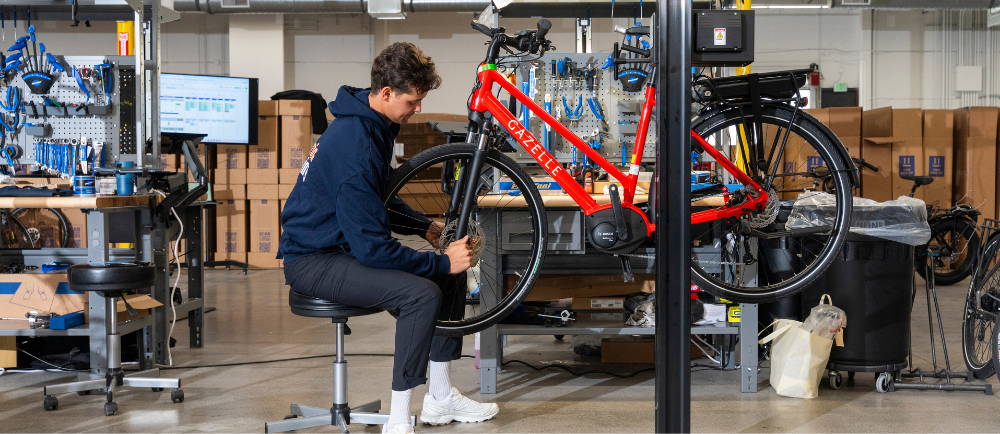
Electric bikes are designed to be upgraded and customized, and many riders improve their performance, comfort or practicality with aftermarket upgrades. Most cosmetic and component upgrades are perfectly legal, but modifications that affect an e-Bike's speed, motor output or safety equipment can have important legal consequences.
In many states, changing an e-Bike so that it no longer fits the three-class system may mean it is no longer treated as an electric bicycle. Instead, it could be classified as an electric motorcycle (e-Moto), moped, or another type of motor vehicle, bringing additional licensing, registration, and insurance requirements.
In this article, I explain which e-Bike modifications are generally legal, when you may need to update your bike's classification label, and what happens if your modified e-Bike exceeds the legal definition of an electric bicycle.
👋 Welcome to Upway!
Upway is your top destination for buying and selling e-Bikes online. Discover your next e-Bike at up to 60% off retail prices, available in new or like-new condition.
Table of Contents
Is it legal to modify your electric bike?
Can I modify brakes, lights and reflectors on my electric bike?
Can I modify the speed of my electric bicycle?
What if the modification makes the bike exceed the three-class system?What if the state doesn't follow the three-class system?
Is it legal to modify your electric bike?
Yes, it is legal to modify your electric bike in the US as long as you follow the correct steps both during and after the modification.
Safety equipment on an electric bike may be legally required, such as brakes, lights, and reflectors, so you cannot simply remove them to make the bike lighter (even if you are doing a hill climb TT ending on a summit finish!), more aerodynamic, or simply to improve its appearance.
You can, of course, upgrade or replace these components, provided they continue to meet the minimum legal performance requirements for brakes and lighting as mandated by state law.
You may also modify the speed capability or power delivery system of your electric bike, provided the bike's labelling is updated to reflect its new capabilities, and it is ridden in accordance with its new legal classification. However, in practice, this really only allows toggling between Class 1, 2, or 3 modes of the e-Bike (when available)— surpassing those corresponding speeds means the bike no longer meets its legal requirements.
Can I modify brakes, lights and reflectors on my electric bike?
Most states specify the type and minimum performance standards for safety equipment on traditional bicycles and electric bicycles within their vehicle code, including:
- Mandatory white front light visible from 500 to 600 feet.
- Mandatory rear red reflector visible from 500 to 600 feet when illuminated by a vehicle headlamp.
- Optional rear red light visible from 500 feet that may be used in addition to, or sometimes instead of, a rear reflector.
- Side reflectors visible from around 600 feet, which may be fitted to the bicycle, pedals, rider, or helmet.
- A device capable of giving an audible warning, such as a bell or horn. (Whistles and sirens are usually prohibited.)
If state or local law requires your electric bicycle to have this safety equipment, removing it (or replacing it with sub-standard equipment) would be illegal.
Can I modify the speed of my electric bicycle?
Many states in the US follow the three-class e-Bike system shown below:
This typically means electric bicycles sold or distributed in those states must display a permanent label showing:
- Class
- Top assisted speed
- Motor wattage
Under these rules, if you modify the electric bicycle so that its class, assisted speed, or power delivery changes, the manufacturer's label must be removed or replaced with a new label reflecting the updated performance specifications. Failing to update the label in states with mandatory labelling requirements may be considered unlawful tampering.
What if the modification makes the bike exceed the three-class system?
If the modification allows the bike to exceed the three-class system (for example, travelling faster than 28 mph under pedal assist or faster than 20 mph using throttle power), it will generally no longer qualify as a low-speed electric bicycle in states that follow this framework, and you will have to remove the e-Bike classification label.
Instead, it will usually be classified as a high-powered electric bike, e-Moto, moped or motorcycle under state law. Riders may then require a driver's license, vehicle registration and insurance before riding legally.
The modified vehicle will also usually lose access to bicycle paths, bike lanes and many shared-use trails, becoming a road vehicle primarily.
What if the state doesn't follow the three-class system?
Even if a state doesn't formally adopt the three-class system, most states still have a legal framework for distinguishing between low-speed electric bicycles and higher-powered electric vehicles.
Montana, for example, has two main categories:
- Electric Assisted Bicycles (Class 1 and Class 2 equivalent)
- Mopeds (roughly equivalent to faster Class 3-style e-Bikes)
Therefore, if you modify an electric bike in Montana so that it exceeds 20 mph, it could move into the Moped category, where different traffic laws apply, and a driver's licence may be required, together with greater restrictions on bicycle paths.
If the modification allows the bike to travel faster than 30 mph, it may instead fall into the motorized cycle or motorcycle category, requiring registration, insurance, and road-only use.
Frequently Asked Questions
Do I need to replace the manufacturer's label after modifying my e-Bike?
Can I unlock my e-Bike to go faster than 28 mph?
Technically, many electric bikes can be modified to exceed their factory speed limits. However, once the bike exceeds the legal definition of a low-speed electric bicycle, it will often be classified as an e-Moto, moped, or motorcycle and become subject to different laws.
Can I remove the lights or reflectors from my electric bike?
Only if doing so does not cause the bike to fall below your state's minimum equipment requirements. Most states legally require lights, reflectors, and working brakes when bicycles are ridden on public roads, particularly at night.
Key Takeaways
- Most e-Bike modifications are legal if they continue to comply with state law.
- Increasing an e-Bike's speed or changing its power delivery may alter its legal classification.
- Once a modified e-Bike exceeds the legal definition of an electric bicycle, it will often be regulated as an e-Moto, moped, or motorcycle, with additional licensing, registration, and insurance requirements.