Yes. Oklahoma recognizes Class 1, Class 2, and Class 3 electric-assisted bicycles that meet the state’s requirements for pedals, motor power, and assisted speed.
Oklahoma E-Bike Laws and Regulations (2026 Update)
Written by: Chris Van Leuven | June 29, 2026 | Time to read: 5 min
Oklahoma e-Bike laws 2026: learn Class 1, Class 2, and Class 3 rules, licensing requirements, age limits, speedometer rules, trail access, and what riders need to know before buying an e-Bike.

More about the Author: Chris Van Leuven
Chris is a writer, climber, and founder of Yosemite E-Biking in Mariposa, CA. When he’s not tackling Sierra Foothills trails or scaling rock walls, he’s crafting adventure stories with his boxer, Fenster. His work has appeared in Outside, Men’s Journal, Gripped, and Best American Sports Writing.

Oklahoma’s e-Bike laws are a little more confusing than they first appear. At a glance, the state follows the familiar three-class e-Bike system used across much of the country, but once you start looking at Class 3 restrictions, trail access, and older Oklahoma electric bike laws that still get referenced online, things can get murky.
Unlike some states where the rules are almost entirely statewide, Oklahoma riders may find that trail access and local rules matter as much as the class printed on the bike. The good news is that most riders won’t run into problems if they understand a few key rules before they ride.
In this blog, I’ll cover Oklahoma’s e-Bike classifications, licensing requirements, age restrictions, helmet rules, trail access, and where local rules can make a difference.
👋 Welcome to Upway!
Upway is your top destination for buying and selling e-Bikes online. Discover your next e-Bike at up to 60% off retail prices, available in new or like-new condition.
Table of Contents
How does Oklahoma define an e-Bike?
Oklahoma recognizes the three-class e-Bike system, and an electric-assisted bicycle must have operable pedals and a motor rated at 750 watts or less. Assistance must stop at the speed limit assigned to its class.
| Oklahoma rule | Why it matters |
|---|---|
| E-Bikes must have operable pedals | Keeps them in the bicycle category, not motorcycle territory |
| Motor must be 750 watts or less | Anything more may fall outside Oklahoma’s e-Bike definition |
| Class 1 and Class 2 assist stops at 20 mph | These are usually the more flexible everyday riding options |
| Class 3 assist stops at 28 mph | Faster road riding, but more restrictions |
| Class 3 bikes need a speedometer | Required for Class 3 e-Bikes in Oklahoma |
| Local rules can limit access | Trails, sidewalks, parks, and shared paths may vary |
Class 1 e-Bikes are pedal-assist only, with assistance stopping at 20 mph. Class 2 e-Bikes can use a throttle or pedal assist, with motor assistance also stopping at 20 mph. And, Class 3 e-Bikes are pedal-assist only, with assistance stopping at 28 mph. Overall, Class 1 and Class 2 e-Bikes are the most flexible options for many riders because they’re commonly allowed wherever bicycles are allowed, and Class 3 e-Bikes come with additional restrictions that are worth understanding before you buy. Oklahoma also requires manufacturers to properly label e-Bikes with their classification.
Do you need a license or registration in Oklahoma?
This is where Oklahoma creates some confusion. Oklahoma’s laws have changed over time, so you’ll sometimes find older information that doesn’t fit with today’s three-class system. Some older references mention licensing rules for electric-assisted bicycles, while newer e-Bike guidance focuses on the Class 1, Class 2, and Class 3 framework.
In practice, Oklahoma’s current three-class e-Bike framework generally treats Class 1, Class 2, and Class 3 e-Bikes differently from motorcycles, mopeds, and other motor vehicles. Riders aren’t required to register properly classified e-Bikes like cars, and they aren’t subject to standard motor vehicle insurance requirements. If your bike falls within Oklahoma’s e-Bike definition, it isn’t treated like a motorcycle. If you’ve modified the bike beyond the state’s class limits, different rules may apply.
What’s different about Class 3 e-Bikes?
This is one place where Oklahoma stands out. Class 3 e-Bikes are limited to riders aged 16 or older. Riders under 16 can’t operate a Class 3 e-Bike, although they may ride as passengers on bikes designed to carry passengers. Oklahoma also requires Class 3 e-Bikes to be equipped with a speedometer that displays speed in miles per hour.
Trail access can also be different for Class 3 bikes. In many situations, Class 1 and Class 2 e-Bikes have more access than Class 3 models. That’s especially important if you’re buying an e-Bike primarily for recreational riding like e-MTB, rail trails, or shared-use paths.
Helmet requirements are another area where riders often find conflicting information. Oklahoma doesn’t have a broad statewide helmet law for all e-Bike riders, but local rules and specific trail systems may have additional requirements. However, wearing a helmet remains one of the simplest ways to reduce injury risk, regardless of what the law requires.
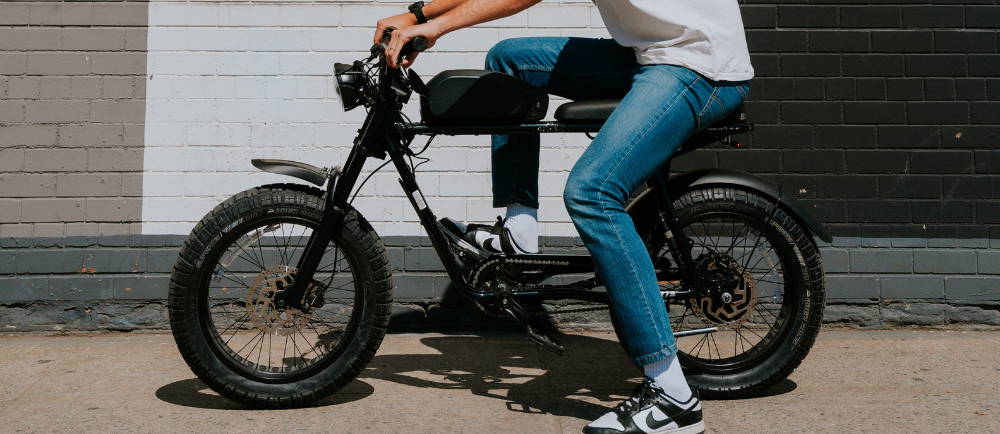
Where can you legally ride an e-Bike?
For most riders, the answer is clear: wherever regular bicycles are allowed, unless a local agency says otherwise. Roads, bike lanes, and many shared-use facilities are generally open to e-Bikes operating within the state’s legal definitions. Oklahoma traffic laws that apply to bicycles also apply to e-Bike riders. But the more complicated question involves trails. Class 1 and Class 2 e-Bikes are often permitted on many multi-use trails and shared pathways. Class 3 e-Bikes may have additional restrictions, particularly on recreational trails or facilities managed by local governments.
Natural-surface trails deserve extra attention. Access can vary depending on the land manager, city, park authority, or state agency involved. One trail system may welcome e-Bikes, while another nearby trail may restrict certain classes. That’s why checking signs at the trailhead is often more useful than relying on a statewide summary.
Why should you check local rules before riding?
Oklahoma’s statewide laws create the framework, but local governments still have authority over many riding areas. Cities, counties, parks, and trail managers can establish rules for where e-Bikes may be used. That means sidewalk access, trail access, park access, and speed restrictions can vary from one community to the next.
A rider using a Class 1 commuter e-Bike in Tulsa may face different path rules than someone riding a Class 3 e-Bike in Oklahoma City or on a regional trail system. When in doubt, check local signage and posted regulations before riding.
How Upway helps Oklahoma riders choose the right e-Bike
In Oklahoma, where trail access and Class 3 rules can vary, choosing the right class matters almost as much as choosing the bike itself.
That means if your riding revolves around bike paths, neighborhood streets, rail trails, and casual recreation, a Class 1 or Class 2 e-Bike often provides the broadest flexibility. A Class 3 e-Bike can make sense for faster road commuting, but it’s worth understanding the age and speedometer requirements, as well as any trail restrictions, first.
Before you buy, make sure you’re choosing the class that fits how you’ll actually ride. And remember, when shopping on Upway, every certified pre-owned e-Bike goes through a 50-point inspection before it’s listed, and the Bikes come with a 1-year warranty and a 14-day return period.
And when shopping on Upway, starting with a clearly identified bike makes it easier to choose a model that fits Oklahoma’s rules, and the type of riding you actually plan to do.
Frequently Asked Questions
Are e-Bikes legal in Oklahoma?
How old do you have to be to ride a Class 3 e-Bike in Oklahoma?
You must be at least 16 years old to operate a Class 3 e-Bike in Oklahoma. Riders under 16 may ride as passengers on qualifying bikes.
Can you ride an e-Bike on Oklahoma trails?
Sometimes. Access depends on the class of e-Bike and the rules of the agency or local authority managing the trail. Class 1 and Class 2 e-Bikes generally feature broader trail access than Class 3 models.
Key Takeaways
- Oklahoma uses the three-class e-Bike system and limits motors to 750 watts.
- Riders must be at least 16 years old to operate a Class 3 e-Bike, and Class 3 bikes must have a speedometer.
- Trail access varies by e-Bike class and local authority, so always check local rules before riding.