No. All three classes are treated as bicycles under state law and don’t require a driver’s license, registration, or insurance.
West Virginia E-Bike Laws and Regulations (2026 Update)
Written by: Tom Fortune | July 1, 2026 | Time to read 5 min
West Virginia has some of the best trail riding on the East Coast, and the state’s e-Bike rules are pretty straightforward. Here’s what you need to know before you head out.

More about the Author: Tom Fortune
Tom is a Brit living in the French Alps. When he's not creating written and video content for various brands, he's either pedalling or snowboarding around his local mountains. E-Bikes have unlocked the potential for Tom to explore Alpine terrain and get away from the crowded bike parks. He is only too keen to share his knowledge and experience with other riders.

West Virginia adopted its three-class e-Bike framework in 2023, and the law has been the same ever since. The state is broadly welcoming to e-Bikes, and with trails like the Greenbrier River Trail and access to the Monongahela National Forest, there’s plenty of good riding to be had here. Here’s a simple summary of the electric bike laws to keep you on the right side of the rules.
How Virginia Defines an E-Bike
Under West Virginia law, an electric bicycle is a two or three-wheeled vehicle with fully operable pedals, and the electric motor cannot be more powerful than 750 watts. If your bike fits that description and falls into one of the three classes below, it’s treated as a bicycle, not a motor vehicle.
If your electric bike has more than 750 watts or can go faster under assistance than your class speed limit, it is considered a moped or motorcycle, which brings a whole different set of rules.
Every electric bicycle sold in West Virginia must have a permanent label showing the class, top assisted speed, and motor wattage. Modifying a bike to change its speed capability without updating the label is illegal.
The Three E-Bike Classes
| Class | Motor type | Max assisted speed | Speedometer required | Helmet required | Min age |
|---|---|---|---|---|---|
| Class 1 | Pedal-assist only | 20 mph | No | No statewide mandate* | None |
| Class 2 | Pedal-assist + throttle | 20 mph | No | No statewide mandate* | None |
| Class 3 | Pedal-assist only | 28 mph | Yes | No statewide mandate* | 16 |
*Riders aged 14 and under must wear a helmet on all classes statewide.
In all three classes, the motor must disengage when you stop pedaling or apply the brakes.
License and Registration Requirements
West Virginia keeps it simple for riding an e-Bike, as you don’t need a driver’s license, registration, title, or insurance. All three classes are treated as bicycles as long as they fit the definition above.
👋 Welcome to Upway!
Upway is your top destination for buying and selling e-Bikes online. Discover your next e-Bike at up to 60% off retail prices, available in new or like-new condition.
Where You Can Ride
Class 1 and Class 2 e-Bikes can ride anywhere traditional bicycles are allowed in West Virginia. That means you’ll have no problems riding electric bikes on public roads, bike lanes, and multi-use public bicycle paths across the state.
But if you have a Class 3 electric bike, the rules for riding off-road are different; this is something to keep in mind if you like riding high-power e-MTBs. Under West Virginia law, Class 3 is not permitted on bike paths, multi-use paths, or single-use trails unless the path runs alongside a highway or roadway, or the relevant local or state agency expressly permits it. But it is fine to ride Class 3 bikes on public roadways, like any other bicycle.
Sidewalks are managed locally. West Virginia doesn’t have a statewide sidewalk ban on e-Bikes, but several cities have their own rules. Wheeling bans bikes from sidewalks in the business district. South Charleston has a citywide ban. Morgantown bans sidewalk riding in business districts and has age-based limits elsewhere. Always check local ordinances before riding on sidewalks in unfamiliar areas.

E-Bikes on West Virginia Trails and Public Lands
West Virginia’s mountain bike scene is one of the best, and e-Bike access is generally good. Here’s how it breaks down:
- Greenbrier River Trail: Class 1 and Class 2 e-Bikes are permitted on this 78-mile rail-trail, one of the longest and most scenic in the state. It follows the Greenbrier River through remote Appalachian countryside, crosses 37 bridges, and passes through two tunnels. Check posted rules at trailheads for any current notices.
- North Bend Rail Trail: E-Bikes are permitted. Follow posted signage for any local restrictions on specific sections.
- Monongahela National Forest: This is one where West Virginia differs from most states. The Monongahela National Forest explicitly permits all three classes of e-Bikes on roads where motorized vehicles are allowed. Check the forest’s Motor Vehicle Use Maps for specific route designations before riding. Wilderness areas and special management zones, like Cranberry Glades, are off-limits to all bikes.
- New River Gorge National Park: National Park Service jurisdiction. E-Bikes are permitted on park roads and in areas where traditional bikes are allowed. NPS rules can vary by park section, so verify current access before riding singletrack.
- Hatfield-McCoy Trails: These are dedicated OHV (off-highway vehicle) trails, not mountain bike or e-Bike trails. They require permits and helmets for all riders and are designed for full-size ATVs, side-by-sides, and dirt bikes. Standard e-Bikes are not appropriate for these trails.
- West Virginia State Parks: Most state parks allow e-Bikes on rail-trails. Singletrack is generally Class 1 only. Always check the specific park’s current policy before riding.
Helmet Requirements
West Virginia’s bicycle helmet rule is simpler than those of some neighboring states. There’s no statewide requirement for adults on any class of e-Bike.
The one exception is age. Riders aged 14 and under must wear a properly fitted helmet on any class of e-Bike. For Class 3, there’s no separate helmet mandate for adults, but the minimum age of 16 applies.
Helmet use is strongly recommended for all riders, and it is required for access to some trails and events.
Age Requirements
Class 1 and Class 2 electric bikes have no minimum age under West Virginia state law. For Class 3, riders must be at least 16 years old. This is worth noting if you’re buying a fast pedal-assist bike for a teenager.
Equipment Requirements
For night riding, West Virginia requires a white front lamp and a red rear lamp or reflector. Class 3 e-Bikes must also be fitted with a speedometer. All e-Bikes must meet Consumer Product Safety Commission manufacturing standards.
Local Rules Worth Knowing
Wheeling: Bicycles and e-Bikes are banned from sidewalks in the business district.
South Charleston: No sidewalk riding permitted citywide unless the sidewalk is specifically designated for cycling.
Morgantown: Sidewalk riding is banned in business districts. Age-based limits apply elsewhere in the city.
Ranson and Charlestown: Both cities don’t allow you to ride on sidewalks. Charlestown also has specific street prohibitions. Check local ordinances before riding in either town.
There are no active state-level e-Bike rebate programs in West Virginia as of 2026. Check with your local utility for any regional incentives.
Buying an E-Bike in West Virginia
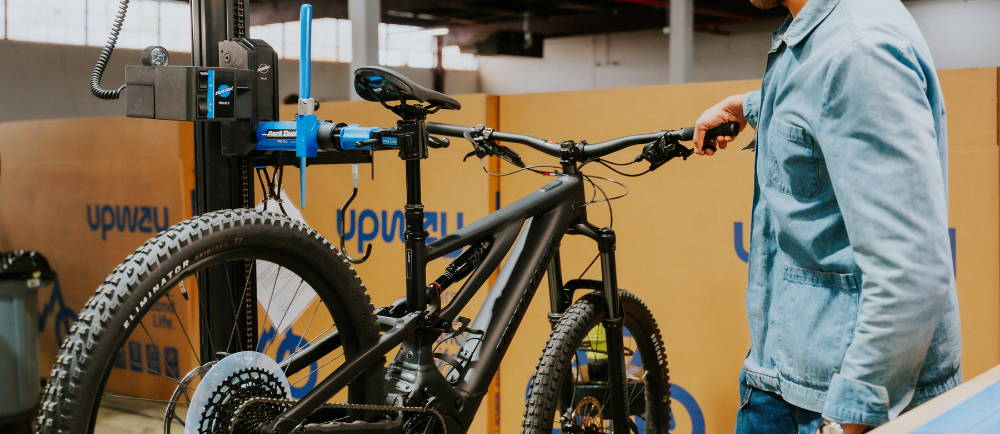
West Virginia is a great state for owning an e-Bike, with rail-trails, gravel roads, and access to national forests. Buying pre-owned is one of the most cost-effective ways in. Every e-Bike on Upway goes through a 50-point inspection before going on sale, and each listing shows the class label, motor wattage, and completed charge cycle count.
The licensing and registration rules for electric bikes are quite simple but it’s worth looking into e-Bike regulations and laws before you head out somewhere new.
Browse Class 1 e-Bikes, Class 2 e-Bikes, or Class 3 e-Bikes on Upway, or explore electric mountain bikes and the full range of certified pre-owned e-Bikes available for West Virginia riders.
Frequently Asked Questions
Do I need a license or registration to ride an e-Bike in West Virginia?
What is the minimum age to ride a Class 3 e-Bike in West Virginia?
16 years old. There is no minimum age for Class 1 or Class 2.
Do I need to wear a helmet to ride an e-Bike in West Virginia?
No statewide requirement for adults. Riders aged 14 and under must wear a helmet in any class. Helmet use is strongly recommended regardless.
Are e-Bikes allowed on the Greenbrier River Trail?
Yes. Class 1 and Class 2 e-Bikes are permitted. Check posted signage at trailheads for any current notices.
Are e-Bikes allowed in the Monongahela National Forest?
Yes, all three classes are permitted on roads where motorized vehicles are allowed. Check the forest’s Motor Vehicle Use Maps for specific route access. Wilderness areas are off limits.
Can Class 3 e-Bikes use multi-use paths in West Virginia?
Not by default. Class 3 is restricted from bike paths, multi-use paths, and single-use trails unless the path runs alongside a highway or the relevant agency specifically permits it.
Key Takeaways
- West Virginia treats e-Bikes as bicycles under state law, with no license, registration, or insurance required for any class. Riders aged 14 and under must wear a helmet, and Class 3 riders must be at least 16 years old.
- The Greenbrier River Trail welcomes Class 1 and Class 2 e-Bikes, and the Monongahela National Forest permits all three classes on roads open to motorized vehicles, which provides broader access than most national forests in neighboring states.
- Class 3 e-Bikes are restricted from bike paths, multi-use paths, and single-use trails by default. Local sidewalk rules vary by city, so check before riding in unfamiliar areas.