No. North Carolina currently uses its own classification system based on Electric Assisted Bicycles and Mopeds. Legislation to adopt the three-class system has been proposed, but as of 2026, there is no confirmed implementation date.
North Carolina E-Bike Rules and Regulations (2026)
Written by: Kazim Ladimeji | June 27, 2026 | Time to read 6 min
As a resident or visitor in North Carolina, it's important to understand the state's electric bike laws. From licensing and insurance requirements to trail access and sidewalk riding restrictions, these regulations directly affect where and how you can legally ride your e-Bike.

More about the Author: Kazim Ladimeji
Kazim is a UK-based cyclist and writer who discovered his passion for riding during lockdown six years ago and hasn’t looked back since. He now rides around 100 miles a week, exploring road and light gravel routes from his base in the Cotswolds, a cycling paradise. When he’s not riding or writing about e-Bike trails in the US, he’s exploring cafés, cooking, and keeping busy as a soccer dad
North Carolina takes a different approach to electric bike regulation than many states. Rather than adopting the familiar three-class e-Bike system used in states such as California and New York, North Carolina distinguishes between “Electric Assisted Bicycles” (Class 1 and Class 2 equivalent) and “Mopeds” (Class 3 equivalent).
This distinction is important because so-defined "Electric Assisted Bicycles" in North Carolina generally enjoy many of the same rights and privileges as traditional bicycles, while vehicles classified as "Mopeds" face additional registration, insurance, helmet requirements, and age restrictions.
Because of these differences, it's worth understanding how North Carolina classifies electric bikes and what e-Bike laws apply to each category before you ride.
👋 Welcome to Upway!
Upway is your top destination for buying and selling e-Bikes online. Discover your next e-Bike at up to 60% off retail prices, available in new or like-new condition.
Table of Contents
What is an e-Bike in North Carolina?
What are the electric bike laws in North Carolina in 2026?
Do electric bikes in North Carolina require labeling reflecting motor wattage and maximum speed?
Where can I ride my electric bicycle in North Carolina?
What are North Carolina's rules on lighting, reflectors, and other equipment on electric bicycles?
Frequently Asked Questions
What is an e-Bike in North Carolina?
North Carolina does not use the 3-class system for classifying electric bikes, which has been adopted by many states in the US, such as California and New York. Legislation to adopt the three-class system is underway, but there is no implementation timeline as of yet.
Under Chapter 20 of the General Statutes, North Carolina uses the terms: Electric Assisted Bicycles, Motor Driven Cycles, and Mopeds.
Electric Assisted Bicycles (Class 1 and Class 2)
As well as a saddle and fully operable pedals, an electric-assisted bicycle has an electric motor with a maximum power output of 750 watts and a maximum speed of 20 mph when powered exclusively by the motor. These are broadly equivalent to Class 1 and Class 2 e-Bikes under the three-class system adopted by most other US states.
But, where do Class 3 e-Bikes fit under North Carolina traffic laws?
Moped (Class 3)
A moped is a vehicle with 2 or 3 wheels, fully operable pedals, with a motor larger than 750 watts and a maximum speed between 20 mph and 30 mph. These are broadly equivalent to Class 3 e-Bikes under the three-class system that most states in the US use.
Under North Carolina General Statutes, any e-Bike with a maximum speed over 30 mph does not meet the definition of an Electric Assisted Bicycle or a Moped and therefore falls under the additional classification of a motorcycle or motor vehicle (subject to even more rules and requirements).
- Class 1 - Electric bicycle: Thistype of electric bike is the closest to a normal bicycle, having pedalassist only. This motor only assists when the rider is pedaling and cutsout at 20 mph, about twice the typical speed of a commuter on atraditional bike, shortening bicycle commute times.
- Class 2 - Electric bicycle:This type of electric bike also comes with pedal assist. But, like amotor bike, it has a throttle which when engaged by the rider powers thebicycle even when not pedaling but cuts out at 20 mph, shortening commute times and eliminating rider effort.
- Class 3- Electric bicycle:This type of electric bicycle comes with pedal assist only. This motoronly assists when the rider is pedaling and cuts out at 28 mph, aboutthree times the typical speed of a commuter on a traditional bike, dramatically shortening commute times.
What are the electric bike laws in North Carolina in 2026?
The University of North Carolina Criminal Law Department has expertly decoded the North Carolina e-Bike law, and I have summarized the main points below:
Electric Assisted Bicycles
Electric-assisted bicycles (Class 1 and Class 2) in North Carolina are generally treated the same as normal bicycles and do not need a license or registration. As with normal bicycle laws, helmets are mandatory for all riders of electric-assisted bicycles under the age of 16.
Electric Mopeds
Mopeds (Class 3 e-Bikes) are not treated like normal bicycles and face additional restrictions, which include:
- Minimum age of 16 years to ride
- Must maintain liability insurance
- Helmets are mandatory for riders and passengers of all ages
- Must be registered with the Department of Motor Vehicles
Do electric bikes in North Carolina require labeling motor wattage and maximum speed?
Under the three-class system, electric bikes must have affixed by the manufacturer or distributor a permanent, easily readable label containing the class, maximum speed, and motor wattage.
North Carolina has not adopted the three-class system (or any similar requirement), and therefore, electric bikes in North Carolina do not need this type of classification labelling.
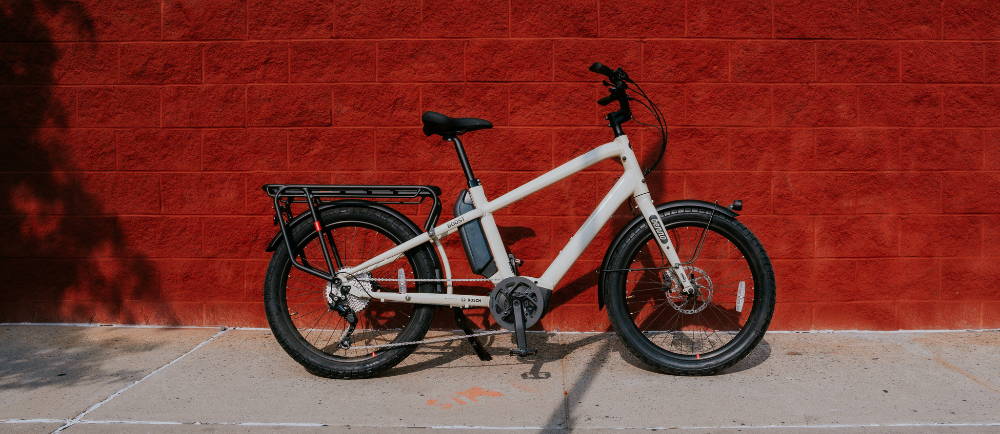
Where can I ride my electric bicycle in North Carolina?
Bicycles, electric bicycles, and mopeds are legally classified as vehicles when on the road, meaning that general traffic law applies to their operation.
In North Carolina, Electric Assisted Bicycles (Class 1 and Class 2) are classified as bicycles and can generally be ridden anywhere that normal bicycles can go, including highways, roadways, bike lanes, and bike paths.
Mopeds (Class 3 electric bikes) are not classified as bicycles and may face additional restrictions in off-road locations.
Sidewalk cycling
NC State law does not prohibit sidewalk cycling, but it does allow local municipalities to set their own city ordinances, and many do impose local restrictions to enhance pedestrian safety.
For example, Charlotte (the largest city in North Carolina) permits the riding of electric bikes on sidewalks apart from the area bounded by Church Street, Brooklyn Village Avenue, College Street, and 7th Street, where it has deployed preventative sidewalk detection technology.
From my experience, sidewalk riding is heavily restricted across the US, especially in downtown areas, and I recommend that riders always check local signage before attempting to ride on sidewalks in North Carolina municipalities, especially if riding mopeds (Class 3 e-Bikes).
North Carolina State Parks
Electric Assisted Bicycles (Class 1 and Class 2 e-Bikes) are allowed on all trails that permit normal bicycles. On multi-use trails, all bicycles must yield to both hikers and equestrians.
Blue Ridge Parkway
This route consists of 469 miles of trails across North Carolina and Virginia. Bicycles, including e-mountain bikes, electric gravel bikes, and e-hybrids, can be ridden on paved road surfaces. E-Bikes are allowed to be ridden in areas where traditional (non-motorized) bicycles are allowed.
Where can I ride my electric bicycle in North Carolina?
According to the Missouri Vehicle Code, electric bicycles (Class 1, Class 2, and Class 3) can ride wherever traditional bicycles can ride in Missouri, unless prohibited by local ordinance or rules. This includes highways, shoulders, public roads, public streets, bicycle lanes, multi-use paths, bike paths, and parks and trails.
Riding on trails
Electric bicycle access to natural trails designated as non-motorized with a natural surface tread may be regulated by local authorities with jurisdiction over the trails and bicycle paths, so check local government ordinances before riding in these areas.
It's important to check local government ordinances before riding in these areas.
Katy Trail State Park
Missouri State Parks are generally welcoming to electric bicycles. The Katy Trail State Park, in particular, has been specially designed for walking and bicycling. No motorized vehicles are allowed on this 240-mile trail, but bicycles, pedal-assisted electric bicycles, and tricycles are allowed. There is a 20 mph speed limit.
Sidewalks
The Missouri Model Vehicle Code (Chapter 300) does allow electric bicycles to be ridden on sidewalks, except in business districts where e-Bike riding on sidewalks is prohibited. Under the Missouri Vehicle Code, electric bicycle riders are expected to yield to pedestrians when on sidewalks and give an audible warning signal before overtaking or passing a pedestrian.
What are North Carolina's rules on lighting, reflectors, and other equipment on electric bicycles?
North Carolina requires bicycles and Class 1, 2, and 3 electric bikes ridden at night to have the following equipment:
- A white lighted lamp on the front
- A red rear light or rear reflector
- A rear reflector
- Working brakes
- A bell or other audible device
Frequently Asked Questions
Does North Carolina follow the three-class system for e-Bikes?
Do I need a license, registration, or insurance to ride an e-Bike in North Carolina?
It depends on the type of e-Bike.
Electric Assisted Bicycles (equivalent to Class 1 and 2 e-Bikes) do not require a driver's license, registration, title, or insurance.
Mopeds (equivalent to many Class 3 e-Bikes) require registration, liability insurance, and riders must be at least 16 years old.
Can I ride an electric bike on bike paths and trails in North Carolina?
Usually, yes for Electric Assisted Bicycles.
Electric-assisted bicycles are generally allowed wherever traditional bicycles are permitted, including many state park trails and paved recreational routes.
Mopeds may face additional restrictions, so always check local ordinances and trail signage before riding.
Key Takeaways
- Electric-assisted bicycles are generally treated like traditional bicycles and do not require registration or insurance.
- Mopeds face additional requirements, including registration, liability insurance, bicycle helmet use, and a minimum rider age of 16.
- Electric-assisted bicycles are generally permitted on state park trails that allow bicycles.