There’s no set number. A big battery helps, but hills, wind, cold weather, cargo, and how much assist you use can make a big difference. Use the manufacturer’s range number as a rough guide and leave some extra battery.
How Far Can an E-Bike Really Go?
Written by: Chris Van Leuven | September 21, 2026 | Time to read 6-7 min
How far can an e-Bike really go? Learn how watt-hours, battery capacity, hills, pedal assist, rider weight, weather, and terrain affect real-world range.

More about the Author: Chris Van Leuven
Chris is a writer, climber, and founder of Yosemite E-Biking in Mariposa, CA. When he’s not tackling Sierra Foothills trails or scaling rock walls, he’s crafting adventure stories with his boxer, Fenster. His work has appeared in Outside, Men’s Journal, Gripped, and Best American Sports Writing.
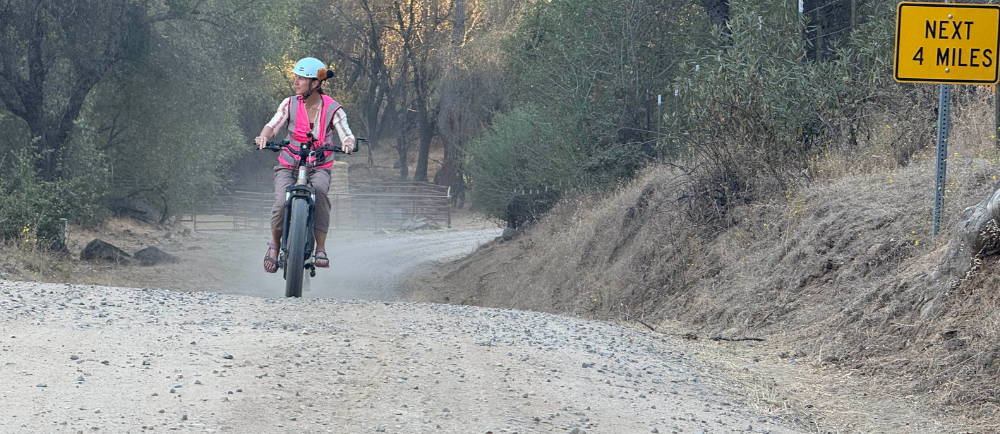
That 60-mile estimated e-Bike range sounds pretty straightforward until the road goes uphill. And remember, the number on the spec sheet is useful, but it isn’t a promise. Two riders can start with the same battery, cover the same distance, and come home with very different amounts of battery left. That’s because hills do matter; as do rider weight, cargo, wind, temperature, and how much assist you use.
The better question isn’t simply, “How far can an electric bike go?” It’s how far this e-Bike can go on the ride you’re planning. In this blog, I’ll cover advertised versus real-world e-Bike range, what watt-hours tell you, why elevation matters so much, and how to get a reasonable idea of whether you have enough battery to get home.
👋 Welcome to Upway!
Upway is your top destination for buying and selling e-Bikes online. Discover your next e-Bike at up to 60% off retail prices, available in new or like-new condition.
Table of Contents
How Far Can an E-Bike Go on One Charge?
There’s no satisfying answer. Some electric bikes can go well over 100 miles on a charge under the right conditions. Others are built around shorter rides and smaller batteries. Even with the same e-Bike, range can change quite a bit from one day to the next. A flat city commute at moderate speed and low assist isn’t the same as hauling groceries uphill on a cargo bike. And it has even less in common with climbing an e-MTB up a steep trail.
However, manufacturer range estimates are still worth looking at. Just watch the “up to” part. Maximum-range figures may be based on lower pedal assist, favorable weather, flatter terrain, a certain rider weight, and properly inflated tires. Real rides are different. Stoplights, hills, headwinds, cargo, and days when you use more assist because you’re tired or running late. If a bike advertises 60 miles of range, don’t automatically plan a 60-mile ride.
Understanding Battery Capacity and Watt-Hours
The battery’s watt-hour rating is a better place to start. It’s usually written as Wh and tells you how much energy the battery can store. If you only see voltage and amp-hours, multiply the two:
Voltage × amp-hours = watt-hours
A 48V, 10Ah battery, for example, has 480Wh of nominal capacity. It’s also easy to confuse battery and motor numbers on an e-Bike spec sheet. A 500Wh battery and a 500W motor sound similar, but they’re describing two different things.
| Number on the spec sheet | What it tells you |
|---|---|
| Watt-hours (Wh) | How much energy the battery stores |
| Voltage (V) | Part of the battery/electrical specification |
| Amp-hours (Ah) | Combine with voltage to calculate Wh |
| Motor watts (W) | Motor power rating, not riding distance |
| Advertised range | Manufacturer estimate |
| Battery display | Estimated charge remaining |
None of those numbers can tell you exactly how far you’ll go. But Wh gives you something concrete to compare battery capacity between bikes. Then you have to look at the ride.
Hills Will Completely Change E-Bike Range
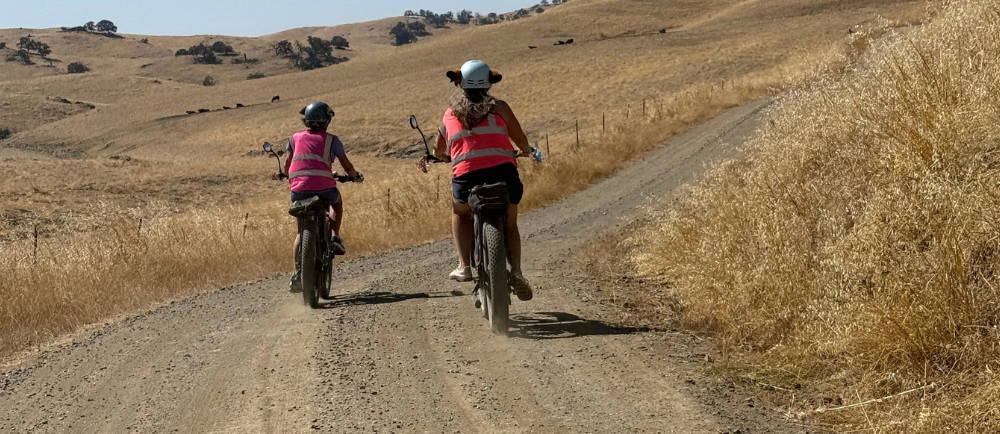
This is the big one for me. I ride a lot of hills here in California’s Sierra foothills. Riding into town can use only about 10% of my battery, but coming home on essentially the same route can take close to half since it’s roughly 2,000 feet of elevation gain to get home. And some of the full-day guided rides I do can approach a mile of vertical gain. At that point, I’m not interested in seeing whether the advertised range works out perfectly. That’s why I carry an extra battery for each bike. Twenty flat miles and 20 miles with 2,000 feet of climbing just aren’t the same thing.
If you live somewhere hilly or you’re planning a mountain ride, look at elevation gain along with mileage.
Why Range Changes from Ride to Ride
Of course, hills aren’t the only factor. Add a heavier rider, groceries, heavy gear, or a passenger and the motor has more weight to move. Tire pressure and tire choice also affect rolling resistance. Big, aggressively treaded tires are useful for certain kinds of riding, but efficiency isn’t why you bought them.
Assist makes a difference too. If you spend the day in a high pedal-assist setting or use the throttle often, you’ll drain the battery faster. Speed also costs energy, especially once wind resistance starts becoming a bigger factor, as does a headwind. Low temperatures can reduce available range, too. Put cold weather, a headwind, soft tires, and a lot of climbing together, and the battery gauge will drop much faster than it did on yesterday’s ride.
Upway goes deeper on those individual subjects in its e-Bike battery drain, tire type, and range, and cold-weather battery range blogs. To figure out range, the key is recognizing when several of those factors show up on the same ride.
🤝 Why you can trust us for buying an e-Bike?
- Great prices: Get your next e-Bike for up to 60% off retail prices, in new or like-new conditions.
- Quality Guaranteed: Every e-Bike is rigorously certified by a team of professional mechanics, and comes with a 1-year warranty.
- Delivered to Your Door: Delivered to your home within a week. Change your mind? Return it thanks to our 14-day return policy.
🚲 We also buy e-Bikes. Click here for an estimation!
Estimate Range and Leave a Buffer
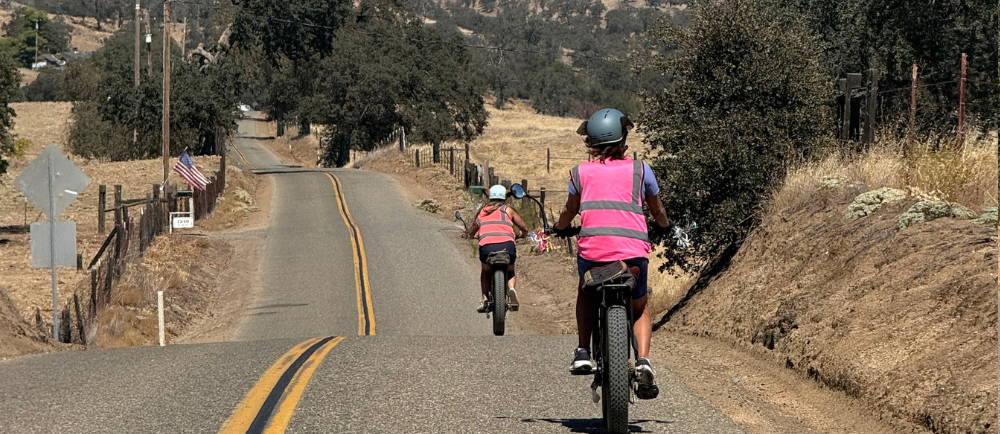
After you’ve ridden the same e-Bike for a while, your own numbers become pretty useful. Say you ride 20 miles and use about half of a 500Wh battery. Roughly speaking, you used 250Wh, or about 12.5Wh per mile.
Energy used ÷ miles ridden = approximate Wh per mile
I wouldn’t get too attached to that number, since it’s a reference. If you ride the same distance with a long climb, a headwind, more cargo, or a higher assist mode, it will change. You don’t even have to calculate Wh per mile if you don’t want to, as knowing that your regular commute normally takes about a quarter of the battery is useful on its own.
For a longer ride, I look at mileage and elevation first. Then I think about the terrain, weather, how much assist I’ll likely use, and whether there’s somewhere to charge if I need it.
A few things make me more conservative:
- Lots of climbing
- Heavy cargo
- High assist or throttle use
- Strong headwinds
- Cold weather
- High rolling resistance
I also don't plan to arrive home with the battery at 1% (but it’s happened plenty of times; I’ve also called for a pickup a bunch). A wrong turn or unexpected climb can wipe out that margin pretty quickly. For exploratory rides or anything with a lot of vertical, I carry an extra battery.
What Happens if the Battery Runs Out?
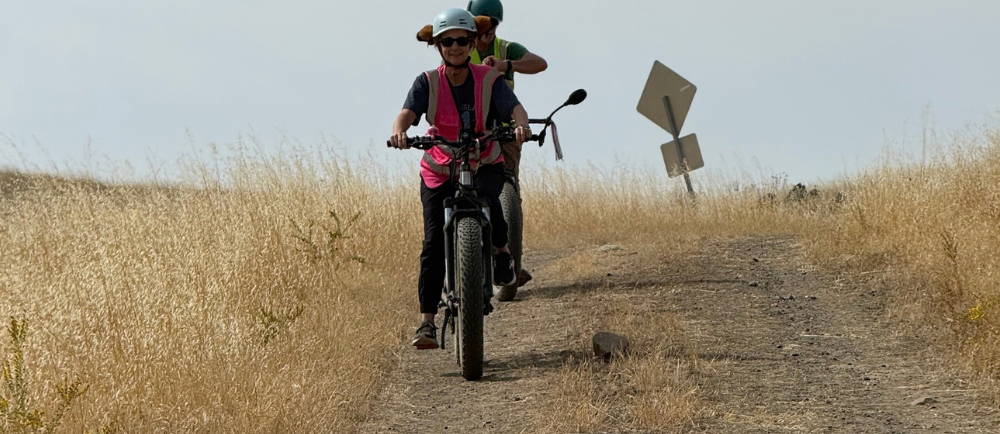
Technically, you still have a bicycle, but that doesn’t mean you’ll enjoy riding it. Most e-Bikes can be pedaled after the battery runs out, and I’ve done it on my fat-tire e-Bikes, including on the steep roads around where I live, and it’s awful. A lighter e-Bike on flat pavement is one thing. A heavy cargo bike or e-MTB at the bottom of another climb is something else. If the battery is disappearing faster than expected, don't wait until it hits zero. Lower the assist mode, shift into an easier gear, pedal more, and take the flatter way home if there is one.
Buy a Pre-Owned E-Bike on Upway and Save!
Range is worth considering when buying pre-owned because the battery on the bike today may not have the same capacity it had when it was new. That’s why Upway tests e-Bike batteries during reconditioning and replaces batteries that test below 80% of their original capacity.
When comparing bikes, check the battery capacity in watt-hours, then think about the riding you actually do. If most of your rides are 20 or 30 miles, you may not need a bike claiming 100 miles of range.
Frequently Asked Questions
How far will an electric bike go on a full charge?
Can an e-Bike go 100 miles on one charge?
Some can, especially e-Bikes with large or dual-battery systems and favorable riding conditions. That doesn’t mean every 100-mile range claim will translate into 100 real-world miles. Climbing, high assist, cargo, wind, speed, and cold weather cut into it.
How can I tell if my e-Bike has enough range for a ride?
Check the battery capacity, route distance, and elevation gain, then compare those numbers with battery use on similar rides. If the route is unfamiliar, hilly, or remote, leave yourself more battery than you think you’ll need. Or pack a spare.
Key Takeaways
- Don’t plan a ride around the advertised maximum. Range changes with the route, rider, conditions, and how much assistance you use.
- Watt-hours are useful, but they aren’t a mileage guarantee. They tell you how much energy the battery stores.
- Pay attention to what happens on your own rides. Mileage, elevation, and battery use on familiar routes are some of the best information you have for planning the next one.