Cold temperatures thicken the electrolyte inside lithium-ion cells, increasing resistance and slowing how quickly the battery can deliver power. It's a temporary chemical effect, not permanent damage, and most of the lost range comes back once the battery warms up.
Why Does My Electric Bike Battery Drain So Fast?
Written by: Tom Fortune | July 30, 2026 | Time to read 5 min
A battery that drains faster than expected isn’t necessarily broken. It could be just how you’re riding.

More about the Author: Tom Fortune
Tom is a Brit living in the French Alps. When he's not creating written and video content for various brands, he's either pedalling or snowboarding around his local mountains. E-Bikes have unlocked the potential for Tom to explore Alpine terrain and get away from the crowded bike parks. He is only too keen to share his knowledge and experience with other riders.
When I first started riding electric mountain bikes, I noticed that I only just made it home before my battery ran out on several occasions. This was a bit confusing to me, as I was sure I would have plenty of reserve power. It also caused quite a lot of range anxiety, especially as I live halfway up a mountain. I was convinced that there was a problem with my battery.
But with a bit of research and experience with e-Bike repair, I learned a lot about battery life over time. There are quite a few things that can affect range. In this guide, I’ll go through the common causes in order of likelihood, so you can work out why your battery drains quicker than you’d like it to.
👋 Welcome to Upway!
Upway is your top destination for buying and selling e-Bikes online. Discover your next e-Bike at up to 60% off retail prices, available in new or like-new condition.
Why E-Bike Batteries Drain Faster Than Expected
The range stated in e-Bikes’ spec sheets isn’t what you’d necessarily get in the real world. It's a rough estimate based on ideal conditions, and almost nothing about everyday riding matches those conditions exactly. Temperature, terrain, tire pressure, assist level, rider weight, and battery age all pull that number down in their own ways, and most of the time, riders are dealing with a combination of several of these at once rather than just one.
| What you notice | Likely cause | What helps |
|---|---|---|
| Range drops in cold weather, comes back when warm | Battery chemistry slowing down, not damage | Store indoors, ride on lower assist until warmed up |
| Range is consistently short, regardless of weather | High assist use, hilly routes, soft tires | Lower assist level, check tire pressure |
| Range has gotten worse over months or years | Aging battery, cell degradation | Check charge cycle count, consider replacement |
| Range varies wildly ride to ride | Cell imbalance, inconsistent riding conditions | Track a few rides to spot the pattern |
| Sudden shutdowns before the display reads empty | Voltage sag, weak cell groups | Get the pack tested at a shop |
Riding Style and Assist Level
The first thing that affects your electric bike’s range is something you have direct control over, and that’s how you ride.
Riding in Boost or the highest pedal-assist setting draws much more power than in Eco mode. The difference isn't small, often cutting the range by half or more, depending on the bike. If you use throttle mode a lot, it drains things even faster. This is because the motor ends up doing all the work instead of sharing it with your legs.
If you regularly ride your electric bike in busy cities, you will likely do a lot of stop-and-go riding. This is quite an inefficient way of riding, as every time you accelerate from a stop, the motor draws a spike of current that you don’t get when you're just holding a steady speed. So a start-heavy commute with many traffic lights will drain a battery faster than a longer ride at a consistent pace, even over a similar distance.
Weather and Battery Chemistry
The weather also affects how your e-Bike battery performs, as cold temperatures can reduce your range. Lithium-ion batteries move energy around using ions in a liquid electrolyte, and cold temperatures thicken that liquid, which slows the ions down. This forces the battery to work harder to deliver the same amount of power. Nothing about the battery is damaged in this process. It's just harder for it to move energy quickly when it's cold.
Riders in cold climates commonly see a 20 to 50% drop in usable range once temperatures fall below about 40°F, and it gets worse the colder it gets. Most of that loss comes back once the battery warms up again, though charging a battery while it's still cold can cause lasting damage, so it's worth letting a cold battery sit at room temperature for a while before you plug it in.
When you’re riding into a headwind, you’ll notice your battery level drops much quicker. The extra resistance means the motor has to work harder, demanding more from the battery. There’s not much you can do about this, but it’s worth knowing about when you’re trying to manage your battery life on a long ride.
Tire Pressure and Rolling Resistance
This is one I didn't think about for a long time, but it makes a noticeable difference. Soft tires force the motor to work harder to hold the same speed, since rolling resistance goes up with lower pressures. Cold weather makes this worse on its own, too, because tire pressure drops roughly 1 psi for every 10°F the temperature falls, so a tire that was properly inflated back in summer can end up noticeably soft by winter without you having touched it.
Checking tire pressure before a ride takes a couple of minutes and usually just means pumping the tires up a bit.
Rider and Cargo Weight
The heavier the load, the more work the motor has to do, and that includes your own body weight and whatever you’re carrying. A heavier rider, a fully loaded cargo bike, or even a city bike will always use more battery per mile than the same bike ridden lighter and unloaded.
This isn't a problem to fix so much as something to keep in mind when you're comparing your range to someone else's on the same model. Two riders on identical bikes can get noticeably different ranges purely because of this.
Battery Age and Cycle Count
Every lithium-ion battery loses some capacity over time, regardless of how well you’ve looked after it. Most e-Bike batteries are rated for 500 to 1,000 full charge cycles before that decline becomes noticeable, and once a battery gets near or past that number, you'll see a shorter range even under conditions that used to give you full range.
This kind of decline is slow and expected. If your range has worn down gradually over a year or two of regular use, aging is probably the explanation.
Signs Something Might Be Wrong
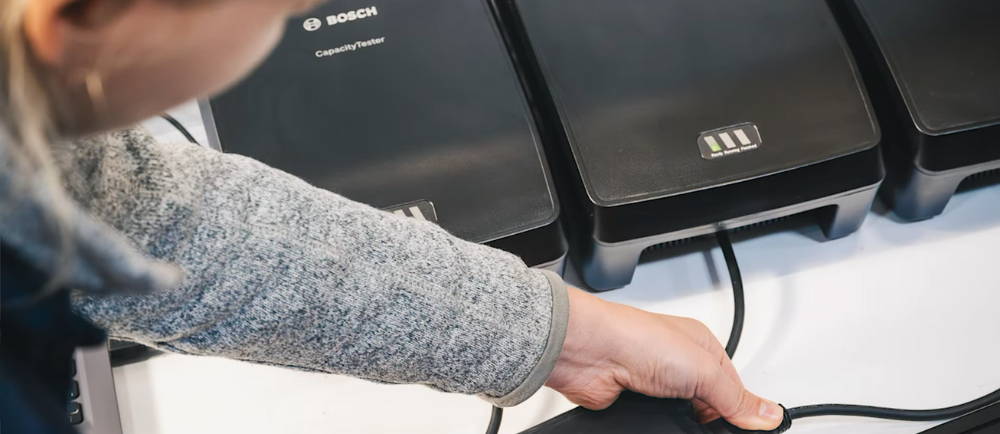
When your battery drains unexpectedly quickly, you can usually trace it back to the causes above. But there are a handful of things that can point to something worth paying closer attention to.
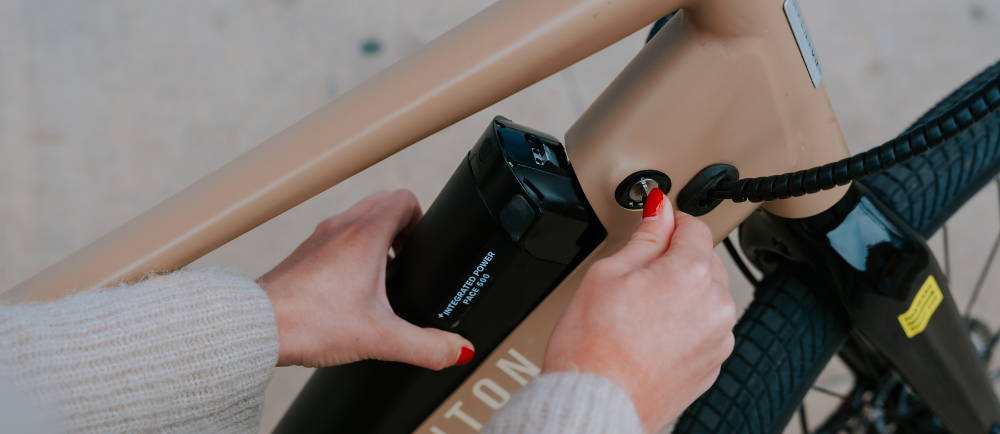
- A range drop that happens during a ride. Check your battery contacts first, on both the pack and the frame mount, since a loose or dirty connection can cause exactly this. If the contacts are clean and it still happens on the next ride, that's a sign for a shop to test the pack under load.
- Shutdowns at 30 or 40% charge, more than once. This is a voltage sag from a weak cell group, and it won't fix itself. Take it to a shop for a load test instead of continuing to ride around it, since it tends to get worse, not better.
- The percentage reading jumps around between rides on the same route. Try a full discharge down to near zero, followed by a full charge back to 100%. That single cycle sometimes allows the battery management system to recalibrate and stabilize the readings. If it's still jumping around after that, the cells themselves are likely imbalanced, and that needs a shop's diagnostic equipment to confirm.
- The bike feels weak or sluggish immediately after a full charge. This points to the battery struggling to deliver current, not a lack of stored energy, since the display would already be showing full. Get it tested instead of assuming a longer charge will help, since it won't.
- Physical warning signs. A battery that feels warm during normal use, looks swollen or misshapen, or has an unusual smell needs to stop being used immediately. Don't charge it again until a shop has looked at it. This isn't a DIY fix under any circumstances.
Getting More Range Out of Every Charge

There are a few things you can do to get the most out of your e-Bike battery:
- Keep the assist level lower on flat ground. Save Boost or throttle for hills and headwinds. Starting a ride in Eco and only stepping up when the terrain calls for it uses noticeably less power than riding the whole route in boost.
- Use a thermal cover. If you ride your e-Bike during the winter and notice your battery isn’t working well, try wrapping it in an insulated sleeve.
- Ride smoothly. Gentle acceleration from a stop uses less energy than repeated hard starts. On a route with many traffic lights, coasting to a stop and accelerating gradually adds up over a full ride.
- Check tire pressure regularly. A quick pressure check and sufficient inflation can restore your e-Bike's efficiency.
- Keep in mind how much you're hauling. Cargo, a passenger, or a strong headwind all add up, so don't expect the same range on a loaded ride as an empty one.
- Avoid charging to 100% or draining to 0% every time. Most lithium-ion batteries last longer when kept between roughly 20% and 80% for daily use, and only charged fully before a long ride where the extra capacity is needed. Constant full cycles put more stress on the cells over time than partial ones do.
- Don't leave the battery on the charger for days at a time. Charging fully and then leaving it plugged in isn't necessary once it's topped up. Also, prolonged time at 100% charge is one of the things that speeds up long-term capacity loss.
- Store the battery properly. If you're not riding for a while, charge it to around 40-60%. Always storing it in a cool, dry spot indoors is better for the battery than leaving it fully charged or empty in hot or cold conditions.
- Keep the drivetrain clean and lubricated. A dry or gritty chain adds mechanical resistance that the motor has to work against. Basic chain maintenance indirectly helps your range, along with everything else.
- Plan routes with elevation in mind if range is tight. A route that looks similar in distance but has more climbing will use noticeably more battery, so checking elevation gain ahead of a long ride can save you from getting caught out.
Buying a Pre-Owned E-Bike
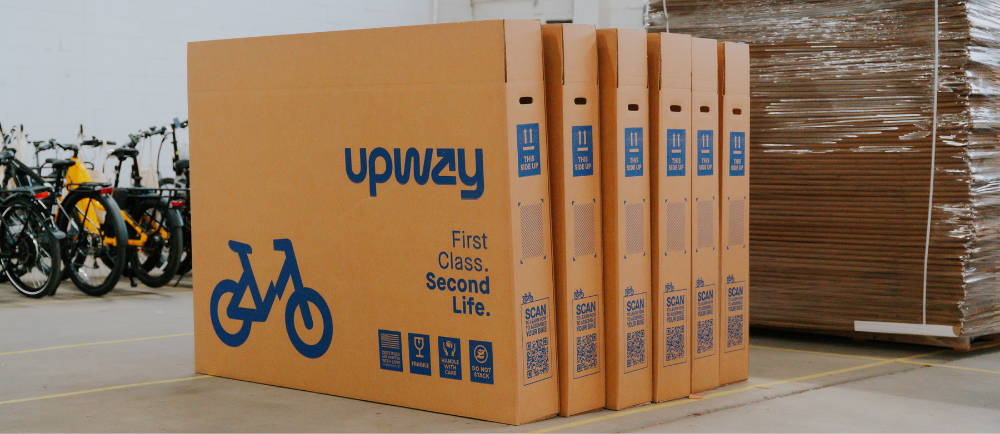
If you're shopping for a used e-Bike, battery health is the one thing you really can't judge for yourself on a quick test ride around the block. A battery pack with an early cell imbalance can ride perfectly fine for ten minutes and only show its problems once you're a few miles from home.
That's the kind of thing Upway checks before a bike ever gets listed. Every used e-Bike goes through 50 separate inspection points, and if a battery's capacity has dropped below 80%, it gets swapped out before the listing goes live. You end up knowing what you're buying instead of hoping for the best.
Frequently Asked Questions
Why does my e-Bike's range drop so much in winter?
Does riding in a higher assist level really drain the battery that much faster?
Yes. Higher assist levels and throttle use draw significantly more current from the battery than lower assist settings. This can often cut the range by half or more, depending on the bike and terrain.
How do I know if my battery is just aging or has a bigger problem?
Gradual decline over months or years, roughly matching the number of charge cycles the battery has undergone, is normal aging. A sudden, dramatic drop with no change in conditions, or shutdowns well before the display reads empty, are worth getting checked by a shop.
Can underinflated tires really affect e-Bike range?
Yes. Soft tires make the motor work harder to hold speed, and it's one of the simplest things to check before assuming something bigger is wrong.
Should I charge my battery after a winter ride if it's cold?
Let it warm up to room temperature first if you can, since charging it while it's still cold can cause lasting damage, even though riding it cold doesn't.
Key Takeaways
- Most fast battery drain comes down to ordinary factors like assist level, cold weather, tire pressure, rider or cargo weight, and wind, not a failing battery.
- Cold weather can cut range by 20 to 50%, and that loss is usually temporary, reversing once the battery warms back up.
- A sudden, dramatic drop in range, shutdowns before the display reads empty, or physical signs like swelling or an unusual smell are worth getting checked by a shop instead of being assumed to be normal.