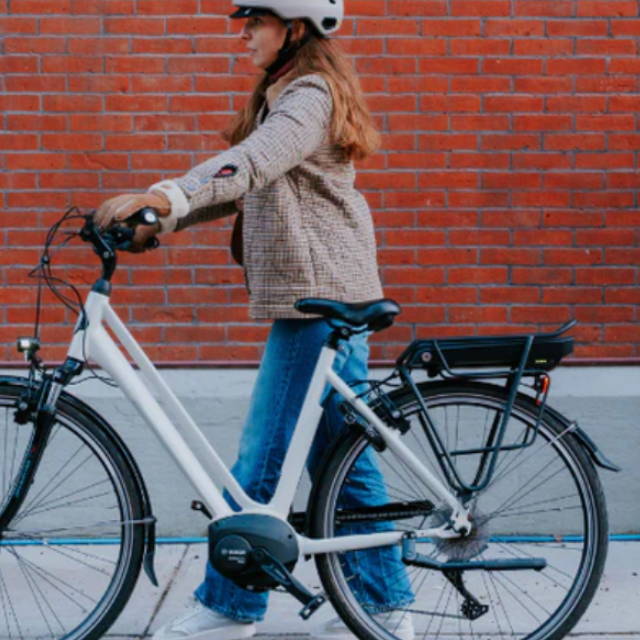
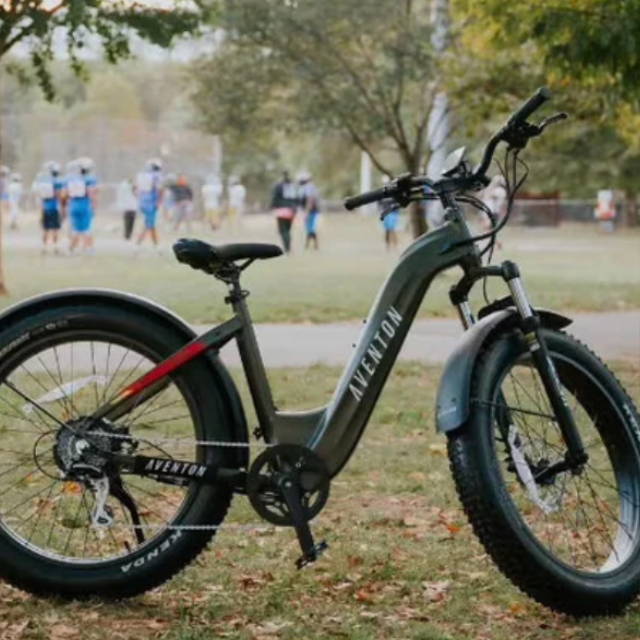
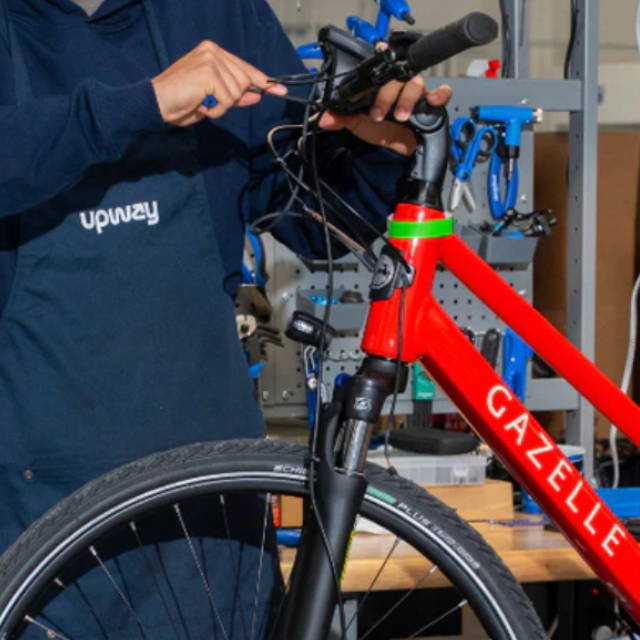
Start with tire pressure, brakes, chain care, and battery habits. Those four areas affect how the bike rides, stops, shifts, and holds its range. They’re also easy to check before small issues interrupt a ride.
E-Bike Maintenance for Beginners: Essential Tips
Written by: Chris Van Leuven | June 21, 2026 | Time to read: 6-7 min
Learn e-Bike maintenance for beginners, including tire pressure, brake checks, chain lubrication, battery care, cleaning, storage, software, and when to visit a mechanic.

More about the Author: Chris Van Leuven
Chris is a writer, climber, and founder of Yosemite E-Biking in Mariposa, CA. When he’s not tackling Sierra Foothills trails or scaling rock walls, he’s crafting adventure stories with his boxer, Fenster. His work has appeared in Outside, Men’s Journal, Gripped, and Best American Sports Writing.
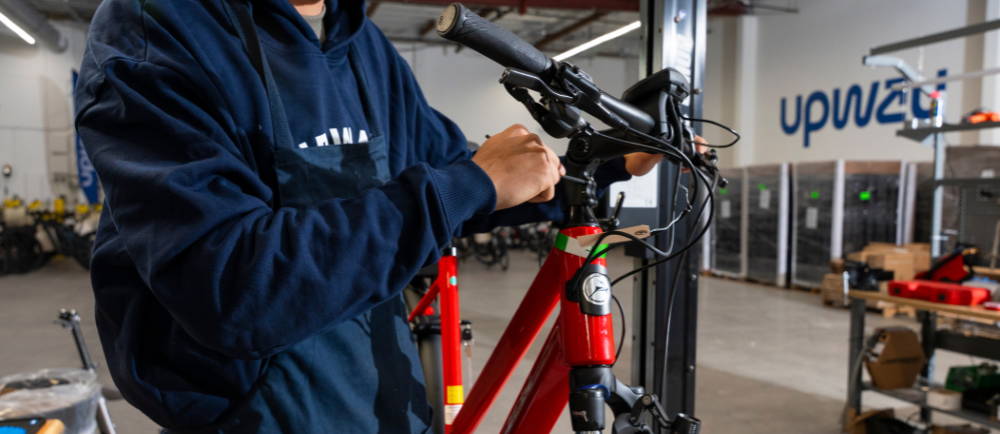
Your first e-Bike is usually a surprise. You buy it for commuting, errands, exercise, or getting out of the car more often, and then suddenly you’re taking the scenic way home because riding is more fun than driving.
Then the practical stuff shows up. How often should you pump the tires? Is that brake noise normal? Can you wash an e-Bike? Should the battery stay on the bike? And how do you know whether a sound is normal or worth a shop visit?
E-Bike maintenance for beginners doesn’t need to be complicated. You’re not trying to become a mechanic overnight. You’re learning a few habits that help the bike ride well and keep little annoyances from ruining a ride. This blog is for the first stretch of ownership, when you’re still learning the bike. I’ll cover the basic checks, how to clean and store an e-Bike, which issues usually pop up first, and when it’s best to call a mechanic.
👋 Welcome to Upway!
Upway is your top destination for buying and selling e-Bikes online. Discover your next e-Bike at up to 60% off retail prices, available in new or like-new condition.
Table of Contents
Start with a one-minute check
A good beginner routine starts with the parts most likely to affect how the bike rolls, stops, shifts, and powers on. This quick inspection is also known as an “ABC Check”— A for air, B for Brakes, and C for chain.
Check tire pressure before rides, especially if the bike has been sitting for a few days. Use the PSI range printed on the tire sidewall. Don’t rely solely on squeezing the tire to get a feel for the pressure, especially with fat tires, cargo tires, or wider commuter tires.
Next, squeeze both brake levers. They should feel firm and engage before the levers get too close to the grips. If the bike takes longer to stop, the lever pulls too far, or you hear grinding, scraping, or pulsing, don’t ignore it.
Look at the chain. It doesn’t need to look new, but it shouldn’t be dry, rusty, or packed with grit. Then check the battery. Make sure it’s seated, locked, and charged enough for the ride. Turn on the display, lights, and pedal assist before you start riding.
Here’s a simple beginner scan:
| Beginner check | What to look for | What it can prevent |
|---|---|---|
| Tire pressure | Correct PSI, tread damage, glass, thorns, sidewall cuts | Soft tires can reduce range, wear faster, and cause flats |
| Brakes | Lever feel, pad wear, rotor rub, scraping, weak stopping | E-Bikes are heavier, so weak brakes matter fast |
| Chain | Dry links, grit, rust, rough shifting | A neglected chain can wear drivetrain parts faster |
| Battery | Locked in place, correct charge, clean contacts | A loose or poorly cared-for battery can end the ride early |
| Loose parts | Rack, fenders, pedals, kickstand, bags, accessories | Small rattles can become missing bolts or bigger repairs |
Learn the bike’s normal rhythm

New e-Bike riders often worry about the motor first. That makes sense, as it’s the expensive part, and it’s what makes the bike feel different. But many e-Bike issues are the same problems you’d find on a regular bike.
Low tire pressure can make the bike feel sluggish. A rubbing brake rotor can make it feel like the motor is dragging. A dry chain can cause pedaling to feel like a grind. A loose rack bolt can sound worse than it is. On some bikes, a dirty or shifted speed sensor magnet can also cause odd assist behavior.
Learn the bike’s normal feel. Notice how the motor sounds under light assist, how the brakes feel when they’re working well, and how the gears shift when the drivetrain is clean.
When something changes, start with the visible stuff. Check air pressure. Spin the wheels. Look at the chain. Squeeze the brakes. Make sure the battery is locked in place. You don’t need to diagnose every problem at once.
Take care of the battery and charger
The battery is one of the most expensive parts of an electric bike, so treat it like something you want to last. Use the charger that came with the bike or a manufacturer-approved replacement. Charge in a dry place. Keep the charging port and battery contacts clean. Don’t charge in direct heat, heavy moisture, or freezing conditions.
If the battery is removable and the bike will sit for a while, store it indoors in a dry, moderate place. Don’t leave it empty for months. Don’t leave it in a hot car. And use the charger that’s designed to work with your battery.
Range changes with temperature, terrain, rider weight, cargo, and assist level. A shorter ride doesn’t automatically mean the battery is failing. But if the battery won’t charge, gets unusually hot, smells odd, has visible damage, won’t seat correctly, or keeps triggering errors, stop using it and contact the brand or an e-Bike mechanic.
Wash the bike without overdoing it
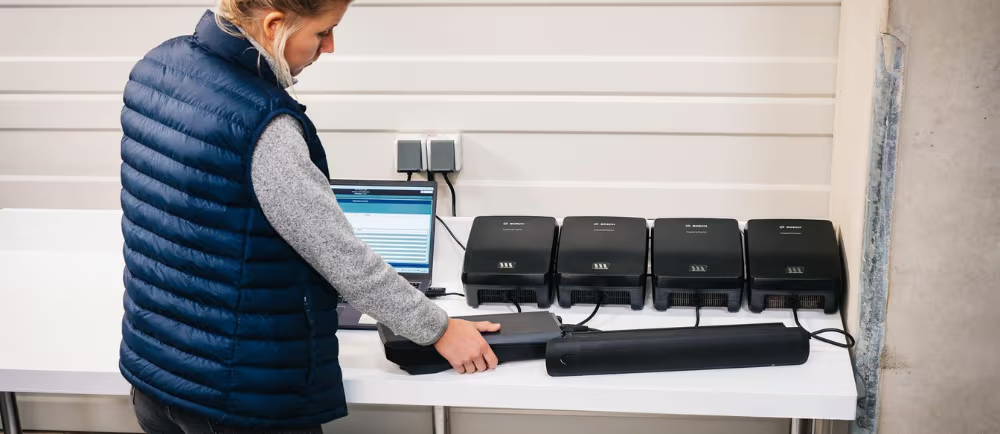
You can wash an e-Bike. Just don’t overdo it. Use a damp cloth, soft brush, sponge, and bike-safe cleaner. Be careful around the display, charging port, battery area, motor, connectors, brake calipers, and hubs. And avoid pressure washers, since water can get into bearings, connectors, battery mounts, displays, and other areas where you don’t want moisture.
After wet rides, wipe the bike before storing it. Salt, grit, and mud are hard on chains, bolts, brake rotors, spokes, and electrical contact points. And as for the chain, keep it simple: wipe it with a rag, add bike-specific lubricant to the rollers, let it settle, and wipe off the extra. More lube isn’t better. Keep sprays, oils, and chain lube away from brake rotors and pads.
Watch the first parts to make noise
The first parts you’ll usually notice are the parts touching the road, stopping the bike, or moving under power. That means tires, brake pads, chain, cassette, chainring, spokes, bearings, cables, and suspension parts if your bike has them.
E-Bikes ask more from these parts because they’re heavier and often used for transportation instead of occasional weekend loops. A commuter e-Bike, cargo e-Bike, or hill-climbing e-Bike will go through brake pads faster than a casual bike-path cruiser. Look at the pads before they’re gone. Listen for scraping. Pay attention to any change in lever feel.
Tires are just as important. Keep them inflated, inspect the tread for cuts, embedded glass, thorns, or exposed casing. City streets, gravel roads, construction zones, and rough terrain are all good places to pick up debris.
Mid-drive e-Bikes send motor power through the chain and gears, so chain care matters. Hub-drive e-Bikes don’t load the chain the same way, but the chain, derailleur, cassette, and shifter still need basic care.
Small noises are useful. A ping from a spoke, a new click near the crank, a brake squeal, or a rack rattle means the bike needs something to be looked at.
Adjust for weather, storage, and software
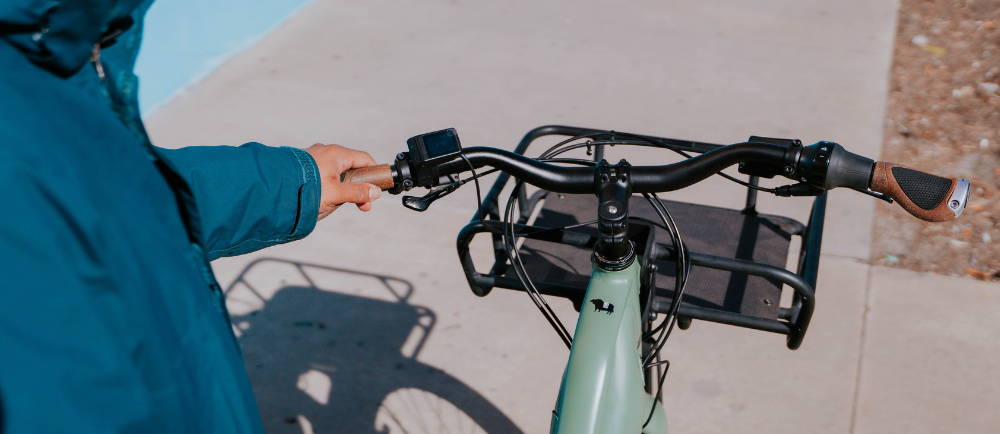
Your maintenance routine should match where you ride. A rider in Southern California won’t have the same maintenance routine as a winter commuter in Boston. Coastal riders deal with salt air. Mountain-town riders deal with climbs, dust, cold mornings, and long descents. City riders deal with potholes, glass, stop-and-go braking, and heavy locks hanging from the frame.
Indoor storage is best when you can manage it. A garage, apartment, shed, or bike room is easier on the battery, chain, display, saddle, bolts, and brake parts than leaving the bike exposed all season. If outdoor storage is your only option, use a quality cover and bring the battery indoors.
Software is part of owning many newer e-Bikes, too. Some systems use apps for firmware updates, diagnostics, ride settings, or service reminders. You don’t need to look for updates every ride, but don’t ignore the brand’s app or manual completely.
Know when to call a mechanic
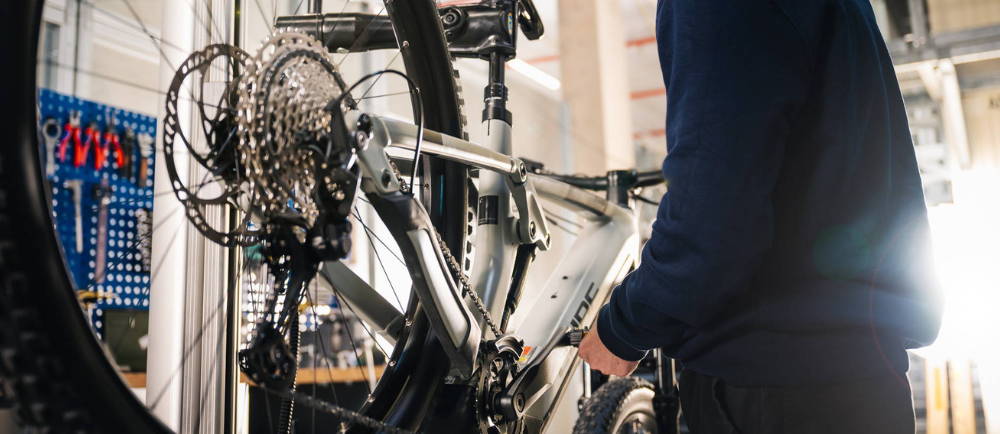
Beginner maintenance should make you more confident. You can handle tire pressure, basic cleaning, chain lubrication, loose accessory bolts, brake-pad checks, and simple visual inspections at home. You can also learn to fix a flat if the wheel and motor setup aren’t beyond your comfort level.
Call an e-Bike mechanic for hydraulic brake bleeds, persistent brake noise, weak braking, wheel truing, spoke tension, bearing noise, suspension work, motor issues, controller problems, battery faults, damaged wiring, repeated error codes, firmware problems, or anything that affects steering or stopping.
How Upway helps new e-Bike riders
If you’re buying your first e-Bike, maintenance is easier when you start with a bike that isn’t already hiding problems. That’s why Upway’s certified pre-owned e-Bikes undergo a 50-point inspection and are backed by a 1-year warranty and a 14-day return period.
You still have to maintain it, but you’re not starting from scratch. Keep the tires aired up, the chain clean, the brakes working, the battery charged, and the hardware tight. Then pay attention when the ride starts to feel different.
Frequently Asked Questions
What is the most important e-Bike maintenance for beginners?
How often should a beginner service an e-Bike?
Do a quick check before rides. Clean and lubricate the chain when it gets dirty or dry. Many riders should plan on a professional tune-up once or twice a year, depending on mileage, weather, cargo use, hills, and riding style.
Can beginners work on e-Bike motors or batteries?
Not beyond basic visual checks and proper charging habits. Motor repair, battery repair, controller issues, wiring damage, recurring error codes, and firmware problems should be handled by the brand, dealer, or an e-Bike mechanic.
Key Takeaways
- E-Bike maintenance for beginners starts with tire pressure, brakes, chain condition, and battery seating.
- Clean gently, avoid pressure washers, use the correct charger, and keep lubricant away from brake rotors and brake pads.
- Use an e-Bike mechanic for battery faults, motor issues, wiring damage, repeated error codes, hydraulic brake service, wheel problems, or anything that affects steering or stopping.