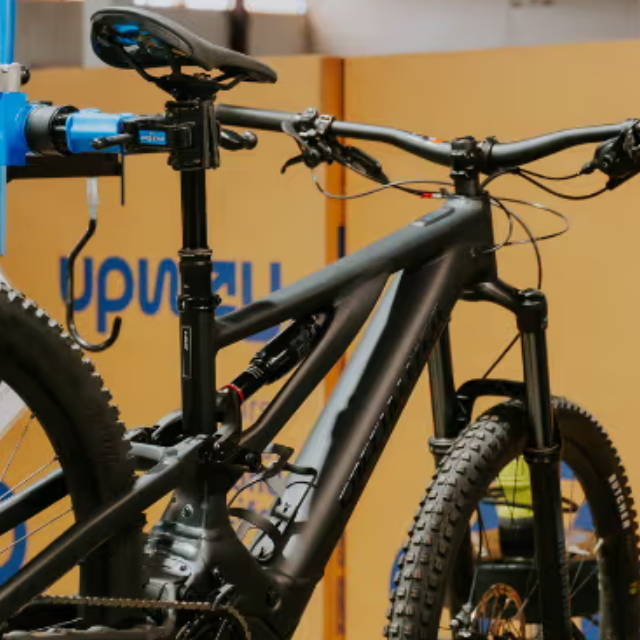
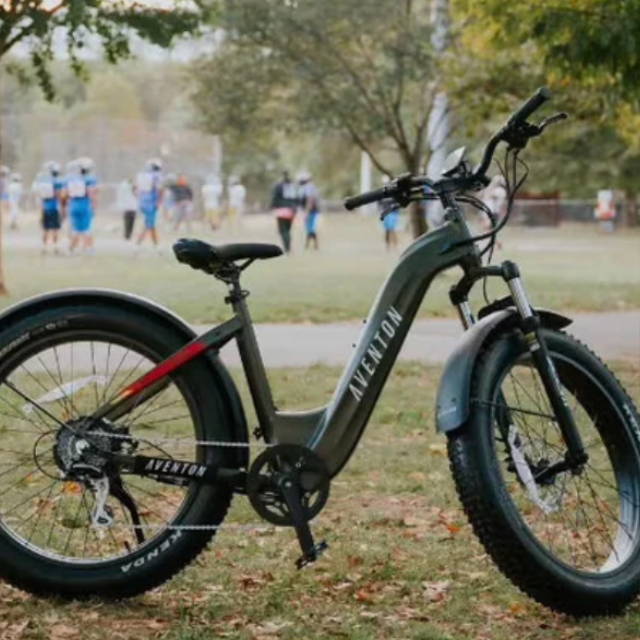
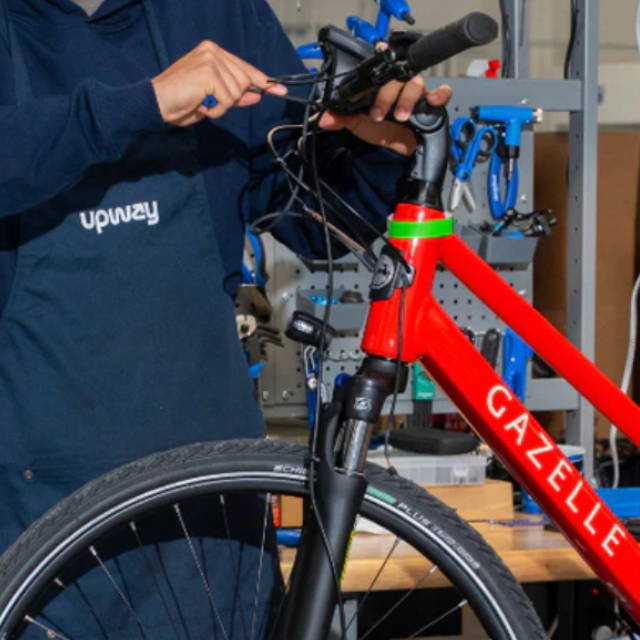
Do a quick check before rides, clean and lubricate the chain regularly, inspect the tires and brakes often, and plan for professional service once or twice a year. Ride more often, carry cargo, or ride in wet weather, and the schedule gets tighter.
Ultimate E-Bike Maintenance Checklist
Written by: Chris Van Leuven | June 21, 2026 | Time to read: 7 min
Use this ultimate e-Bike maintenance checklist to track tire, brake, and chain care, battery health, drivetrain wear, service timing, storage, and Upway buying tips.

More about the Author: Chris Van Leuven
Chris is a writer, climber, and founder of Yosemite E-Biking in Mariposa, CA. When he’s not tackling Sierra Foothills trails or scaling rock walls, he’s crafting adventure stories with his boxer, Fenster. His work has appeared in Outside, Men’s Journal, Gripped, and Best American Sports Writing.
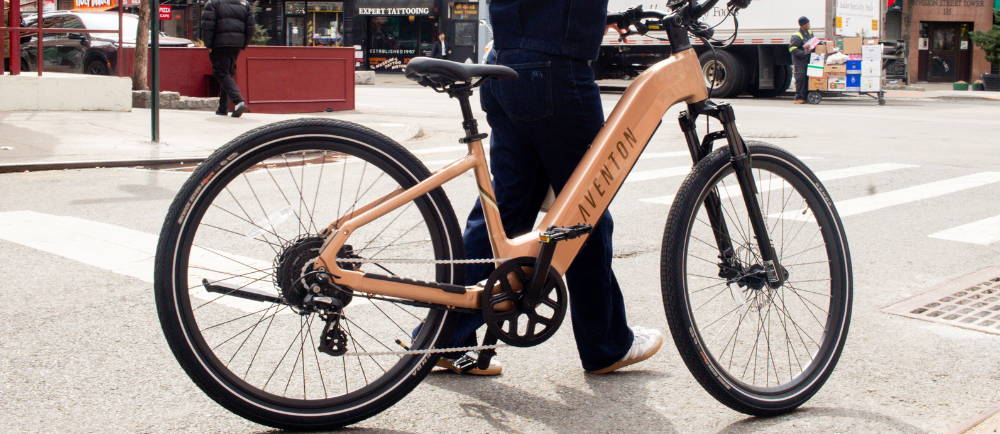
Most e-Bike problems don’t start as big issues. They start as a soft tire, a dry chain, a brake lever that pulls a little too far, a loose rack bolt, a charger cord that looks rough, or a sound you heard last week and meant to check later.
That’s why a maintenance checklist helps. Not because you need to look over the bike after every ride, but because it gives you a routine. Some things are worth checking before you leave the driveway, while others belong to the end of the week, end of the month, the end of the season, or your next shop visit.
The best e-Bike maintenance checklist is the one you’ll use. This blog is about real ownership: commuting, errands, cargo runs, hills, rain, dirt, potholes, winter roads, and the kind of everyday riding that wears parts out before you notice.
👋 Welcome to Upway!
Upway is your top destination for buying and selling e-Bikes online. Discover your next e-Bike at up to 60% off retail prices, available in new or like-new condition.
Table of Contents
What should you check before every ride?
What belongs on your weekly e-Bike checklist?
Which parts need a monthly inspection?
What should you check every few months?
How do you protect the battery long-term?
When should a mechanic service your e-Bike?
How Upway stands behind its certified pre-owned e-Bikes
What should you check before every ride?
Before riding, keep it simple. Tires, brakes, battery, lights, and anything loose. Start with tire pressure. Use a gauge, not just your thumb. E-Bikes are heavier than regular bikes, and low tire pressure will make the bike feel slower, reduce range, wear out tires faster, and increase the risk of flats.
Squeeze both brake levers. The brakes should bite before the levers get too close to the grips. If the lever feels soft, the bike takes too long to stop, or the brake rotor scrapes every wheel rotation, don’t wave it off; get it fixed.
Check that the battery is seated and locked. Turn on the display and lights. If the bike has a throttle, make sure it isn’t stuck, cracked, or acting unpredictably before you roll into traffic.
Then look for the obvious stuff: loose rack bolts, fenders, kickstand hardware (mine used to get loose often, so I use Loctite), mirrors, bags, child seats, bottle cages, pedals, or anything you added after buying the bike.
Here’s the quick version:
| When | Quick job | Why you'll care later |
|---|---|---|
| Before rides | Tires, brakes, battery lock, display, lights, loose accessories | Helps avoid flats, weak braking, dead displays, rattles, and ride-ending surprises |
| Weekly | Chain, drivetrain, tire pressure, rack bolts, fenders, pedals | Helps prevent dry chains, loose hardware, poor shifting, and avoidable noise |
| Monthly | Brake pads, rotors, spoke tension, derailleur, tire wear | Catches wear before it turns into a bigger repair |
| Every 3–6 months | Battery contacts, charger, bearings, drivetrain wear, cables | Helps catch corrosion, charging issues, rough bearings, and worn drivetrain parts |
| Yearly | Full tune-up, diagnostics, firmware updates, brake service | Helps keep the bike reliable and safer to ride |
What belongs on your weekly e-Bike checklist?
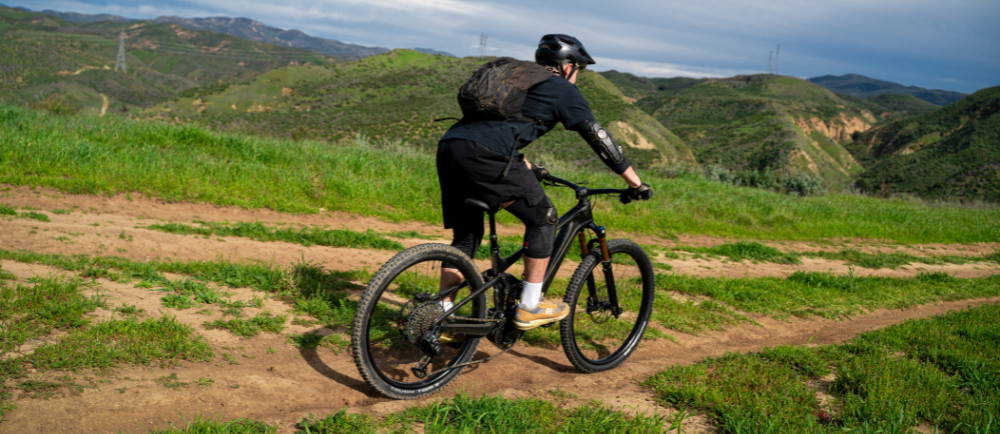
Weekly maintenance keeps the bike operating optimally. Wipe the chain, add bike-specific lubricant to the rollers, let it settle, and wipe off the extra. Don’t leave the chain dripping, since too much lube pulls in grit and turns into black paste.
Look at the drivetrain while you’re there. Is the chain rusty? Does the derailleur look straight? Are the cassette teeth pointed or hooked? Does the bike hesitate between gears? A little drivetrain love saves money later, especially on mid-drive e-Bikes that send motor power through the chain and gears.
Check tire pressure routinely if you ride often. A commuter, cargo e-Bike, or fat-tire bike can lose just enough air to feel slow without looking flat, and it takes checking the PSI with your pump, not just by feel. And look for small items stuck to your tires and remove them.
This is also a good time to tighten the obvious hardware. Racks, fenders, kickstands, mirrors, cargo baskets, lights, bags, and all bolts. E-Bikes vibrate. Bolts loosen. A small rattle can sound like a motor problem when it’s really a rack bolt backing out.
Which parts need a monthly inspection?
Monthly checks are for the parts that wear quietly. Start with the brakes. Look at the brake pads before they’re too far gone. Check both rotors for rubbing, bends, deep grooves, or contamination. If the lever pulls farther than it used to, stopping power feels weak, or the brakes scrape and grind, fix it before the next long ride.
Then look at the wheels. Spin each wheel and listen. A steady scrape may be brake rub. A pinging or ticking sound can point to spoke tension. A wobble may mean the wheel needs truing. E-Bike wheels deal with rider weight, motor torque, cargo, braking, and potholes, so don’t ignore new wheel noises.
Check shifting while riding, and if the chain skips, hesitates, or clunks between gears, the issue may be cable tension, derailleur alignment, chain wear, cassette wear, or a bent derailleur hanger. Fix it before it impacts your whole drivetrain.
Tires deserve another look here, too. Sidewall cuts, worn tread, embedded wire, and exposed casing are all signs you’re getting close to replacement. If you ride in a city, near construction, on gravel roads, or along rough shoulders, tire checks matter more.

What should you check every few months?
Every few months, slow down and look closer at the bike. Check the battery contacts and charging port. They should be clean, dry, and undamaged. Look at the charger cord and plug. If anything is cracked, bent, melted, loose, or unusually hot, stop using it and contact the brand or an e-Bike mechanic.
Listen for bearing noise, as rough hubs, creaky pedals, headset chirps, or bottom-bracket noise can start quietly and worsen. Not every click is a big deal, but new sounds are worth tracking.
Look over the frame and fork. Examine for dents, cracks, loose mounts, rubbing cables, damaged housing, and worn contact points where bags or locks touch the bike. Cargo bikes, folding e-Bikes, fat-tire e-Bikes, and e-MTBs deserve an especially close look because they tend to live harder lives.
If your bike has suspension, check the fork or shock for oil, dirt buildup, worn seals, or rough action. Suspension service isn't something most riders need to do at home, but you should notice if it starts to feel sticky or make a noise.
How do you protect the battery long-term?
Battery care is less about doing something fancy and more about avoiding bad habits. Use the correct charger. Charge in a dry place. Keep the charging port and battery contacts clean. Don’t leave the battery empty for months, and don’t store it in a hot car, freezing shed, or damp corner.
If the battery is removable and the bike will sit for a while, bring the battery indoors and keep it in a climate-controlled environment, and check the charge periodically instead of forgetting about it until spring.
Range changes with conditions. Cold weather, hills, wind, rider weight, cargo, low tire pressure, and high-assist modes can all shorten a ride. That doesn’t automatically mean the battery is failing.
If the battery won’t charge, gets unusually hot, smells odd, looks damaged, won’t seat correctly, or triggers repeated errors, stop using it and call the brand or an e-Bike mechanic.
When should a mechanic service your e-Bike?
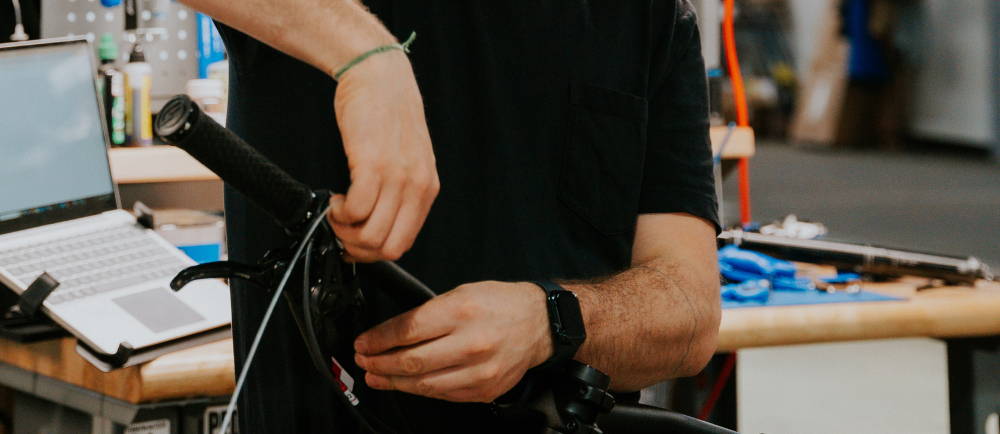
A lot of e-Bike maintenance is regular bike maintenance: tires, brakes, chain, drivetrain, wheels, bolts, and cleaning. You can learn plenty of that at home. The line gets clearer when the problem affects stopping, steering, electrical systems, or expensive parts.
Call a mechanic for hydraulic brake bleeds, weak braking you can’t fix, wheel truing, spoke tension, bearing replacement, suspension service, motor issues, controller problems, damaged wiring, repeated error codes, firmware problems, and anything that smells hot or electrical.
Service timing depends on how much you ride. Upway’s maintenance-cost guide notes that frequent riders may need tune-ups every few months or every 500 to 1,000 miles, while lighter riders may be fine with yearly service. Personally, I expect to replace my chain a few times a year and brake pads more often than that. But I ride a lot, and a lot of hills. A cargo rider in wet weather and hills will need service sooner than a weekend rider on flat bike paths.
How Upway stands behind its certified pre-owned e-Bikes
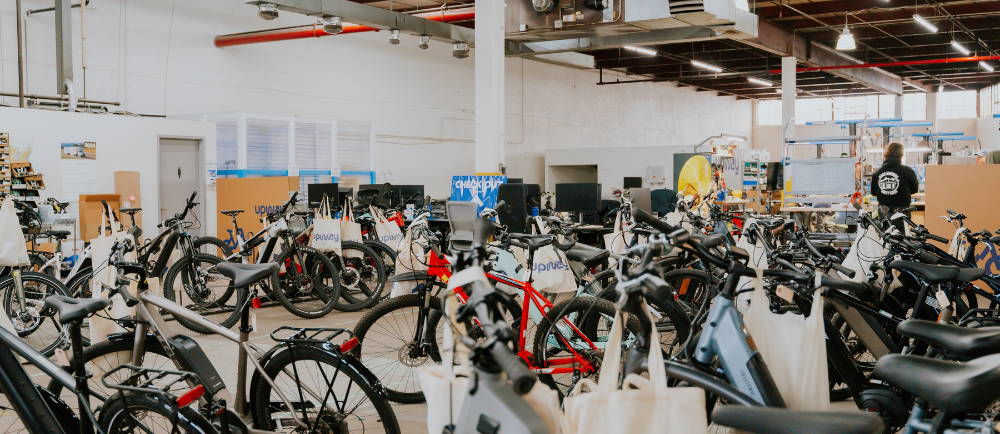
Upway takes out the guesswork. Every certified pre-owned e-Bike on Upway undergoes a 50-point inspection before it’s listed, and each e-Bike comes with a 1-year warranty and a 14-day return period.
Upway doesn’t replace maintenance, but it gives you a bike that is worry-free from the get-go. From there, this baseline checklist helps you track wear before it becomes a bigger problem.
Frequently Asked Questions
How often should I maintain my e-Bike?
What maintenance can I do myself?
Most riders can handle tire pressure checks, chain cleaning, basic lubrication, brake pad inspection, checking for loose accessory bolts, tire inspection, and gentle cleaning. Electrical diagnostics, motor repairs, battery faults, hydraulic brake issues, suspension service, and wheel work usually fall under a mechanic's responsibilities.
Do e-Bikes need more maintenance than regular bikes?
They need many of the same bike checks, but e-Bikes are heavier, often faster, and usually ridden more often. That means tires, brake pads, chains, spokes, and drivetrain parts may wear faster, especially on commuter, cargo, and mid-drive e-Bikes.
Key Takeaways
- The best e-Bike maintenance checklist is based on routine: before rides, weekly, monthly, every few months, and yearly.
- Tires, brakes, chain, drivetrain, wheels, battery contacts, charger condition, and loose hardware deserve regular attention.
- Use a mechanic for hydraulic brake service, wheel problems, battery faults, motor issues, damaged wiring, repeated error codes, or anything that affects steering or stopping.