Sometimes, but check the stand’s weight rating first. Many regular repair stands were designed around lighter bikes, not heavy e-Bikes with batteries, racks, bags, and accessories. If your e-Bike is close to the stand’s max load, look for a stronger option.
Best Repair Stand for E-Bike Maintenance
Written by: Chris Van Leuven | June 18, 2026 | Time to read: 5 min
Find the best e-Bike repair stand for maintenance, including weight capacity, clamp safety, portable stands, lift stands, tool trays, and Upway e-Bike care.

More about the Author: Chris Van Leuven
Chris is a writer, climber, and founder of Yosemite E-Biking in Mariposa, CA. When he’s not tackling Sierra Foothills trails or scaling rock walls, he’s crafting adventure stories with his boxer, Fenster. His work has appeared in Outside, Men’s Journal, Gripped, and Best American Sports Writing.
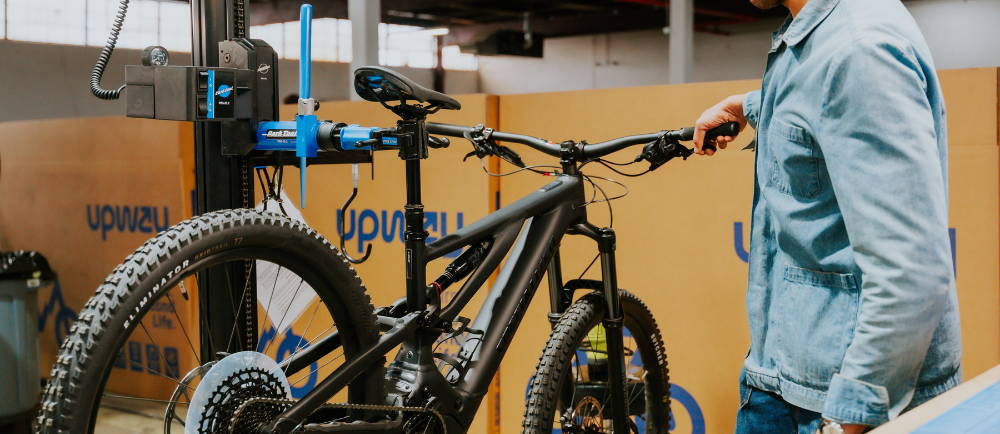
A regular bike repair stand makes chain cleaning, brake checks, derailleur adjustments, tire swaps, and cable work a whole lot easier. With an e-Bike, things get sketchy fast if the stand is too light, the clamp is weak, or the bike is heavier than the stand is built to hold.
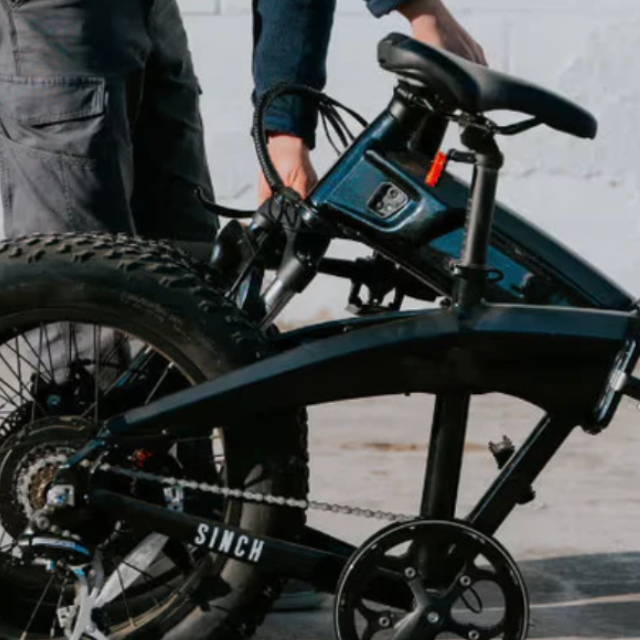
That’s the main difference. E-Bikes are heavy. Some commuter e-Bikes, cargo bikes, fat-tire e-Bikes, and e-MTBs can push 60, 70, 80 pounds or more with racks, batteries, bags, fenders, and accessories installed. A low-cost stand that feels fine with a road bike will feel wobbly once you hang a heavy electric bike off the clamp.
The best e-Bike repair stand isn’t always the most expensive one. It’s the one with enough load capacity, a stable base, a good clamp, usable working height, and a setup that doesn’t make you wrestle the bike into the air every time you use it.
In this blog, I’ll walk through what to look for before buying an e-Bike repair stand, including weight rating, clamp design, working height, footprint, and whether you actually want to lift your e-Bike by hand. A portable stand, a heavy-duty shop-style stand, and a lift-assisted stand all solve the same problem in different ways.
👋 Welcome to Upway!
Upway is your top destination for buying and selling e-Bikes online. Discover your next e-Bike at up to 60% off retail prices, available in new or like-new condition.
Table of Contents
Why e-Bikes need a stronger repair stand
A bike repair stand has one job: hold the bike steady while you work. With an e-Bike, that job gets harder. The battery, motor, thicker frame tubes, racks, lights, fenders, cargo gear, and bigger tires all add weight. Even if the bike is technically under the stand’s listed weight capacity, it can still feel like the wrong fit if the weight is hanging far from the central column or the stand has a narrow footprint.
That matters for basic jobs. For example, chain cleaning is easier when the rear wheel is off the ground, and brake adjustments are easier when the bike is level. Derailleur tuning is easier when you can turn the pedals freely. Tire work, wheel checks, cable routing, and drivetrain cleaning are all less challenging when the bike isn’t leaning against a wall.
But an e-Bike repair stand should make the job safer, not more tricky. If the stand rocks every time you touch the crank, or if you’re worried the clamp will slip, then the stand isn't helping.
For many home riders, the first question isn’t “What is the best bike repair stand?” It’s “Can this thing safely hold my e-Bike?”
Weight capacity and stability come first
Start with the bike’s weight, then add the stuff you usually leave on it: battery, racks, bags, locks, mirrors, child seats, cargo baskets, fenders, and accessories. That number is the one that matters.
If your e-Bike weighs 65 pounds and the stand is rated to 66 pounds, I’d look for a different one. You want margin. A stand at its limit isn't one I’d trust while pulling a rear wheel, working on a stuck pedal, or cleaning a drivetrain.
For many e-Bikes, I’d look for a stand rated somewhere around 80 to 100 pounds. The Park Tool PCS-10.3, for example, is a strong home mechanic option with an 80-pound rating. Feedback Sports’ Pro Mechanic HD goes heavier, with a 100-pound rating. Lift-assisted stands, such as the Topeak PrepStand eUP Pro or Feedback Sports Pro E Lift, are built with heavier e-Bikes in mind and make more sense if you work on heavy bikes often.
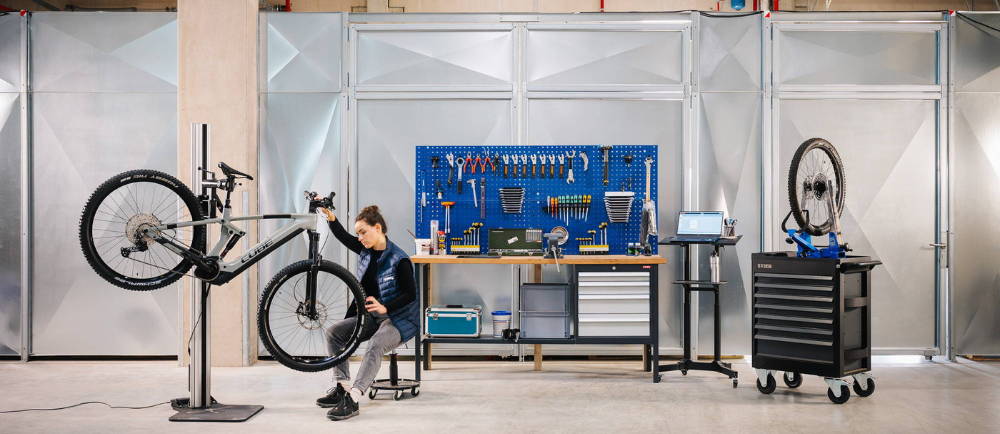
The base matters. A wide tripod footprint or sturdy four-legged base feels better than a narrow, tippy setup. Rubber feet help, and so does using the stand on flat ground. A repair stand in a garage on a level floor is one thing. A stand sitting crooked in gravel or on a sloped driveway is another.
Also, think about working height. If you’re bent over the whole time, the stand isn’t saving your back. If the bike is raised too high, lifting it into the clamp becomes the hardest part.
Clamp, seatpost, and frame safety
The clamp is where a lot can go wrong. Most home repair stands hold the bike by clamping a tube, often the seatpost. That is usually the safest place to clamp, especially compared with clamping a thin top tube, carbon frame tube, or oddly shaped hydroformed section. E-Bike frames can have batteries in the downtube, cables routed through the frame, and larger tube shapes that were not designed to be crushed by a repair clamp.
I wouldn’t clamp directly onto the battery, motor area, display wiring, cables, brake hoses, or a fragile frame section. Clamp gently and only as tight as needed to keep the bike from slipping. If the bike has a dropper post, carbon post, aero post, or unusual seatpost shape, be more careful and check the manufacturer’s guidance.
A good clamp should open wide enough, close smoothly, and have rubber or non-marring pads. It should also rotate so you can access the drivetrain, brakes, fork, rear wheel, and cables without having to unclamp the bike every few minutes.
Balance matters, too. Heavy e-Bikes don’t always hang nicely. A rear hub-drive e-Bike may feel tail-heavy. A mid-drive with a frame battery may balance better. A cargo e-Bike may feel challenging no matter what. Before you let go, make sure the bike is centered, the clamp is secure, and the stand legs are pointed in the right direction.

Portable stand, shop stand, or lift stand?
There are three basic routes:
- A portable folding stand is the easiest to store and move around. This is the kind most home riders think of first. It can work well for lighter commuter e-Bikes, gravel e-Bikes, and some e-mountain bikes if the load rating is high enough. The downside is that the heavier the bike gets, the more you’ll notice any flex in the stand.
- A heavy-duty home or shop-style stand is better if you have garage space and work on e-Bikes often. It may be heavier and less compact, but the extra stability is worth it. A stand like the Feedback Sports Pro Mechanic HD or Park Tool Deluxe Home Mechanic Repair Stand makes more sense if you’re doing regular brake checks, drivetrain work, and wheel adjustments.
- A lift-assisted e-Bike stand is the best option if you hate lifting heavy bikes, work on cargo bikes, or handle heavier e-Bikes often. The Topeak PrepStand eUP Pro uses lift assist to help raise the bike. The Feedback Sports Pro E Lift goes further and is aimed at heavier e-Bikes in home shops and bike shops. These stands cost more, but your back will thank you.
I’d be cautious with low-cost stands that advertise big claims but have small clamps, thin tubing, narrow bases, or vague weight ratings. With e-Bikes, the stand isn’t just there to hold weight. It’s holding weight while you push, pull, rotate pedals, remove wheels, and sometimes fight stuck parts.
| Stand type | Best use | What to watch |
|---|---|---|
| Portable folding stand | Lighter e-Bikes, small spaces, occasional maintenance | Make sure the load rating and base are not marginal |
| Heavy-duty home stand | Frequent garage maintenance, commuter e-Bikes, e-MTBs | Heavier and less compact, but more stable |
| Lift-assisted stand | Cargo bikes, heavy e-Bikes, regular wrenching | Costs more, but reduces lifting and improves control |
| Floor-mounted or shop stand | Dedicated workspace or professional use | Stable, but less portable and more permanent |
| Budget stand | Light-duty work on lighter bikes | Be skeptical of weak clamps, narrow bases, and vague ratings |
How a repair stand helps with Upway e-Bike maintenance
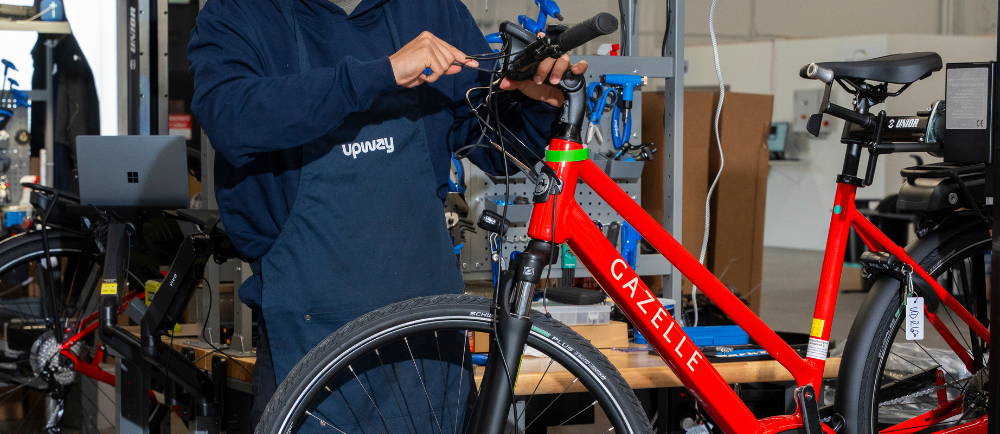
If you buy a certified pre-owned e-Bike from Upway, a repair stand can make normal home care easier after the bike arrives.
The stand lets you spin the wheels and listen for brake rub, and rotate the cranks while cleaning the chain. You can watch the derailleur move through the cassette, look for a bent rotor, inspect the tire tread, check spoke tension, tighten the rack bolts, and clean the drivetrain without balancing the bike against a wall.
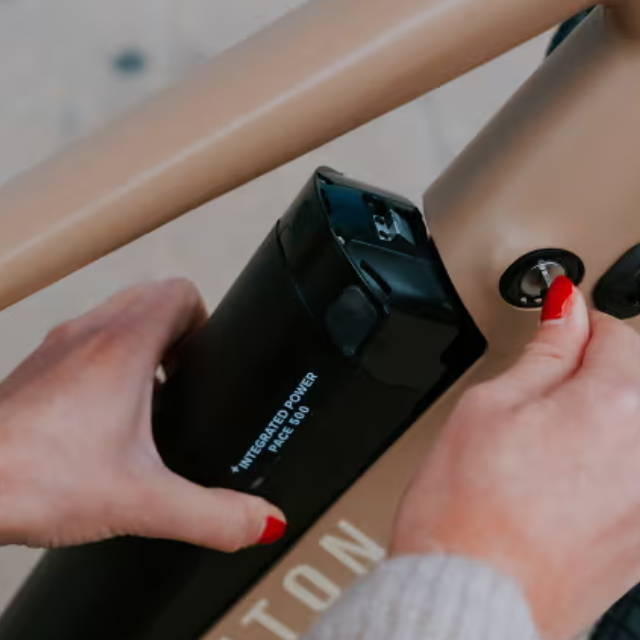
For heavier e-Bikes, remove the battery before lifting if the bike design allows it. That takes several pounds off the bike, making it easier to clamp. It also reduces the chance of banging the battery area while moving the bike into the stand.
A repair stand is helpful for routine work. Chain cleaning, brake-pad checks, rotor rub, tire swaps, rack adjustments, fender rattles, and drivetrain cleaning are normal home tasks. However, motor repair, battery repair, wiring diagnosis, controller issues, and recurring error codes should be handled by a qualified e-Bike mechanic or the brand’s service support.
The stand should make regular maintenance easier. It shouldn’t turn your garage into a wrestling match with a heavy bike in the air.
Frequently Asked Questions
Can a regular bike repair stand hold an e-Bike?
Where should you clamp an e-Bike in a repair stand?
The seatpost is usually the safest place to clamp when the bike and seatpost design allow it. Avoid clamping the battery area, motor area, cables, brake hoses, display wiring, carbon frame tubes, or odd-shaped frame sections that could be damaged by pressure.
Is a lift-assisted e-Bike repair stand worth it?
It can be, especially if you work on heavy e-Bikes, cargo bikes, or multiple bikes often. A lift-assisted stand costs more, but it reduces the awkward part: getting a heavy e-Bike off the ground and into a stable working position.
Key Takeaways
- The best e-Bike repair stand should have enough load capacity, a wide, stable base, a strong clamp, and a usable working height.
- For many e-Bikes, an 80–100 lb weight rating is a better starting point rather than a lightweight road-bike stand.
- Clamp carefully, usually at the seatpost when appropriate, and avoid battery areas, cables, motor housings, and fragile frame sections.