With Performance Upgrade 2.0, an approved Bosch Performance Line CX system can reach 120 Nm of torque and 750 W of maximum power. Shimano’s EP801 tops out at 85 Nm and 600 W. Keep in mind that those Bosch numbers aren't available on every CX-powered e-Bike, so check the motor generation and the individual bike.
Bosch vs Shimano E-Bike Motors: Which Is Better?
Written by: Chris Van Leuven | September 16, 2026 | Time to read 7-8 min
Bosch vs Shimano e-Bike motors compared for 2026, including torque, power, batteries, displays, shifting, reliability, apps, and used e-Bike value.

More about the Author: Chris Van Leuven
Chris is a writer, climber, and founder of Yosemite E-Biking in Mariposa, CA. When he’s not tackling Sierra Foothills trails or scaling rock walls, he’s crafting adventure stories with his boxer, Fenster. His work has appeared in Outside, Men’s Journal, Gripped, and Best American Sports Writing.
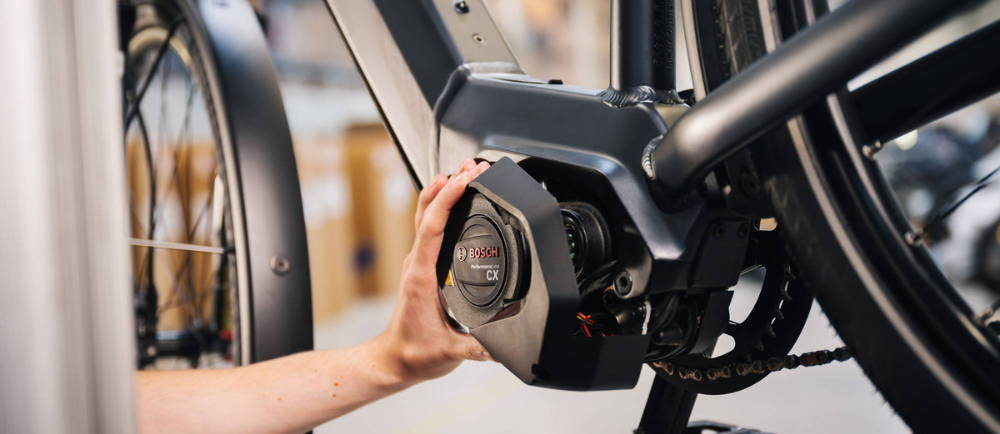
Bosch and Shimano both build some of the best-known mid-drive systems in the e-Bike world, but choosing between them isn’t as simple as comparing two motors. Bosch has built a broad ecosystem around everything from city bikes to cargo bikes to full-power e-MTBs and other electronics. Shimano focuses only on cycling, tying the motor closely to the drivetrain, shifting, and the way the bike responds to pedaling. That distinction matters more than the motor’s logo.
In this blog, I’ll compare current Bosch and Shimano e-Bike motor systems, including power, ride feel, batteries, displays, software, reliability, and what matters when buying either used or certified pre-owned on Upway.
👋 Welcome to Upway!
Upway is your top destination for buying and selling e-Bikes online. Discover your next e-Bike at up to 60% off retail prices, available in new or like-new condition.
Table of Contents
Bosch and Shimano Are More Than One Motor
Bosch and Shimano both make motors for several types of e-Bikes, so comparing the two brands depends on which motors you’re talking about.
Bosch has one of the broader lineups:
- Active Line: city riding and lighter everyday use
- Active Line Plus: commuting, leisure riding, and hybrids
- Performance Line: stronger assistance for commuting, trekking, and everyday riding
- Performance Line SX: lightweight e-MTBs, gravel bikes, and other performance-oriented e-Bikes
- Performance Line CX: Bosch’s full-power e-MTB motor
- Cargo Line: built for cargo bikes and heavier loads
Upway’s guide to Bosch e-Bike motors goes into the differences between these systems in more detail.
Shimano’s range is broad, too. EP801 sits at the performance end and is widely used on e-MTBs. EP600, sometimes shortened to EP6, retains the same 85 Nm maximum torque but uses a heavier aluminum housing and tops out at 500 W rather than the EP801’s 600 W. It appears on mountain, city, and cargo bikes. On the used market, you’ll also find older Shimano STEPS systems, including E6000 and E6100 motors.
Comparing every Bosch motor directly with every Shimano motor wouldn’t be particularly useful. For the performance comparison below, I’m focusing primarily on Bosch Performance Line CX and Shimano EP801, the two brands’ full-power e-MTB systems. I’ve also included Performance Line SX and EP600 in the table for context.
Current Bosch vs Shimano Motor Specs
At the high-performance end, the motors to compare are Bosch Performance Line CX and Shimano EP801. With Bosch’s Performance Upgrade 2.0, approved Performance Line CX bikes can be configured for up to 120 Nm of torque and 750 W of maximum power. Support can reach 600% at low speeds, although the exact limits depend on the drive unit and what the bike manufacturer enables.
That doesn’t mean every Performance Line CX produces 120 Nm. The motor generation, bike, and manufacturer settings matter, especially when shopping used. Bosch also notes that increasing the performance settings can reduce range and increase drivetrain wear. More power isn’t free.
Shimano’s comparable full-power e-MTB motor is the EP801. It produces up to 85 Nm and 600 W and weighs about 6.0 pounds. The EP600 sits below it in Shimano’s lineup. It still produces 85 Nm, but maximum power drops to 500 W, and its aluminum drive unit weighs about 6.6 pounds.
The table below focuses on those performance-oriented motors rather than trying to represent every Bosch and Shimano drive unit.
Here’s the comparison:
| Motor | Maximum torque | Maximum power | Weight | Main use |
|---|---|---|---|---|
| Bosch Performance Line CX | 85–120 Nm* | 600–750 W* | 6.2 lbs | Full-power e-MTB |
| Bosch Performance Line SX | 60 Nm | 600 W | 4.4 lbs | Lightweight e-MTB, gravel |
| Shimano EP801 | 85 Nm | 600 W | 6.0 lbs | Premium e-MTB |
| Shimano EP600 | 85 Nm | 500 W | 6.6 lbs | E-MTB, city, cargo |
*Maximum CX settings depend on the drive unit and bike manufacturer.
Those numbers make Bosch look like the obvious winner, but it’s not quite that simple. Torque and maximum power tell you what a motor can deliver. They don’t tell you everything about how the bike will respond when you’re pedaling it.
Bosch’s 2026 Power Upgrade Changes the Comparison
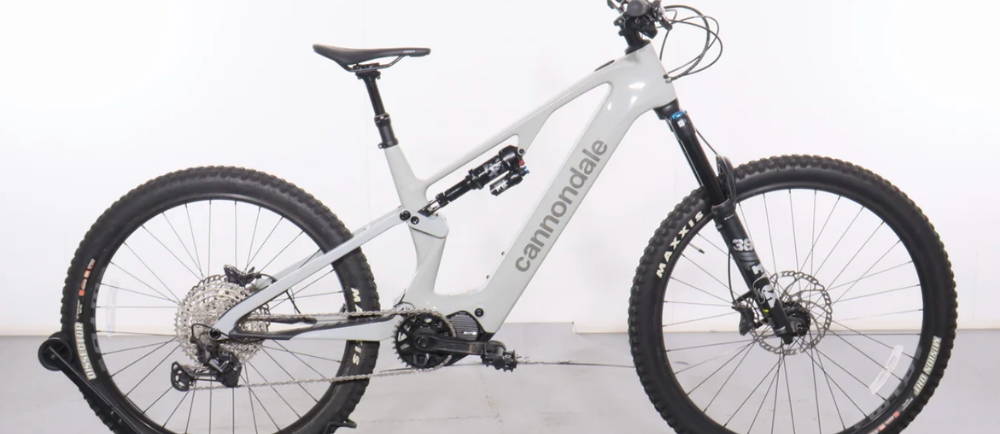
Until recently, Bosch Performance Line CX and Shimano EP801 were commonly compared as 85 Nm full-power e-MTB systems. Bosch’s Performance Upgrade 2.0 changes that equation. Compatible CX systems now deliver much more power. That can help on sustained climbs, steep starts, or heavier e-Bikes. But more isn’t always better. On a steep fire road with good traction, plenty of motor is useful. On a loose technical climb, controlling that power without spinning the rear tire matters just as much. And more power comes at a cost: more battery use and more drivetrain wear.
Shimano hasn’t chased the same 120 Nm number with EP801. Its 85 Nm output is designed to respond closely to rider input and maintain assistance across a broad cadence range. The extra Bosch power is useful, but it doesn’t automatically make a Bosch-powered e-Bike better than one with a Shimano motor.
For more on climbing performance, Upway also compares e-MTB motors for steep climbs.
Batteries, Apps, Displays, and Shifting
A modern e-Bike motor isn’t really a standalone component anymore. You’re buying into a system. Bosch calls its current platform the Smart System. The eBike Flow app connects motor settings, batteries, displays, navigation, software updates, and compatible security functions. Depending on the bike, that can include displays such as the Purion 200, Kiox 300, or Kiox 500. The app also lets riders customize riding modes and, on compatible bikes, unlock approved performance changes through software.
Shimano takes a different route. The E-TUBE PROJECT Cyclist app allows riders to update firmware and adjust assistance characteristics. On compatible EP801 and EP600 systems, Fine Tune Mode offers up to 15 adjustable assist settings.
Shimano goes a step further when the motor is paired with its electronic drivetrains. AUTO SHIFT can change gears automatically using cadence, torque, and speed data. FREE SHIFT allows compatible systems to change gears while the rider is coasting. EP801 and EP600 can work with Shimano electronic drivetrains, including CUES Di2 and DEORE XT Di2, along with LINKGLIDE and HYPERGLIDE+ technology.
Shimano has an advantage here because it also makes the drivetrain and electronic shifting components, allowing the motor and shifting to work more closely together. Bosch, meanwhile, offers a broader connected ecosystem.
🤝 Why you can trust us for buying an e-Bike?
- Great prices: Get your next e-Bike for up to 60% off retail prices, in new or like-new conditions.
- Quality Guaranteed: Every e-Bike is rigorously certified by a team of professional mechanics, and comes with a 1-year warranty.
- Delivered to Your Door: Delivered to your home within a week. Change your mind? Return it thanks to our 14-day return policy.
🚲 We also buy e-Bikes. Click here for an estimation!
Reliability, Service, and Buying Used
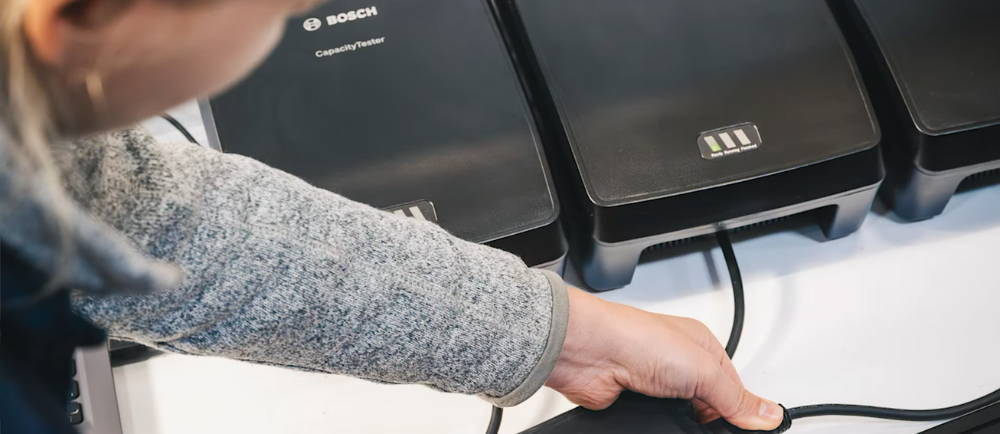
There isn’t enough public data to say Bosch is more reliable than Shimano, or vice versa. Both have been making e-Bike motors for years and have established dealer networks, diagnostic tools, and replacement parts. More importantly, a used motor doesn’t exist in isolation. The bike’s age, mileage, battery condition, stored error codes, assistance quality, and service history all matter. So does local support. Before buying, make sure a nearby shop can diagnose and service that particular motor generation.
Older systems deserve extra attention. A Bosch motor from several generations ago isn’t the same thing as the current Smart System CX, and an older Shimano E8000 isn’t an EP801. The same applies to E6000 and E6100 systems. Don’t assume current batteries, displays, wiring, software, or other components will work with an older drive unit. For a used bike, the condition of the motor and battery matters more than which brand has the better reputation for reliability.
And remember, Upway’s 50-point inspection checks the electrical system, battery, brakes, drivetrain, and other components before listing a certified pre-owned e-Bike.
Choosing Between Bosch and Shimano
Choose the bike before choosing the motor. Frame geometry, battery capacity, suspension, brakes, tires, drivetrain, weight, and how you'll actually use the bike still matter. A great Bosch motor won’t make the wrong e-Bike right, and the same goes for Shimano. If two bikes are otherwise similar, the motor system may be the deciding factor.
For full-power e-MTBs, Bosch currently owns the bigger numbers. With Performance Upgrade 2.0, an approved Performance Line CX system can reach 120 Nm, compared with 85 Nm for the EP801. But that doesn’t automatically make Bosch the better choice. An 85 Nm motor on the right bike is more useful than 120 Nm on the wrong one.
A commuter doesn’t automatically need the strongest Bosch motor, either. Battery capacity, riding position, weight, gearing, service support, and range may matter considerably more. When buying used, pay attention to the exact motor generation rather than just seeing “Bosch” or “Shimano” in the listing.
Frequently Asked Questions
Which is more powerful, Bosch or Shimano?
Is Shimano a high-end e-Bike motor brand?
Yes. Shimano has been making bicycle components for more than a century, and the EP801 is its premium full-power e-MTB motor. The company also makes more affordable drive units, along with drivetrains, brakes, and electronic shifting systems.
Which is more reliable, Bosch or Shimano?
There isn't enough public data to say Bosch is more reliable than Shimano, or vice versa. Both brands have been making e-Bike motors for years and have established dealer networks, diagnostic tools, and replacement parts. On a used e-Bike, the motor generation, service history, battery condition, mileage, and local service support matter more than the brand name.
Key Takeaways
- Bosch has more power available. With Performance Upgrade 2.0, a compatible Performance Line CX system can reach 120 Nm and 750 W, compared with Shimano's EP801 at 85 Nm and 600 W.
- Shimano is more closely integrated with the drivetrain. EP801 and EP600 can work with Di2, AUTO SHIFT, FREE SHIFT, E-TUBE tuning, and Shimano’s other drivetrain components.
- Buy the bike, not just the motor. Motor generation, battery capacity, geometry, components, service support, and the condition of a used e-Bike matter more than whether the motor says Bosch or Shimano.