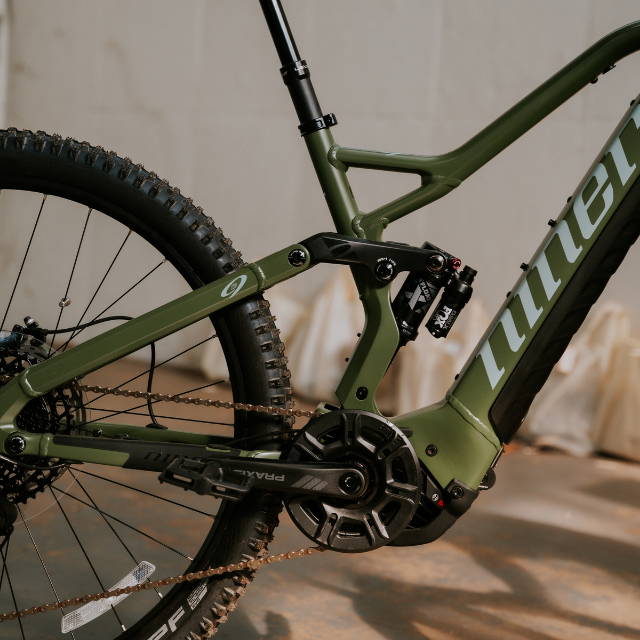
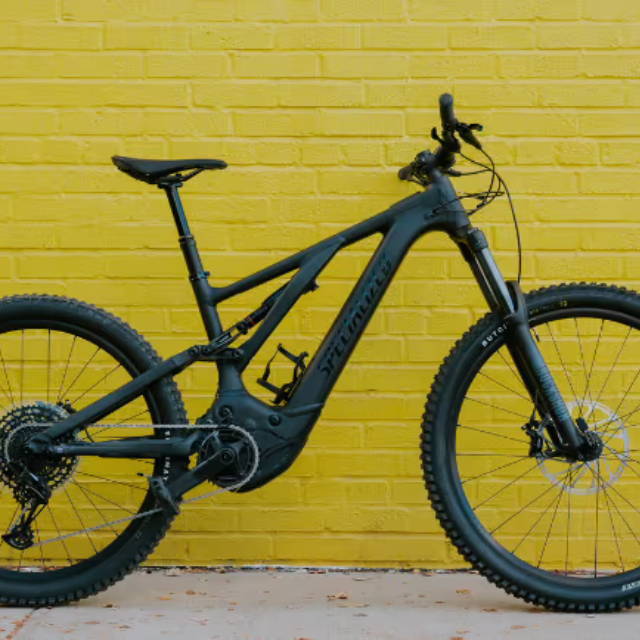
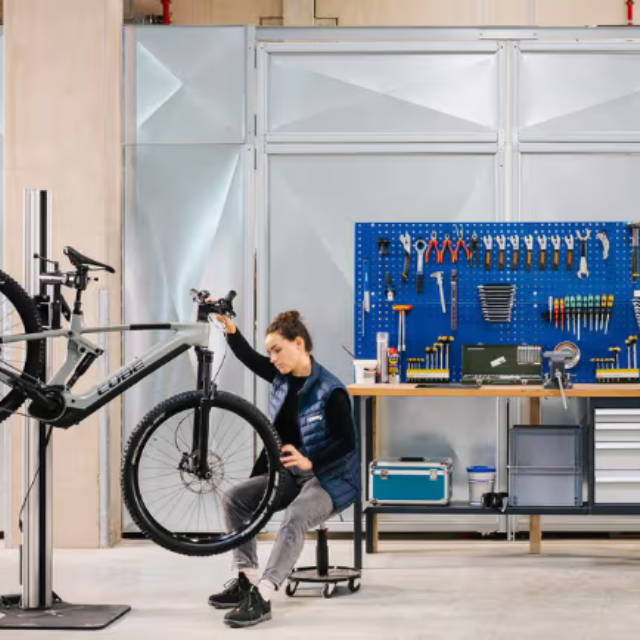
Both offer similar headline torque, but Bosch can feel more forceful at low cadence, while Shimano feels smoother and more natural.
Which E-MTB Motor Is Better: Bosch or Shimano?
Written by: Tom Fortune | February 7, 2026 | Time to read 5 min
Learn the differences between Bosch and Shimano e-Bike motors so you can make an informed decision.

More about the Author: Tom Fortune
Tom is a Brit living in the French Alps. When he's not creating written and video content for various brands, he's either pedalling or snowboarding around his local mountains. E-Bikes have unlocked the potential for Tom to explore Alpine terrain and get away from the crowded bike parks. He is only too keen to share his knowledge and experience with other riders.
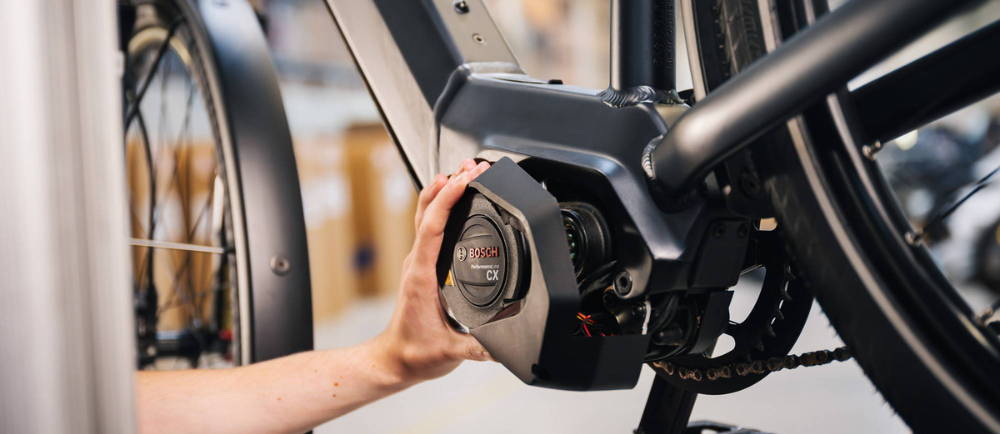
There are quite a few e-Bike motor manufacturers, but Bosch and Shimano are among the best-known. If you’re looking at a particular level of electric mountain bike, there’s a good chance you’ll be choosing between a Bosch or Shimano motor.
These two brands dominate the e-MTB market, power many of the most popular bikes on the trail, including Mondraker and Cannondale, and represent slightly different philosophies about how electric assistance should feel.
The short answer is that neither motor is universally “better.” The longer and more useful answer is that Bosch and Shimano excel in different areas, and the best choice depends on how you ride, where you ride, and what you value most from your e-MTB. In this guide, I’ll take a deep, research-based look at Bosch and Shimano e-MTB motors, focusing on real-world performance, technology, ride feel, software, reliability, and my own observations.
👋 Welcome to Upway!
Upway is your top destination for buying and selling e-Bikes online. Discover your next e-Bike at up to 60% off retail prices, available in new or like-new condition.
Table of Contents
The Two Systems Most Riders Are Comparing
When mountain bikers talk about Bosch vs. Shimano, they are almost always referring to the flagship full-power e-MTB motors from each brand. These models have the increased torque and peak power required for steep climbs while mountain biking.
On the Bosch side, that is the Bosch Performance Line CX, now part of Bosch’s Smart System ecosystem. This motor has been a benchmark for years and is widely used across trail, all-mountain, and enduro e-MTBs.
On the Shimano side, the comparison usually centres on the Shimano EP801, which replaced the original EP8 as Shimano’s top-tier e-MTB motor. It is found on many high-end trail and enduro electric mountain bikes.
Both motors are similarly rated at 250 W continuous, with an assist cutoff at 25 km/h in the EU/UK. However, Bosch and Shimano differ in peak power delivery, how the power feels, and system design around each motor. Bosch often prioritises robust power and integrated control, while Shimano focuses on seamless assistance and customizability.
In the US, both Bosch and Shimano are usually sold as Class 1 e-Bikes, providing pedal-assist up to 20 mph (32 km/h) without a throttle. Motors are configured to meet these regulations, which aids widespread trail access compared to faster bikes.
In practical terms, Bosch and Shimano motors used in the US deliver similar ride characteristics to their EU and UK counterparts, but with a higher assist speed limit that better suits longer climbs, fire roads, and trail networks common in North America.
Bosch Performance Line CX (Gen 4)
- Maximum torque: 85 Nm
- Nominal power: 250 W
- Peak power: ~600 W
- Top assisted speed: 20 mph (Class 1, US spec)
- Drive unit weight: ~2.9 kg (6.4 lb)
Shimano EP8 (DU-EP800)
- Maximum torque: 85 Nm
- Nominal power: 250 W
- Peak power: ~500 W
- Top assisted speed: 20 mph (Class 1, US spec)
- Drive unit weight: ~2.6 kg (5.7 lb)
Power, Torque, and What the Numbers Really Mean
Bosch and Shimano motors appear very similar on paper. Shimano EP801 and Bosch Performance Line CX both deliver up to 85 Nm of torque, with Bosch’s newer models allowing slightly higher peaks.
However, torque figures alone do not tell the full story. How that torque is delivered, how quickly it responds to rider input, and how controllable it feels at low speeds all matter far more on technical trails than headline numbers.
Bosch motors are known for strong, immediate assistance, particularly at low cadences. This makes steep, slow, technical climbs feel easier, especially when traction is poor. Riders who regularly tackle rocky, rooty climbs often describe Bosch as feeling more forceful and confidence-inspiring when the going gets tough.
Shimano takes a slightly different approach. The EP801 is widely praised for how naturally it blends assistance with rider input. Rather than feeling like a strong push from behind, it feels like your legs have simply become much stronger. For riders who value subtlety and smoothness over outright punch, this is a major advantage. In practice, both motors are more than powerful enough for modern e-MTB riding.
Ride Feel on Real Trails
Ride feel is where opinions start to diverge, and where personal preference matters most. Bosch motors tend to feel assertive and punchy. When you apply pressure to the pedals, the assistance is immediate and noticeable. This can be extremely helpful on steep climbs, especially when restarting on a slope or navigating awkward technical sections at low speed.
That same assertiveness can feel less natural to some riders, particularly those coming from non-assisted mountain biking backgrounds. Bosch motors reward a steady cadence and confident pedal input, but they can feel a little abrupt if you are sensitive to how assistance ramps up.
Shimano’s EP801 is often described as more organic. Assistance ramps up smoothly and predictably, and the connection between rider effort and motor output feels very direct. Many riders say it feels closer to riding a very fit version of yourself rather than riding a motor-assisted bike.
Neither approach is objectively better. Bosch generally suits those who prioritise control on steep, technical climbs, providing assertive assistance. Shimano appeals to riders who value flow, smooth riding, and a more natural pedalling experience.
My current e-Bike has a Bosch system, whereas my wife Carolyn’s bike has a Shimano system. After back-to-back testing, we felt that my bike climbs a bit more easily, while Carolyn’s feels a little more refined. There’s not much in it, but my Bosch feels a tiny bit more capable on techy climbs.
Software, Apps, and Customisation
Bosch’s Smart System is built around the eBike Flow app, which acts as the central hub for motor behaviour, battery management, displays, navigation, and over-the-air updates. Bosch riders can adjust assistance characteristics and riding modes, while also benefiting from features such as navigation, route syncing, and ongoing firmware updates. My e-Bike has an older system without app connectivity. This is more basic, but still works well.
Shimano approaches software from a more rider-tuning perspective. The E-TUBE PROJECT Cyclist app allows more customization of how assistance feels on the trail. Riders can adjust power delivery, responsiveness, and support levels across multiple profiles, allowing a high degree of personalisation.
In practice, Bosch prioritises a broad, integrated system experience, while Shimano prioritises fine control over motor behaviour. Neither approach is objectively better, but they suit different types of riders and expectations. If you like to tweak your riding experience, you may prefer to go Shimano. On the other hand, if you prefer simplicity and something you're less likely to mess up, stick with Bosch.
🤝 Enjoy an even greater discount when you trade in your old electric bike today!
Click here for a price estimation
Reliability, Support, and Long-Term Ownership
Both Bosch and Shimano have extensive global dealer networks, which are important for diagnostics, firmware updates, and warranty support.
Bosch positions itself strongly around long-term system support and frequent software updates. Shimano offers excellent dealer-level diagnostic tools and integrates well with its wider component ecosystem.
However, this isn’t always true. My Bosch motor started making a grinding noise, and after some investigation, it turned out that a motor bearing had worn out. Luckily, it was under warranty, or I would have had to buy a new motor. My local bike shop said it was common, and he had several motors with the same problem. It took over a month to persuade Bosch to give me a new motor, but eventually they gave in.
This poor service put doubt in my mind about buying another Bosch-equipped bike. However, the bike mechanic said that previously, he had just as many serious issues with Shimano motors and their customer service.
In real terms, reliability is influenced as much by bike brand integration and dealer support as by the motor itself. I also think there’s an element of luck (good or bad), as I know lots of people who have had no problems with either system.
Which Motor Is Better for You?
Bosch may be the better choice if you value strong low-cadence power, a highly integrated ecosystem, navigation features, and a more assertive motor feel.
Shimano may be the better choice if you value natural pedalling feel, deep assist customisation, lighter system weight in some builds, and a more subtle riding experience. Both motors are excellent, proven, and used on top e-MTBs.
Final Verdict
The Bosch vs Shimano debate really comes down to which motor best matches how you ride.
If you ride steep, technical terrain and want maximum assistance with minimal effort, Bosch often feels unbeatable. If you value flow, subtlety, and a ride feel that closely mirrors traditional mountain biking, Shimano is hard to beat.
The most honest advice is simple: ride both if you can. This will give you a chance to determine your favourite. It will also let you know whether the differences are enough to influence your decision or if you’d be happy with either option. Check out Upway’s collection of refurbished e-Bikes to find your next Bosch or Shimano-equipped electric mountain bike.
Frequently Asked Questions
Is Bosch more powerful than Shimano?
Which motor is quieter, Bosch or Shimano?
Bosch motors are generally quieter when coasting. Shimano EP801 motors are known for some mechanical rattle on rough terrain.
Can I customise how Bosch and Shimano motors feel?
Yes. Bosch allows tuning within its Smart System, while Shimano offers deeper assist customisation through the E-TUBE app.
Which motor is more reliable long term?
Both are highly reliable. Long-term ownership satisfaction often depends more on dealer support and bike integration than the motor brand alone.
Key Takeaways
- Bosch and Shimano e-MTB motors offer similar headline performance, but differ in how power is delivered, with Bosch feeling more forceful and Shimano feeling more natural.
- Bosch focuses on a highly integrated system with navigation, displays, and regular software updates, while Shimano prioritises ride feel and deep assist customisation.
- The better motor depends on your riding style, terrain, and preferences, so the best way to choose is to test-ride bikes with both systems.