Power off for 10 seconds, restart, then do a fast scan: battery seated, brake levers fully released, and connectors/cables (especially near the head tube). If you see moisture, melting, corrosion, or smell hot electronics, stop and get it checked.
Velotric Error Codes (2 of 2): Motor, Controller, Throttle, Torque Sensor, and Light Errors
Written by: Chris Van Leuven | January 30, 2026 | Time to read 5 min
Velotric error codes explained, quick checks, troubleshooting, and what to do for controller, motor, torque sensor, and light-related codes.

More about the Author: Chris Van Leuven
Chris is a writer, climber, and founder of Yosemite E-Biking in Mariposa, CA. When he’s not tackling Sierra Foothills trails or scaling rock walls, he’s crafting adventure stories with his boxer, Fenster. His work has appeared in Outside, Men’s Journal, Gripped, and Best American Sports Writing.
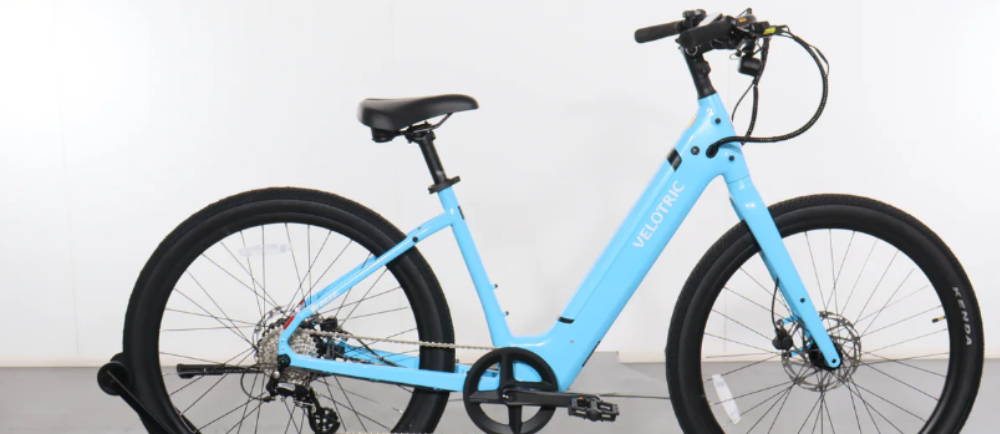
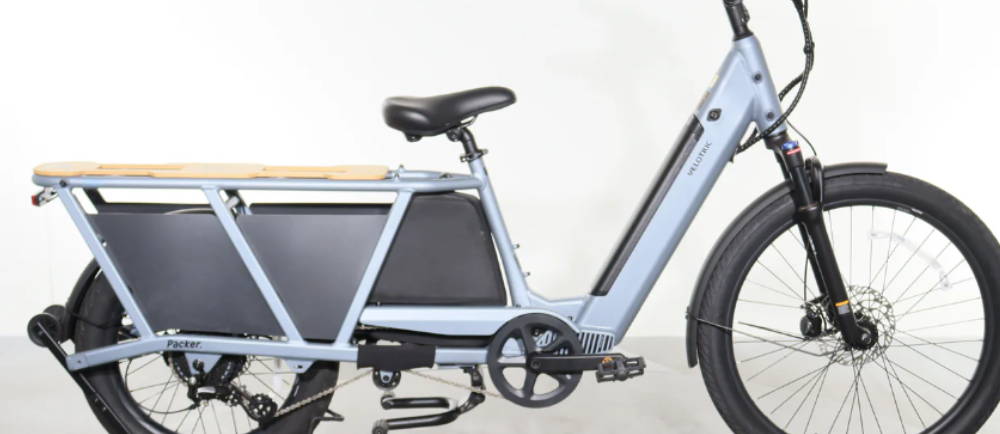
If your Velotric e-Bike flashes an error code that wasn’t covered in Part 1, this is the rest of the list—focused on the codes that tend to stop a ride cold. These come straight out of the e-Bike categories, such as cargo, city, and step-through styles. Velotric highlights in its troubleshooting guides: display and power issues, controller and throttle protection, motor phase and hall faults, torque and cadence sensor problems, and wired lighting circuits.
Learn more in this blog: How Often Does My Electric Bike Need Maintenance.
👋 Welcome to Upway!
Upway is your top destination for buying and selling e-Bikes online. Discover your next e-Bike at up to 60% off retail prices, available in new or like-new condition.
Table of Contents
Complete List of Priority E-Bike Error Codes
Number codes (21–30): What they mean and what to check
Display communication codes (E03, E04)
Display sensors and power codes (E10, E11, E18, E20, E21)
Controller and throttle protection codes (E30–E42, E46, E50)
Motor phase and hall codes (E51–E54)
Motor temperature and sensor codes (E56, E5A)
Torque and cadence sensor codes (E60–E64)
Lighting circuit codes (E12–E17, E70–E77)
Complete List of Priority E-Bike Error Codes
Number codes (21–30): What they mean and what to check
Some Velotric displays use two-digit codes. Here’s what those numbers are usually trying to tell you, and where to start.
- 21 Abnormal current or damaged MOS tube: Check the controller connector/cable for damage and reseat it. If anything is damaged, replace the faulty part. If it keeps returning and wiring looks fine, this usually points to a bad controller, and Velotric’s guidance is to replace the controller.
- 22 Throttle fault: Make sure nothing is pressing the throttle, then check the throttle connector and cable for a loose plug or bent pin.
- 23 Missing phase on motor: Check the motor connection cable, reseat the plug, and inspect for damage. If it persists, it may require motor diagnosis.
- 24 Motor hall fault: Similar to 23—start at the motor wiring harness and connectors and inspect for damage; persistent faults can require motor diagnosis.
- 25 Abnormal brake: The e-Bike thinks a brake cutoff is active. Confirm the levers fully return, then check the brake lever connector and wiring for damage.
- 26 Battery undervoltage: Check battery charge level, then fully charge and retest (give it a real full charge, not a quick top-off). If the issue returns early or under light load, seek professional help to have the battery and connections checked.
- 27 Overvoltage protection: Follow Velotric’s official troubleshooting flow for this one. If it repeats, stop guessing and get support or involve a shop.
- 28 Speed limit protection: This is typically a settings/protection behavior—follow Velotric’s official steps. If you are unsure or cannot resolve the issue, seek help from a qualified technician or support.
- 29 Cadence sensor fault: Check the cadence sensor connector and cable; replace the sensor if damaged.
- 30 Communication fault: Inspect connectors and wiring harness (especially the main harness). If you find damage, replace the affected component; if it persists without visible damage, plan on shop-level diagnosis.
Display communication codes (E03, E04)
- E03 Display and battery communication failure: Power cycle, reseat the battery, and inspect battery contacts and connectors for dirt, moisture, or damage.
- E04 Display and motor controller communication failure: Treat it like a harness or connector issue first—display connector, main wiring harness, then controller-side connectors.
Display sensors and power codes (E10, E11, E18, E20, E21)
Most of these are in the cockpit area, where the display and accessory wiring come together.
- E10 Photosensitive sensor abnormality: If a restart doesn’t clear it, this typically points to the display itself.
- E11 Abnormal 5V supply on display: If it repeats, this is commonly treated as a display-side fault.
- E18 Display Bluetooth malfunction: If it persists after a restart, this is typically treated as a display-side issue.
- E20 Display overvoltage: Often a brief protection event. If it clears quickly and the e-Bike returns to normal, you can usually continue. If it repeats frequently, get it checked.
- E21 Display undervoltage: Fully charge the battery and retest. If it appears to be at a healthy charge level, inspect the battery contacts and wiring, and plan a diagnostic.
Controller and throttle protection codes (E30–E42, E46, E50)
This is the zone where the controller is trying to prevent damage when something doesn’t look right.
- E30 Current sensor malfunction: If it returns after a restart, it often points to a controller-side issue.
- E31 MOS drive voltage too high / E32 MOS drive voltage too low / E33 MOS short circuit: Controller protection faults—if they repeat, it’s shop time.
- E34 Abnormal 5V on controller: A controller power supply fault—inspect harness and connectors; diagnose if persistent.
- E35 Throttle open circuit / E36 Throttle overcurrent / E37 Throttle ground wire protection: Throttle wiring and connector pins are your first suspects, along with any bar setup that tugs the cable.
- E40 Overcurrent protection: Can be triggered by high load. Restart and retest; if it repeats under normal riding, it likely needs diagnosis.
- E41 Throttle not reset: The controller wants “zero throttle” at startup—fully release the throttle, make sure it’s not rubbing on anything, and restart.
- E42 Anti-flyaway protection: Restart and retest. If it keeps returning, stop riding hard until it’s diagnosed.
- E46 Stall protection: Stop riding, reset the throttle, restart, then retest. If it repeats, plan on diagnosis.
- E50 5V power supply overcurrent: This often points to a short/fault in the torque sensor circuit. If disconnecting the torque sensor clears the error, the torque sensor is a strong suspect. If it persists, it can point back to the controller.
Motor phase and hall codes (E51–E54)
Start with the motor connector: unplug/replug carefully, check for bent pins, moisture, or harness damage.
- E51 Motor Hall A phase damage / E52 Hall B / E53 Hall C: If connector checks don’t clear it, this often escalates to motor diagnosis (and sometimes controller follow-up).
- E54 Motor phase line short circuit: Treat this as a “stop riding” code. If it returns after a restart, plan on shop-level diagnosis (motor and/or controller).
Motor temperature and sensor codes (E56, E5A)
- E56 Motor temperature sensor fault: Start with a motor wiring harness and connector inspection. If it persists, it often requires motor or controller diagnosis.
- E5A Motor overheating: Let the system cool down (give it at least 20 minutes), then retest. Going forward, climb in an easier gear, keep cadence higher, and use assist like a boost—not a tow rope.
Torque and cadence sensor codes (E60–E64)
- E60 Torque sensor open circuit / E61 torque sensor overcurrent / E62 abnormal torque sensor output: If a restart and connector inspection don’t clear it, plan on torque sensor diagnosis (and sometimes controller follow-up).
- E63 abnormal cadence signal: Inspect sensor wiring and connectors and retest—these can show up after transport or hard jolts.
- E64 sensor zero point abnormality (calibration issue): This often needs calibration rather than repeated restarts. A common first step is cycling the power switch on and off multiple times. If it won’t restore, it’s a diagnostic problem.
Lighting circuit codes (E12–E17, E70–E77)
If your e-Bike has wired lights, many of these point to wiring, connectors, or a damaged harness—often near the head tube.
- E12 Excessive power to front light / E13 front light supply too low: If the front light turns on and off normally, it may not require action. If it won’t toggle correctly, this is commonly treated as a display-side issue.
- E14 Front light open circuit / E16 Front light overcurrent / E17 Front light short circuit: Check the front light harness and connector for damage and bent pins. If it won’t clear, the front light may need to be replaced.
- E70 Rear light open circuit / E71 Rear light overcurrent: Check the rear light harness and connector. If it won’t clear, the rear light may need to be replaced.
- E73 Front light overvoltage / E74 Front light undervoltage: If the front light toggles normally, no action is typically needed. If it won’t turn on/off properly, this can point to a controller-side issue.
- E75 Front light open circuit / E76 Front light overcurrent / E77 Front light short circuit: Check harness and connector pins, then retest. If it won’t clear, the front light may need to be replaced.
Frequently Asked Questions
What should I check first when a Velotric error code pops up mid-ride?
Which Velotric error codes mean I should stop riding right away?
If assist keeps cutting out, the code returns immediately, or the code mentions short circuit, overcurrent, MOS, 5V power, or motor phase line short circuit (like E33, E50, E54), stop riding and get a diagnosis.
Why do codes show up after transport or turning the handlebars?
Vibration and steering can tug or pinch the harness near the head tube. A slightly loose connector can act fine at home, then trigger a communication or sensor code once the bike’s moving.
Key Takeaways
- Part 2 covers Velotric codes tied to the display, controller, motor sensors, torque/cadence sensors, and lighting circuits—plus the two-digit number codes some displays use.
- If a code returns immediately after a restart and a careful connector check, don’t burn rides troubleshooting—especially with controller, motor phase/hall, and 5V power codes.
- For U.S. riders who depend on an e-Bike for commuting or travel, a local e-Bike shop near you can usually isolate harness and sensor issues faster than trial and error.
There is more to Explore
Visit below articles for more info about electric bikes