Hub motors tend to have fewer moving parts and fewer failure points, which generally makes them more reliable and cheaper to maintain. Mid-drive motors are reasonably reliable, too, but they put more stress on the chain, cassette, and derailleur, which wear out faster as a result.
Hub Motor vs Mid-Drive Repairs: What Breaks and What It Costs
Written by: Tom Fortune | July 30, 2026 | Time to read 5 min
The motor type you choose doesn’t just affect how your e-Bike rides. It affects what breaks, how often, and how much it costs to put right.

More about the Author: Tom Fortune
Tom is a Brit living in the French Alps. When he's not creating written and video content for various brands, he's either pedalling or snowboarding around his local mountains. E-Bikes have unlocked the potential for Tom to explore Alpine terrain and get away from the crowded bike parks. He is only too keen to share his knowledge and experience with other riders.
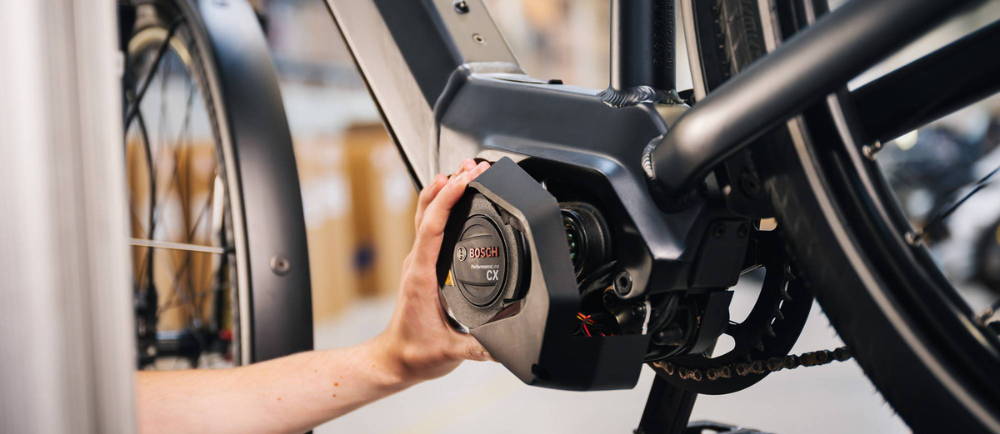
Unfortunately, electric bikes have problems from time to time. In my experience and chatting with my local bike shop, e-Bike motors, whether they are mid-drive or hub motors from several brands, can fail. Sometimes they are warranty issues, sometimes they are not.
Hub motors tend to be simpler and cheaper to maintain overall, but repairs can be harder to access. Mid-drive motors put more stress on the drivetrain, leading to more frequent wear rather than sudden motor failure. This e-Bike repair guide breaks down what goes wrong with each type and roughly what it costs to fix.
👋 Welcome to Upway!
Upway is your top destination for buying and selling e-Bikes online. Discover your next e-Bike at up to 60% off retail prices, available in new or like-new condition.
How Hub Motors and Mid-Drives Differ
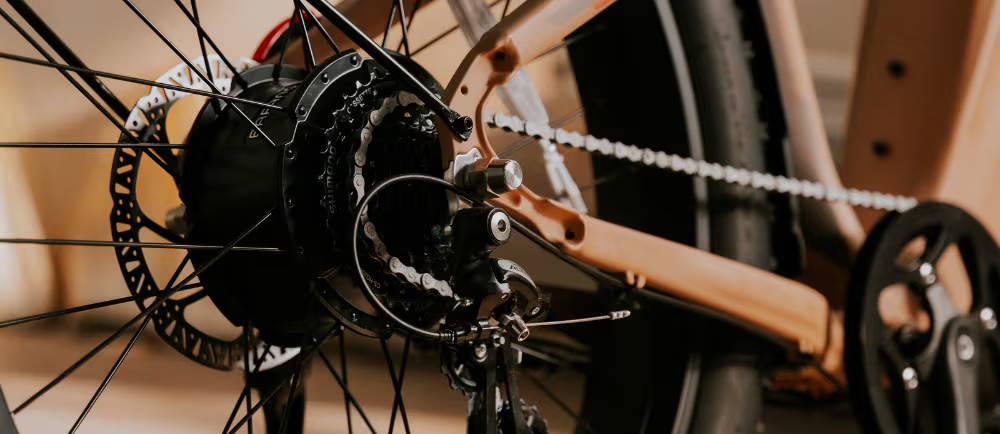
A hub motor sits inside the front or rear wheel and drives it directly, completely separate from the bike’s chain and gears. A mid-drive motor sits at the crank and powers the chainring, so it pushes through the same chain, cassette, and derailleur the rider uses.
Hub motors work differently as they are mechanically isolated from the drivetrain. Mid-drive motors are not isolated, so there is quite a lot of stress on parts that already wear out on a normal bike.
| What you notice | Likely cause | Typical cost |
|---|---|---|
| Motor makes a grinding or rattling noise | Hub: worn bearings or internal gear wear. Mid-drive: worn internal gearing | $100-300+ depending on parts and labor |
| No power at all, display still works | Loose connection, faulty controller, or wiring fault | $50-150 for connections, more for a controller |
| Chain keeps skipping or breaking (mid-drive) | Chain, cassette, or derailleur wear from motor torque | $30-80 for a chain, more for a full drivetrain |
| Flat tire is unusually hard to fix | Hub motor wiring and torque arm complexity | $20-30 extra at a shop over a standard flat |
| Motor works fine, but bike won't shift properly (mid-drive) | Derailleur or cassette wear, common with mid-drive stress | $40-150 depending on parts needed |
What Breaks on a Hub Motor
Hub motors have fewer moving parts than mid-drives, and that becomes evident in what tends to go wrong. Bearing wear is the most common issue over time, since the motor spins constantly inside the wheel. Those bearings eventually need replacing. Geared hub motors, which use a small internal gearbox to boost torque, can also wear or strip those internal gears over years of use, while direct-drive hub motors don’t and tend to last longer as a result.
Wiring and connector faults are common too, and they’re often mistaken for a dead motor when the actual problem is a loose or corroded connection. When a controller fails, it can also appear as motor problems. This is because the controller supplies power to the motor. Replacing the controller can sometimes fix what appears to be a motor issue without having to do anything to the motor.
The bigger complication with hub motors is how annoying some repairs are to access. A hub motor is built into the wheel, so anything involving the wheel itself, a spoke, a flat tire, or a bearing replacement means dealing with the motor’s wiring and torque arm as well. Not every bike shop is set up for this, and some hub motor repairs need the manufacturer or a specialist instead of a general bike shop.
What Breaks on a Mid-Drive
Mid-drive motors themselves are reasonably reliable, especially from established manufacturers. However, my Bosch motor had to be replaced last year after not many miles, but luckily, it was under warranty. I also know of Shimano motors failing and needing to be replaced.
The parts around mid-drive motors wear out faster than they would on a hub-motor bike. Because the motor pushes power through the chain, cassette, and derailleur, all three components experience more stress than they do on a regular bike or a hub-motor e-Bike. Chains stretch and wear faster, cassettes wear down sooner, and derailleurs need more frequent adjustment.
Mid-drive motors are also more likely to break a chain, since the added torque puts more strain on it than pedaling alone would. Unlike a hub motor, if the chain breaks on a mid-drive, the motor can’t help you get home, since it only delivers power through that same chain.
On an electric bike, it’s best to check “chain stretch” regularly. If your chain has stretched too much, you’ll experience shifting issues, and the cassette (which is expensive) will wear quickly. A rule of thumb is that you usually get 2 chains per cassette if you look after them.
When the motor itself does fail, mid-drive units tend to be more complex internally, with more gearing and electronics packed into a smaller housing. That complexity can mean a more expensive repair if something breaks outside the warranty period. Although the motor itself is often modular enough that a full swap is possible instead of an in-depth internal repair.
Repair Costs Compared
Labor for a full motor swap, hub or mid-drive, typically runs $100 to $250 at a shop, depending on the bike and the region. Beyond that baseline, the two types diverge:
- Hub motors add cost through wheel-related work. A flat tire that would normally cost very little to fix can run $20 to $30 more once wiring and a torque arm are involved. A full hub motor replacement is required if bearings or internal gears fail, which may mean rebuilding or replacing the wheel entirely.
- Mid-drive motors increase cost due to drivetrain wear. Chains run $30 to $80, cassettes and derailleurs can push costs higher, and because mid-drive systems wear these parts faster, they need to be replaced more often. Estimates for the added yearly cost of mid-drive drivetrain upkeep run around $100 to $200 more than a comparable hub-motor bike. As an example, the cassette on my Focus Sam2 costs around $500 to replace.
Which One Costs Less Over Time
Hub motors generally cost less to maintain over the life of the bike, mostly because there’s less to wear out in normal use. Estimates suggest hub-motor bikes can run 30 to 50% cheaper in cumulative maintenance costs than mid-drive bikes, largely due to the drivetrain wear mid-drives cause. That said, mid-drive bikes tend to deliver better efficiency and hill-climbing performance, which is part of why riders pay the premium in the first place. The cost difference is meaningful, but it’s the trade-off for the performance mid-drives offer, not a sign that mid-drives are poorly made.
What You Can Fix Yourself
Some repairs are reasonable to do yourself, regardless of motor type. For example, loose wiring connections, corroded contacts, and basic cleaning are usually safe for an owner to check and fix. On a mid-drive, chain lubrication and basic drivetrain cleaning are standard bike maintenance tasks that any rider can do with common tools and a decent cleaning kit.
Anything involving opening the motor casing, replacing internal gears or bearings, or working on a hub motor’s wheel-integrated wiring is better left to a shop. The risk of damaging a sealed unit or getting something wrong with the electrical system usually outweighs the money saved by doing it yourself.
When your battery drains unexpectedly quickly, you can usually trace it back to the causes above. But there are a handful of things that can point to something worth paying closer attention to.
Buying a Pre-Owned E-Bike

The motor condition of a used electric bike is hard to judge, and it’s one of the more expensive things to get wrong. Every e-Bike on Upway goes through a 50-point inspection before it’s listed, covering the motor, drivetrain, and electrical system, so problems like the ones covered here get caught before the bike ever reaches a buyer.
Browse the current electric bikes selection on Upway, the wider range of used electric bikes, or the sale collection to compare current options.
Frequently Asked Questions
Are hub motors or mid-drive motors more reliable?
What’s the average cost to replace an e-Bike motor?
Labor alone typically runs $100 to $250 at a shop, and the total cost depends on the specific repair needed, replacing the motor itself, or just a related part like a controller or wiring.
Can a mid-drive motor still work if the chain breaks?
No. A mid-drive motor delivers power through the chain, so a broken chain means no motor assistance until it’s repaired. A hub motor is independent of the chain, so it can still move the bike even if the chain fails.
Key Takeaways
- Hub motors are generally cheaper to maintain over time, but repairs often require work on the wheel itself, which can require specialty service.
- Mid-drive motors put more stress on the chain, cassette, and derailleur, leading to more frequent drivetrain costs even when the motor itself is reliable.
- Every e-Bike on Upway undergoes a 50-point inspection of the motor and drivetrain, helping catch these issues before a used bike is ever listed for sale.