Not necessarily. A bigger battery adds weight and cost, so it's only worth it if your riding calls for the extra range. For short commutes, a smaller battery is often the more sensible choice.
How Much E-Bike Battery Capacity Do You Actually Need?
Written by: Tom Fortune | September 23, 2026 | Time to read 5 min
Bigger battery numbers look better on a spec sheet, but they don’t always mean what you think they mean once you’re actually riding.

More about the Author: Tom Fortune
Tom is a Brit living in the French Alps. When he's not creating written and video content for various brands, he's either pedalling or snowboarding around his local mountains. E-Bikes have unlocked the potential for Tom to explore Alpine terrain and get away from the crowded bike parks. He is only too keen to share his knowledge and experience with other riders.
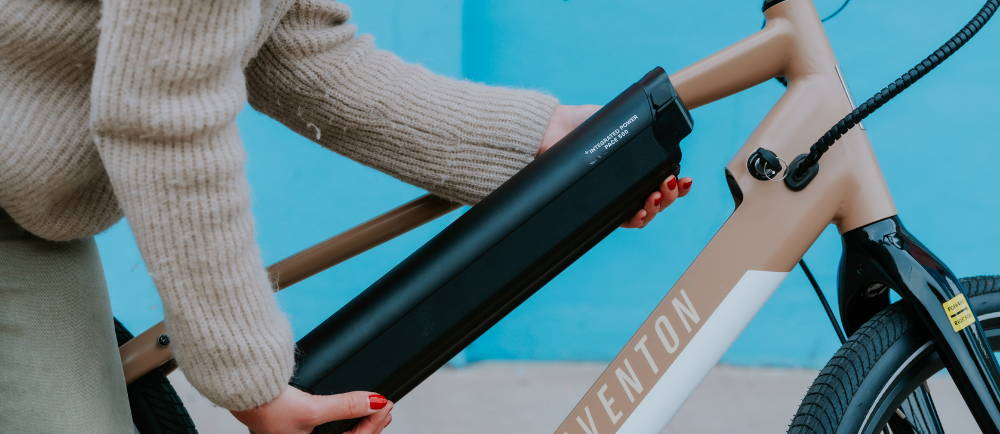
When it comes to battery capacity, there's no single right answer. This is because everyone’s needs are different. For example, someone doing a two-mile commute doesn't need the same battery as someone hauling two kids up a hill. But without living with an electric bike for a while, how do you know if you can reach your destination before your battery dies? Here’s some helpful insight on just how much e-Bike capacity you need for your rides.
👋 Welcome to Upway!
Upway is your top destination for buying and selling e-Bikes online. Discover your next e-Bike at up to 60% off retail prices, available in new or like-new condition.
What Battery Capacity Really Means
Watt-hours, or Wh, measure how much energy a battery can store. You get that number by multiplying the battery voltage by amp-hours, so a 48V battery rated at 10Ah stores 480Wh. It’s a simple calculation, but it’s worth knowing since manufacturers sometimes advertise voltage or amp-hours separately in a way that makes comparing two bikes harder than it needs to be.
| Voltage | Amp-Hours | Watt-Hours | Best For |
|---|---|---|---|
| 36V | 10Ah | 360Wh | Short commutes and errands |
| 48V | 10Ah | 480Wh | Longer daily commutes |
| 48V | 14Ah | 672Wh | Cargo and family riding |
| 52V | 14Ah | 728Wh | Off-road and e-MTB riding |
In simple terms, more watt-hours means more stored energy. But you still don’t know how far that energy will take you, as that depends on a handful of other factors you need to know about.
How Capacity Connects to Range
When you look at an electric bike's range on its spec sheet, it is usually a best-case number, tested under ideal conditions. You're unlikely to get that stated range unless you’re a lightweight person riding on a mild day on a flat road in Eco mode. Day-to-day riding is much more varied than that for most of us. We have to carry stuff, ride up hills, deal with traffic, and have days when we just want to use turbo mode to get home.
This isn’t manufacturers lying, exactly. Treat the advertised range as the ceiling, not the expectation.
Short Commutes and Errands

If most of your riding is a few miles to work or the grocery store and back, you don’t need a huge battery. Something in the 300 to 400Wh range is fine for most short commutes.
Buying a battery with more capacity than this for short trips mostly adds weight and cost without adding much practical benefit. A bigger battery is heavier to carry if you ever need to bring it inside to charge, and it costs more to replace later.
Longer Daily Commutes
If your commute is longer than 10 or 15 miles each way, or you ride in a hilly area, you’ll need a bigger battery. Look for electric bikes with batteries around 500 to 625 Wh, which give you more range, so you’re less likely to worry about completing your journey.
This is also one advantage of mid-drive motors, which are more efficient and usually come with larger batteries anyway, making them a better option. They handle distance and hills more efficiently than a hub motor.
Cargo and Family Riding
Transporting kids or getting the groceries home makes the need for a large battery more important. The extra weight means the motor has to work harder, which drains your battery faster. Cargo e-Bikes often come with 625 to 750Wh batteries, or even dual-battery setups, because the loads they’re designed to carry demand it.
If you’re shopping for a cargo bike, don’t just look at the battery’s Wh rating alone. Check what range the manufacturer claims with a realistic load, not an empty bike, as that’s the number that applies to how you’ll use it. The same logic applies to rider weight. A heavier rider pulls more from the battery per mile than a lighter one, so if you’re on the heavier side, hauling gear regularly, or riding with a passenger, go for a larger battery; it’s best to go for overkill for this kind of riding.
Off-Road and Hilly Terrain
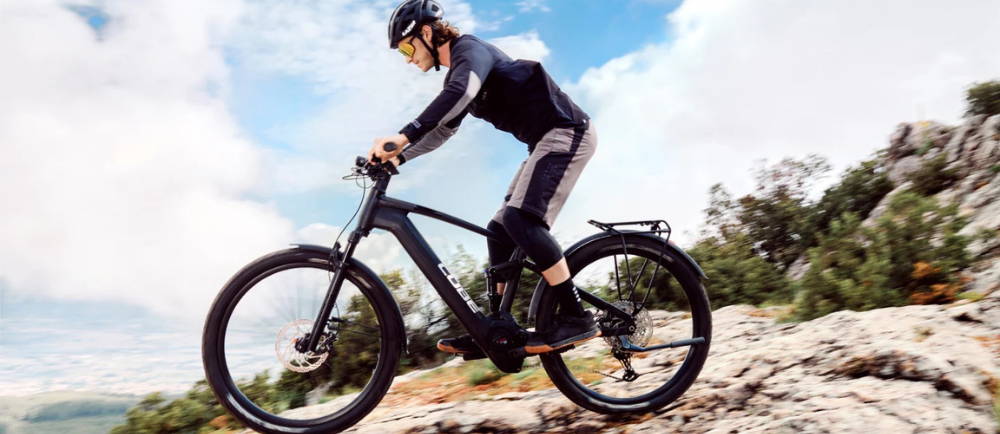
Mountain biking asks even more of your battery than a hilly road commute. You've got climbing to deal with, plus loose dirt, gravel, or sand adding rolling resistance on top, since your tires sink in slightly instead of rolling over the surface.
If most of your riding is off-road or in the hills, look at the top end of whatever range a bike offers instead of the middle, and don't expect to see the advertised maximum out on the trail.
Motor Type Changes Everything
A hub motor is mounted in the wheel, while a mid-drive motor is mounted at the pedals and works through the bike's own gears. As mentioned above, that makes mid-drive motors more efficient on hills and over distance, since they get to use gearing the same way your legs would on a normal bike.
That doesn't make hub motors bad. They're simpler, cheaper, and do the job perfectly well on flatter routes. The difference between the two only really shows up once hills or heavy loads get involved.
Assist Level Is the Biggest Variable
This is the one people underestimate most, but they soon learn. Riding in Eco mode versus Turbo mode can be the difference between getting 60 miles and getting 25. At higher assist levels, the motor does more work, and all that extra power comes straight from the battery.
If you're worried about range on a particular ride, dropping down an assist level is the best thing to do.
Battery Chemistry and Lifespan
Almost every modern e-Bike runs on lithium-ion batteries, which pack a lot of energy into a light, compact package. These batteries are rated in charge cycles; one full charge and discharge counts as one cycle, and most last between 500 and 1,000 cycles before you notice capacity dropping off.
You can stretch that lifespan by not leaving the battery fully drained for long periods, and by not leaving it sitting on the charger at 100% for extended periods either. Neither habit does your battery health any favors, and both are easy to avoid once you know about them.
Range Extenders and Second Batteries
Some e-Bikes let you add an extra battery as a range extender for longer rides. This is worth looking into if your riding needs change a lot, commuting most days but wanting a much longer ride at the weekend.
It's not free capacity, though. An extra battery adds weight and cost, so it's only worth doing if you'll use the extra range regularly, not just a couple of times a year.
Checking Your Actual Range
Most modern e-Bikes with a display or a companion app will show you your power draw and estimated remaining range as you ride. Pay attention to how assist level and terrain move that number around on your usual routes, as it will help you manage your battery life.
Whatever your riding looks like, Upway's electric bike selection covers everything from short-commute city bikes to cargo and off-road options, so it's worth browsing to see what battery size matches how you ride.
Frequently Asked Questions
Is a bigger battery always better for an e-Bike?
How much does riding style affect e-Bike range?
A great deal. Dropping from the highest assist level to the lowest can cut how much power the motor draws by well over half on the same ride, often the single biggest factor you have direct control over.
How long do e-Bike batteries typically last?
Somewhere between 500 and 1,000 full charges before you'll notice the range dropping off, which for most riders works out to several years of regular use.
Key Takeaways
- Battery capacity, measured in Wh, tells you how much energy is stored, but your actual range depends just as much on motor type, assist level, terrain, and rider weight.
- Short commuters can get by comfortably with 300 to 400Wh, while cargo riders, hilly commutes, and off-road riding call for 500Wh or more.
- Riding in a lower assist level does more for your range than almost any other single change, worth remembering before assuming you need a bigger battery.