


Why Upway Backs Reforms to New Jersey’s E-Bike Law
Written by: Jareth Sweazea | October 22, 2026 | Time to read 5 min
New Jersey made e-bike riders jump through hoops. Now, state lawmakers may be ready to hit the brakes on those new rules for Class 1 and 2 e-bikes.

More about the Author: Jareth Sweazea
Jareth is Upway's Operation Lead in New York. He specializes in scaling businesses, optimizing teams, and driving efficiency in high-growth environments.
Proposed legislation could roll back some of the most contentious provisions of New Jersey’s new e-bike law, carving out an exemption for low-speed models (Class 1 and 2) and easing the draconian restrictions imposed on riders in the Garden State.
Upway stands with other cycling advocacy groups across New Jersey and New York that support this new bill. Below, I’ll take a deeper look at the proposed rule change and the related policies that support rider safety and encourage e-bike ridership across New Jersey.
Proposed bill walks back NJ’s strict rules for legal e-bikes
In response, last week, Senator Raj Mukherji introduced S4830. The new bill would treat Class 1 and Class 2 e-bikes (motors of 750 watts or less, 20 mph top motor speed) like bicycles again: no registration, no license, and no insurance requirements. Faster Class 3 bikes, which can travel up to 28 mph, would still require a license, registration, and insurance.
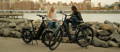
This is great news for New Jersey residents and visitors alike. E-bikes are a great equalizer, providing affordable door-to-door mobility and flattening hills. They reduce car traffic and have zero emissions. Regulators should do everything they can to encourage cycling, including reducing barriers to purchasing and riding legal, low-speed e-bikes.
Important cycling advocacy groups in the tri-state region, including PeopleForBikes, Jesse’s e-Rides, New Jersey Bike & Walk Coalition, and Regional Plan Association which make up the New Jersey E-Bike Coalition, have come out in support of Senator Mukherji’s proposed legislation removing barriers to low-speed e-bikes.
We applaud Senator Mukherji’s leadership and urge the legislature to advance S4830 quickly!
We also recommend that New Jersey follow California’s lead and introduce a bill to rein in illegal, high-speed e-motos. Although state vehicle codes clearly define e-bikes under the three-class rule, some retailers deceptively market e-motos as e-bikes. E-motos are overrepresented in crashes and nuisance complaints, and California’s SB1167 bill gives the state the tools to enforce truth in advertising and stop the sale of these hazardous vehicles.
Upway supports effective e-bike policies
- Stop illegal e-motos before they reach the street. Build on the city's cease-and-desist letters to 42 online retailers with escalated penalties for sellers. Have the City Council ask our federal delegation for legislation to block these vehicles at the border. Give NYPD the tools to verify a device's actual speed and power, and focus on confiscation, instead of court summonses.
- Build protected bike lanes, fast. Paris added 1,000+ km of bike lanes and invested €250M+ in street safety. The result: cycling's share of trips doubled from about 5% to 11% between 2020 and 2025, and motor vehicle collision hospitalizations fell by more than half.
- Borrow Europe's enforcement tools. The Netherlands trains port workers to spot illegal vehicles and seized about 16,500 e-motos at Rotterdam in 2024, plus 10,500+ more off the streets. France treats tampering with motor limits as a serious offense for riders, repair shops, and retailers alike.
- Skip NJ-style licensing and registration. It wastes public money, hits delivery workers and low-income riders hardest, and does nothing about e-motos whose owners were never going to register them anyway.

Stop illegal e-motos in their tracks
- Class 1: Pedal assist up to 20mph
- Class 2: Throttle allowed up to 20 mph
- Class 3: Pedal assist up to 28 mph
Here’s what can be done:
- In April, California's Attorney General put online retailers on notice with a plain-language consumer alert, and by May, Amazon had pulled illegal e-bike listings in the state. Attorney Generals across the country should issue a similar consumer alert.
- States and cities like NYC should pass new bills to enforce against illegal devices in stores and online. As covered in a recent Streetsblog article, NYC agencies have been successful at stopping brick-and-mortar stores from selling illegal devices. New laws should outline an enfogercement framework to levy fines on online sellers to stop the sale of illegal devices.
At Upway, we sell certified, legal e-bikes that comply with local laws because safe, compliant micromobility is good for the world. Illegal high-speed devices endanger people on the street and erode trust in an industry that's helping people get around without a car. Getting illegal devices off the market is good for everyone who rides, and we will continue to do our part to make safe e-bikes affordable for all!
Key Takeaways
- Relief for low-speed e-bikes: Proposed bill S4830 would exempt Class 1 and Class 2 e-bikes from licensing, registration, and insurance requirements, while keeping the rules for faster Class 3 models.
- Smarter safety policies, fewer barriers: Cycling advocates argue that policies should encourage legal e-bike use through better infrastructure and targeted enforcement, rather than burdening everyday riders with extra red tape.
- Crack down on illegal e-motos: High-powered vehicles disguised as e-bikes pose a distinct safety challenge. Stronger enforcement against deceptive retailers and illegal sales could help protect riders and pedestrians alike.

MY WISHLIST
Drop Us A Line
We’re happy to answer any questions you have or provide you with an estimate. Just send us a message in the form below with any questions you may have.