Not for a single charge, but doing it repeatedly and leaving the cells at full charge for long stretches adds stress to the cells over time. Charging to 80-90% for daily use and saving 100% for days you need the extra range is a better long-term habit.
How to Store and Charge an E-Bike Battery the Right Way
Written by: Tom Fortune | July 30, 2026 | Time to read 5 min
A lithium-ion battery doesn’t fail all at once. It fails gradually, and a lot of that comes down to how it’s charged and stored between rides.

More about the Author: Tom Fortune
Tom is a Brit living in the French Alps. When he's not creating written and video content for various brands, he's either pedalling or snowboarding around his local mountains. E-Bikes have unlocked the potential for Tom to explore Alpine terrain and get away from the crowded bike parks. He is only too keen to share his knowledge and experience with other riders.

A while ago, my friend went to work abroad for a couple of months, but before he left, he told me he had fully charged his electric mountain bike battery so it would be ready when he got back. Little did he know that it was the last thing he should’ve done. This is just one of the bad charging habits that people fall into that reduces their battery’s lifespan.
Most e-Bike batteries are rated for 500 to 1,000 charge cycles, but how you charge and store the battery day to day makes a noticeable difference to how close it gets to that number. None of the habits that protect a battery are complicated or expensive. Here are my tips for properly storing and charging your e-Bike battery.
👋 Welcome to Upway!
Upway is your top destination for buying and selling e-Bikes online. Discover your next e-Bike at up to 60% off retail prices, available in new or like-new condition.
Why You Should Get into Good Charging and Storage Habits
Lithium-ion batteries degrade through ordinary use, but the rate of that decline depends heavily on how they’re treated when they’re not being ridden. Extreme states, sitting at 100% for long stretches, sitting at 0%, or sitting in heat or cold, all put stress on the cells that adds up over months and years. None of these will ruin your battery overnight, but adopting good charging habits will slow the inevitable decline.
| Situation | What to do |
|---|---|
| Charging for a ride tomorrow | Charge to 80-90%, save 100% for days you need the full range |
| Storing for a few days to a week | Leave at whatever charge it's at, no special steps needed |
| Storing for a few weeks to a few months | Charge to 30-60%, store indoors at room temperature |
| Storing over winter | Charge to 30-60%, remove from the bike, check every 2-3 months |
| Battery is cold from riding | Let it warm to room temperature before charging |
The Right Way to Charge Your Battery
Use The Correct Charger
Always use the charger that came with the bike, or a manufacturer-confirmed compatible charger. A mismatched charger can damage the battery, and using one that wasn’t approved will usually void the warranty, too. Charge in a dry space at room temperature, if possible, since charging in extreme heat or cold puts extra strain on the cells. Avoid charging a battery that feels cold straight off a winter ride until it’s warmed back up.
Don’t Charge Straight After A Ride
It's also worth giving the battery some time to rest after any ride before plugging it back in. Discharging generates its own heat inside the cells, so a battery that's just come off a long or hard ride is often warm, even without any cold-weather involved. Charging straight into that state stacks the heat from discharging on top of the heat from charging, putting more thermal stress on the cells than they need. Letting it sit for 15 to 30 minutes after a ride, or until it feels close to room temperature, gives the battery a chance to settle before it goes through a charge cycle.
Don’t Fully Charge The Battery Every Time
For daily use, charging to around 80-90% is a better habit than charging to 100% every time. Lithium-ion batteries don't have the memory effect older battery types did, so partial charges won't hurt performance the way they might on an old nickel-based battery. Save the full 100% charge for days you truly need the extra range, since keeping a battery at full charge for a long time is one of the things that accelerates long-term wear.
Don’t Leave It Plugged In
Avoid leaving the battery on the charger unattended or overnight as a routine practice, even though most modern batteries and chargers have built-in overcharge protection. Once it's charged, unplugging it is a simple step that removes any risk of a fault in the charger or the battery. You can use a timer between the outlet and the charger to cut the power at the right time if you can’t unplug it yourself.
Storing Your Battery Short-Term
For gaps of a few days up to about a week, there's not much to think about. Leaving the battery at whatever charge level it happens to be at is fine, and there's no need to top it up or drain it specially before a short break from riding.
If you know you won’t be riding for a few weeks, it's worth charging or discharging the battery to a 30-60% range before setting it aside and storing it indoors. Make sure you put it somewhere dry and out of direct sunlight. This battery level puts the least stress on the cells compared to leaving them full or empty for an extended period.
Storing Your Battery for Winter or Long Periods
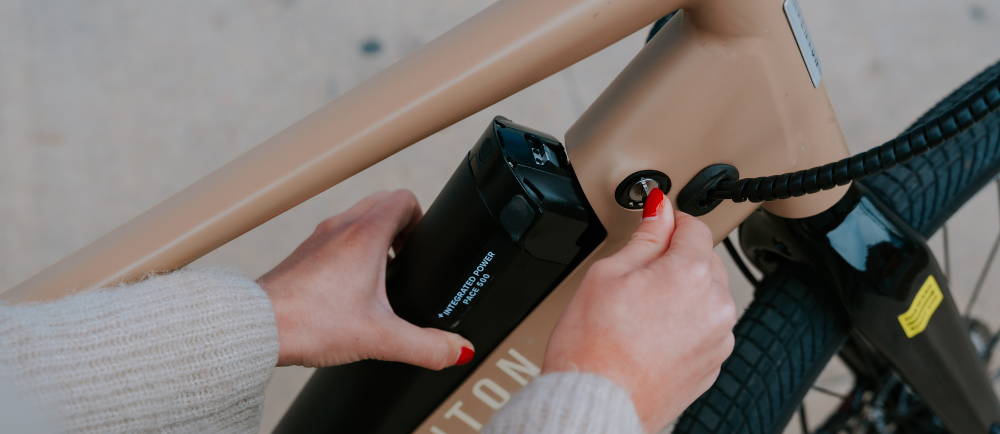
For long-term storage, the same 30-60% charge range applies. You can also remove the battery from the bike to avoid parasitic drain on its electronics and keep it in a more controlled environment than a garage or shed.
Check the battery every 2 to 3 months during long-term storage. If the charge has dropped below 30%, top it back up into the 30 to 60% range instead of letting it sit at a very low level for months.
Temperature Rules Worth Following
Extreme temperatures are harder on a battery than almost anything else short of physical damage. The ideal storage range is 50 to 68°F, and most guidance agrees that a battery should never sit below freezing or above roughly 104°F for extended periods. A hot car, a sun-facing windowsill, or an uninsulated shed in winter are all worse environments than most people realize.
Charging has its own temperature range, too, generally somewhere around 40 to 70°F. Charging a battery that's below freezing can cause damage that doesn't show up until later, which is why letting a cold battery warm up before plugging it in is important.
Common Mistakes to Avoid
- Storing a battery at 100% charge for weeks or months at a time accelerates long-term capacity loss.
- Letting a battery sit fully drained for an extended period without checking or recharging it.
- Charging in direct sunlight, a hot car, or any place where the battery can't dissipate heat properly.
- Using a charger that didn't come with the bike or wasn't confirmed compatible by the manufacturer.
- Leaving the battery mounted on the bike in a cold garage or shed over winter instead of storing it indoors.
- Charging a battery that's still cold from a ride without letting it warm up first.
- Plugging a battery straight into the charger right after a ride, before it's had a chance to cool down from riding.
Buying a Pre-Owned E-Bike

How a previous owner charged and stored a battery has a noticeable effect on its remaining life, and that's not something you can tell just by looking at a listing. Every e-Bike on Upway goes through a 50-point inspection before it's listed, and any battery reading below 80% capacity gets replaced ahead of time, so the storage and charging history of the previous owner isn't something you have to guess about.
Browse the current electric bikes selection on Upway, the electric mountain bikes range, or check out the sale collection to compare current options.
Frequently Asked Questions
Is it bad to charge my e-Bike battery to 100% every time?
What charge level should I store my e-Bike battery at?
Somewhere between 30 and 60% for anything longer than a week or two. That range puts the least stress on the cells compared to storing it full or empty.
Can I leave my e-Bike battery on the bike over winter?
It's better to remove it and store it indoors, in a dry, temperature-controlled location. Leaving it mounted in a cold garage or shed exposes it to temperature swings that indoor storage avoids.
How often should I check a battery in long-term storage?
Roughly every two to three months. If the charge has dropped below about 30%, top it back up into the 30-60% range instead of leaving it depleted.
Key Takeaways
- Charge to 80-90% for daily use and save the full 100% charge for days you truly need the extra range, since constant full charges can stress the cells over time.
- For storage longer than a week or two, charge to 30-60%, remove the battery from the bike, and keep it somewhere dry at room temperature.
- Check a battery in long-term storage every 2 to 3 months and top it up if it drops below 30%, since leaving it fully depleted for months can cause permanent capacity loss.