Resale demand softens in the fall and winter across the board, and our offers track that.
How Pre-Owned E-Bike Prices Change Over Time
Written by: Upway Team | November 2026 | Time to read 5 min
The trade-in value of the same bike can look different from one season to the next. This is because the pre-owned market tends to follow the same seasonal rhythm as the new-bike market.
E-Bike values don’t stay constant throughout the year, and Upway is constantly monitoring market patterns and our own sales data. Just like the new-bike market, the pre-owned market experiences seasonal shifts in demand that influence resale prices and our trade-in offers.
👋 Welcome to Upway!
Upway is your top destination for buying and selling e-Bikes online. Discover your next e-Bike at up to 60% off retail prices, available in new or like-new condition.
Seasonality & E-Bike Prices
One of the largest factors behind price changes of e-Bikes is seasonality. As an outdoor activity that’s quite a bit more enjoyable when it's warm (or at least not freezing) outside, e-Bike value’s strong link with the time of year makes sense. Some places are great for riding all year round, but as a company that serves the entire US, Upway still experiences these general seasonal changes.
Exiting the winter months, springtime is when demand and interest in e-Bikes perk back up, and prices are strongest during the summer when riding conditions are ideal. Those warmer seasons can push e-Bike values up, meaning stronger trade-in values, buying offers, and higher selling prices compared to the end of the riding season. Still, on a personal basis, there are many factors at play when considering when is the best time of the year to sell an e-Bike.
The Pre-Owned Market Tends to Follow the Primary Market
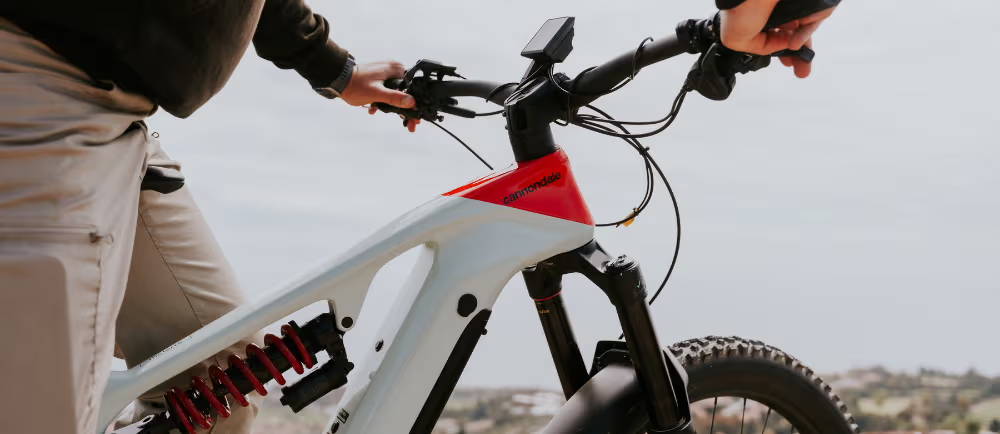
Just like sales of new bikes, demand for pre-owned e-Bikes runs highest in spring and summer and cools off heading into fall and winter. This means that quote values tend to decrease during the fall and winter. New e-Bikes and used electric bikes are ridden outdoors in the same way and are just as susceptible to the seasons, so the mirroring market trends make sense.
The pre-owned market doesn’t necessarily have to exactly mirror the new-bike market, however— there can be small differences in behavior. Back when the Trump administration imposed its first round of tariffs, we discussed the potential additional advantage to buying and selling used electric bikes since, as pre-owned finished products already inside the US, they aren’t affected by tariffs that raise the production costs of new bikes, most of which are made mostly or entirely abroad. Buying pre-owned could become even more attractive to customers due to the predicted inflation of prices of new models in the future. Largely, though, prices in the pre-owned market behave similarly to those of the primary, new-bike market.
The pre-owned market doesn’t necessarily have to exactly mirror the new-bike market, however— there can be small differences in behavior. Back when the Trump administration imposed its first round of tariffs, we discussed the potential additional advantage to buying and selling used electric bikes since, as pre-owned finished products already inside the US, they aren’t affected by tariffs that raise the production costs of new bikes, most of which are made mostly or entirely abroad. Buying pre-owned could become even more attractive to customers due to the predicted inflation of prices of new models in the future. Largely, though, prices in the pre-owned market behave similarly to those of the primary, new-bike market.
Example: Upway’s November Pricing Update
Upway calculates every trade-in offer backward from a bike's expected resale price, then subtracts our costs— we never just take a flat percentage of a bike's original price. As a result, trade-in pricing is tied to how well bikes are selling at any given moment.
After reviewing September and October sales velocity, in November, Upway lowered its expected selling prices by about 4% on average. This led to trade-in quote values falling around 6% on average so Upway could continue to cover refurbishment costs, keeping in mind their slightly lower sale prices. All bike categories fell in value, but folding and commuter, which had slower sales, saw bigger decreases.
After reviewing September and October sales velocity, in November, Upway lowered its expected selling prices by about 4% on average. This led to trade-in quote values falling around 6% on average so Upway could continue to cover refurbishment costs, keeping in mind their slightly lower sale prices. All bike categories fell in value, but folding and commuter, which had slower sales, saw bigger decreases.
This wasn't a one-off correction, but is the same seasonal pattern that plays out every year, and it's worth knowing heading into the next few months.

What This Means For Buying & Trade-Ins
- The new and used markets share the same factors: Seasonal swings move the whole market up or down together, but a bike's brand, mileage, and original MSRP still drive most of the difference between any two offers.
- Lower offers can still close deals: A slightly lower offer relative to original MSRP can still mean a lot of value for an individual when upgrading bikes. Our average trade-in quote was still over $1,500 in October, which can make a huge difference in converting customers interested in upgrading to a new e-Bike.
Frequently Asked Questions
Why is a customer's trade-in offer lower than it was last season?
Should I tell customers to wait for a better offer?
No need! Prices typically recover as demand picks back up in spring, but we can't guarantee the timing or size of any future change. Further, seasonality swings quotes around 10% between highs and lows, and there’s still value in having cash now when upgrading to a new model.
Does this affect every bike the same way?
Nope, the “seasonality” we’re describing is a general trend. Use our trade-in tool to find the value of a specific bike.
Key Takeaways
- Seasonality matters: E-Bike values typically peak in spring and summer and soften in fall and winter.
- Markets move together: Pre-owned prices generally follow the same demand trends as new e-Bikes.
- Timing isn't everything: On an individual basis, brand, mileage, and original MSRP also influence trade-in value, regardless of the season.