Yes. Fat tires have higher rolling resistance, so the motor has to work harder, reducing range compared to a regular bike.
Fat Tire vs Regular Tire E-Bikes: Pros and Cons
Written by: Tom Fortune | September 23, 2026 | Time to read 5 min
The differences between fat tires and regular tires change your grip in the snow, how far you'll get on a charge, and how nimbly the bike handles; here’s why.

More about the Author: Tom Fortune
Tom is a Brit living in the French Alps. When he's not creating written and video content for various brands, he's either pedalling or snowboarding around his local mountains. E-Bikes have unlocked the potential for Tom to explore Alpine terrain and get away from the crowded bike parks. He is only too keen to share his knowledge and experience with other riders.
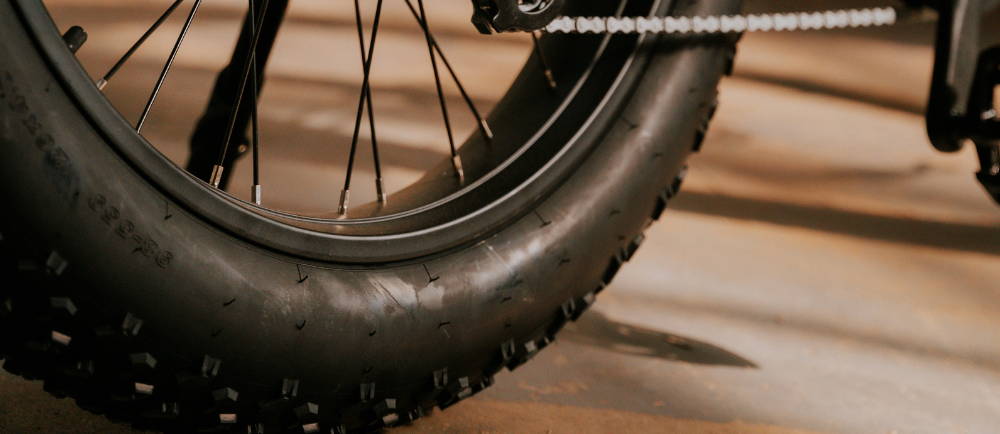
If you’ve been looking at a new electric bike, you will have seen some models with huge bulbous tires. These are known as “fat tires,” and their characteristics affect how a bike performs compared with a bike with regular tires. You can’t say that one type of tire is better than another, as they solve different problems. Depending on your wants and needs, fat tires could be what you’re looking for, but they don’t suit everyone.
👋 Welcome to Upway!
Upway is your top destination for buying and selling e-Bikes online. Discover your next e-Bike at up to 60% off retail prices, available in new or like-new condition.
What Makes a Tire "Fat"
You’ll know a fat tire e-Bike as soon as you see one, but a fat tire measures 3.8 to 5 inches wide, more than double a regular tire's 1.75 to 2.5 inches on a commuter or hybrid bike. A wider tire also holds a lot more air. This is a big part of why fat tires and regular tires feel so different to ride.
Why Tire Pressure Makes a Difference
Tire pressure makes a difference to how an electric bike performs in a couple of ways. Low pressure increases the contact patch a tire has with the ground, which gives you more grip. This is especially useful with fat tires, as you can inflate them to very low pressures. Along with the safety of extra grip, the bike’s weight spreads out enough for you to ride on soft mud, snow, or sand.
A regular tire needs high pressure, which keeps the casing rigid and the contact patch small for efficient rolling. There’s a middle ground, though: electric mountain bikes have lower pressures than road bikes, but higher pressures than fat tire models. This is because of how and where they are ridden.
Rolling Resistance and Battery Range
Rolling resistance doesn't come mainly from a bigger contact patch, which is a common misconception. It comes from hysteresis, which is when the casing and tread flex as they meet the ground and don't return all that energy as the tire rolls on. A wider tire at lower pressure flexes more, and that extra flex turns into heat instead of forward motion.
This is why a fat tire generally draws more from the battery to cover the same distance as a regular tire. Also, the extra weight of a fat tire electric bike means the electric motor has to work harder, which also drains the battery a bit faster.
Ride Quality and Suspension
Another benefit of fat tires is that they act like suspension. The high volume and extra squish soak up the shock and vibrations from rocks, roots, and bumps in the road.
Some fat tire electric bikes don’t have suspension, as the tires often do a good enough job, depending on what it is designed for. You will sometimes see cheaper e-Bikes with fat tires, as they are less expensive to fit than complex suspension systems. Fat tires also keep the bike simpler and lighter than it would be with added suspension components.
A regular tire bike doesn't have that cushion built in, so it relies on a suspension fork or a full-suspension frame to soften the ride over rough terrain.
Handling and Weight
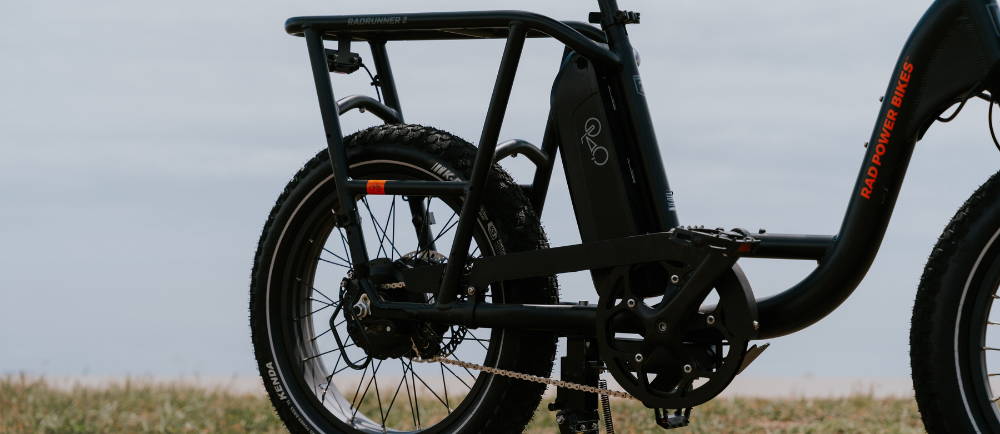
Fat tire e-Bikes usually weigh more than regular ones due to the wider wheels and reinforced frames to hold them. Many of these bikes also come with a more powerful motor, often 750W or larger, to move that extra weight and overcome the higher rolling resistance. Some use a mid-drive motor for this reason, as it can cope with hills and heavy loads better than a hub motor.
That extra weight and wide stance make a fat tire bike less nimble, so it won’t make tight turns or quick direction changes easily. A regular tire bike is lighter and has a narrower contact patch, so it’s quicker to steer and easier to handle at low speed.
City Streets and Paved Roads
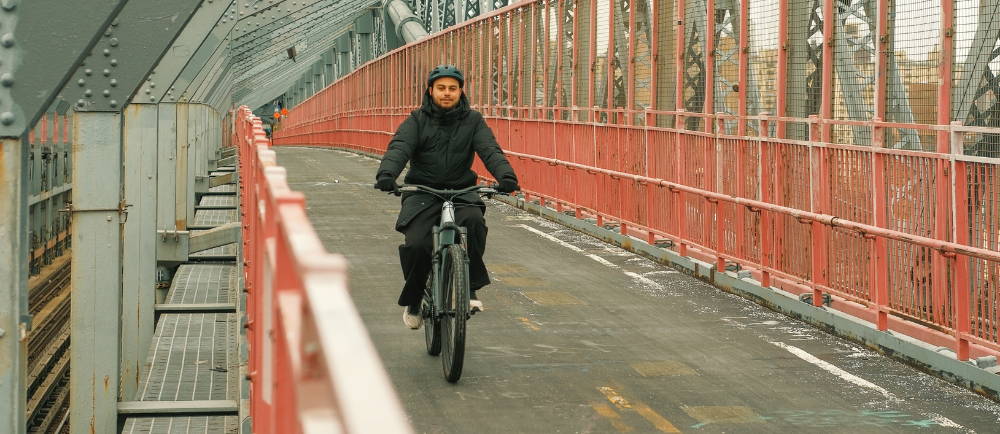
For daily commuting on paved roads and in bike lanes, a regular tire bike is usually the more practical choice, as it’s lighter and more efficient. Many are Class 1 or Class 2 bikes, as commuters don’t usually need all the motor power a fat tire off-road bike has.
A fat tire bike can still handle city riding fine, especially if you inflate the tires closer to 20 or 30 PSI for pavement, but it might be overkill for your needs.
Which One Should You Choose?
This comes down to your wants and needs, and where you usually ride. A regular bike is better for urban commuting on pavement or in traffic, as it’ll get you there more efficiently.
If you often encounter snow, sand, mud, or loose gravel, a fat tire bike makes more sense, even with the extra weight. This is also the case if you carry cargo or ride off-road terrain. You should also factor in the hill-climbing power that comes with a fat tire bike's motor.
Every bike Upway sells goes through a 50-point inspection before it's listed, so you don’t have to worry about the bike’s condition. Browse the electric bikes selection to compare current options.
Frequently Asked Questions
Do fat tire e-Bikes reduce battery range compared to regular tires?
Can fat tire e-Bikes be ridden on regular roads?
Yes, though inflating the tires up to 20 to 30 PSI helps reduce rolling resistance and makes them feel less sluggish on pavement than the low pressures used for sand or snow.
Do fat tire e-Bikes need suspension?
Not always. The tire's air volume already absorbs many small bumps, so many fat-tire bikes don’t have suspension, though some higher-end models still include one for rougher terrain.
Key Takeaways
- A fat tire electric bike will allow you to ride on surfaces that would be challenging on a regular e-Bike like snow and sand. They also work in pretty much all weather conditions.
- A fat tire's extra weight and wider stance make it less nimble to steer and potentially less efficient.
- Fat tires can replace the need for suspension components on cheaper electric bikes.