The current Pedego City Commuter can operate as a Class 1 or Class 2 e-Bike and is Class 3-ready. Pedego offers a software upgrade at participating locations for pedal assistance up to 28 mph. However, regional rules determine where you can use different e-bike classes.
Pedego City Commuter E-Bike Review
Written by: Chris Van Leuven | September 16, 2026 | Time to read 5-6 min
Pedego City Commuter e-Bike review covering its 749W motor, 52V battery, range, cadence pedal assist, hydraulic brakes, specs, and used models on Upway.

More about the Author: Chris Van Leuven
Chris is a writer, climber, and founder of Yosemite E-Biking in Mariposa, CA. When he’s not tackling Sierra Foothills trails or scaling rock walls, he’s crafting adventure stories with his boxer, Fenster. His work has appeared in Outside, Men’s Journal, Gripped, and Best American Sports Writing.
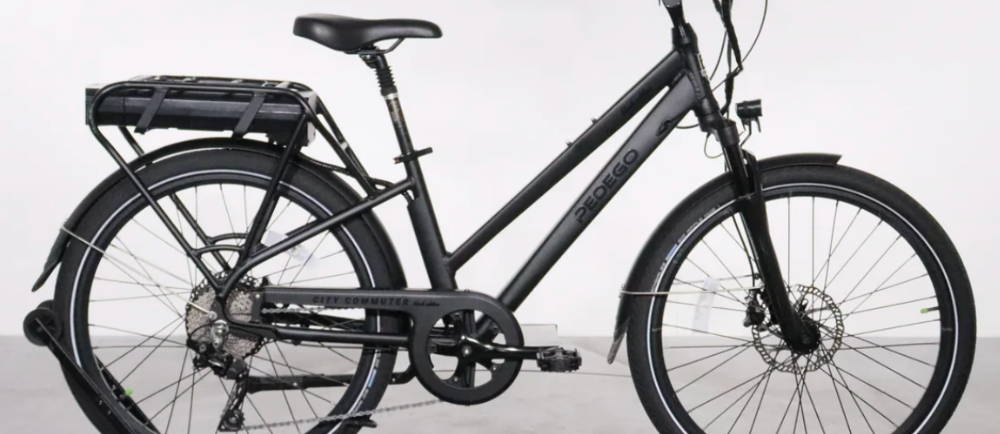
The Pedego City Commuter has been on the market for more than a decade, but the current version is a long way from some of the older bikes carrying the same name. Pedego has kept the upright position, rear-rack battery, and practical city-bike layout while adding a much bigger motor, two 52V battery options, hydraulic brakes, and updated components.
I like that Pedego hasn’t tried to disguise what this bike is. The Pedego City Commuter still looks like a comfortable city bike, not something designed around a hidden battery and minimalist frame. Swept-back handlebars and an adjustable stem keep the rider upright, while the rack, fenders, lights, and wide saddle are there for everyday use. Its long production history also makes this a great bike to buy used, but remember that a City Commuter from several years ago may be quite different from the one Pedego sells today.
In this Pedego City Commuter e-Bike review, I’ll look at the current bike’s motor, battery, and range, pedal assist, comfort, commuter equipment, and what to check when comparing older certified pre-owned e-Bikes on Upway.
👋 Welcome to Upway!
Upway is your top destination for buying and selling e-Bikes online. Discover your next e-Bike at up to 60% off retail prices, available in new or like-new condition.
Table of Contents
Pedego City Commuter Specs
The current City Commuter shows why the model year matters. Pedego now builds it around a 52V electrical system, a 749W rear-hub motor producing 60Nm of torque, and two battery capacity options.
| Spec | Pedego City Commuter |
|---|---|
| Motor | 749W geared rear hub |
| Torque | 60Nm |
| Battery | 52V 10.5Ah or 17.5Ah |
| Claimed range | Up to 75 miles |
| Pedal assist | 5-level cadence assist |
| Throttle | Twist throttle |
| Drivetrain | Shimano Acera 8-speed |
| Brakes | 2-piston hydraulic disc |
| Rotors | 180mm |
| Tires | 26 x 2.0 or 28 x 2.0 in. |
| Frame options | 26-in. step-through, 28-in. step-through, 28-in. classic |
| Payload | 250 lb. |
| Speed | Class 1 & 2; Class 3-ready |
Pedego lists the bike without its battery at roughly 53 to 56 pounds depending on configuration. The battery adds another 8.8 to 10 pounds.
A Commuter With Some Cruiser in It
Despite the name, the City Commuter has some cruiser influence. The handlebar sweeps back toward the rider, the stem adjusts for height and angle, and the wide saddle sits on a suspension seatpost with 40mm of travel. The riding position is relatively upright rather than stretched forward over the bars, making it a joy to ride.
Pedego skips a suspension fork and uses a rigid steel one instead, which is fine since the 2-inch-wide Schwalbe tires and suspension seatpost already provide some cushioning, and a rigid fork keeps one more component off the bike. The City Commuter is more purposeful than Pedego’s Comfort Cruiser, but it hasn’t abandoned the relaxed position that defines many of the brand’s bikes.
749W Rear-Hub Motor Has Plenty of Power
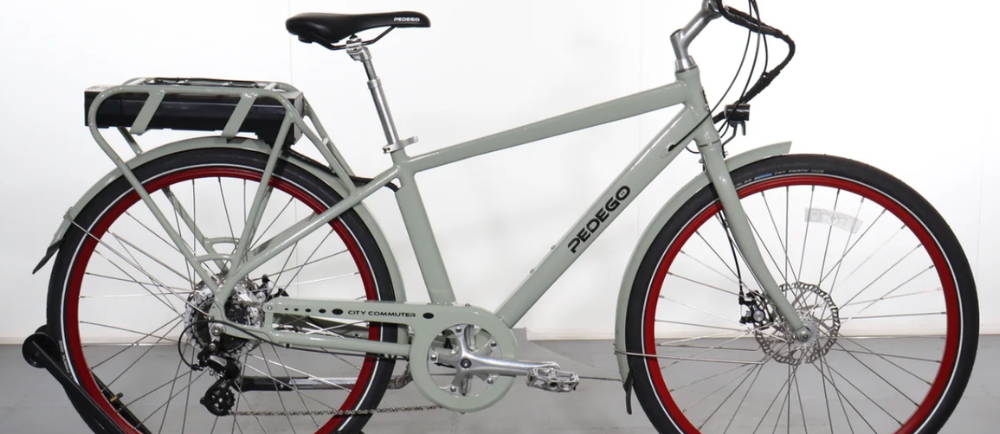
The current City Commuter uses a 749W geared rear-hub motor rated at 60Nm of torque. That’s substantial assistance for a bike intended primarily for pavement. Pedego pairs it with five levels of cadence-sensing pedal assist rather than a torque sensor. A cadence sensor detects when the cranks are turning and supplies assistance based on the selected level, but it doesn’t respond to how hard you’re pedaling in the same way a torque sensor does. For riders who want to put in less effort, that isn’t necessarily a disadvantage. Pick an assist level, pedal, and the motor does its share. The twist throttle can also get the bike moving without waiting for pedal assist to engage.
Pedego lists the bike as Class 1 and Class 2 and says it is Class 3-ready, with the upgrade available at participating locations. Class 3 operation allows pedal assistance up to 28 mph, although e-Bike laws determine where that higher-speed assistance can be used.
Battery Size and Range Depend on the Model
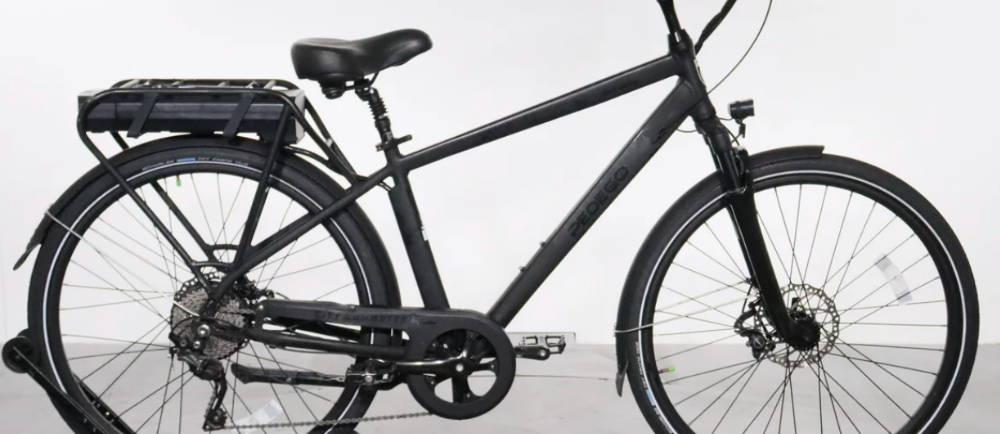
The current City Commuter comes with a 52V 10.5Ah or 17.5Ah e-Bike battery. The larger pack has an equivalent capacity of 910Wh, which is a lot of battery for riding around town. Pedego claims up to 75 miles of range, but I wouldn’t plan a 75-mile ride around that number. Hills, speed, rider weight, wind, temperature, assist level, and throttle use can all shorten the distance between charges. A commuter riding 10 or 15 miles a day may care more about charging less often than hitting the maximum range. The larger battery also leaves more room for errands or a longer ride.
The battery sits in the rear rack instead of inside the downtube. That puts some weight higher and farther back, but the pack is removable, so you can bring it inside to charge. And if you’re looking at a used City Commuter, check which battery it has, since previous generations used different batteries and electrical systems.
The City Commuter Comes Ready for Daily Riding
Pedego includes most of the equipment you’d expect on a dedicated commuter:
- Full-length fenders with mud flaps
- Integrated rear rack
- Front and rear lights with a brake light
- Hydraulic disc brakes with 180mm rotors
- Adjustable kickstand
- Shimano eight-speed drivetrain
- Schwalbe tires with flat protection and sealant
Hydraulic brakes are a good upgrade on an e-bike that can weigh more than 60 pounds with the battery installed, and Pedego uses two-piston calipers and 180mm rotors front and rear. Plus, the rear rack is already part of the bike, so adding panniers or a bag doesn’t require turning the City Commuter into a project first. This way, groceries, work gear, or a change of clothes can stay off the rider’s back.
Three Frame Sizes Make Fit Worth Considering
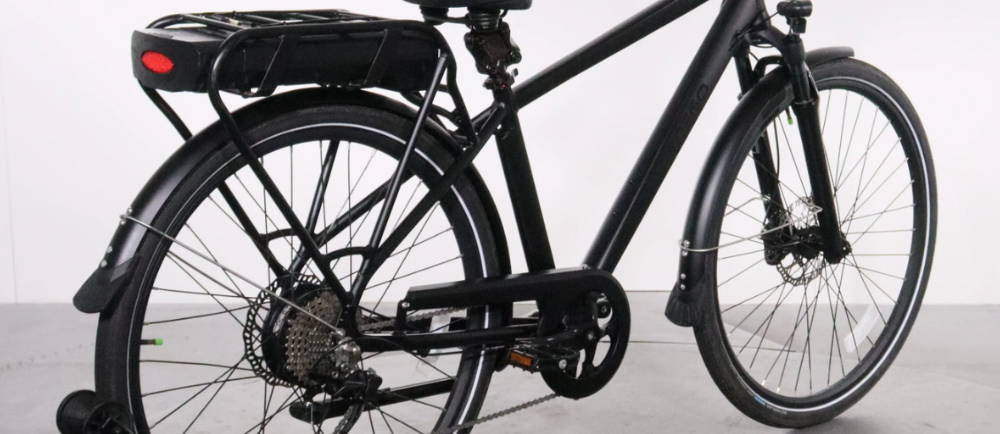
Pedego offers a 26-inch step-through, 28-inch step-through, and 28-inch classic frame. The 26-inch step-through e-Bike brings the bike closer to the ground, while the 28-inch versions give taller riders a choice between a step-through and traditional top tube. The adjustable stem also changes both handlebar height and angle. That’s useful because the upright fit is one of the main reasons to choose the City Commuter in the first place.
🤝 Why you can trust us for buying an e-Bike?
- Great prices: Get your next e-Bike for up to 60% off retail prices, in new or like-new conditions.
- Quality Guaranteed: Every e-Bike is rigorously certified by a team of professional mechanics, and comes with a 1-year warranty.
- Delivered to Your Door: Delivered to your home within a week. Change your mind? Return it thanks to our 14-day return policy.
🚲 We also buy e-Bikes. Click here for an estimation!
Who Is the Pedego City Commuter For?
The City Commuter makes the most sense for riders who want a practical e-Bike but don’t want a forward, performance-oriented position. This means that paved commutes, errands, bike paths, and recreational rides all suit the bike. The larger battery option also gives longer-distance commuters more room before the next charge. Weight is the obvious compromise.
Depending on the configuration and battery, the complete bike can get well into the 60-pound range. I’d look elsewhere at lightweight electric bikes if carrying an e-Bike upstairs is part of the daily routine. The cadence sensor may be a drawback for riders who prefer the more responsive feel of torque-sensing pedal assist, but if you mainly want plenty of assistance, it may not matter much.
With the current City Commuter, Pedego offers a comfortable, well-equipped commuter with a lot more power than earlier versions.
Buy a Pedego City Commuter on Upway & Save
The City Commuter’s long production history makes the individual listing particularly important when shopping on Upway. An older version may have a different motor, battery, drivetrain, braking system, or frame setup from the bike Pedego sells today.
Check the model year, mileage, battery, frame configuration, and equipment on the actual bike. Upway also puts its certified pre-owned e-Bikes through a 50-point inspection covering the mechanical and electrical systems. And all e-Bikes come with a 14-day return policy and a 1-year warranty.
Frequently Asked Questions
How fast does the Pedego City Commuter go?
How far can the Pedego City Commuter go on one charge?
Pedego claims up to 75 miles for the current City Commuter. But actual range depends on battery size, assist level, speed, terrain, rider weight, weather, and throttle use. Older City Commuters may have different battery capacities.
Is the Pedego City Commuter good for commuting?
The current model comes with fenders, lights, a rear rack, hydraulic disc brakes, a removable battery, and an upright riding position.
Key Takeaways
- The current City Commuter is comfortable, upright, and considerably more powerful than earlier versions. It pairs a 749W rear-hub motor with hydraulic brakes and two 52V battery choices.
- Don’t treat every City Commuter as the same bike. The model has been around for years, and the motor, battery, brakes, drivetrain, and frame configuration can vary considerably.
- Weight and the cadence sensor are the main drawbacks. The current bike can weigh well over 60 pounds with its battery, and some riders may prefer torque-sensing pedal assist.