Start with tire pressure, brake pads, wheels, chain and drivetrain wear, battery connections, lights, display, and visible electronics. Fall maintenance should also include more frequent cleaning if you ride through rain, mud, snow, or road salt.
Fall E-Bike Maintenance Checklist: Get Ready for Cold and Wet Weather
Written by: Chris Van Leuven | September 20, 2026 | Time to read 7-8 min
Follow this fall e-Bike maintenance checklist for tires, brakes, drivetrain care, battery range, lights, night riding, wet weather, and winter storage.

More about the Author: Chris Van Leuven
Chris is a writer, climber, and founder of Yosemite E-Biking in Mariposa, CA. When he’s not tackling Sierra Foothills trails or scaling rock walls, he’s crafting adventure stories with his boxer, Fenster. His work has appeared in Outside, Men’s Journal, Gripped, and Best American Sports Writing.
Fall changes an e-Bike ride very fast. The commute home gets darker and cooler. Mornings get colder. Roads stay wet longer, leaves pile up in corners, and a bike that spent the summer in dry conditions suddenly sees rain, mud, and grit. That doesn’t mean you need to rebuild the bike. But fall is a good time to clean it, look at what summer wore out, and get ready for different riding conditions.
If there’s already a mechanical problem, electrical issue, or error code, Upway’s electric bike repair guide covers troubleshooting and repairs in much more detail. This checklist focuses on seasonal upkeep: tires, brakes, the drivetrain, battery, electronics, lights, and the changes that come with colder, wetter weather.
In this blog, I’ll go through a fall e-Bike maintenance checklist, what colder temperatures and wet conditions can do to the bike, and how to get it ready for fall riding or winter storage.
👋 Welcome to Upway!
Upway is your top destination for buying and selling e-Bikes online. Discover your next e-Bike at up to 60% off retail prices, available in new or like-new condition.
Table of Contents
Start With What Summer Left Behind
Before worrying about winter, look at what happened over summer. A few months of commuting, trail riding, dusty roads, or long weekend rides can leave behind worn brake pads, loose components, bald tires, and plenty of dirt in the drivetrain. None of that is specific to fall. The change of seasons is simply a good reminder to look.
Start with the tires and wheels. Squeeze both brake levers. Shift through the gears and listen to the chain and derailleur. Make sure the battery still seats and locks normally, then check the display, lights, visible wiring, and other electronics. Pay attention to anything that’s changed. A new click, scrape, wobble, or squeal can say a lot about what’s happening with the bike.
Here’s the short version:
| Fall check | What matters | Why now? |
|---|---|---|
| Tires | Pressure, tread, cuts | Colder temperatures and wet roads |
| Brakes | Pads, rotors, lever feel | Rain and slippery surfaces |
| Drivetrain | Dirt, chain wear, lubrication | Summer dust followed by fall moisture |
| Battery | Charge, connections, temperature | Cold weather can reduce range |
| Lights | Headlight and taillight | Earlier sunsets |
| Fenders/racks | Loose bolts or rubbing | More rain and wet-road riding |
Tires and Brakes Matter More in Fall
Wet pavement changes things. So do wet leaves, painted road markings, mud, and the season’s first icy mornings. Good brakes and tires can’t eliminate those problems, but worn ones certainly don’t help. Check tire pressure with a gauge rather than squeezing the tire. Pressure can drop as temperatures fall. While you’re there, look for cuts, worn tread, embedded debris, and sidewall damage.
Then check the brakes; for more, see Upway’s brake repair guide. For a fall check, look for worn brake pads, damaged or contaminated rotors, rubbing, and any noticeable change in lever feel or stopping power. Hydraulic disc brakes may also need professional attention if a lever becomes unusually soft or braking performance changes. Stopping distance matters more on wet roads and trails.
Clean Up Before the Wet Weather Arrives
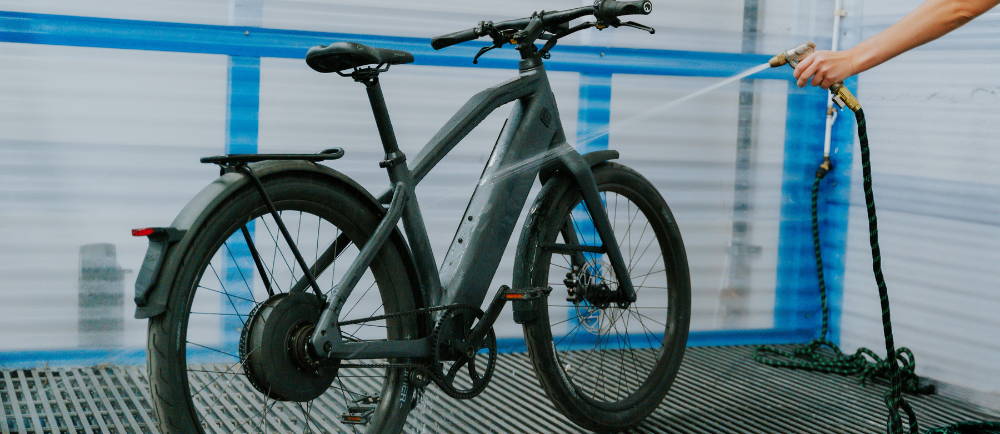
Summer dust mixed with fall rain makes a mess. Clean the frame, wheels, drivetrain, and the areas around the battery and electric motor where dirt tends to collect. Use an e-Bike-safe cleaner, brushes, rags, and some water.
For a chain drivetrain, clean the chain, cassette, chainring, gears, and derailleur pulleys before adding fresh lubricant. Wipe away the excess. In consistently wet conditions, wet-weather chain lube may last longer than dry lube, although it also tends to collect more dirt, which is why I use a dry bike lubricant.
After a rainy or muddy ride, don’t leave the bike filthy for a week. Mud, grit, moisture, and road salt can accelerate wear and contribute to corrosion or rust, especially around the drivetrain and other exposed metal components. Fall also means more water around an e-Bike’s electrical system. Keep the battery connections, charging port, display, controller wiring, and motor area clean and don’t get the electrical components wet (if you can avoid it).
For the complete washing process, read more about how to clean an electric bike.
Cold Weather Changes Battery Range
This is where fall maintenance gets more specific to electric bikes. Lithium-ion batteries don’t perform exactly the same in cold weather. As temperatures drop, available range can temporarily decrease even when the battery is healthy (I’ve seen this on many cold winter nights). Hills, wind, low tire pressure, cargo, and higher pedal-assist levels will reduce it further.
If the battery is removable and temperatures are dropping below freezing, storing it somewhere warmer is always better than leaving it overnight in a freezing garage or shed. And don’t start charging an extremely cold battery right away. Let it warm toward room temperature first. Cold-weather range loss doesn’t necessarily mean the battery is worn out. But a battery that won’t charge, repeatedly shows errors on the display, becomes unusually hot, smells strange, swells, or has visible damage is a different matter. Stop using it.
🤝 Why you can trust us for buying an e-Bike?
- Great prices: Get your next e-Bike for up to 60% off retail prices, in new or like-new conditions.
- Quality Guaranteed: Every e-Bike is rigorously certified by a team of professional mechanics, and comes with a 1-year warranty.
- Delivered to Your Door: Delivered to your home within a week. Change your mind? Return it thanks to our 14-day return policy.
🚲 We also buy e-Bikes. Click here for an estimation!
Don’t Get Caught Out After Dark

Nothing has to break for an e-Bike to be poorly prepared for fall. The normal ride home can suddenly happen in the dark, so check that the front and rear lights work before that happens. If the bike uses separate rechargeable lights, charge those too. Clean dirty lenses and make sure a rack bag, basket, or other cargo isn’t blocking the taillight.
For night riding, I add an extra-bright light to the handlebars even when the e-Bike already has a headlight. I also want to be as visible as possible, so I’ll add LED lights to my helmet and wear a reflective vest. Seeing the road is only half of it. Drivers and other riders need to see you too.
And night riding can be great. Some of my favorite rides happen on cool fall and winter evenings, when I can watch my breath, and there’s nothing but me, the open road, and a bright beam coming off the handlebars, lighting the empty road leading home.
Fenders start earning their keep around now too. Make sure they’re secure and aren’t rubbing the tires or wheels. A loose fender rattling against the wheel for 10 miles gets old quickly. And where you live makes a difference. Fall in Southern California can still mean warm afternoons and dry roads. The Northeast and Midwest can move into freezing mornings, heavy rain, snow, and road salt much sooner. Mountain trails will see the first snow while lower-elevation roads are still dry.
Keep Riding or Put the E-Bike Away

By late fall, the maintenance routine depends on what happens next. If you ride an e-Bike through winter, wet roads, snow, mud, salt, and grit mean you'll need to clean and check components more often. Watch tire pressure, brake performance, drivetrain lubrication, battery range, and lights throughout the season.
If the bike is going away until spring, a few jobs are worth doing before it disappears into the garage:
- Clean and dry it. Don’t store an e-Bike covered in mud, salt, or road grime.
- Take care of the drivetrain. Clean and lubricate the chain and examine for excessive wear.
- Check the tires. Inflate them to the appropriate pressure before storage.
- Store the battery properly. Follow the battery manufacturer’s recommendations for storage charge and temperature rather than assuming one percentage applies to every battery.
- Keep it dry. A removable battery is generally better stored in a dry, moderate-temperature location than left through winter in a freezing shed.
Fall can also be a good time for a professional tune-up if the e-Bike had a hard summer. Worn brake pads, a stretched chain, a wobbly wheel, hydraulic brake problems, or persistent shifting issues won’t improve while the bike sits. Deal with them now, and your first spring ride will be much simpler.
Frequently Asked Questions
What maintenance does an e-Bike need in fall?
How do I winterize my e-Bike?
Clean and dry the bike, lubricate the drivetrain, inflate the tires, and store the e-Bike somewhere dry. Follow the battery manufacturer’s recommendations for long-term battery charge and storage temperature, especially if the bike will sit for several months.
Does cold weather damage an e-Bike battery?
Cold temperatures temporarily reduce lithium-ion battery performance and range. Charging and storage temperatures matter too. Follow the battery manufacturer’s recommendations and avoid charging an extremely cold battery.
Key Takeaways
- Fall maintenance is about changing conditions. Colder temperatures, rain, shorter days, wet roads, and slippery trails change what deserves attention.
- Check the parts that take the abuse. Tires, wheels, brakes, drivetrain components, the battery, electronics, and lights are good places to start.
- Plan for winter. An e-Bike ridden through winter needs more frequent cleaning and checks, while a stored bike should be clean, dry, and have its battery properly stored.