Yes. Leasing and subscriptions are designed for regular, everyday use.
The Best E-Bike for Commuting: Test, Rent, Then Decide
Written by: Tom Fortune | January 25, 2026 | Time to read 5 min
Find the best e-Bike for commuting by testing and leasing before you buy. A smarter way to choose your daily ride.

More about the Author: Tom Fortune
Tom is a Brit living in the French Alps. When he's not creating written and video content for various brands, he's either pedalling or snowboarding around his local mountains. E-Bikes have unlocked the potential for Tom to explore Alpine terrain and get away from the crowded bike parks. He is only too keen to share his knowledge and experience with other riders.

If you have spent some time researching the best e-Bike for commuting, you've probably already realised something important: there's no single best option that suits everyone, making the choice very difficult. Commuting needs vary widely depending on distance, terrain, storage, and your actual daily circumstances. That's where approaches like bike leasing and long-term rentals are coming into the picture. Instead of committing to one of many electric bikes up front, more commuters are choosing bike leasing. It allows them to test and rent e-Bikes before deciding what truly fits their routine.
In this article, I will explain how e-Bike leasing works for commuters, why testing matters, and how subscriptions change the way people choose their perfect e-Bike.
👋 Welcome to Upway!
Upway is your top destination for buying and selling e-Bikes online. Discover your next e-Bike at up to 60% off retail prices, available in new or like-new condition.
How Commuting Affects What E-Bike You Ride?
Commuting is quite different from recreational riding. A commuter bike has to perform consistently day after day, often under pressure and in demanding circumstances. You're riding when you're late, tired, or carrying things. You may even combine riding your bike with public transportation, store the bike at work, and navigate traffic during the busiest times of the day. These realities make choosing among different electric bikes more complex than simply reading spec sheets or taking a short test ride at a bike shop.
That's why many commuters now avoid traditional ownership and instead adopt a bike leasing or a bike subscription. These options reduce risk while you figure out what actually works for you.
What E-Bike Leasing Means for Commuters
Bike leasing lets you use an e-Bike through structured monthly payments rather than paying the full price upfront. In commuter-focused programs, this often resembles a long-term rental or a bike subscription, such as Upway's Flex scheme. The scheme lets you choose a specific bike, ride it regularly, and keep paying monthly as long as it suits your needs.
Leasing is very different from short-term electric bike rentals. Leasing is made for everyday use. It's meant for commuting, running errands, and repeated trips over weeks or months. It is meant to fit in with or enhance your daily routine.
This model can make biking much better. It is especially helpful for people who ride electric bikes for the first time.

Why E-Bike Test Rides Matter More Than Specs
An electric bike's spec sheet is a good place to start when deciding what to buy. But you don't really know how it will suit your life, especially if you are new to the e-Bike world. If you test an electric bike through a bike subscription, you have time to understand the following:
- Whether the max operating range is enough for your daily cycling distance.
- How the bike handles in traffic.
- If it is practical enough for you.
- If it feels manageable during busy commutes?
Test, Rent, Then Decide
For commuters, long-term access changes how they make decisions about their transport. Instead of asking "Is this the best bike?" you ask "Does this bike work for my commute?" That's the thinking behind flexible programs like Upway Flex, which sits somewhere between ownership and traditional bike leasing. Flex allows riders to use specific e-Bikes month-to-month, with maintenance and support included, while the rider evaluates how it fits in with their daily life.
How Commuters Actually Use E-Bikes
Before you make a decision on an electric bike, you need to think about what you will actually do with it. People who commute tend to have a similar routine, and their mode of transport needs to fit in with it. For example:
- They may need a cargo bike to carry all their gear or even drop the kids off at school.
- If you mix riding a bike with public transit, a folding electric bike would be useful, as you could carry it onto trains, etc. They are also great if storage space is an issue.
- A mountain e-Bike may be a bit overkill for commuting unless you have unique circumstances where you have to ride over technical terrain.
- A road bike e-Bike may feel fast, but it is less forgiving and often impractical.
- Your commute may be many miles, so the max operating range needs to be long enough.
Bike Leasing vs Buying For Daily Commuters
There are a few characteristics you should consider before you decide to lease or buy a commuter electric bike:
Buying is often the best choice if you:
- Know your ideal setup.
- Expect to ride the same route long-term.
- Have secure storage.
- Have your heart set on a particular bike.
- Like to customise and upgrade your bike.
Bike leasing or a bike subscription often fits better if you:
- Expect changes in schedule or location.
- Prefer predictable payment plans that include things like theft insurance.
- Value flexibility over ownership.
- Don't want to worry about maintenance costs.
- Want to try different electric bikes over time.
Neither option is universally better; you need to decide between buying and bike leasing based on your commuting needs.
🤝 Enjoy an even greater discount when you trade in your old electric bike today!
Click here for a price estimation
The Role of Bike Shops In The Process
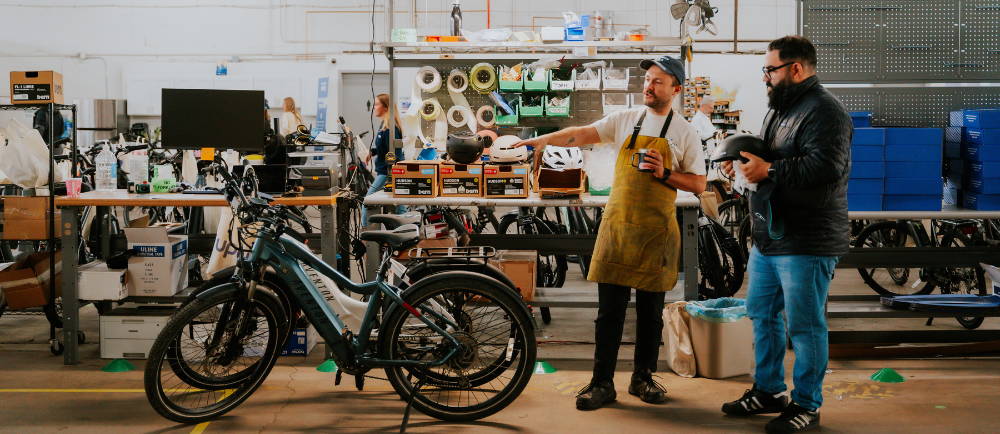
Traditional bike shops still matter. They help with fit, sizing, and guidance in the early days. Short test rides only answer basic questions. They do not give you a full idea of what it is like to live with a specific electric bike. Increasingly, bike shops are pairing sales with leasing or subscription options. This reflects how commuters now choose bikes.
Upway understands that people love the personal touch of local bike shops. Therefore, Upway helps riders out in person at the UpCenter. This is where professionals help you with sizing and give you a rundown of all the controls while giving you top tips for riding your e-Bike.
Monthly Payments vs Upfront Costs
One major barrier to e-Bike commuting is cost. Quality electric bikes often require a significant outlay. But leasing replaces that with monthly payments, which many commuters find easier to budget.
Bike subscription programs like Upway Flex simplify this further. There are several tiers available to suit your budget, for example:
- $79 per month
- $99 per month
- $119 per month
- $139+ per monthfor more premium models
These low costs are predictable, your commitment is limited, and you can avoid locking into an unknown bike before knowing whether it fits you or suits your needs. For commuters comparing bike leasing options and different payment plans, clarity makes a huge difference.
How does Upway Flex work? 🚴♀️
- 🚴 Step 1: Browse our entire inventory, grouped by monthly price. Reserve the exact e-Bike you want or visit our showroom in Los Angeles.
- 🧰 Step 2: Pick up the professionally inspected bike and we’ll walk you through the ins and outs of your specific model, and set the seat height, too.
- 🔧 Step 3: Ride it, swap it, or buy it! Enjoy riding and there's an included tune-up each 6 months. After 3 months, you can return the bike, swap for a different one, or apply 25% of your payments toward owning it forever.
What a Bike Subscription Usually Covers
Most commuter-focused bike subscription models, including Upway Flex, are built around everyday reliability rather than occasional use. While details vary, they typically include:
- Use of a specific commuter-ready e-Bike.
- Maintenance and ongoing support.
- The ability to return or swap the bike if needs change.
This structure helps commuters focus on riding, not ownership logistics.
Are Subscriptions the “Cheapest” Option?
Over many years, buying an e-Bike outright is usually cheaper on paper. But that assumes an uneventful ownership experience with no theft and minimal repairs. For many commuters, the real question isn’t total lifetime cost, but risk. Subscriptions cost more over time, yet they reduce uncertainty. That tradeoff is often acceptable, especially when commuting habits are still evolving.
Frequently Asked Questions
Can I rely on a leased e-Bike for daily commuting?
Is leasing only for people new to e-Bikes?
No. Experienced riders often use it when routines or cities change.
What happens if my commute changes mid-term?
Flexibility lets you adapt without having to sell a bike.
Final Takeaway
For commuters, the best e-Bike decision is rarely obvious straight away. You understand more when you've spent time with a bike with repetition, and everyday riding. Flexible access models like Upway Flex offer you peace of mind. They let you experience commuting on a particular bike without locking you into a choice too early, so you can try something else if you wish.