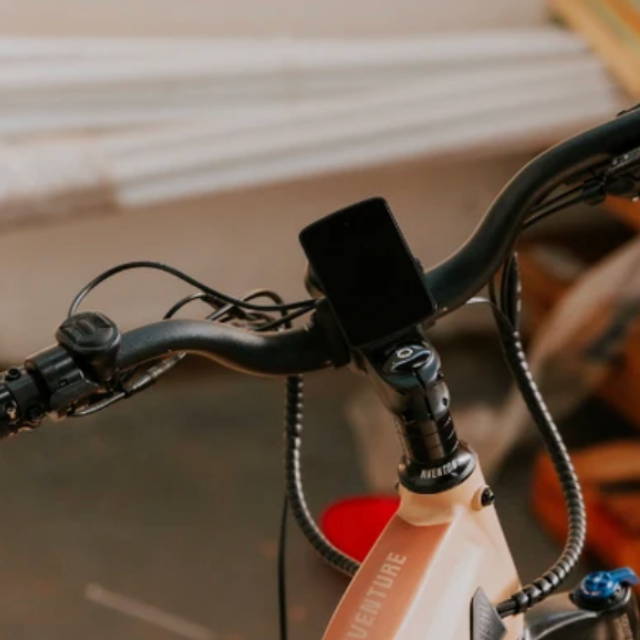
Yes. Electric bicycles that meet Hawaii’s legal definition can be ridden on public roads subject to state and municipal traffic laws. Under the 2026 rules, Hawaii recognizes Class 1, Class 2, and Class 3 e-Bikes, with a 750-watt motor ceiling.
Hawaii Electric Bike Laws: What Changed in 2026
Written by: Chris Van Leuven | August 26, 2026 | Time to read: 5 min
Hawaii electric bike laws changed in 2026. Learn about Class 1-3 e-Bike rules, registration, helmets, age limits, sidewalks, motor power, and where you can ride.

More about the Author: Chris Van Leuven
Chris is a writer, climber, and founder of Yosemite E-Biking in Mariposa, CA. When he’s not tackling Sierra Foothills trails or scaling rock walls, he’s crafting adventure stories with his boxer, Fenster. His work has appeared in Outside, Men’s Journal, Gripped, and Best American Sports Writing.

Buying an e-Bike in Hawaii comes with one requirement that riders in most states never have to think about: registering the bike. As of July 2026, there’s also a new set of rules governing what counts as an e-Bike, who can ride one, and where faster electric devices belong.
Along with registration, riders need to pay attention to the bike’s class, motor power, assisted speed, age and helmet rules, and where they’re riding. An e-Bike with a motor over 750 watts and capable of exceeding 28 mph falls into Hawaii’s new high-speed electric device category, with much tighter rules than a legal e-Bike.
In this blog, I’ll cover Hawaii electric bike laws for 2026, including the new Class 1, Class 2, and Class 3 definitions, registration, helmets, sidewalks, bike lanes, and rules for younger riders.
For a comparison with the rest of the country, Upway’s electric bike laws by state guide covers e-Bike regulations across the US.
👋 Welcome to Upway!
Upway is your top destination for buying and selling e-Bikes online. Discover your next e-Bike at up to 60% off retail prices, available in new or like-new condition.
Table of Contents
Hawaii Rewrote Its E-Bike Rules in 2026
Until this summer, Hawaii was something of an outlier when it came to e-Bike classification. Act 259 brings the state closer to the system you’ll recognize if you’ve ridden an e-Bike elsewhere in the country.
A legal electric bicycle now needs fully operable pedals and a motor of no more than 750 watts. From there, Hawaii uses the Class 1, Class 2, and Class 3 system:
| E-Bike Class | How the Motor Works | Maximum Assisted Speed | What to Know |
|---|---|---|---|
| Class 1 | Pedal assist | 20 mph | Assistance works while you pedal |
| Class 2 | Can propel the bike without pedaling | 20 mph | Includes throttle-assisted operation |
| Class 3 | Pedal assist | 28 mph | Must have a speedometer |
That brings Hawaii in line with the three-class e-Bike system used in much of the US. The bigger change may be what falls outside those definitions. Act 259 defines a high-speed electric device as an e-Bike with a motor exceeding 750 watts and capable of more than 28 mph. Those e-Bikes face much tighter restrictions on public roads and other public spaces. That distinction is worth paying attention to in Hawaii, where something sold online as an “e-Bike” may look vaguely like a bicycle while having considerably more power and speed. The pedals and marketing name aren’t enough. Check the motor rating and assisted speed.
Hawaii also added several specific riding rules. On public rights-of-way, e-Bike riders aren’t supposed to do wheelies or stunts, stand or kneel on the seat, ride on the handlebars, or operate the bike recklessly. In normal riding, the operator must be seated, facing forward, with the wheels on the ground.
Registration Is Still Part of Riding an E-Bike in Hawaii

A legal e-Bike must be registered in Hawaii. The permanent registration fee is $30, making Hawaii one of the few states where buying an e-Bike also means dealing with a state registration requirement. Hawaii and New Jersey are the only states that require e-Bike registration.
You don’t, however, need motor-vehicle insurance for an e-Bike that meets Hawaii’s definition.
Here’s what matters:
- Registration: Yes.
- Permanent registration fee: $30.
- Motor-vehicle insurance for a legal e-Bike: No.
- Motor limit: 750 watts.
- Class 3 maximum assisted speed: 28 mph.
- Class 3 speedometer: Required.
New labeling rules are part of the changes as well. Manufacturers and distributors must include information such as the bike’s class, top assisted speed, and motor wattage. Sellers delivering e-Bikes into Hawaii also face disclosure requirements intended to clarify the bike’s legal status and riding requirements. That should make it harder to mistake a legal e-Bike for something much faster that happens to have pedals.
If you already own a bike modified for more speed or power, pay particular attention here. Changes to motor output, assisted speed, or other performance settings can affect an e-Bike’s legal classification. Upway has a separate guide covering what can happen when you modify an electric bike.
Where Can You Ride an E-Bike in Hawaii?

This is where knowing the statewide law isn’t quite enough. Hawaii sets the basic framework, but counties can add restrictions, particularly around sidewalks, bicycle lanes, and bicycle paths. Sidewalks are a good example. Hawaii’s new law permits e-Bikes on sidewalks under certain conditions, including a 10 mph speed limit, but business districts and county restrictions can change the answer.
So Hawaii allowing e-Bikes on sidewalks doesn’t mean you can automatically ride one down every sidewalk in Honolulu or Waikiki. If I were planning a ride there, I’d check the City and County of Honolulu rules for the specific area. Do the same on Maui, Kauai, or Hawaii Island rather than assuming the rules are identical once you leave the roadway.
Bike lanes and paths can have their own restrictions, too. Counties have authority over access in some of these places. Once you leave the pavement for a park or recreational trail, check who manages it. That agency can have its own e-Bike rules.
That’s particularly relevant for anyone riding an electric mountain bike. A legal Class 1 e-Bike doesn’t automatically get access to every mountain-bike or natural-surface trail in Hawaii. A legal e-Bike still isn’t a ticket onto every path or trail in the state. The bike can meet Hawaii’s definition, while the place you want to ride has its own restrictions.

Age, Helmets, and What to Check Before You Ride
Hawaii’s new law puts more attention on younger riders. Anyone under 16 riding a Class 2 or Class 3 e-Bike must be under the direct supervision of a parent, guardian, or someone at least 18 years old. The law defines direct supervision as having that person physically present and close enough to observe and control what’s happening.
Helmet requirements extend further. Riders under 18 have to wear a properly fitted and fastened bicycle helmet when riding on a street, bikeway, or other public property. The helmet rule also applies to kids riding as passengers in a child seat or bicycle trailer. For most riders, registration and the exact route deserve the closest look.
Before heading out:
- Look at the motor. A legal Hawaii e-Bike is limited to 750 watts.
- Know the class. Class 1 and Class 2 assistance ends at 20 mph; Class 3 pedal assistance ends at 28 mph.
- Register the bike. Hawaii requires e-Bike registration.
- Check the rider’s age. Riders under 16 need direct supervision on Class 2 and Class 3 e-Bikes.
- Bring a helmet for anyone under 18.
- Check the county and the route. Streets, sidewalks, bike paths, parks, and natural-surface trails can each have different access rules.
One practical limitation for Hawaii riders: Upway currently delivers only to the lower 48 states and doesn’t ship to Hawaii or Alaska. For riders who already own an e-Bike in Hawaii, the key is knowing exactly what you have and checking the rules where you actually ride.
Frequently Asked Questions
Are electric bikes street legal in Hawaii?
Do I need to register my e-Bike in Hawaii?
Yes. Hawaii requires e-Bike registration and charges a one-time $30 registration fee. That’s unusual nationally; Upway’s current state-by-state guide lists Hawaii and New Jersey as the two states requiring e-Bike registration.
Can I ride an e-Bike on the sidewalk in Hawaii?
Sometimes. Hawaii law allows e-Bikes on sidewalks under certain conditions and sets a 10 mph limit, but business districts and county rules can restrict where you ride. Check the local ordinance rather than assuming every sidewalk is open to e-Bikes.
Key Takeaways
- Hawaii changed its e-Bike laws in 2026. The state now uses Class 1, Class 2, and Class 3 definitions and draws a clearer line between legal e-Bikes and high-speed electric devices.
- Registration is still required to own an e-Bike in Hawaii. The state charges a one-time $30 registration fee, while younger riders face additional helmet and supervision requirements.
- Check where you’re riding. State law establishes the basic rules, but sidewalks, bike paths, parks, and trails can have additional county or land-manager restrictions.