Our trade-in offers are calculated by working backward from the projected retail value to ensure we can offer a competitive payout while covering our costs.
How Does Upway Calculate An E-Bike’s Trade-In Value?
Written by: Upway Team | August 2026 | Time to read 5 min
At Upway, we look at what a used electric bike could sell for today, and work backward to determine what we can offer.
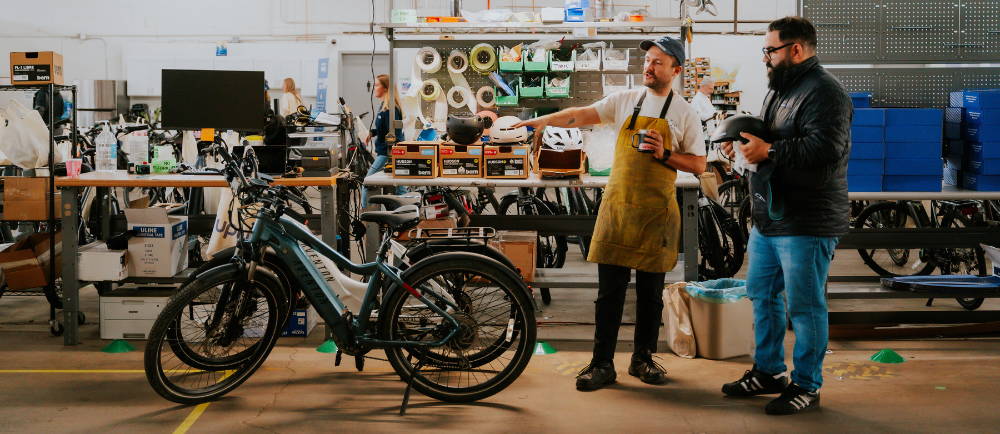
How does Upway actually calculate our trade-in offers for used electric bikes? There’s a lot more that goes into it than simply offering a flat percentage of MSRP— at Upway, we determine our purchase offers by working backward from a bike's projected resale value. That means taking into account additional factors such as the brand, model year, mileage, original MSRP, and bike type. We’ve tailored our valuation system, creating an effective real-time pricing tool that allows Upway and our partners to provide fast quotes for used e-Bikes.
In this quick guide to Upway’s Trade-In Program, we’ll discuss how we approach pricing, rank brands by how well they retain value, and explain other pricing factors through tangible examples.
In this quick guide to Upway’s Trade-In Program, we’ll discuss how we approach pricing, rank brands by how well they retain value, and explain other pricing factors through tangible examples.
👋 Welcome to Upway!
Upway is your top destination for buying and selling e-Bikes online. Discover your next e-Bike at up to 60% off retail prices, available in new or like-new condition.
Trade-In Program: Top Brands to Know
Not all electric bike brands get top dollar when it comes to trade-in value. At Upway, we’ve seen that certain brands tend to retain more value in the secondary market.
Here are some of the brands most worth surfacing to customers considering a trade-in:
- Specialized
- Aventon
- Super73
- Riese & Müller
- Orbea
- Tern
- Santa Cruz

Notable Brands with Low Trade-In Value
Customers can be disappointed if their expectation of the trade-in value is well below the real value in the secondary market. To reduce the likelihood of disappointing a customer, it can be helpful to understand what brands retain a lower share of their original value.
For instance, a customer might be surprised that a Pedego they bought for $2,000 MSRP is only worth a few hundred dollars at resale.
The brands below have low trade-in values relative to MSRP:
- Rad Power Bikes
- Momentum
- Pedego
- Blix
- Magnum
- Diamondback
Trade-In Pricing Examples
Disclaimer: These examples are from the spring of 2026. These models have already sold, and if these same bikes came online today, they could have different prices.
Brand
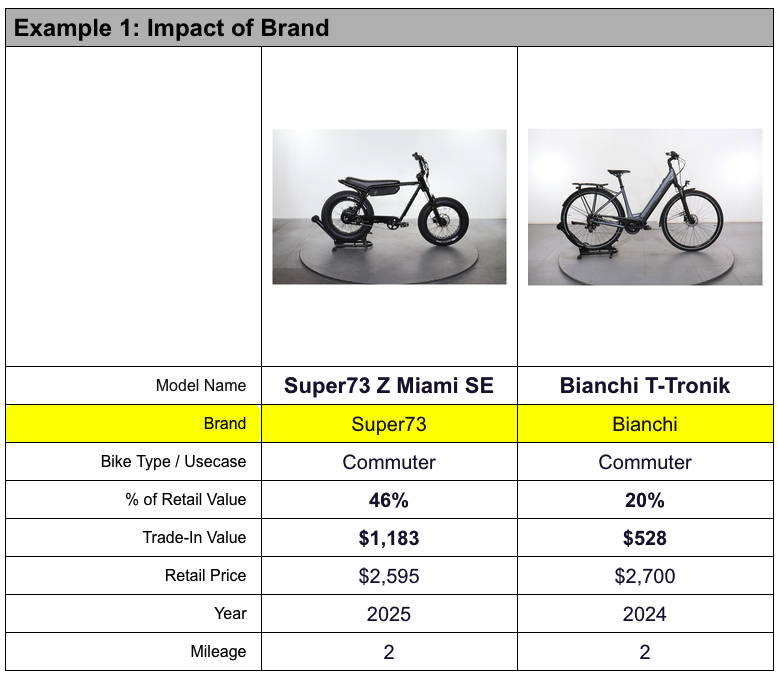
One of the key factors informing a bike’s value in the secondary market is the brand. Well-recognized brands command a higher residual value, the value in the secondary market as a % of MSRP.
In the example below, two commuter bikes with similar mileage, year, and MSRP have very different trade-in values. While the Bianchi is one year older, the key difference here is that Super73s sell better and so are worth more in the secondary market.
Model year
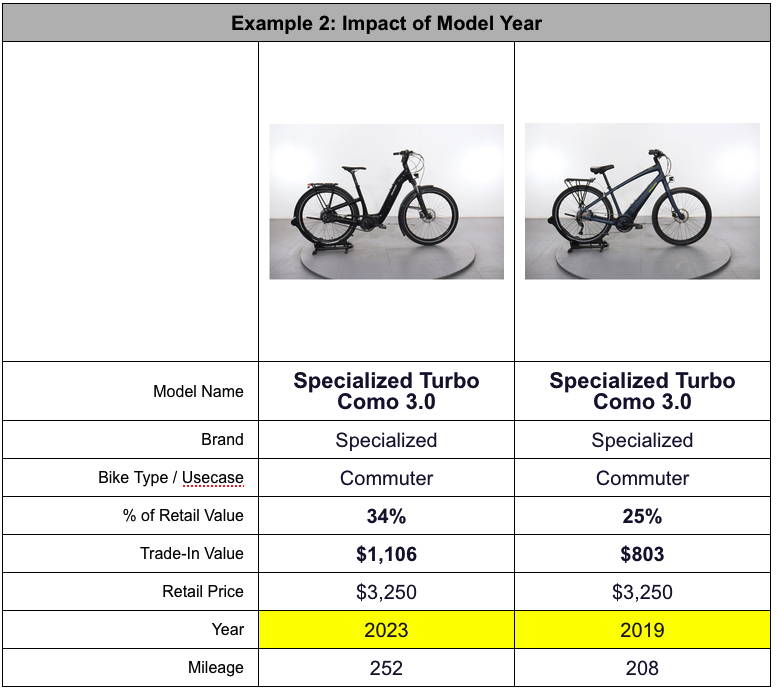
While brand can play a bigger role in determining resale value, the age of a used bike still comes into play. Just like car models can have different years, some bike models evolve over time. Because older bikes sell for less, their trade-in value is correspondingly lower. In this example below, two Specialized Turbo Como 3.0s with similar mileage differ in trade-in values by about $300 because they are different model years.
Mileage
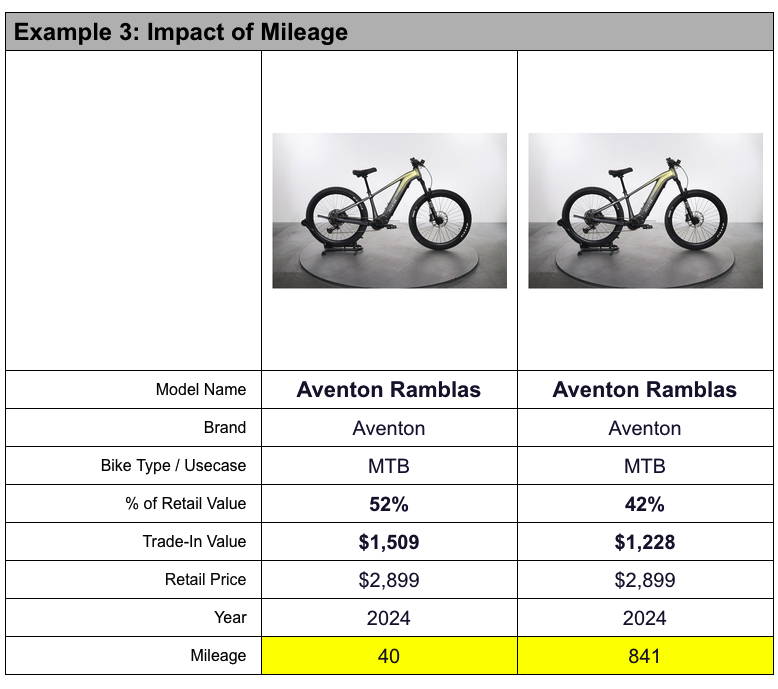
Another key factor impacting a bike’s trade-in value is how much it has been ridden. In this example, the two bikes are the same model (2024 Aventon Ramblas) but have different levels of use. The additional wear lowers the trade-in value by around $280 in this example.
Original MSRP
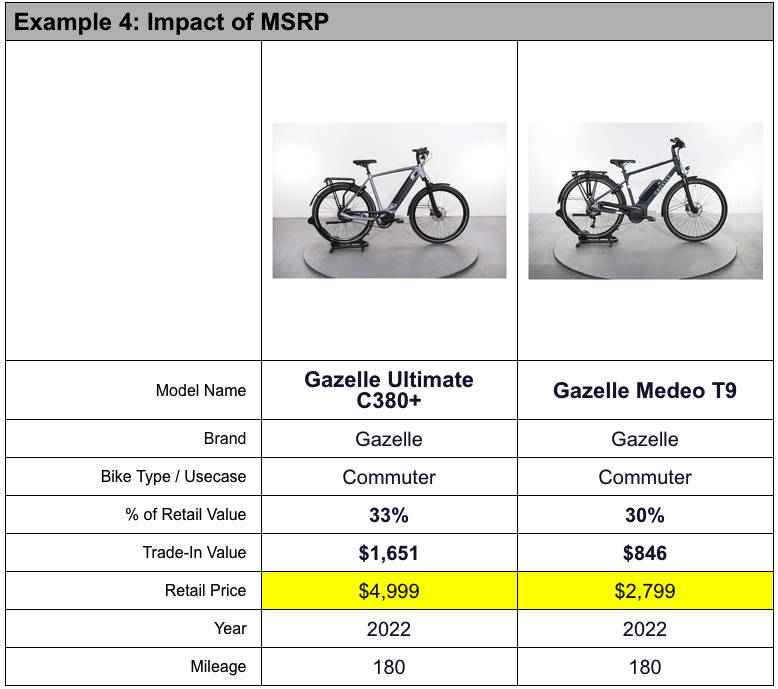
While we’ve focused so far on how bikes with similar original MSRPs can have different resale values, the original MSRP is still the biggest determinant of value in the secondary market. See here two Gazelles from 2022 with similar levels of wear. The Gazelle C380+’s MSRP is $2,200 higher, yielding a trade-in value that is $800 higher and roughly double the Gazelle Medeo T9.
Bike type or use case
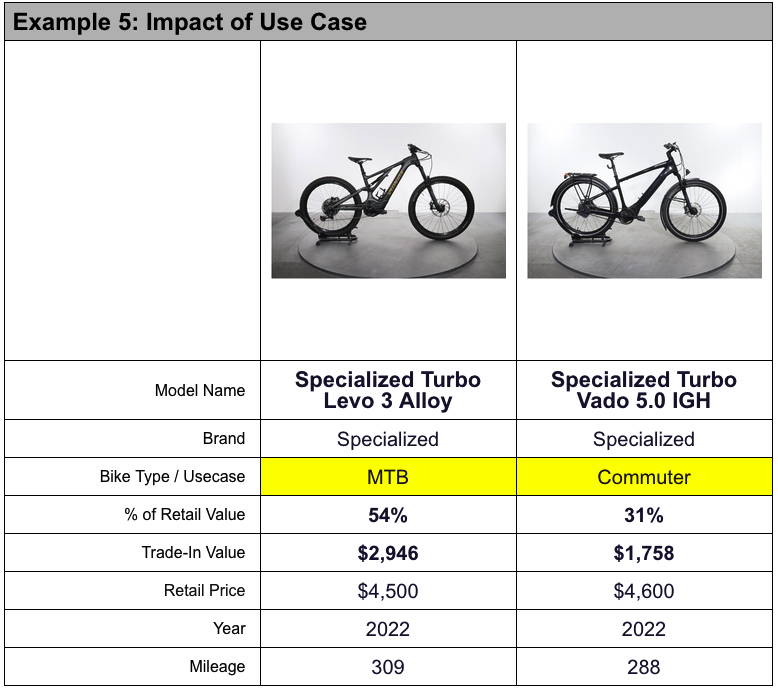
Just as pickup trucks have different residual values than minivans, e-MTBs have different residual values than road bikes. Generally, cargo bikes and e-MTBs retain a higher share of their original price in the secondary market than commuter, folding, or road bikes. See the example below, where two Specialized bikes with similar mileage, year, and MSRP have very different purchase prices. This is, in part, because Specialized e-MTBs better retain value in the secondary market than commuter models.
Frequently Asked Questions
Why doesn't Upway just offer a flat percentage of the bike’s original MSRP?
How does brand impact trade-in value?
Depreciation is not uniform across categories or brands. Brands like Aventon, Specialized, Tern, and Super73 store resell closer to MSRP, while brands like Rad Power, Bianchi, and Blix resell with a larger discount relative to MSRP.
By tracking historical sales trends and real-time demand, we determine the expected selling price residual value based on its specific brand and use case, rather than applying a one-size-fits-all MSRP markdown.
What is “residual value”?
This is another way of saying “percent of MSRP”. For example, a bike with a $4,000 MSRP that sells for 50% residual value sells for $2,000.
Why do you calculate the trade-in offer by subtracting costs backward from the selling price, rather than just taking a percent of expected selling price?
Working backward from the projected retail value ensures we can offer a competitive payout while covering our costs.
If we took a rigid, flat percentage of the selling price, we would be forced to underpay customers on high-value bikes just to cover our baseline risks on low-value ones. By estimating our actual operational costs and target spread from the real-market selling price, we pass the maximum remaining equity directly back to the rider.
If we took a rigid, flat percentage of the selling price, we would be forced to underpay customers on high-value bikes just to cover our baseline risks on low-value ones. By estimating our actual operational costs and target spread from the real-market selling price, we pass the maximum remaining equity directly back to the rider.
Key Takeaways
- Holistic Valuation: We look at the complete picture of a bike: its brand, use case, engine type, suspension, mileage, model year, and original MSRP.
- Market Determines Selling Price: Our prices aren't set in stone. We raise and lower prices in response to observed sales performance.
- Backward-Calculated Offers: To ensure trade-in deals are mutually beneficial, we calculate our purchase offer by subtracting Upway’s expected operational costs from Upway’s projected selling price.