It may be using the wrong wheel size or circumference setting, or the speed sensor may be misaligned, damaged, or losing signal. Tire size, tire pressure, firmware, display settings, controller issues, and replacement parts also affect speed and distance readings.
E-Bike Mileage Looks Wrong? What Can Throw Off the Odometer
Written by: Chris Van Leuven | May 26, 2026 | Time to read: 5-6 min
Learn why your e-Bike odometer may be wrong, from wheel size and speed sensors to mileage checks and e-Bike repair when buying certified pre-owned.

More about the Author: Chris Van Leuven
Chris is a writer, climber, and founder of Yosemite E-Biking in Mariposa, CA. When he’s not tackling Sierra Foothills trails or scaling rock walls, he’s crafting adventure stories with his boxer, Fenster. His work has appeared in Outside, Men’s Journal, Gripped, and Best American Sports Writing.
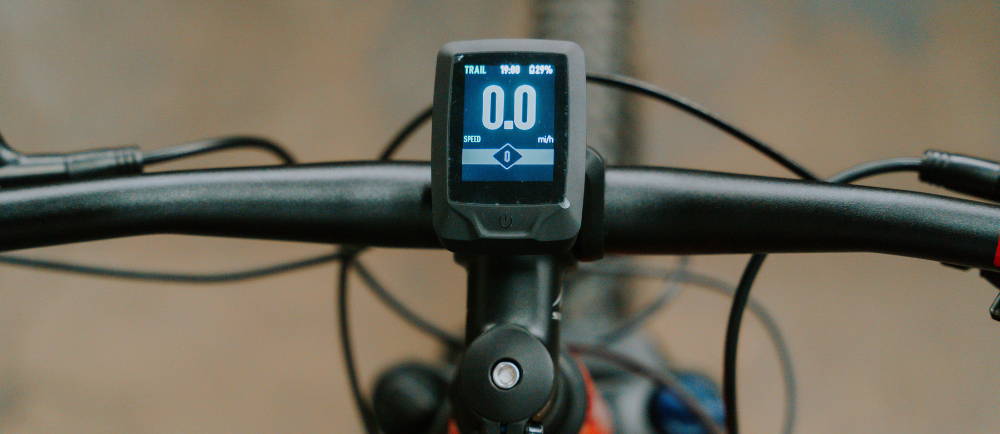
It’s not always obvious when an e-Bike odometer is wrong. The bike rides fine, and the motor helps. Plus, the display looks normal. Then you compare it to GPS, a friend’s bike, Strava, or the route you know by heart, and the numbers are different.
Maybe your e-Bike says you rode 20 miles, but your smartwatch or phone says 18. Maybe the speedometer reads a little fast. Maybe the trip odometer resets correctly, but the total mileage looks wrong, just not by a huge amount. Or maybe the electric bike suddenly shows a number that makes no sense at all. On an e-Bike, mileage depends on the display, wheel size, tire setup, speed sensor, magnet, controller, firmware, and sometimes the app. A minor setup issue can cause the bike’s distance count to be wrong on every ride.
Before you assume the mileage is totally wrong or the display is malfunctioning, it helps to understand how the bike counts miles in the first place. Below, I’ll walk through why e-Bike odometer errors happen, what to check first, and how to read mileage and more when you’re shopping for certified pre-owned e-Bikes on Upway.
👋 Welcome to Upway!
Upway is your top destination for buying and selling e-Bikes online. Discover your next e-Bike at up to 60% off retail prices, available in new or like-new condition.
Table of Contents
Why can an e-Bike odometer be wrong?
Most e-Bikes calculate displayed speed and distance from wheel rotation, using a speed sensor, a magnet, a motor signal, or system data tied to wheel rotation. If the wheel size, tire size, wheel circumference, magnet position, or speed sensor signal is off, the display will be off too.
That’s why two bikes can ride the same loop and show slightly different mileage. GPS isn’t perfect either, especially around trees, buildings, tunnels, tight switchbacks, or stop-and-go city riding. But if your e-Bike is always optimistic by the same amount, I’d look at the bike setup.
Most odometer oddities are caused by simple things:
- Wrong wheel size or wheel circumference setting
- Tire size change from stock
- Low tire pressure changes the effective wheel diameter
- Misaligned speed sensor magnet
- Damaged speed sensor
- Frayed or broken sensor cable
- Display or controller setting issue
- Firmware or app issue
- Trip distance is confused with total odometer mileage
- A replacement display, controller, or drive-system part
Wheel and tire changes are easy to miss. A fat tire, commuter tire, or mountain bike tire doesn’t always measure exactly like the number printed on the sidewall. Also, tire pressure can change the actual rolling diameter. That difference may not feel huge on a single ride, but over hundreds of miles, it can add up.
A sensor problem can be more obvious. The speed jumps around, reads zero while you’re moving, shows a number that feels improbable, or throws a speed-sensor error. Bosch 503 and Aventon E45 are good examples of how brands can show sensor-side trouble. Bosch calls 503 a speed sensor fault. Aventon’s E45 error points to a damaged speed sensor, damaged speed-measuring magnet, or damaged cable between the controller and motor.
What should you check before assuming the mileage is off?
Start by making sure you’re looking at the right number: trip distance, total mileage, wheel size, tire size, and the speed sensor. A trip odometer is usually resettable. The main odometer, or total mileage, is not meant to be treated the same way. Shimano, for example, has a clear function for resetting the traveled distance, which also resets ride time and average/max speed data, but that is not the same as rewriting the bike’s lifetime mileage.
Then compare the bike against a route you know. Don’t judge it from one short ride around the block. Use a longer ride, ideally one with steady GPS reception. If the bike is off by a consistent percentage, wheel circumference, or display calibration is a good place to look.
| What you see | Likely direction | First move |
|---|---|---|
| Bike always reads a little fast | Wheel circumference or display calibration | Check tire size, wheel setting, and brand app/display settings |
| Bike always reads a little slow | Wheel circumference, tire setup, or GPS comparison issue | Check tire pressure, tire size, and compare on a longer route |
| Speed jumps around | Speed sensor, magnet, cable, or controller signal | Inspect magnet alignment and visible sensor wiring |
| Speed reads zero while moving | Sensor or display communication issue | Check speed sensor area, plugs, and error codes |
| Trip distance resets, total mileage doesn’t | Normal display behavior | Confirm you’re viewing trip vs. total odometer |
| Total mileage looks impossible | Display/controller replacement, firmware issue, data error, or tampering concern | Ask for service history and have a shop inspect it |
If your system allows display-speed adjustment, use the brand’s instructions. Shimano’s SC-EM800 manual, for example, includes a Display speed setting to match the displayed speed to another device, and Shimano says this setting only changes the displayed value, not the power-assist function.
I wouldn’t treat speed display adjustment like a performance hack. Ensure the displayed information is accurate and the bike is designed for the terrain where you’ll be using it.
That matters for Class 1, Class 2, and Class 3 e-Bikes, too. Class 1 bikes assist only while you pedal and stop assisting at 20 mph. Class 2 bikes can use a throttle and also top out at 20 mph. Class 3 bikes assist while you pedal up to 28 mph. If your speed or mileage reading is off, don’t use display settings to blur those lines. Keep the bike’s class, speed limit, and local rules in mind.

When is an odometer error a bigger problem?
A small difference between GPS mileage and display mileage is not automatically an issue. I’d pay closer attention when the numbers are wildly wrong, the speed display is unstable, an error code appears, or the mileage doesn’t match the bike’s condition.
This is where the bike’s history matters. If a seller says the bike has 120 miles, but the tires are heavily worn, the grips are worn smooth, the brake rotors are grooved, and the battery has years of use, I’d ask more questions. Or I simply wouldn’t buy it.
That doesn’t prove the odometer’s been tampered with. E-Bikes are not cars, and the legal odometer-disclosure rules people know from vehicle titles do not map neatly onto a normal bicycle sale. Still, mileage matters because the battery, motor system, brakes, tires, and drivetrain all age with use. Eventually, parts need to be replaced.
I’d be more cautious if you see:
- A total mileage number that seems impossible
- A seller who cannot explain a replaced display or controller (I’ve replaced mine before, and it reset the odometer)
- Speed and distance readings that change after every restart
- Sensor errors that keep coming back
- A bike that looks heavily used but shows very low mileage
- Mileage that doesn’t match the battery age, tires, brakes, or drivetrain wear
- Signs of display, controller, or wiring swaps with no service record (ask if they have repair documentation)
Many parts replacements are legitimate. Displays break. Controllers fail. Motors get serviced. Firmware gets updated. But if the mileage changed after the repair, the listing or seller should be clear about that. Ask if the controller or display has been replaced.
Upway helps you confidently buy e-Bikes
The number on the screen is useful, but it’s not everything. I’d rather see whether the bike’s condition backs up the mileage.
For a used e-Bike, I’d rather have the whole bike checked by a professional than rely on the screen alone. Plus, a low-mileage bike that's been sitting around isn’t the same as a newer bike with higher mileage (it likely needs new tubes, and the battery is aged). Upway inspects and reconditions certified pre-owned e-Bikes before listing them, so mileage is only one part of the story. They undergo a 50-point inspection by master mechanics at Upway Centers and come with a 1-year warranty and a 14-day return policy.
When you find the make and model you’re looking for on Upway, look at the year, mileage, battery details, frame size, etc. The odometer is just one piece of the buying decision, so keep that in mind as you think over the rest of the bike, too.
A low mileage number on the display is a great starting point, but I’ve done a local purchase from a friend (it had 35 miles on it) and put way more money into the bike than expected, as I had to upgrade the brakes, replace tubes, and get it professionally serviced. Keep in mind that a certified pre-owned electric bike on Upway that has been professionally inspected and reconditioned and offers a clearly better warranty and return window is often a better choice than buying from a friend, shop, or marketplace.
Frequently Asked Questions
Why is my e-Bike odometer wrong?
Is GPS more accurate than an e-Bike odometer?
Sometimes. But GPS isn’t perfect either, especially under trees, around buildings, in tunnels, or on short stop-and-go rides. If your e-Bike is off by the same percentage on longer rides, check wheel circumference, tire size, and display settings.
Can an e-Bike odometer be reset?
Trip distance can usually be reset. Lifetime mileage depends on the bike, display, controller, motor system, and brand. When buying used, ask about any replacements to the display, controller, or motor that could affect the mileage shown.
Key Takeaways
- Mileage starts with the wheel rotation. The wrong wheel size, tire changes, low tire pressure, or a faulty speed sensor can throw off distance readings.
- Compare the mileage number with the bike. Tires, brakes, drivetrain wear, battery age, and service history must match the mileage.
- The odometer is only one clue. Upway’s certified pre-owned inspection helps you compare mileage and the bike’s condition, parts, and overall story. Plus, with Upway, you save up to 60%.