Usually, yes. A heavier total system weight generally requires more pressure, and full-power e-MTBs add load before you even account for rider size or gear. That is one reason generic MTB PSI advice regularly feels too low on heavier electric bikes.
What Tire Pressure Should I Run on a Heavy E-MTB?
Written by: Chris Van Leuven | March 29, 2026 | Time to read: 7 min
Find the right tire pressure for a heavy e-MTB, with front and rear PSI tips for trail, enduro, and fat tire setups.

More about the Author: Chris Van Leuven
Chris is a writer, climber, and founder of Yosemite E-Biking in Mariposa, CA. When he’s not tackling Sierra Foothills trails or scaling rock walls, he’s crafting adventure stories with his boxer, Fenster. His work has appeared in Outside, Men’s Journal, Gripped, and Best American Sports Writing.
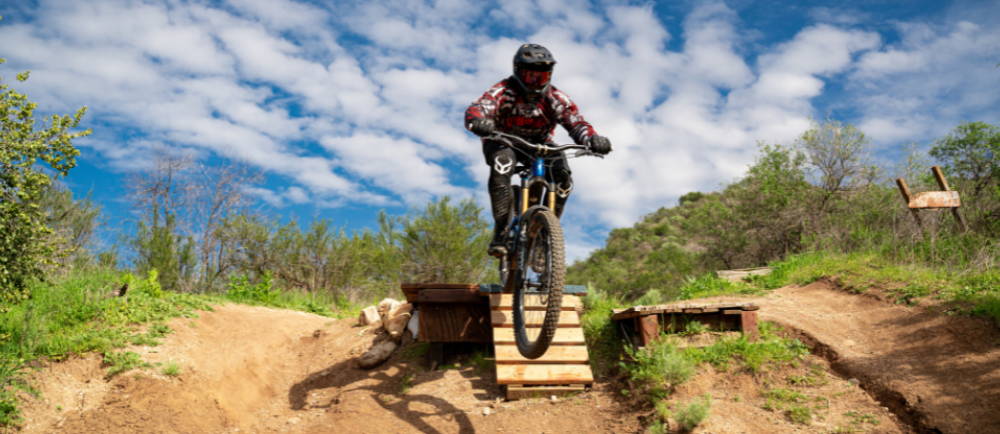
A heavy e-MTB is less forgiving on tire pressure than a lighter trail bike. More bike weight, more total system weight, and more assisted speed all raise the stakes. Too much pressure, and the bike starts to feel harsh, rigid, and a little shaky. Run too little, and you invite rim strikes and pinch flats, weak cornering, and that soft, overworked feeling that makes a full-power e-Bike feel even bigger than it already is. That’s why Upway’s tire-pressure guide explains that weight, terrain, and tire type all matter, and heavier setups usually need more air.
In this blog, I’m focused on a practical PSI range for heavy full-power e-MTBs, how I’d adjust front and rear pressure on trail, and what changes if the question is really about a heavy fat-tire bike instead. I’m also using a few current 2026-era examples, because the pressure conversation shifts quickly once you move from a 41-pound full-power bike to something in the mid-50s.
👋 Welcome to Upway!
Upway is your top destination for buying and selling e-Bikes online. Discover your next e-Bike at up to 60% off retail prices, available in new or like-new condition.
Table of Contents
What counts as a heavy e-MTB?
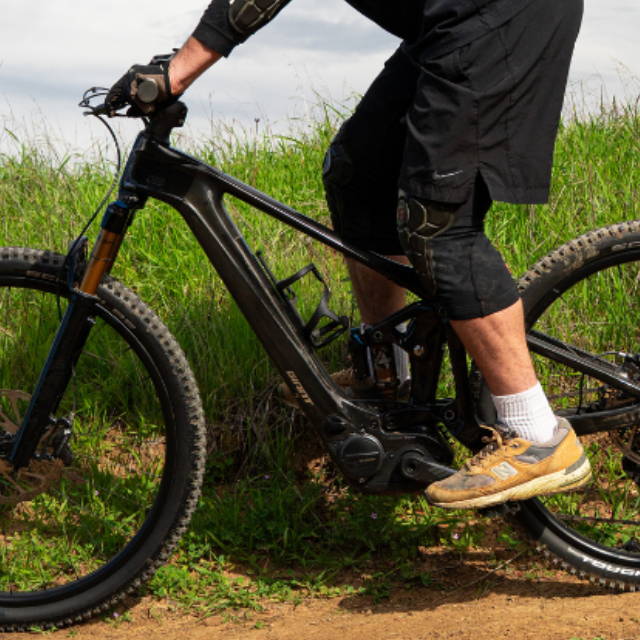
For pressure purposes, I’m talking about full-power trail and enduro e-MTBs, not the lighter “barely electric-feeling” side of the category. Specialized’s Turbo Levo 4 Comp is a good reference point at 53.8 lb, with a 29 x 2.4 front and 27.5 x 2.4 rear setup. Cannondale’s Moterra LT 1 sits in the same category, with 170 mm front / 165 mm rear travel, mullet wheels, Bosch CX power, and an 800Wh battery. Trek’s Rail+ 9.7 Gen 5 belongs here too, with 160 mm front and rear travel, Bosch Performance Line CX, and an 800Wh battery.
That matters because much of the generic mountain-bike pressure advice starts from a lighter, non-electric trail bike. On a heavy e-MTB, the bike itself adds a lot before you even count rider weight, water, tools, or a loaded pack. That is why a full-power bike on rough backcountry rock, blown-out bike-park braking bumps, or square-edged trail chatter usually wants more support than a lighter trail rig. That’s why a heavier total weight generally calls for higher tire pressure.
Front and rear PSI
For a heavy full-power e-MTB on 2.4 to 2.5-inch tubelesstires, I’d use this:
- Front: 25 to 27 PSI
- Rear: 28 to 30 PSI
For a heavy full-power e-MTB on 2.6 to 3.0-inch tubeless tires, I’d start a little lower: - Front: 21 to 23 PSI
- Rear: 24 to 26 PSI
Those are not manufacturer-set numbers. They are working ranges based on heavier-bike logic, wider-tire air volume, and the simple fact that the rear usually needs a little more support than the front. Heavier riders and heavier total loads need more pressure, while larger-volume tires can usually run a little lower.
If you are still on tubes, add roughly 3-5 PSI. That is one of the best reasons heavier e-MTB riders usually end up happier with tubeless. You get more room to chase grip and comfort without wandering into pinch-flat territory every time the trail gets sharp.
How to fine-tune e-MTB tire pressure
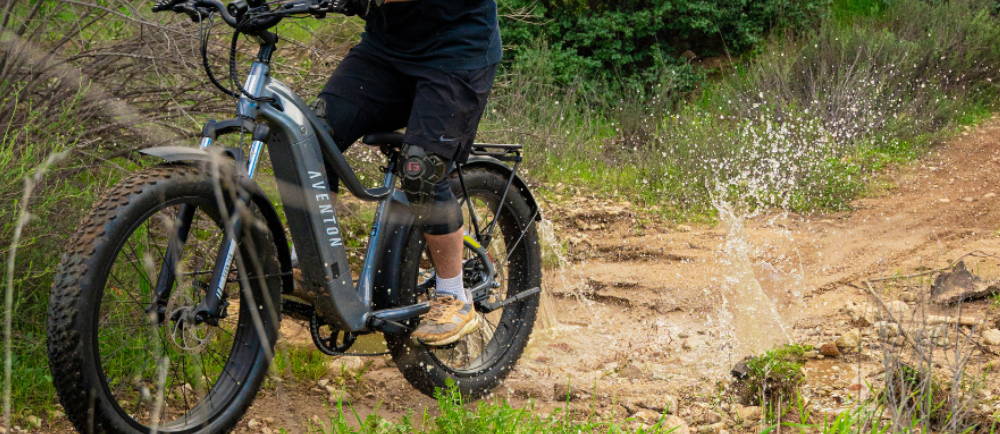
The easiest way to dial this in is not to chase a perfect number on the first try. Start a bit high, ride a short loop you know well, and drop pressure in small steps until the bike feels more balanced, then stop before support falls apart. On a heavy e-MTB, even a 2 to 3 PSI change is enough to notice, especially if you use the same gauge every time. That method lines up well with how tire-pressure tuning is typically approached: one familiar loop, one consistent gauge, one small tweak at a time.
The trail signs are usually obvious. If the bike chatters across rocks, skips off roots, and feels a little unsteady in flatter turns, you are probably too high. If it starts to feel soft, folds more in harder cornering, or tags the rim on square hits, you have probably gone too low. Smoother hardpack and fire roads usually let you edge pressure upward a bit. A rougher, rockier, or rootier trail usually lets you come down slightly, as long as the tire still keeps its shape.
What factors influence your ideal PSI?
The biggest variable is total system weight, not just body weight. Rider, bike, water, tools, and pack all count. That is why a 53.8-pound Turbo Levo 4 Comp will almost never want the same pressure as a 41-pound Giant Trance X Advanced E+ Elite 0 ridden by someone lighter. Giant says the Elite 0 weighs 41 lb in medium, which is a huge shift from the starting point compared with a full-weight enduro e-MTB.
The next variables are tire width, casing, and terrain. Wider tires hold more air, so they can usually run a little lower without sacrificing support. A 2.6 rear is not going to want the same PSI as a 2.4 rear on the same bike. And terrain still matters. If most of your riding is smoother hardpack, you can bias a little higher. If most of it is rough rock, roots, and chopped-up trail, you can usually bias a little lower. Weight, tire type, and terrain all affect the number.
Best PSI for fat tire bikes
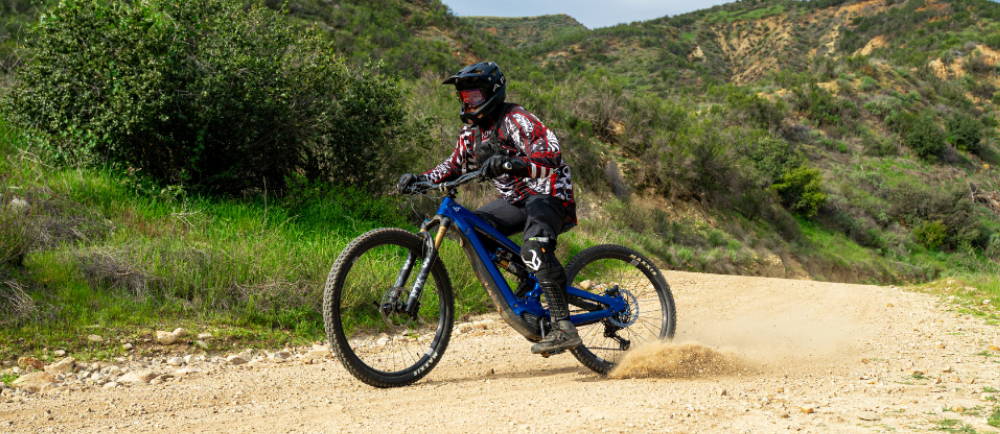
This is where the answer changes a lot. If your “heavy e-MTB” question is really about a fat-tire bike rather than a true e-MTB, the right pressure is much lower than a typical 2.4 or 2.5 trail tire. Upway’s fat-tire pressure guide puts fat-tire e-bikes broadly in the 5 to 30 PSI range, with 20 to 30 PSI making sense on pavement and firmer surfaces and lower pressures reserved for softer terrain like sand or snow.
Two good examples from brands Upway carries:
- Aventon Aventure 3: Aventon uses 4-inch fat tires and a 750W motor, offering up to 65 miles of range. For mixed pavement, gravel, and firmer dirt, I’d start around 14 to 18 PSI front and 16 to 20 PSI rear. If most of the ride is on pavement, I’d set it to 20-25 PSI.
- Rad Power RadRover 6 Plus: Rad uses 26 x 4-inch fat tires and offers 45+ miles of range. For everyday mixed-use, I’d start at 15-18 PSI front and 17-20 PSI rear, then move up if the ride is mostly pavement or you are carrying more.
That’s why fat-tire bikes live in a different pressure conversation. They are not just “run the same PSI as an e-MTB, but lower.” They sit in a much wider, softer window.
Recommended 2026 e-MTBs
Brands worth checking out on Upway are Cannondale, Bulls, Giant, Haibike, Orbea, Santa Cruz, Specialized, and Trek (though there are more great brands on the market).
A few current examples show why the PSI conversation moves around so much:
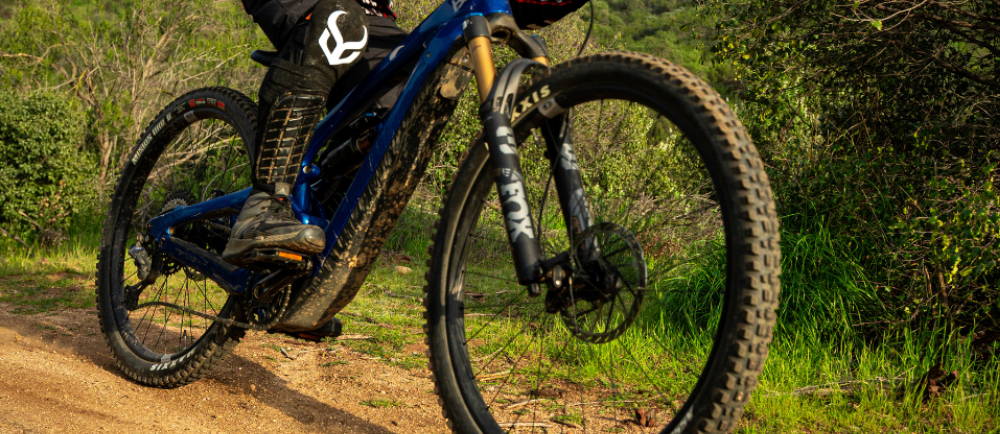
- Specialized Turbo Levo 4 Comp: 53.8 lb, 29 x 2.4 front / 27.5 x 2.4 rear
- Trek Rail+ 9.7 Gen 5: 160/160 mm travel, Bosch Performance Line CX, 800Wh battery, MX wheels
- Cannondale Moterra LT 1: 170/165 mm travel, mullet layout, Bosch CX, 800Wh battery
- Giant Trance X Advanced E+ Elite 0: 41 lb, a much lighter full-power reference point
That range is exactly why copying one random PSI number off the internet rarely works. A Levo 4, Rail+, and Moterra LT usually want a sturdier setup than a lighter full-power bike like the Giant Elite.
How Upway helps you sort the choices
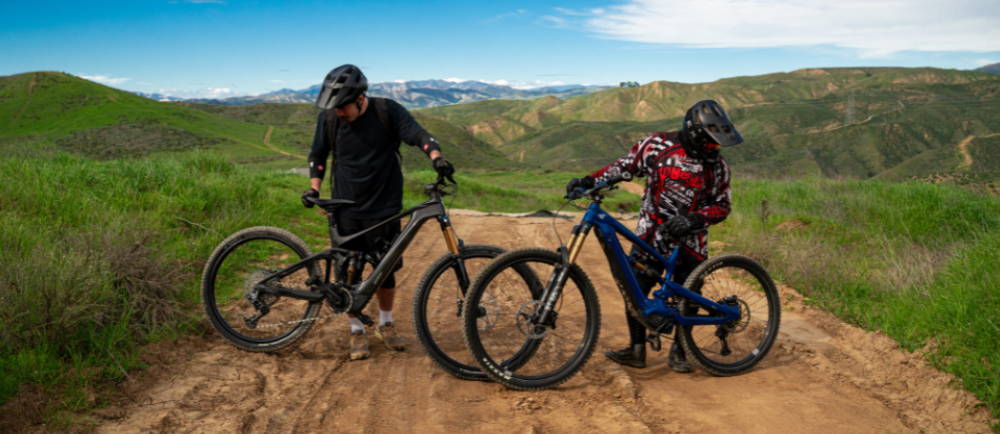
Upway is useful here because it helps separate the bike category before you start digging into PSI. Its e-MTB pages separate the field into electric mountain bikes, full suspension, hardtails, and fat-tire types, which is the right sequence to think about this. Tire pressure follows the kind of bike you are actually riding. A full-power enduro e-MTB, a lighter trail e-MTB, and a fat-tire all-terrain bike are not trying to solve the same problem.
Upway’s certified bikes are inspected, refurbished, and certified at UpCenters by master mechanics; every bike passes a 50-point inspection, and buyers get a 1-year warranty and 14-day returns. That matters in the e-MTB category because pressure is only one piece of setup. Tires, rims, suspension, and the bike's overall condition all determine which pressure will actually work.
Frequently Asked Questions
Should a heavy e-MTB run more tire pressure than a regular mountain bike?
What is a safe front and rear difference for a heavy e-MTB?
A good place to start is about 2-3 PSI higher in the rear than in the front. The rear usually carries more load and sees more drive force on a full-power bike.
Does lower tire pressure improve range on an e-MTB?
Not usually. Very soft pressures can increase rolling resistance, making the motor and battery work harder. There is a point at which lower PSI improves traction more than it hurts efficiency, but very soft tires are not the answer if you also care about range.
Key Takeaways
- For a heavy, full-power e-MTB with 2.4 to 2.5-inch tubeless tires, 25 to 27 PSI front and 28 to 30 PSI rear. Wider 2.6 to 3.0-inch tires usually let you start a little lower.
- If you run tubes, add roughly 3-5 PSI. If you are on a fat-tire bike, you are in a different pressure world entirely — usually somewhere in the 5 to 30 PSI range, with everyday mixed-use setups often landing in the mid-teens to low 20s.
- The numbers that matter most are total system weight, tire width, terrain, and whether the bike is a true e-MTB or a heavy fat-tire rig. Start with a sensible base, then fine-tune on a short loop that you know well.