Neither is “better.” Aventon tends to win on value and everyday utility. Haibike tends to win on a sport-forward ride feel and the dealer-supported ecosystem.
Aventon vs Haibike: Which E-Bike Brand Fits Your Riding Style?
Written by: Chris Van Leuven | February 20, 2026 | Time to read 8-9 min
Aventon vs Haibike: Value, utility vs dealer performance. Compare motors, ride feel, batteries, features, and buying tips.

More about the Author: Chris Van Leuven
Chris is a writer, climber, and founder of Yosemite E-Biking in Mariposa, CA. When he’s not tackling Sierra Foothills trails or scaling rock walls, he’s crafting adventure stories with his boxer, Fenster. His work has appeared in Outside, Men’s Journal, Gripped, and Best American Sports Writing.
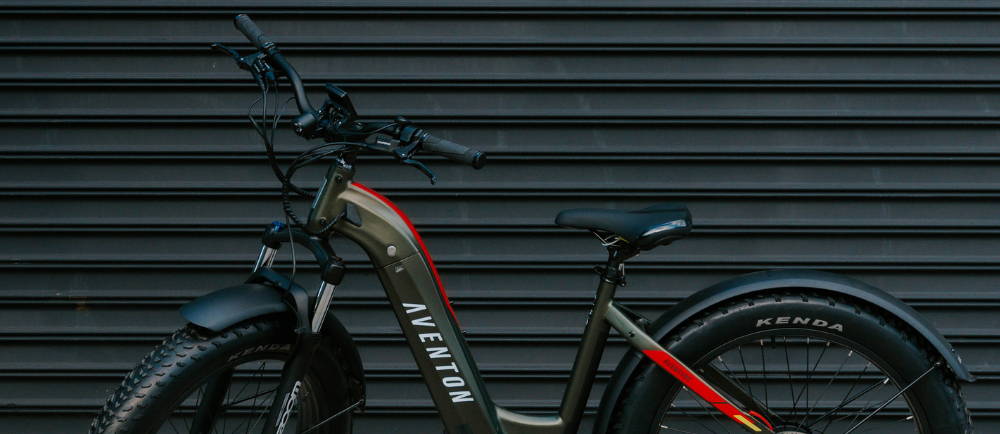
If you’ve been shopping long enough to land on Aventon and Haibike, you’re already in the interesting part of the market. Both brands build solid e-Bikes, but they’re oriented toward different priorities.
Aventon is the value-forward pick when you want a lot of features for the money and an e-Bike that’s easy to live with day to day. Haibike is the performance and dealer-bike pick when you care about ride feel, mid-drive power delivery, and having a traditional bike shop support path.
If you want to skip the showroom loop, Upway can simplify the process: you can compare certified, inspected e-Bikes from both brands in one place.
👋 Welcome to Upway!
Upway is your top destination for buying and selling e-Bikes online. Discover your next e-Bike at up to 60% off retail prices, available in new or like-new condition.
Table of Contents
Aventon vs Haibike at a glance
Aventon builds a broad lineup: Commuters, cargo bikes, fat-tire bikes, and a newer trail-focused option. The common thread is practical value and everyday features that make ownership feel straightforward. That said, Aventon now has true mid-drive models too (Ramblas and Aventure M), which narrows the “mid-drive is only a Haibike thing” gap, depending on the category you are shopping in.
Haibike leans sport-forward. Even when you’re looking at a commuter-style model, the brand tends to feel more “bike first, assist second,” with a heavier emphasis on mid-drive systems, ride composure, and the dealer ecosystem.
Newer models worth knowing
You don’t need to memorize every model name. You just need a few anchors so you’re not comparing apples to oranges.
- Aventon Aventure 2 and 3: Fat-tire, comfort-first utility. Specs include a 750W rear hub motor, a 48V 15Ah (720Wh) battery, a throttle, and a torque sensor.
- Aventon Level 3: Commuter-leaning, feature-rich. 4G/GPS security features, and a 500W motor class.
- Aventon Aventure M: Fat-tire mid-drive. A100 mid-drive motor (250W, 750W peak) with 100Nm torque and a 36V 20Ah (733Wh) removable battery. It also has a 4G-enabled security suite for tracking and remote features, and an optional throttle is available.
- Aventon Ramblas: Trail-focused hardtail eMTB. A100 mid-drive (36V, 250W sustained, 750W peak), which delivers 100Nm of torque, and a 708Wh battery. Can be adjusted up to Class 3 assist speeds through the app (where allowed).
- Aventon Abound: Cargo category. This is the better place to talk hauling, kid seats, and payload, rather than forcing that conversation onto a fat-tire adventure bike.
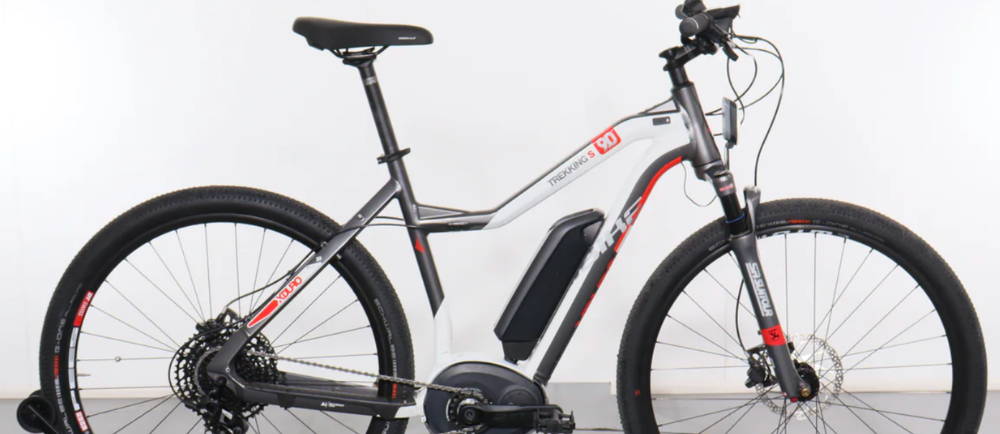
- Haibike Trekking 4: Commuter and fitness style with a mid-drive platform. Retailer specs commonly list a Yamaha PW-S2 mid-drive, 75 Nm of torque, and a 720 Wh battery.
- Haibike LYKE: Lightweight e-MTB family. Many builds use the Fazua Ride 60 system, which targets a more natural, less “motor-forward” trail feel.
Aventon gives you a lot of practical bikes for the money. Haibike often aims for a more refined ride feel, especially when you’re climbing or riding fast on mixed terrain.
Where the brands overlap and where they don’t
Aventon and Haibike overlap best in the commuter and “all-road” lane: Riding to work, running errands, on bike paths, and on longer weekend loops on pavement or hardpack.
They separate fast in two places:
- Cargo and utility, where Aventon has clearer, purpose-built options, like Abound.
- Performance e-MTB depth, where Haibike has a longer history and a wider range of sport-first models.
Price comparison
In general, Aventon tends to rank lower on the price-to-feature scale for feature-rich e-bikes, especially in the commuter, fat-tire, and cargo categories. Haibike often costs more due to its mid-drive platforms, build kits, and dealer-oriented structure. If you’re comparing apples to apples, do it like this: Pick the category first on Upway (commuter, cargo, fat-tire, e-MTB), then compare within that lane.

Design
This is where “brand feel” becomes real.
Aventon Aventure 2 and 3 design identity: Fat tires, stable stance, comfort-forward posture, and utility details that make it feel like a daily driver you can take off pavement.
Haibike Trekking 4 design identity: More classic bicycle geometry for distance and capability, with a mid-drive layout that keeps weight centered and predictable.
If you imagine carrying your bike up steps, loading it onto a rack, or fitting it into tight storage, the Aventure 2 and 3 style tends to be heavier and bulkier. The Haibike commuter-style build is more manageable in tight real-world situations.
Performance
Performance is not just top speed. It’s how the bike behaves when you’re tired, climbing, or riding into the wind.
- Aventon Aventure 2 and 3:
750W rear hub motor
48V 15Ah (720Wh) battery
Torque sensor
Throttle - Haibike Trekking 4:
Yamaha PW-S2 mid-drive
75Nm torque
720Wh battery
What that means:
Hub-drive bikes can feel punchy from a stop, especially when the throttle is used.
Mid-drive bikes tend to feel smoother when you’re climbing because the motor works through the gears, and the effort feels more connected to your pedaling.
🤝 Why you can trust us for buying an e-Bike?
- Great prices: Get your next e-Bike for up to 60% off retail prices, in new or like-new conditions.
- Quality Guaranteed: Every e-Bike is rigorously certified by a team of professional mechanics, and comes with a 1-year warranty.
- Delivered to Your Door: Delivered to your home within a week. Change your mind? Return it thanks to our 14-day return policy.
🚲 We also buy e-Bikes. Click here for an estimation!
Features
This is the stuff you appreciate after 30, 100, and 500 rides.
Aventon tends to win on everyday value features: Commuter-friendly add-ons, useful utility, and a lot of spec for the money, especially in cargo and fat-tire categories.
Haibike tends to win on the “bike shop” build feel: More performance-oriented setups and an ownership path that often assumes you’ll service and dial it in at a traditional shop.
If you want a quick reality check before buying, look at:
- Brakes, hydraulic disc brakes are the baseline you want on real commuting miles
- Drivetrain durability, especially if you ride hills
- Tire category, fat tire comfort vs commuter efficiency
- Service pathway, who will actually work on it in your area
Motors and sensor feel: Torque vs cadence
It’s worth a quick, clear explanation, but don’t let it become a brand stereotype.
A torque sensor feels proportional: Push harder, get more help. A cadence sensor is more mode-driven: You start pedaling, and the bike delivers a set amount of assist based on the setting.
Do the brands differ here? Not cleanly.
Aventon has moved hard into torque sensors across many of its current models, and some of its bikes feel impressively responsive as a result. On Aventon’s newer mid-drive bikes (Aventure M, Ramblas), torque sensing is integrated into the motor system, which is a big reason they feel more proportional and less “on-off” than older cadence-forward setups.
Haibike’s mid-drive approach tends to produce a more consistently “natural” climbing feel across models, mostly because mid-drives deliver power through the gears rather than because Haibike invented torque sensing.
If you want the simplest rule: The motor platform and tuning usually matter more than the sensor buzzword alone.
Battery and charging reality
- Use the correct charger.
- Avoid questionable replacements.
- Do not use damaged charging cords.
- If anything smells hot, looks swollen, or behaves inconsistently, stop and get it checked.
Matchups by riding style
Start with your riding style; that’ll get you to the right bike faster than spec-chasing.
Mostly commuting, errands, and mixed pavement? Aventon is often the cleaner value pick, especially when you want lots of practical features and an e-Bike that’s easy to live with.
Planning long rides with real climbs? Haibike commuter-style builds tend to shine here because mid-drive support stays smooth over time, and the bike feels composed when you’re pushing.
Need to carry real weight, kids, gear, groceries? Treat that as a cargo decision. Look at purpose-built cargo models (Aventon Abound is the relevant lane), not a fat-tire vs commuter debate.
Spending weekends off-road? Haibike generally offers more e-MTB depth, including lightweight options, while Aventon’s off-road lineup is narrower, but legit if you’re looking at their trail-specific option.
Trail riding is the clearest place to name names: Aventon Ramblas is Aventon’s eMTB play. Haibike, meanwhile, offers a broader range of trail families, from lighter builds like LYKE (Fazua Ride 60) to full-power options like AllMtn (Bosch Performance Line CX).
Want fat-tire comfort without giving up mid-drive feel? That’s where Aventon Aventure M makes more sense to mention than Aventure 2, since it blends big tires with a mid-drive platform.
Why is Haibike Trekking 4 better than Aventon Aventure 2 and 3?
Sometimes it is. Sometimes it isn’t. It depends on what you mean by “better.”
If you’re shopping for Aventon Aventure 2 and 3 and Haibike Trekking 4, you’re often deciding between two different feelings:
Aventure 2 and 3 are built around big tires and stability. It can feel confidence-inspiring right out of the box, especially if you want the bike to smooth out rough pavement, dirt roads, and sandy paths.
Trekking 4 is built around a mid-drive system that tends to feel more “bike-like” under effort, especially on long climbs or when you’re trying to keep an even rhythm.
So the more honest question is: do you want comfort and float, or a more athletic pedaling feel?
If you are choosing Trekking 4 specifically because you want a mid-drive feel on climbs, the Aventon to compare is the Aventure M (mid-drive) rather than the Aventure 2 and 3 (hub-drive).
Where Upway and Upway Flex fit
Once you know your preferred brand—Aventon or Haibike— category and model, shopping gets easier.
Upway is useful because you can compare certified pre-owned models from both brands in one place and keep your comparisons inside the same lane. That prevents the classic mistake: Bouncing between totally different builds and calling it “research.”
If you’re not ready to commit, Upway Flex is the clean “live with it first” option. The core idea is simple: You get a real e-Bike, support, and coverage, and you find out what your routine actually looks like before you buy.
The current Flex structure includes a minimum commitment period, then it rolls month-to-month, and some plans let you swap models if your needs change. Pickup is through an Upway UpCenter in Redondo Beach.
Frequently Asked Questions
Is Aventon or Haibike better?
Should I worry about torque vs. cadence sensors?
It matters for feel, but don’t treat it like brand identity. The bigger differences are the motor platform and tuning.
Can I compare two specific models and call it a brand decision?
You can use model comparisons as reference points, but it’s smarter to choose your category first (commuter, cargo, or e-MTB), then compare within that category.
Key Takeaways
- Aventon is usually the better fit when you want value, everyday features, and an uncomplicated ownership experience.
- Haibike is usually the better fit when you want a sport-forward ride feel, mid-drive performance, and a traditional shop support path.
- Pick your category first, then compare within it on Upway. If you’re unsure, test your routine with Upway Flex first.