Not necessarily. Torque sensors usually feel more proportional, but tuning matters just as much. A well-tuned hub bike can feel great in traffic, and a mid-drive can still feel abrupt if it’s set up poorly.
Aventon vs Cannondale: Which E-Bike Brand Makes More Sense for You?
Written by: Chris Van Leuven | February 19, 2026 | Time to read 7-8 min
Aventon vs Cannondale: compare hub vs mid-drive ride feel, battery size, and city-to-trail matchups, plus a smart Upway shopping move.

More about the Author: Chris Van Leuven
Chris is a writer, climber, and founder of Yosemite E-Biking in Mariposa, CA. When he’s not tackling Sierra Foothills trails or scaling rock walls, he’s crafting adventure stories with his boxer, Fenster. His work has appeared in Outside, Men’s Journal, Gripped, and Best American Sports Writing.
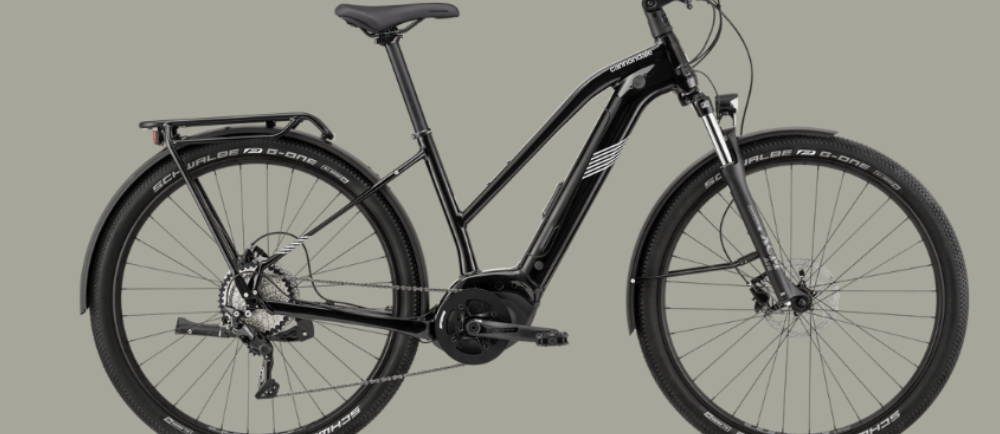
Buying an e-Bike is less about the logo and more about the bike you will want to live with as the miles stack up and you rely on pedal assist day to day.
Aventon and Cannondale sit in two different worlds. Aventon wins people over with feature-forward value and easy-to-shop categories. Cannondale appeals to riders who want stronger dealer support and a lineup that stretches from practical city riding to serious mountain e-Bikes.
Upway helps you compare models and narrow in on your preferred brand, with certified pre-owned options that often beat the selection—and the pricing—you’ll find at a single shop in a given week.
In this blog, you’ll see where Aventon and Cannondale really differ once you get past the marketing: Hub vs. mid-drive ride feel, sensor behavior, battery and charging practicality, and the service reality, including who fixes what, and how fast.
I’ll also break the comparison into clear lanes—city commuting, utility and cargo, and trail riding—so you can match the right model family to how you actually ride, then shop smarter on Upway, and use Upway Flex if you want a longer trial before committing.
👋 Welcome to Upway!
Upway is your top destination for buying and selling e-Bikes online. Discover your next e-Bike at up to 60% off retail prices, available in new or like-new condition.
Table of Contents
Aventon vs Cannondale
At a high level, these brands solve different problems.
Aventon is a value-oriented e-Bike brand built mostly for everyday riders. The lineup is designed to be easy to understand, with sleek styling, practical features, and reliable parts that make commuting, errands, and leisure rides feel simple and fun. Aventon is often the brand people choose when they want a lot of capability for the money, plus modern convenience baked in.
Cannondale is a long-standing bike brand with a deep dealer culture. Its e-Bikes tend to lean more premium in design and performance, and the price tag often reflects that. Cannondale appeals to riders who want a brand with deep roots in bike shops, a strong service network, and a lineup that ranges from road riding and gravel to serious e-MTB territory.
Once you have that framing, the differences in the model become clearer.
If you want fat-tire comfort and everyday utility with a feature-forward feel, Aventon makes the decision simple. A good example is the Aventure.3, which Aventon positions as a fat-tire e-Bike with features like Sensor Switch to adjust assist feel and 4-inch tires for comfort and traction.
If you like that Aventon vibe but want a more mid-drive style response for climbing, Aventon also offers the Aventure M in the fat-tire family. And if your version of “utility” includes actual trail riding—not just dirt roads—the Ramblas is Aventon’s trail-hardtail answer: a mid-drive platform designed for real off-road use.
If you want a brand that feels rooted in classic bike design and dealer support, Cannondale is often the better fit, partly because the lineup is so broad. On the accessible, around-town end, the Adventure Neo Allroad family includes models built around a rear hub drive unit and a removable battery, like the Adventure Neo Allroad S.
Ride feel: hub motors, mid-drive motors, and sensors
Most brand comparisons get complex here, because it’s not really about brands. It’s about how power shows up when you ride, your real ride quality.
- Hub motors usually feel simple and predictable in stop-and-go traffic. You notice it most pulling away from stoplights: the bike just goes, with that straightforward punch that makes hub-drive builds easy to live with in a city.
Aventon lives here most often across its commuter, comfort, and utility categories—think Pace 500.3, Level.3, Soltera, and Sinch 2. On mixed surfaces, Aventure.3 keeps the same rear-hub personality, but adds wide tires and a more planted stance for rough pavement and dirt-road days.
Cannondale also uses rear hub systems in parts of its city, fitness, and gravel lineup—models like Adventure Neo Allroad, Treadwell Neo, Quick Neo SL, Compact Neo, Topstone Neo SL, and Mavaro Neo SL—which tend to feel smooth and quiet, but still have a different climbing personality than a mid-drive when the grades get steep.
- Mid-drive motors tend to feel more natural on climbs because they work through your gears. This is where Cannondale often shows up, especially on higher-performance, trail-focused e-Bikes. If you ride hills, haul weight, or want a more “mountain bike” response under load, mid-drives usually shine.
A good example is the Cannondale Moterra Carbon 1, built around a Bosch Performance Line CX drive unit (85 Nm) and an 800 Wh removable, integrated battery.
On the Aventon side, true mid-drive options include the Ramblas, hardtail e-MTB built around Aventon’s A100 mid-drive platform, and the Aventure M, which brings that mid-drive feel into Aventon’s fat-tire, comfort-first lane.
Sensors
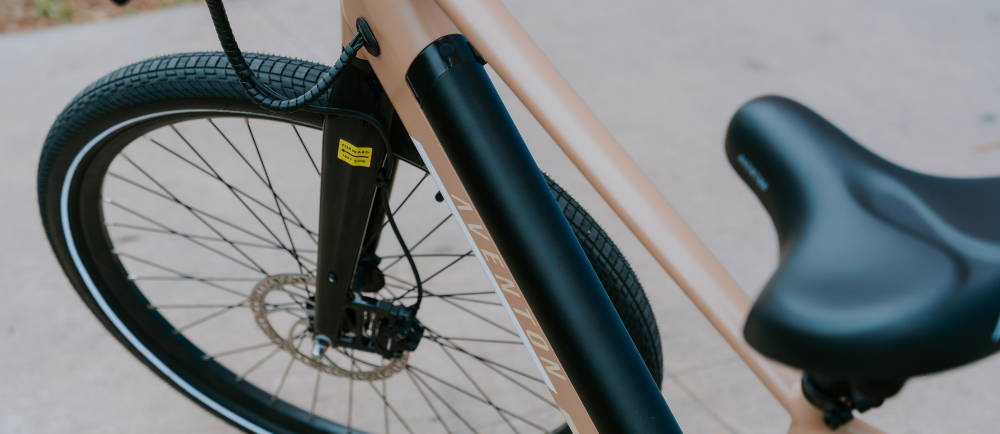
Sensors matter just as much as motor type. A torque sensor generally feels more natural; push harder, get more help. A cadence sensor can feel more on and off since it detects pedaling and delivers assist based on the mode. Aventon does this by tuning assist feel on models like the Aventure.3.
That combo—hub vs mid-drive and torque vs cadence—is most of what you’re feeling when people talk about “smooth” versus “jumpy.” It’s also where motor power on paper can be misleading: Two bikes can have similar numbers and feel totally different depending on sensor tuning and drivetrain setup.
- Aventon: Many current Aventons lean torque-sensed for a more natural feel—for example, the Soltera.2 is positioned around a torque sensor. On the Level.3, Aventon goes a step further with Sensor Switch, letting you choose torque or cadence behavior. And on Aventon’s newer mid-drive models—the Ramblas and Aventure M—torque sensing is integrated into the A100 motor system, which is a big reason they feel more proportional on climbs than cadence-driven setups.
- Cannondale: Torque sensing is clearly listed in Cannondale spec sheets, even on rear-hub builds. The Adventure Neo Allroad Speed lists a Bafang torque sensor in its specs, and the Treadwell Neo 2 EQ lists a Hyena torque sensor.
On Bosch mid-drive Cannondales, the assist is controlled by a sensor system that measures rider input up to 1,000 times per second.
Cadence-style assist
- Aventon: If your bike has a Sensor Switch (available in some models), you can deliberately switch to cadence mode for easier spinning and back to torque for a more proportional feel.
- Cannondale: Some lightweight Cannondale hub-drive lines use the MAHLE SmartBike Systems X35 system, which MAHLE describes as using a PAS sensor in the rear hub (that’s the “pedal-assist sensor” side of the system).
🤝 Why you can trust us for buying an e-Bike?
- Great prices: Get your next e-Bike for up to 60% off retail prices, in new or like-new conditions.
- Quality Guaranteed: Every e-Bike is rigorously certified by a team of professional mechanics, and comes with a 1-year warranty.
- Delivered to Your Door: Delivered to your home within a week. Change your mind? Return it thanks to our 14-day return policy.
🚲 We also buy e-Bikes. Click here for an estimation!
E-Bike error codes: Aventon vs Cannondale
“If this e-Bike throws an error code, what happens next: diagnostics, parts, and timeline?”
Here’s the real-world workflow most riders end up in:
- Step 1: Quick check at home. Power-cycle, reseat the battery, and do a fast cable and connector scan. If the issue repeats, stop guessing; modern systems log faults.
- Step 2: Proper diagnostics. For dealer-first brands like Cannondale, warranty and service are intended to be handled through an authorized shop, and Cannondale explicitly states that warranty claims are handled through an Authorized Cannondale Retailer.
If the bike is Bosch-equipped, a dealer can pull system info and error data and run software updates via Bosch’s dealer diagnostics tools; Bosch also publishes an official error-code lookup and notes that errors can be read via the Flow app or your retailer.
- Step 3: Parts and timeline reality. Dealer networks usually mean the shop can submit claims and source common replacement parts through established channels, which often speeds up the “what happens next” phase.
On the Aventon side, the story is direct-to-consumer, with a support net. Aventon has more than 1,000 shops for service and test rides, plus a 2-year warranty, which can reduce the “you’re on your own” feeling, especially if you’ve got a participating shop nearby.
Safety note: If you’re charging inside, it’s smart to follow battery safety standards (including UL 2271) and avoid sketchy third-party chargers.
Model matchups by category: city, utility, cargo, & trail
City
If your rides are quick trips, errands, and rolling around for fun, I favor a comfortable position, easy starts, and brakes that feel consistent in traffic. This is also where light and simple models tend to shine, such as the Aventon Pace 500 and the Soltera 3. If you want a more classic “commuter” build from Aventon, check out the Level Commuter.
In Cannondale’s comfort-commuter line, there’s the Adventure Neo 2 EQ, Treadwell Neo (easy city fitness), Quick Neo SL (lighter, zippy commuter feel), and the Compact Neo (small-footprint urban option).
This is also where you’ll see lots of “commuter” framing—what many people casually call commuter e-Bikes, and where features like a front light, rear light, and a true tail light stop being “nice extras” and start being daily-use essentials.
If you’re shopping this e-Bike style, it’s also fair to ask if the bike supports a smartphone app for tuning, diagnostics, or ride stats, because that can be either a perk or just another thing you don’t want to deal with.
Utility
This is where the “owning it” stuff matters: fenders, lights, rack compatibility, and whether the assist stays calm in stop-and-go. This is also where “Class” comes up: some commuters want a Class 3 option for higher assisted speeds (where legal), while others prefer a slower Class 1 or Class 2 setup if they’re mostly on shared paths.
Cargo
This is where the category matters as much as the brand: An electric cargo bike can be a grocery machine, a kid-hauler, or a daily workhorse—if it actually fits your life.
Aventon cargo models to know:
- Abound (longtail cargo): the clear Aventon “carry stuff and people” platform.
- Abound SR (compact cargo): a smaller-footprint cargo take that still lives in the hauling lane, with features like Sensor Switch (torque or cadence behavior).
Cannondale cargo model to know:
- Cargowagen Neo (e-cargo longtail): step-thru frame, integrated rear cargo rack, 200 kg total weight capacity, and it’s dual battery ready (two battery mounts).
Trail
This is where I care less about bells and whistles and more about whether the bike feels composed under load:
Aventon trail models to know:
- Ramblas (hardtail eMTB): If you want Aventon in this area, the Ramblas is the clean reference point: it’s Aventon’s first eMTB, built around the A100 mid-drive with 250W sustained, 750W peak, and 100 Nm of torque, plus trail-appropriate parts like a RockShox 35 fork (130mm), SRAM NX 12-speed, and SRAM DB8 4-piston hydraulic brakes.
- Aventure M (fat-tire mid-drive): Not a trail-bike-first eMTB, but it’s the Aventon pick if you want mid-drive climbing feel in a comfort-forward, wide-tire package for rough roads, dirt connectors, and mellow off-pavement exploring.
Cannondale trail models to know:
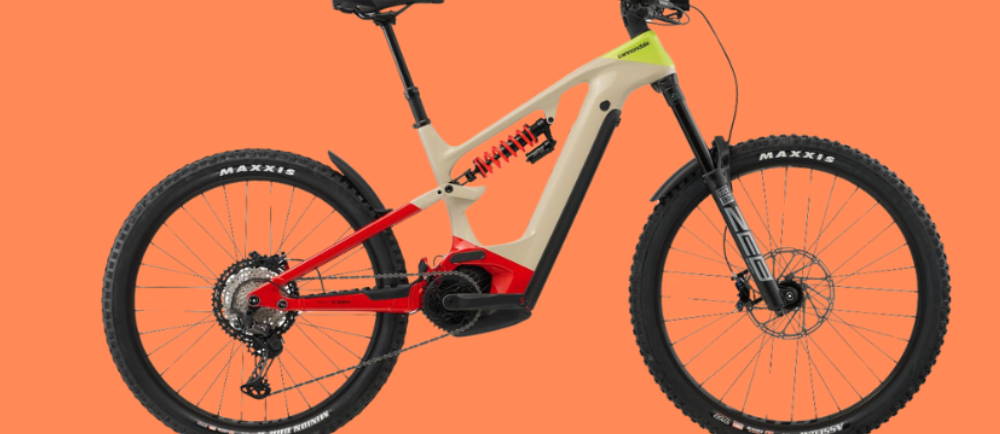
- Moterra family (full-power eMTB): This is Cannondale’s “real trail riding” platform. Most builds are centered on the Bosch Performance Line CX, with current specs calling for up to 100 Nm and 750W peak, and battery options that typically fall in the 600–800Wh range, depending on the build.
- Moterra LT (long travel): This is the rowdier, more descent-ready version. Think bigger hits and rougher trails, with 170mm front / 165mm rear travel, Bosch CX power, and an 800Wh battery on the LT 1 spec.
- Moterra SL (lightweight eMTB): The “less tank, more agile” option. It’s built around Shimano EP801 (85 Nm) with 601Wh battery sizing on the SL 1 build, and it’s meant to feel quicker and more playful than full-power bruisers.
- Habit Neo (trail full-suspension): A more everyday e-trail setup. On the Habit Neo 4 build, you’re looking at Bosch Performance Line CX with a 500Wh battery and up to 85 Nm—plenty for real singletrack, but not built as an enduro sled.
- Trail Neo (hardtail eMTB): The simpler hardtail lane for smoother trails and mixed-surface riding. Specs vary by trim: one build is listed with Bosch Performance Line (up to 65 Nm) plus 625 Wh, while higher builds step up to Bosch CX plus 750 Wh.
Aventon vs Cannondale Buyer's Guide: How to Shop, including on Upway
- Test ride once locally in your category. I’m not trying to find “the one.” I’m learning what I like: the riding position, how the assist behaves at low and high speeds, and whether the start feels smooth or jumpy. One clean test ride can teach you more than ten comparison charts.
- Then, smartly, widen the field online. This is where Upway can be useful: it’s a certified pre-owned marketplace where bikes are inspected before sale, and Upway highlights perks like up to 60 percent off retail, a 1-year warranty, and a 14-day return window. If you already know your preferred make and model, this is a great option.
If you’re near an Upway UpCenter, that can simplify logistics, too. Upway has a New York UpCenter in Brooklyn and a Los Angeles-area location in Redondo Beach.
If you’re not ready to commit, Upway Flex is the “live with it first” option. It’s a monthly e-Bike subscription with a 3-month minimum, then it continues month-to-month, and it includes maintenance and insurance. Prices range from $79 per month for standard models to $239 per month for premium models.
Frequently Asked Questions
Do I need a torque sensor to get a smooth ride?
Should I prioritize battery size or bike weight?
Pick the one that fits your routine. Bigger batteries (higher Wh) buy you flexibility on hills and longer days, but they add weight. If you carry the bike up stairs or lift it onto a rack often, a lighter setup can be the better “daily” choice.
Is Upway Flex worth it instead of buying right away?
If you’re unsure about size, comfort, or category (commuter vs cargo vs trail), yes—Flex gives you real time to learn what you’ll actually ride. It’s especially useful if you don’t have easy access to multiple long test rides.
Key Takeaways
- Aventon is usually the value and features pick. It has easy-to-shop categories and strong everyday commuter and utility options.
- Cannondale is usually the dealer support and depth pick. It has a broader lineup that extends into performance riding and serious electric mountain bikes.
- Your deciding factor is the use case. For errands and commuting, Aventon often makes more sense for the money. For hills, trails, and long-term service, Cannondale often makes more sense.