The SUPER73 M1D is sold as a Class 2 e-Bike with a top assisted speed of 20 mph. SUPER73 also notes that riders who pair the app after January 1, 2025, won’t have access to ride modes beyond the Class 2 configuration in which the bike is sold.
Super73 M1D E-Bike Review
Written by: Chris Van Leuven | July 15, 2026 | Time to read: 7 min
Read Upway’s SUPER73 M1D review to learn how it rides, who it’s for, and what to know before buying a certified pre-owned one.

More about the Author: Chris Van Leuven
Chris is a writer, climber, and founder of Yosemite E-Biking in Mariposa, CA. When he’s not tackling Sierra Foothills trails or scaling rock walls, he’s crafting adventure stories with his boxer, Fenster. His work has appeared in Outside, Men’s Journal, Gripped, and Best American Sports Writing.
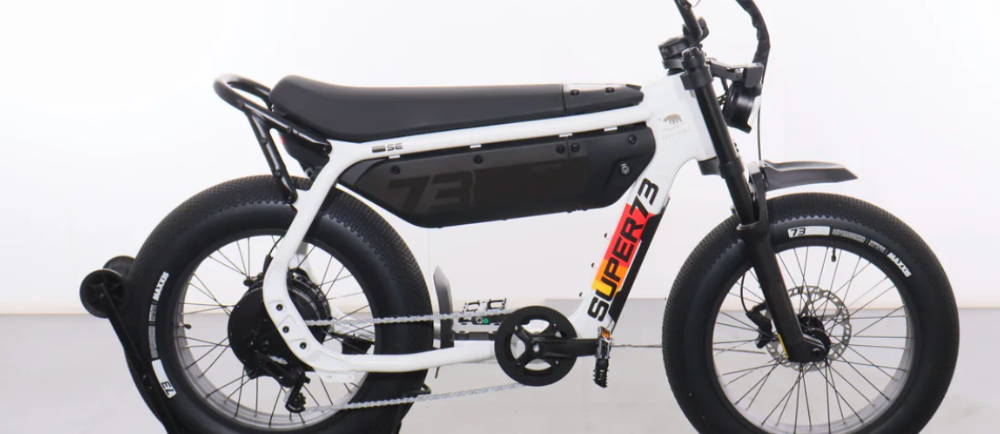
Some e-Bikes are easy to understand. They’re built for hauling cargo, riding mountain trails, or covering long commutes. The SUPER73 M1D is different. It’s less about checking boxes on a sheet and more about savoring the ride.
Ride one around town, down to the beach, across a college campus, or through your neighborhood, and it becomes obvious why people are drawn to it. It’s less about getting somewhere as quickly as possible and more about appreciating every moment of the ride.
The M1D fills an interesting place in SUPER73’s lineup. It isn’t the entry-level option, and it isn’t the tall-rider model. Instead, it combines a 30-inch seat height, straightforward components, and a relaxed riding position that works for a wide range of riders.
In this blog, I’ll look at how the SUPER73 M1D rides, who it’s best for, what separates the Core from the M1D SE, what I’d check before buying a certified pre-owned model on Upway, and whether it’s the SUPER73 I’d recommend first.
👋 Welcome to Upway!
Upway is your top destination for buying and selling e-Bikes online. Discover your next e-Bike at up to 60% off retail prices, available in new or like-new condition.
Table of Contents
Why does the SUPER73 M1D stand out?
One thing I like about the M1D is that it doesn’t try very hard to impress you. The Core model sticks to the basics. It uses a 500W nominal rear hub motor, a 520Wh removable battery, 20 mph Class 2 assist, a rigid fork, an analog display, 2-piston brakes, internal lockable battery storage, and compatibility with SUPER73’s modular dual-battery system.
On paper, none of those specifications stand out, and that’s almost the point. SUPER73 kept the Core model simple rather than trying to win a spec sheet competition. It’s easy to assume every new e-Bike has to add another ride mode or another electronic feature. Sometimes those upgrades matter. Other times, they simply make the bike more complicated to own. I actually think the M1D’s restraint is one of its strengths.
Its 30-inch seat height also helps. SUPER73 designed it to fit between the smaller MZFT and the taller B1G, giving many riders a more natural fit without asking them to climb onto the tallest bike in the lineup.
Range is one area where distance should stay realistic. SUPER73 estimates 15 to 20 miles from the Core model’s 520Wh battery, depending on rider weight, terrain, speed, tire pressure, weather, hills, and throttle use. That’s enough for neighborhood rides, campus transportation, beach communities, errands, and casual urban riding.
If you’re planning much longer days, the SUPER73 M1D SE is a better fit. It adds a larger 746Wh battery, making it the better option for riders who regularly go beyond the Core model’s range.

How does the SUPER73 M1D ride?
You don’t need much time on the M1D for its personality to become clear. You buy it because you like how it feels.
The riding position stays relaxed, the thumb throttle makes getting moving easy, and the fat tires help smooth out ordinary pavement. I know plenty of riders assume they need the biggest motor they can find. Then they spend 10 minutes riding around town and realize that comfort and confidence matter far more than another 100 watts. The M1D reminds me of that.
The Core’s rigid fork is perfectly reasonable for bike paths, neighborhood streets, and smoother city riding. If your normal route includes rough pavement, I’d lean toward the M1D SE. Its adjustable front suspension is one of the upgrades I’d spend money on because you’ll notice it every ride.
The larger battery is another worthwhile improvement. More battery capacity simply gives you more freedom to ride without thinking about the next charge.
The drivetrain also tells you what kind of bike this is. The M1D SE uses a single-speed setup with a rear hub motor, thumb throttle, and pedal assist. That combination isn’t aimed at riders chasing fitness goals or constantly shifting gears. It suits short trips, daily errands, casual city commuting, and riding where simplicity is part of the appeal. Current M1D models are sold as Class 2 e-Bikes with a 20 mph assisted top speed.

Who should choose the M1D?
If someone asked me where to begin in the SUPER73 lineup, this would probably be my answer. Not because it’s the fastest. Not because it has the biggest battery, but because I think it fits the most riders. The SUPER73 M1D SE is made for riders roughly 5-foot-2 through 6-foot-2, which gives you a good idea of who this bike is meant to fit.
I’d recommend it for:
- Daily rides around town
- City commuting
- College campuses
- Beach communities
- Neighborhood errands
- Weekend cruising

I wouldn’t recommend it if your priority is carrying heavy cargo, covering very long commuting distances, or finding the lightest e-Bike possible.
At roughly 75 pounds, the M1D SE is still a substantial bike. That matters if you live upstairs, lift your bike onto a rack, or regularly move it through tight storage spaces. I think people are happiest with the M1D when they buy it for the riding it’s built to do, rather than expecting it to become something it isn’t.
What should you know before buying a used SUPER73 M1D?
One thing I’ve learned from buying used e-Bikes is that mileage rarely tells the whole story. A bike with a few hundred miles that was stored indoors, charged properly, and maintained can be a much better buy than one with almost no miles that spent months outside (like I’ve done). That’s especially true with SUPER73.
Owners tend to personalize these bikes. Sometimes it’s as simple as adding a mirror, phone mount, rack, or upgraded grips. Other times you’ll find replacement lighting, aftermarket electronics, or wiring changes that make it harder to know exactly what you’re buying.
If I were shopping for a used M1D, these are the first things I’d check.
| What I'd check | Why it matters |
|---|---|
| Battery condition | Battery health matters far more than mileage alone. |
| Original charger | A missing charger is an immediate question mark. |
| Display and controls | Make sure the throttle, pedal assist, lights, and display all work properly. |
| Brakes and tires | Heavy e-Bikes wear these parts faster than many riders expect. |
| Front suspension (SE) | Check for smooth travel and signs of leaks or excessive play. |
| Battery compartment | The removable battery should lock securely and fit properly. |
| Modifications | Accessories are one thing. Homemade electrical work is another. |
If you're looking at a SUPER73 M1D on Upway, remember that every certified pre-owned e-Bike goes through a 50-point inspection, and every bike comes with a 14-day test-ride policy and a 1-year limited warranty.
Is the SUPER73 M1D worth it?
I don’t think the M1D is the SUPER73 that gets the most attention. That may actually be one of its strengths. It doesn’t try to be the tallest bike, the most aggressive model, or the one with the biggest personality.
Instead, it delivers the riding experience most people picture when they think about owning a SUPER73.
You get the relaxed seating position, fat tires, thumb throttle, compact proportions, and unmistakable styling without feeling like you’ve bought a bike built around someone else’s priorities. If you regularly ride long distances, I’d spend the extra money on the M1D SE or consider an e-Bike designed for larger batteries and longer range. If you’re exceptionally tall, the B1G is the better fit.
Some bikes stand out because they specialize in one thing. The M1D stands out because it doesn’t. It quietly does a lot of things well, and that’s why it’ll end up being the right SUPER73 for a lot of riders.
Frequently Asked Questions
How fast does the SUPER73 M1D go?
What’s the difference between the SUPER73 M1D Core and M1D SE?
The Core model uses a 500W nominal rear hub motor, a 520Wh battery, a rigid fork, an analog display, and 2-piston brakes. The SUPER73 M1D SE adds a larger 746Wh battery, adjustable front suspension, and hydraulic disc brakes, making it the better option for riders who want more comfort and longer rides.
Is a used SUPER73 M1D worth buying?
Yes, provided the battery, electronics, brakes, and overall condition have been checked carefully. A certified pre-owned SUPER73 M1D from Upway also includes a 50-point inspection, a 14-day test ride policy, and a 1-year limited warranty.
Key Takeaways
- The SUPER73 M1D is a versatile city e-Bike with a 30-inch seat height that fits a broad range of riders.
- The Core model focuses on simplicity, while the SUPER73 M1D SE adds a larger battery, adjustable front suspension, and hydraulic disc brakes.
- The M1D makes the most sense for riders who value comfort, simplicity, and everyday fun over maximum range or outright performance.