The D7 uses a 1000W rear hub motor producing 96Nm and an 8-speed Shimano Acera drivetrain. The D7 Pro uses a 1000W Bafang M620 mid-drive producing 160Nm, a wider-range Shimano CUES 10-speed drivetrain, 4-piston hydraulic brakes, and upgraded suspension.
Himiway D7 E-MTB Review: D7 vs. D7 Pro
Written by: Chris Van Leuven | September 14, 2026 | Time to read: 7-8 min
Himiway D7 e-MTB review comparing the D7 and D7 Pro, including motors, 960Wh battery, fat tires, suspension, range, and Cobra model history.

More about the Author: Chris Van Leuven
Chris is a writer, climber, and founder of Yosemite E-Biking in Mariposa, CA. When he’s not tackling Sierra Foothills trails or scaling rock walls, he’s crafting adventure stories with his boxer, Fenster. His work has appeared in Outside, Men’s Journal, Gripped, and Best American Sports Writing.
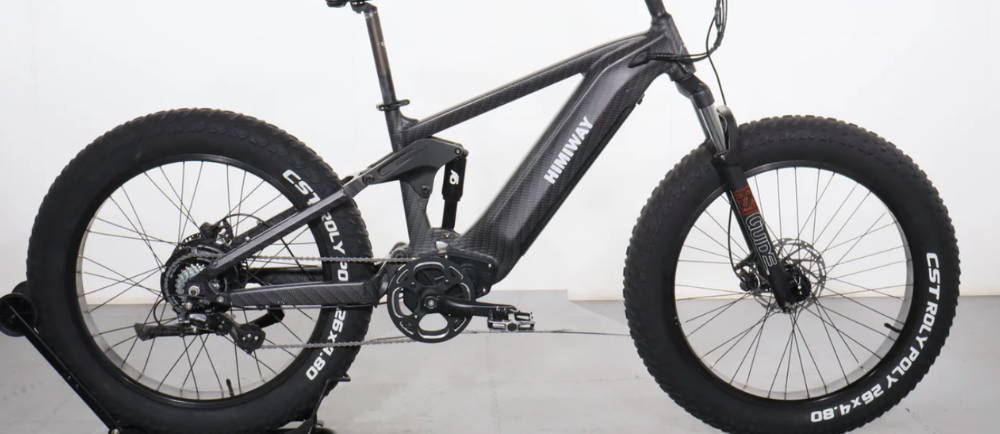
The Himiway D7 and D7 Pro are both big e-MTBs built around fat tires, full suspension, large batteries, and plenty of motor power. They’re aimed at rougher terrain, but the two bikes aren’t as similar as they first appear.
The D7 sticks with a rear-hub motor and a relatively straightforward setup that fits forest roads, doubletrack, and backcountry access. The D7 Pro moves further toward a traditional e-MTB, with a mid-drive motor, wider gearing, and upgraded suspension and brakes. The harder and steeper the terrain gets, the more those differences start to matter.
In this Himiway D7 e-MTB review, we’ll look at the D7 family, how it compares to the Cobra model, what changes with the D7 Pro, and which bike makes more sense for you.
👋 Welcome to Upway!
Upway is your top destination for buying and selling e-Bikes online. Discover your next e-Bike at up to 60% off retail prices, available in new or like-new condition.
Table of Contents
The D7 Family Started with the Himiway Cobra
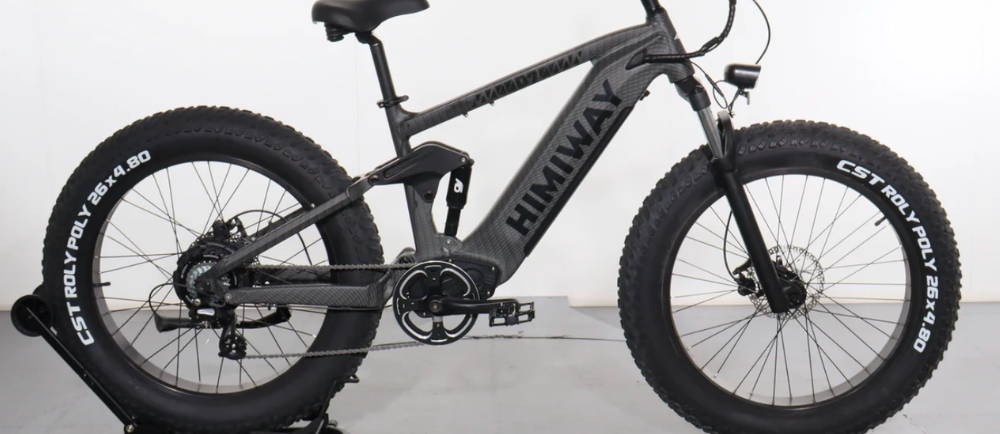
Before the D7, there was the Cobra. Himiway renamed the Cobra the D7, while the Cobra Pro became the D7 Pro. That’s useful to know when shopping certified pre-owned on Upway because you’ll still find bikes under the older names.
The specifications have changed over time, too. Earlier Cobras used a 750W rear hub motor producing 86Nm of torque. Himiway’s current D7 uses a 1000W geared hub motor rated at 96Nm. The current D7 Pro is the bigger departure. Its 1000W Bafang M620 mid-drive produces 160Nm and is paired with a Shimano CUES 10-speed drivetrain.
The main differences between the earlier Cobra, current D7, and D7 Pro come down to the motor, drivetrain, and tire setup:
| Model | Motor | Drivetrain | Tires |
|---|---|---|---|
| Earlier Cobra | 750W hub, 86Nm | Shimano 7-speed | 26 x 4.8 in. |
| Current D7 | 1000W hub, 96Nm | Shimano Acera 8-speed | 26 x 4.5 in. |
| Current D7 Pro | 1000W Bafang mid-drive, 160Nm | Shimano CUES 10-speed | 26 x 4.8 in. |
The D7 Pro is the biggest departure from the initial Cobra formula. Its mid-drive motor and wider gearing make it substantially different from the hub-driven D7.
Hub Drive or Mid-Drive?
This is the biggest difference between the D7 and D7 Pro. The regular D7’s 1000W hub motor drives the rear wheel independently of the drivetrain. A torque sensor adjusts assistance based on how hard the rider pedals, and there’s also a thumb throttle. The Pro moves the motor to the crank.
That lets its Bafang M620 use the bike’s gears when climbing. Himiway pairs it with a Shimano CUES 10-speed drivetrain and an 11–48T cassette. The D7 gets an 8-speed Shimano Acera setup with an 11–34T cassette.
On paper, the Pro’s 160Nm of torque jumps out. Where the motor sits and the extra low gearing matter just as much. Those differences are great as climbs get steeper and speeds get slower. A mid-drive uses the bike’s gearing rather than asking the motor to drive the rear wheel at a fixed reduction, which is more efficient.
The D7's hub motor is the simpler setup. It makes sense for forest roads, doubletrack, hunting access, and other terrain where technical climbing isn't the priority. Once the trails get steeper and more technical, the Pro's mid-drive and wider gearing make more sense.
What the D7 and D7 Pro Have in Common
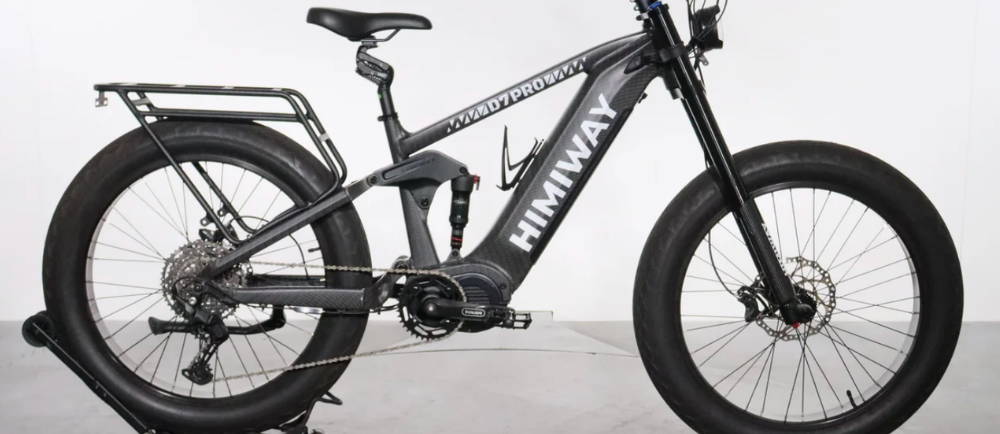
Whichever motor you choose, you’re still getting a very big e-Bike. Both current models use 6061 aluminum frames, torque-sensing pedal assist, hydraulic disc brakes, full suspension, throttles, and removable 960Wh Samsung/LG batteries. Himiway lists both at 88.6 pounds with a 400-pound payload capacity. The tires are big, too: 26 x 4.5 inches on the D7 and 26 x 4.8 on the Pro.
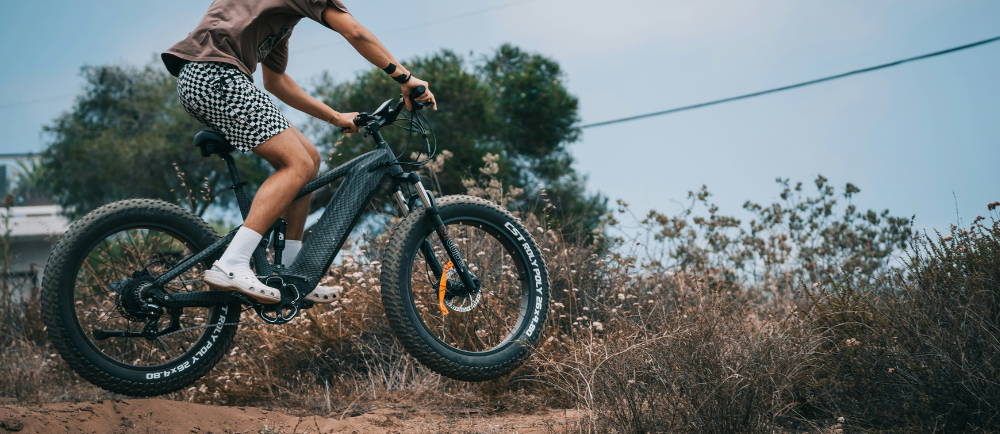
That much tire volume can be useful on sand, snow, loose dirt, gravel, and rough roads where traction and stability matter. It also sets these bikes apart from more conventional e-MTBs with considerably narrower tires.
Nearly 90 pounds combined with 4.5- or 4.8-inch tires creates a different kind of mountain bike. The D7 family emphasizes traction, stability, motor power, and carrying capacity over low weight or quick handling. The suspension differs between the two models. Himiway currently lists a DASH-AIR-20 inverted fork and DNM rear shock on the D7. The Pro moves to a KKE fork and RockShox Deluxe Select+ rear shock.
One specification is worth checking on the individual D7. Himiway’s current product page lists 120mm of front travel in its technical specifications but describes an 80mm fork elsewhere on the same page. If suspension travel matters, verify the fork on the actual bike rather than assuming every D7 is identical.
Braking also gets an upgrade on the Pro. The D7 uses Tektro hydraulic brakes with a 203mm front and 180mm rear rotor. The Pro gets 4-piston Tektro hydraulic brakes with the same rotor sizes. The stronger braking setup makes sense on a bike this heavy, particularly once speed, steeper terrain, and cargo enter the equation.
Both Bikes Get a 960Wh Battery
There’s no need to choose between the D7 and D7 Pro based on battery capacity. Both use a removable 48V 20Ah Samsung/LG pack, or 960Wh. Himiway claims 60 to 80 miles of range.
That’s a large battery for longer dirt-road approaches, hunting, camping, or rides where you regularly use higher assist levels. It also fits the rest of the D7 platform: these bikes prioritize capacity and range rather than trying to save every possible pound. Both bikes come with 3A chargers. But keep in mind, battery condition deserves close attention on a certified pre-owned D7 or D7 Pro. A 960Wh pack is a major part of the bike’s value and an expensive component to replace.
The D7 Pro Goes Further Toward an E-MTB
The regular D7 has plenty of equipment for getting off pavement. The Pro adds several features that become more useful as trails get technical. The mid-drive and 11–48T cassette are the biggest ones. The Pro also gets 4-piston brakes, upgraded suspension, and a 150mm-travel dropper-style seatpost.
Being able to lower the saddle without getting off the bike gives the rider more room while descending or moving through technical terrain. That’s a common feature on modern mountain bikes and a great addition. None of those upgrades make the D7 Pro light.
Himiway lists it at the same 88.6 pounds as the D7. That weight becomes harder to ignore in tight switchbacks, over downed trees, or anywhere the bike has to be lifted or moved around rather than simply ridden through. That’s also why the D7 family doesn’t fit neatly beside lighter trail e-MTBs. Himiway has made different compromises.
The D7 and D7 Pro carry large batteries, oversized tires, powerful motors, and 400-pound payload ratings. Those features add weight, but they also make the bikes better suited to riders who want to cover rough country, carry gear, or spend time on loose surfaces. The Pro shifts that formula further toward mountain biking without abandoning it.
Which Himiway D7 Should You Choose?
Terrain is the easiest way to tell them apart. The D7 makes more sense for forest roads, doubletrack, hunting and fishing access, snow, sand, rough gravel, and other places where fat tires and a large battery are useful without requiring a mid-drive for repeated technical climbs.
The D7 Pro is better equipped for steeper and more technical trails. Its mid-drive, wider gearing, 4-piston brakes, dropper, and upgraded suspension all become more useful as the terrain gets harder. Himiway recommends both bikes for riders from 5'3" to 6'5". That's a huge range for one frame size, especially on a mountain bike. Transport is worth checking, too. A nearly 90-pound e-Bike with fat tires won't fit every rack. Check the rack's per-bike weight limit and tire capacity before buying.
Finally, check where you can legally ride. Both bikes have 1000W motors and throttles, which may put them outside the e-Bike classes permitted on some public trails. Regulations vary by trail system and land manager.
Buy a Himiway D7 From Upway & Save
The changing names and specifications make the individual listing important when shopping certified pre-owned. An earlier Cobra may have a 750W/86Nm hub motor. The current D7 uses a 1000W/96Nm hub motor, while the D7 Pro gets the 1000W Bafang mid-drive producing 160Nm. On Upway, check the motor, battery, drivetrain, suspension, brakes, mileage, and tire size of the actual bike rather than relying on the D7 or Cobra name alone.
Every certified pre-owned e-Bike sold through Upway also goes through a 50-point inspection, including checks of the electrical system, battery, drivetrain, brakes, frame, wheels, tires, and suspension. On a full-suspension e-Bike with a 960Wh battery, those items matter more than a few cosmetic scratches.
Frequently Asked Questions
What’s the difference between the Himiway D7 and D7 Pro?
Is the Himiway D7 the same as the Cobra?
The D7 replaced the Himiway Cobra name, but the specifications have changed. Earlier Cobras used a 750W/86Nm rear hub motor. Himiway’s current D7 uses a 1000W/96Nm hub motor. The former Cobra Pro is now the D7 Pro.
Is the Himiway D7 good for mountain biking?
It depends on the terrain. The regular D7 is better suited to forest roads, doubletrack, loose terrain, and backcountry access. The D7 Pro’s mid-drive, wider gearing, stronger brakes, and upgraded suspension make it the better choice for steeper and more technical trails.
Key Takeaways
- The motor is the biggest difference between the D7 and D7 Pro. The D7 uses a 96Nm hub motor, while the Pro gets a 160Nm Bafang mid-drive and wider gearing.
- Both are big, long-range fat-tire e-Bikes. Each weighs 88.6 pounds, carries a 960Wh battery, and has a 400-pound payload capacity.
- Choose based on where you ride. The D7 fits rough access roads and less technical terrain, while the D7 Pro has the components to make more sense as trails get steeper and more technical.