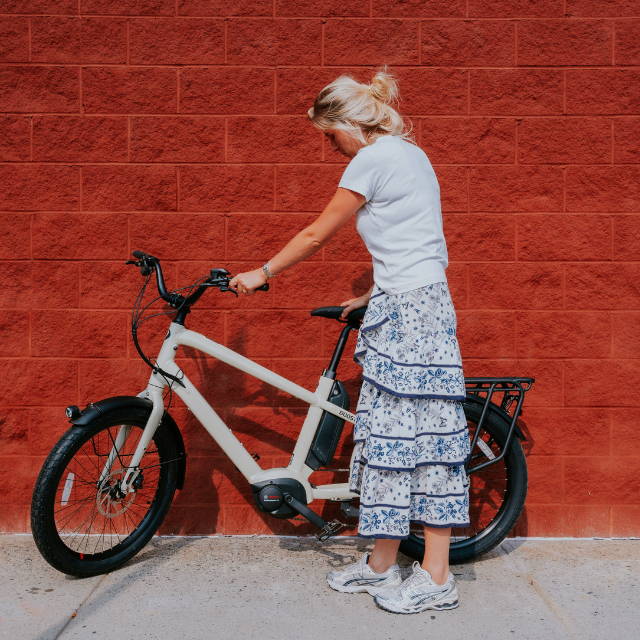
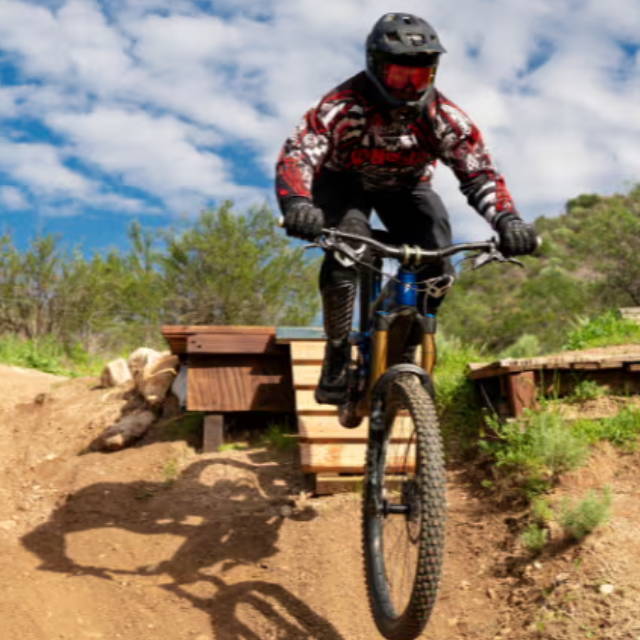
Yes, but the type of sand matters. Hard-packed sand is much easier to work with than soft, dry sand. For most sandy routes, start with a fat-tire e-Bike with controlled pedal assist and hydraulic brakes.
Best E-Bike for Riding Through Sand
Written by: Chris Van Leuven | May 30, 2026 | Time to read: 5-6 min
Compare the best e-Bikes on Upway for sand, from fat tire beach cruisers to full-suspension e-Bikes for loose terrain.

More about the Author: Chris Van Leuven
Chris is a writer, climber, and founder of Yosemite E-Biking in Mariposa, CA. When he’s not tackling Sierra Foothills trails or scaling rock walls, he’s crafting adventure stories with his boxer, Fenster. His work has appeared in Outside, Men’s Journal, Gripped, and Best American Sports Writing.
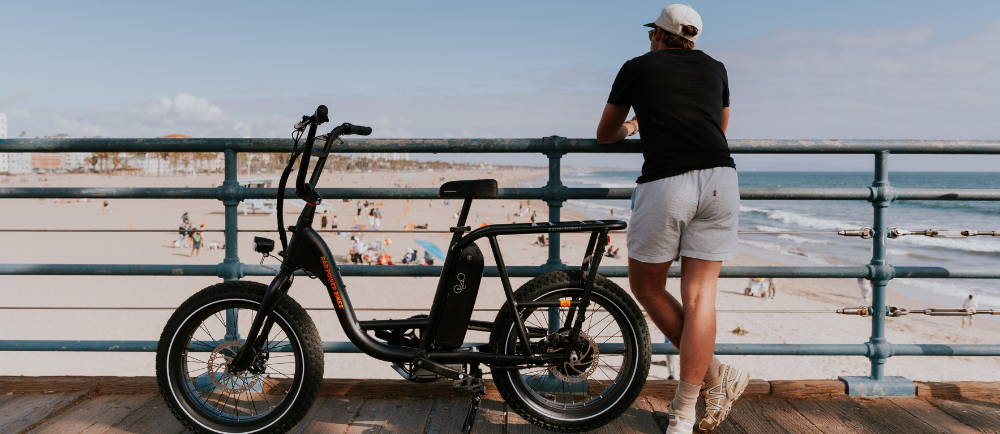
Beach sand looks easy from the parking lot. Then the front wheel starts sliding around, the rear tire digs in, and every wheel rotation feels like more work than it should. That’s when the right e-Bike matters.
Hard-packed sand near the water can feel smooth and fast. Soft dry sand above the tide line is like riding through flour. Add salt air, wind, loose turns, and a heavy e-Bike, and the small details show up fast. For sand, I’d think less about top speed and more about float, traction, torque, tire pressure, battery size, and how long it will take you to clean your e-Bike after the ride. A fat tire e-Bike opens up beach paths, sandy campground roads, vast desert terrain, and coastal errands. But no e-Bike turns deep sand into pavement.
In this blog, I’ll compare sand-ready e-Bikes, including mid-drive fat tire bikes, long-range cruisers, full-suspension options, and premium fat tire e-MTBs. I’ll also cover tire pressure, motor choice, salt, maintenance, and what to check before riding near the beach.
👋 Welcome to Upway!
Upway is your top destination for buying and selling e-Bikes online. Discover your next e-Bike at up to 60% off retail prices, available in new or like-new condition.
Table of Contents
What does a sand-ready e-Bike need?
What are the best e-Bikes for riding through sand?
What’s the difference between sand riding and beach cruising?
Do fat tires, tire pressure, and motor choice matter in sand?
How do beach sand, salt, and maintenance affect an e-Bike?
Shopping sand-ready e-Bikes on Upway
What does a sand-ready e-Bike need?
A good sand e-Bike starts with float. That means fat tires, real tread, and enough tire volume to keep the wheels from cutting into the surface. The bike also needs predictable power. If the motor comes on too hard, the rear tire can spin instead of driving the bike forward.
The main things I’d keep in mind are:
- Fat tires, around 4 inches wide or more
- Enough torque for slow starts in loose sand
- Smooth pedal assist
- A suspension fork or full suspension for rough beach roads
- A drivetrain you’re willing to clean often
- A bike that still feels manageable when you’re walking it
Beach riding isn’t allowed everywhere since not every spot allows e-Bikes. Some allow bikes only on hard-packed sand, below certain tide lines, or outside busy hours. Check the local rules before you roll onto the beach.
What are the best e-Bikes for riding through sand?
| Sand riding need | Upway pick | Why it works |
|---|---|---|
| Best premium all-around sand e-Bike | Aventon Aventure M | Mid-drive power, 100 Nm torque, 4-inch tires |
| Best long-range fat tire cruiser | Himiway D5 or D5 Zebra | Big battery, fat tires, beach-road range buffer |
| Best high-power full-suspension fat bike | Biktrix Juggernaut Ultra FS Pro 3 Fat | Bafang Ultra M620 motor, full suspension, fat-bike build |
| Best wide-tire beach and backroad bike | Surface 604 Boar | 4.5-inch tires, torque sensor, fat-bike platform |
| Best premium fat tire e-MTB | Fantic Fat Sport | Brose motor, Bluto fork, 26 x 4-inch tires |
Aventon Aventure M: Best premium all-around sand e-Bike
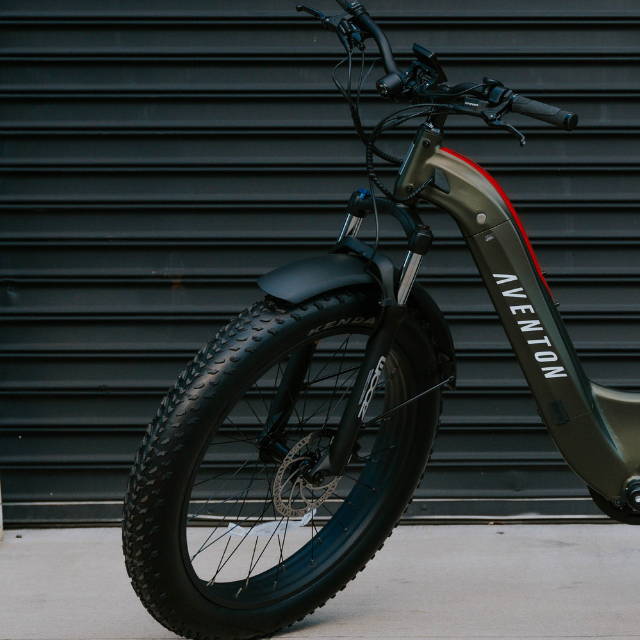
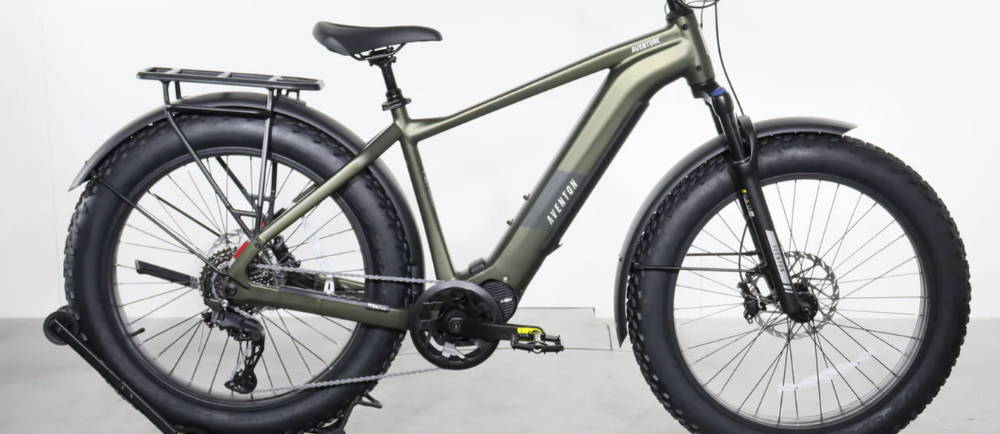
The Aventon Aventure M is the Aventon pick here, thanks to its motor. Aventon lists the Aventure M with its A100 mid-drive motor, 100 Nm of torque, 750W peak power, 4.0-inch tires, an 80mm suspension fork, and up to 85 miles of range.
For sand, I like the Aventure M for hard-packed beach roads, sandy campground loops, loose dirt, and riders who want a fat-tire e-Bike that feels great. It’s not a deep-sand e-Bike. No two-wheel e-Bike really is. But the mid-drive layout, torque, and tire volume give it a better foundation than most everyday fat tire bikes.
Himiway D5 or D5 Zebra: Best long-range fat tire cruiser
The Himiway D5 Pro has fat tires, a 960Wh battery, and up to 80 miles of range. Himiway also describes the D5 Pro as a sand-capable fat tire model.
That range matters because sand, strong winds, low tire pressure, and throttle use drain a battery faster than a normal paved ride. A bigger battery helps, but it doesn’t cancel out soft sand or a heavy bike.
Biktrix Juggernaut Ultra FS Pro 3 Fat: Best high-power full-suspension fat bike
The Biktrix Juggernaut Ultra FS Pro 3 Fat is the big-bike option. Biktrix lists the bike with a Bafang Ultra M620 mid-drive system, more than 1,500W of peak power, 160 Nm of torque, torque-sensing assist, and full suspension.
This is more bike than a casual beach rider needs. But for long sand roads, rough access routes, loose doubletrack, and riders carrying extra gear, it’s great. The tradeoff is size. This isn’t the bike I’d want to drag up stairs after a beach ride.
Surface 604 Boar: Best wide-tire beach and backroad bike
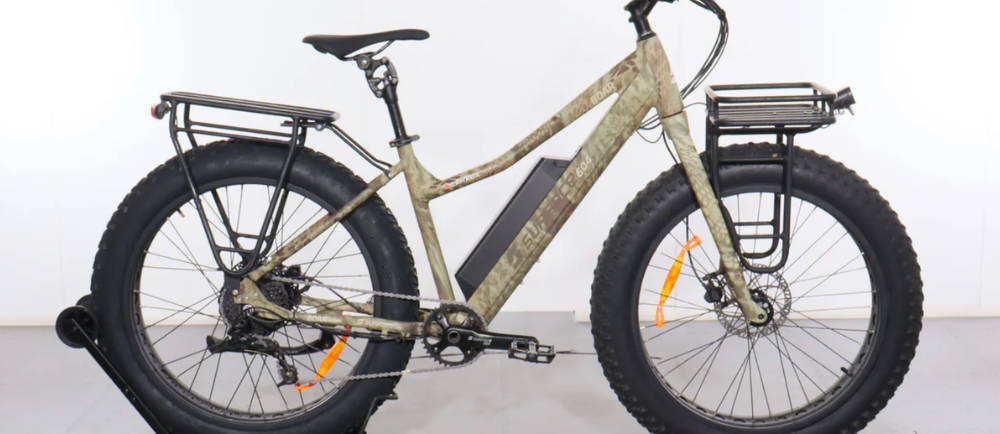
Surface 604 isn’t as familiar as Aventon, but the Boar earns its place here because tire width matters in sand. Surface 604 lists the Boar Explorer with a 960 Wh battery and a 28 mph Class 3 speed. It also has Maxxis Colossus 27.5 x 4.5-inch tires and 80 Nm of torque.
For sand, the 4.5-inch tires are worth a second look. That extra width can help on soft beach roads, loose gravel, sandy two-track, and around campgrounds. The torque sensor also matters because sand rewards smooth power more than sudden bursts.
Fantic Fat Sport: Best premium fat tire e-MTB
The Fantic Fat Sport is the premium fat tire e-MTB pick. This is the bike I’d recommend to riders who want a fat-tire e-Bike that still feels like a mountain bike. The battery is smaller than some long-range hub-drive bikes here, but the component mix is better than most budget fat-tire e-Bikes. The Bluto fork also matters, since it’s a real fat-bike fork.
What’s the difference between sand riding and beach cruising?
There’s overlap between sand bikes and beach bikes, but they’re not the same thing. A beach cruiser can be great for boardwalks, beach-town errands, paved paths, and short rides near the water. If that’s your main use case, Upway’s 6 Best E-Bikes for the Beach blog is worth checking out because it leans more toward comfort, easy handling, and coastal cruising.
This blog is about e-Bikes that make more sense on loose surfaces: hard-packed sand, sandy roads, campgrounds, desert sand, and beach-access routes where e-Bikes are allowed. That’s why the picks lean heavier, wider, and more off-road than a typical beach cruiser list.
Do fat tires, tire pressure, and motor choice matter in sand?
Fat tires are the main reason an e-Bike works in sand. More volume helps the bike float rather than dig into the surface. For firm beach sand or sandy roads, 4-inch tires may be enough. For softer terrain, 4.5-inch or wider tires can help, though rider weight, bike weight, tire tread, and pressure all matter. Lower tire pressure improves grip and float, but don’t guess on PSI. Stay within the tire and rim limits, and remember that low pressure can make the bike feel slower and less precise on pavement.
Motor choice isn’t as simple as “more watts is better.” A hub motor can work well on flat sand and slow starts, especially with a throttle. A mid-drive can feel more natural when the route changes, climbs, or gets uneven. Either can work. What I’d avoid is jerky power delivery. Sand rewards smooth inputs. Too much sudden power will bury the rear tire.
How do beach sand, salt, and maintenance affect an e-Bike?
Sand gets everywhere. Salt makes it worse. After beach rides, I’d clean the bike more often than I would after normal street or path rides. Wipe the frame. Clean the chain. Check the cassette, derailleur, brake rotors, battery contacts, and any area where sand collects. Don’t pressure-wash the motor, battery, display, or electrical connections. That’s a fast way to turn a fun beach ride into an expensive service problem.
I’d also avoid riding through salt water. Even shallow saltwater is hard on bearings, chains, brakes, and electrical components. Wet hard-packed sand can be great, but the tide line isn’t a bike lane.
Shopping sand-ready e-Bikes on Upway
Sand changes what I’d look for on Upway. I wouldn’t just sort by price or pick the fattest tire in the row. I’d start with the actual bike: tire width, battery size, motor type, brakes, mileage, frame condition, and drivetrain wear. Then I’d think about what happens after the ride. If you’re near salt or soft sand, cleaning and storing the bike are part of owning it.
That’s why shopping for certified pre-owned e-Bikes—which saves you up to 60%—on Upway works. Here, you can compare better builds, bigger batteries, and wider-tire bikes without treating the brand name as the whole story.
Frequently Asked Questions
Can you ride an e-Bike on sand?
What tire size is best for riding an e-Bike through sand?
I’d start around 4 inches wide. But remember that wider tires, such as 4.5-inch or 4.9-inch options, can add float in softer conditions. Tire pressure, tread, bike weight, rider weight, and motor control matter too.
Is beach riding bad for an e-Bike?
It can be if you ignore the cleanup. Sand and salt are hard on chains, brakes, bearings, and electrical parts. Avoid salt water, clean the bike after beach rides, and store the battery properly.
Key Takeaways
- Sand riding starts with float, not speed. Fat tires, smooth assist, and tire pressure matter more than top speed.
- The best sand e-Bikes have 4-inch or wider tires, hydraulic brakes, and power delivery you can control.
- Upway helps riders compare sand-ready e-Bikes from brands like Aventon, Himiway, Biktrix, Surface 604, and Fantic by saving them up to 60%.