Yes. That’s one of the places it makes the most sense. The 4-inch fat tires, upright position, strong motor support, and front suspension help the Aventure feel stable on gravel, dirt roads, rough pavement, and mixed-surface rides.
Aventon Aventure Review: Fat-Tire E-Bike I Actually Ride
Written by: Chris Van Leuven | June 9, 2026 | Time to read: 6 min
Discover the Aventon Aventure, a fat-tire e-Bike built for gravel, dirt roads, errands, comfort, and all-terrain riding.

More about the Author: Chris Van Leuven
Chris is a writer, climber, and founder of Yosemite E-Biking in Mariposa, CA. When he’s not tackling Sierra Foothills trails or scaling rock walls, he’s crafting adventure stories with his boxer, Fenster. His work has appeared in Outside, Men’s Journal, Gripped, and Best American Sports Writing.
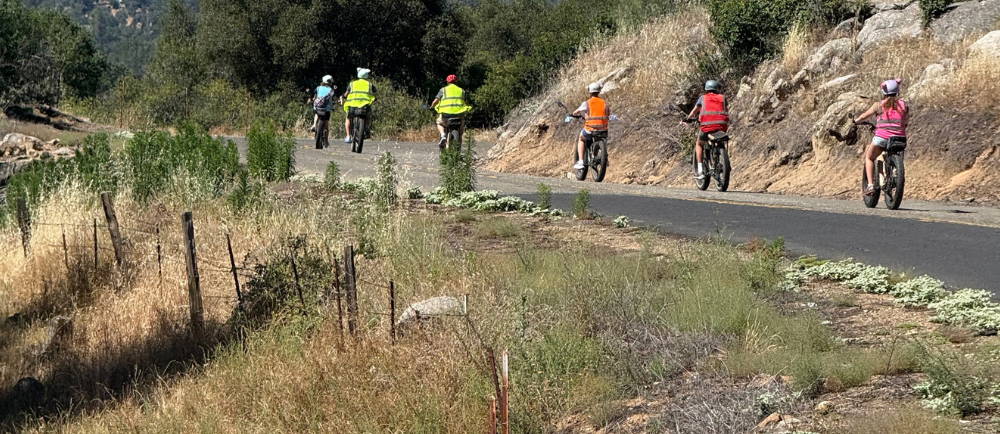
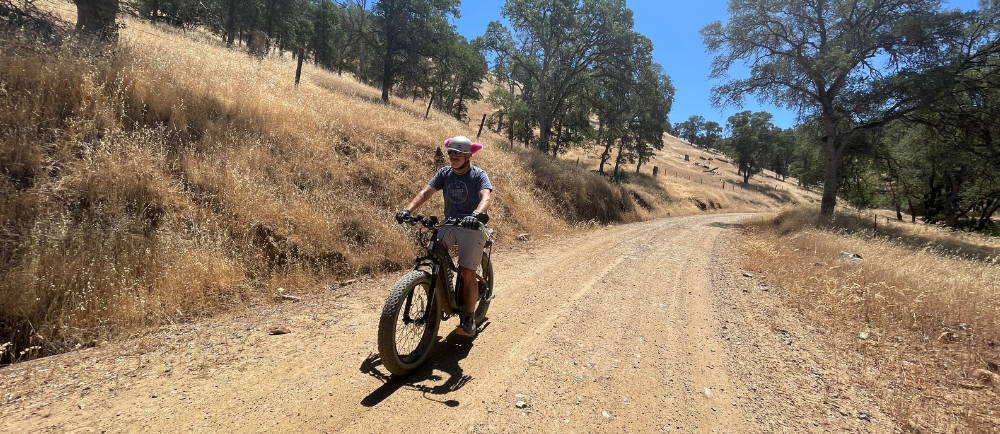
The Aventon Aventure isn’t a delicate bike. That’s one reason I like it. I ride an Aventure year-round, and mine doesn’t have an easy life. It gets loaded up with gear, ridden on rough foothill roads and mountains, over gravel, charged again and again, and it’s been used on blazing hot days and even in a blizzard! That kind of use tells you things a spec sheet doesn’t. This is the e-Bike that works for the riding I do — fire roads with plenty of elevation gain and all-day outings.
The Aventure is a fat-tire e-Bike for riders who want stability, power, comfort, and the freedom to ride rough roads (but not singletracks) without worrying whether the bike is out of its depth. It’s not a true e-MTB like the Aventon Ramblas, and it’s not a lightweight city bike like the Soltera. It’s a sturdy, most-terrain heavy e-Bike that can do a lot! And for many everyday riders, that’s the whole appeal.
In this blog, I’ll cover why the Aventon Aventure works so well for mixed-surface riding, how the newer Aventure 3 and Aventure M differ, what I’ve learned from riding one regularly for many years, and what to check when shopping for a certified pre-owned Aventon Aventure on Upway.
👋 Welcome to Upway!
Upway is your top destination for buying and selling e-Bikes online. Discover your next e-Bike at up to 60% off retail prices, available in new or like-new condition.
Table of Contents
Why I keep coming back to the Aventure
The Aventure works because it can do a lot, and do it well. I ride rocky mountain roads, ranch roads, over potholes, through wet leaves and snow, soft, powdery dirt, and up long hills. And I ride it a lot, since it’s part of my daily routine, logging somewhere in the range of 400+ miles a month, all in the mountains and foothills.
That’s where the Aventure feels at home. The 4-inch fat tires add stability, smooth out the ride, and improve traction on loose surfaces. For new riders, heavier riders, and people carrying heavy gear, super picnics (like me), layers, and other supplies, that confidence matters.
Aventon’s Aventure collection includes the Aventure 3, Aventure 3 Step-Through, and Aventure M (though I still use my ol’ standby Aventure.1 the most, and I also have an Aventure.2). The Aventure 3 uses 4-inch fat tires, a suspension fork, a suspension seatpost, a 750W motor, up to 65 miles of range, and ACU technology with 4G/GPS and anti-theft features. The Step-Through retains the same general ride feel while lowering the frame for easier mounting and dismounting.
The Aventure M is the premium mid-drive version, with an A100 mid-drive motor, 100 Nm of torque, 4-inch tires, an 80mm suspension fork, SRAM DB4 hydraulic four-piston brakes, a Shimano CUES 10-speed drivetrain, E-Shift, AutoShift, Auto Mode, ACU smart features, a rack, and fenders.
Check out Upway's hands-on review of the Aventon Aventure e-Bike below!
Aventure 3, Aventure Step-Through, and Aventure M specs
The Aventure lineup has changed a lot since the initial model. But the basic idea stayed the same: wide tires, strong motor support, an upright position (great for sightseeing), and enough comfort to make rougher rides more doable.
| Model | Motor | Range | Tires | Frame style | Best use |
|---|---|---|---|---|---|
| Aventon Aventure 3 | 750W rear hub motor | Up to 65 miles | 26 x 4.0 inches | Step-over | Gravel, errands, commuting, mixed surfaces |
| Aventon Aventure 3 Step-Through | 750W rear hub motor | Up to 65 miles | 26 x 4.0 inches | Step-through | Same Aventure feel with easier starts and stops |
| Aventon Aventure M | A100 mid-drive, 100Nm | Up to 85 miles | 26 x 4.0 inches | Step-over | More climbing, more weight, more dirt, premium feel |
The Aventure 3 is the main pick for most riders. It keeps the fat-tire feel, adds a suspension fork and suspension seatpost, and includes Aventon’s ACU technology with GPS, anti-theft tools, and Ride Tune customization through the Aventon app.
The Aventure 3 Step-Through is the one I’d point toward riders who want the same tire width and motor support but don’t want to swing a leg over a high top tube. That matters if you’re carrying gear, riding in town, sharing the bike, or just want easier starts and stops. I like the Aventure step-through (I have both a step-through and a step-over) and find it slightly easier to use.
The Aventure M changes the ride more than the frame shape does. A mid-drive motor sends power through the drivetrain, which feels more natural on climbs and variable terrain than a rear hub motor. AutoShift and Auto Mode also make the bike feel more controlled when the grade keeps changing.
How the Aventure feels on pavement, gravel, and dirt roads
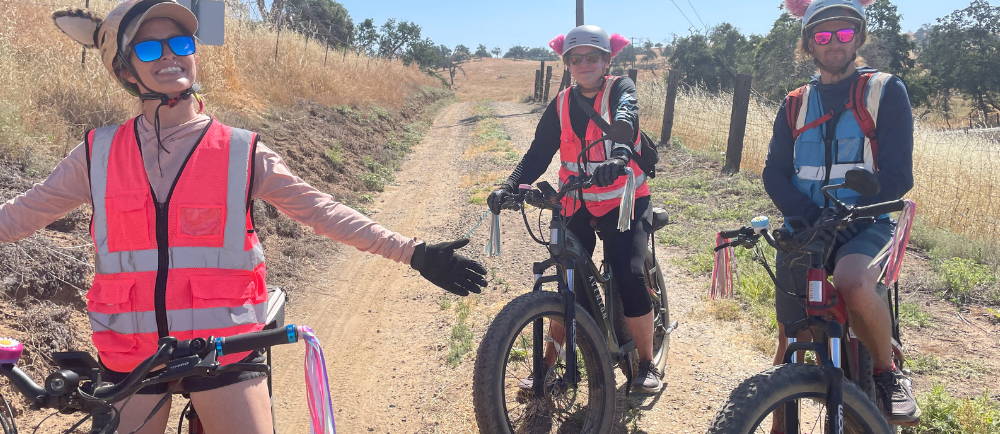
The first thing you notice on an Aventure is the posture. It feels wide, upright, and stable. You don’t feel perched over it. You feel like you’re sitting on the bike a bit, with enough tire under you to relax your shoulders.
On pavement, the Aventure is comfortable but not quick in the road-bike sense, but it’s quick enough. Plus, I pack a spare battery on the rear rack, so I don’t get range anxiety on long rides. The fat tires add cushion and grip, but they also add weight and rolling resistance. I don’t mind that tradeoff because I’m usually riding places where pavement isn’t the whole story. Think along river roads, over easements with cows around, and sometimes even horses.
On gravel, the bike makes even more sense, and I like that it rolls right over rocks. Washboard doesn’t rattle you as much, especially if you lower the PSI. The tires help when the surface changes from hardpack to dust to small rock. You still need to pay attention, especially because this is a heavy e-Bike, but the Aventure is forgiving. I take extra care on loose, downhill turns so the bike doesn’t slide out.
On dirt roads and mellow doubletrack, it’s fun in a different way than a mountain bike. You’re rolling, looking around, carrying speed, and not worrying too much when the surface gets a bit bumpy. However, all this wear and tear does take a toll, so expect regular maintenance (which gets spendy) if you ride rough terrain.
The torque sensor is a big part of the newer Aventure feel. It helps the assist come on more smoothly, which matters on a fat-tire hub-drive e-Bike. A smoother sensor makes starts, climbs, and tight turns easier to manage. But I do find that I have to pedal harder on a torque-sensor e-Bike, especially on hills.
The smart features are useful, too: GPS tracking, geofencing, remote shutdown, motion alerts, Ride Tune, the Aventon app (which is quite helpful), and the integrated rear-wheel lock. But the reason to buy an Aventure is still simpler: it’s stable, comfortable, powerful, and ready for a big mix of surfaces.
Where the Aventure isn’t the right tool
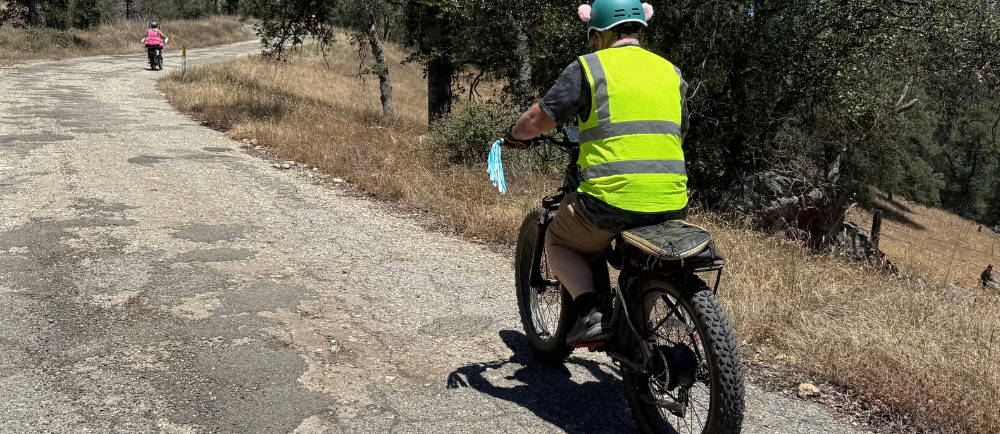
The Aventure is capable, but it’s not for all types of riding. It’s a big bike. That’s part of why it feels so stable, but it also means you’ll notice the weight when loading it onto a rack (it’s really heavy), carrying it up steps (nearly impossible), walking it through a tight garage, or making a quick correction on rough ground (don’t turn too quickly). If you need to lift your e-Bike often, think hard before buying one. It’s a real workout to load it onto a car rack, even with the battery removed first.
The fat tires are also a tradeoff. They’re great for comfort and traction, but they’re not as efficient as narrower tires. If most of your riding is on smooth pavement, a commuter e-Bike like the Aventon Level (which is not the best hill climber, in my opinion) may feel quicker and easier to handle. If you want actual mountain-bike handling on singletrack, the Aventon Ramblas is the better place to look.
I’d also be realistic about “off-road.” The Aventure can handle dirt roads, gravel, sand, snow, rough pavement, and mellow trails. But it isn’t a full-suspension mountain bike, and I wouldn’t treat it like one (even though I have). Hydraulic disc brakes and 4-inch tires help, but weight, geometry, and suspension still matter.
If you want one e-Bike for errands, weekday and weekend dirt roads, beach-town riding, ranch roads, winter commuting, and mixed-surface cruising, the Aventure is in its element. If you want to ride technical singletrack regularly, look for an e-MTB.
What to check when shopping for an Aventure on Upway
Upway already has an Aventon Aventure model review and buyer’s guide, and it has stocked the first Aventure, Aventure.2, and Aventure 3.
The Aventure is a tough bike, but tough bikes still wear out parts. I’ve worn out plenty but have yet to have to replace anything major like a motor or battery, despite putting on more than 5,000 miles on my Aventure.1.
On Upway, I’d look closely at:
- Battery condition
- Mileage
- Suspension fork condition
- Display and Aventon app compatibility (for example, you can’t use the app to change some settings on earlier models)
- Whether it’s an original Aventure, Aventure.2, Aventure 3, or Aventure M
- Frame size and step-over vs. step-through frame
- Throttle, pedal assist, and smart features listed
The Aventure is a great certified pre-owned buy because it works for so many riders. Upway’s great here because their bikes undergo a 50-point inspection, are refurbished, and are backed by a 1-year warranty and a 14-day return period, which matters for a heavy utility-style fat-tire e-Bike.
I’d also check the generation carefully. The first Aventure is still useful (I very much like mine), but the Aventure.2 added torque-sensor refinement (but I still prefer cadance sensors). The Aventure 3 brings newer smart features and anti-theft tech. The Aventure M changes the ride more significantly with a mid-drive motor, AutoShift, and Auto Mode.
That doesn’t mean everyone needs the newest one. It means the right deal depends on the exact version, condition, if the bike fits you, and how you ride. If you can store and transport an Aventure, which weighs around 70 pounds, and you want to ride the terrain it’s made for, it’s worth checking out!
Frequently Asked Questions
Can the Aventon Aventure handle dirt roads and gravel?
What’s the difference between the Aventon Aventure 3 and Aventure M?
The Aventure 3 uses a 750W rear hub motor and is the more familiar fat-tire option. The Aventure M uses Aventon’s A100 mid-drive motor with 100Nm of torque, plus electronic shifting, AutoShift, Auto Mode, GPS tracking, and a more premium ride feel.
Is the Aventon Aventure too heavy?
It can be, depending on your setup. The weight helps the bike feel stable, but it’s a real factor if you need to lift it, store it upstairs (not recommended), load it on a rack, or maneuver it in tight spaces. For ground-level storage and mixed-surface riding, the tradeoff is easier to live with.
Key Takeaways
- The Aventon Aventure is a heavy fat-tire e-Bike built for stability, comfort, power, and mixed-surface riding.
- The Aventure 3 is the main all-terrain pick, while the Aventure M adds a mid-drive motor, AutoShift, Auto Mode, and a more premium ride feel.
- When shopping for certified pre-owned e-Bikes on Upway, check the exact generation, battery condition, brakes, tires, suspension fork, mileage, frame style, and smart features.