Stop riding, power cycle the bike off for about 10 seconds, and back on, then check the code against Velotric's error code guide. If it doesn't clear, get in touch with Velotric support or a shop.
Velotric E-Bike Troubleshooting Guide
Written by: Tom Fortune | July 30, 2026 | Time to read 5 min
Most Velotric e-Bike problems come down to a handful of causes: a loose connector, a brake lever that isn't fully released, or a sensor reading something it shouldn't.

More about the Author: Tom Fortune
Tom is a Brit living in the French Alps. When he's not creating written and video content for various brands, he's either pedalling or snowboarding around his local mountains. E-Bikes have unlocked the potential for Tom to explore Alpine terrain and get away from the crowded bike parks. He is only too keen to share his knowledge and experience with other riders.
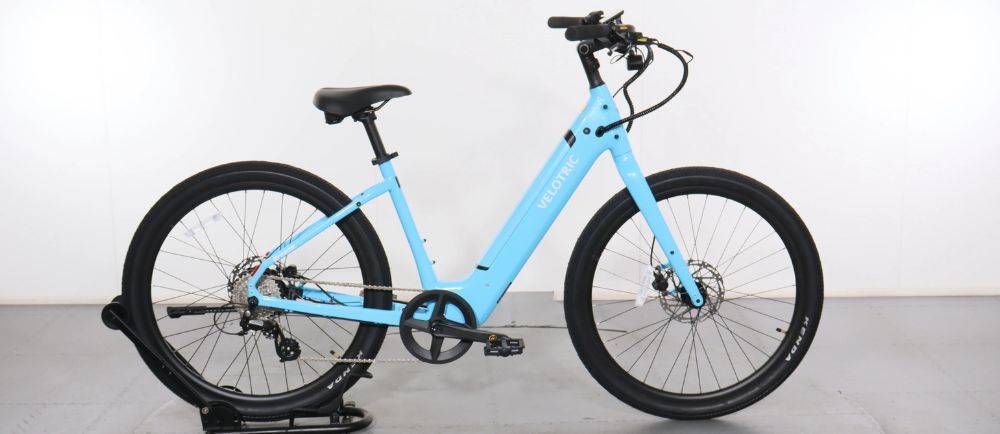
Every e-Bike will have an occasional problem, and Velotric is no exception, even though the brand's bikes are generally reliable. Some problems are mechanical, the same wear and tear any bike deals with, and others show up through the display's error code system when something electronic needs attention. This guide covers the common mechanical issues worth checking first, how to read Velotric's error codes when the problem is electrical, and how Velotric's SensorSwap and hub-motor design change what's worth checking compared to other e-Bike brands.
👋 Welcome to Upway!
Upway is your top destination for buying and selling e-Bikes online. Discover your next e-Bike at up to 60% off retail prices, available in new or like-new condition.
Table of Contents
Common Mechanical Issues
Squealing or Weak Brakes
If you're hearing a squeal every time you brake, take the off wheel and look at the pads before you do anything else. You need to replace the brake pads if there's less than about a millimeter of material left. You should also replace the pads if they are glazed and shiny instead of matte.
On the Velotric Nomad line specifically, the stock Tektro brakes aren't the best, and the lever can feel spongy compared to what they're used to. This is where you need to bleed the brakes if they are hydraulic, or tighten the cable if it's mechanical.
Grinding From the Wheel
Grinding that's most noticeable when you spin the wheel by hand, with it off the ground, points to a hub bearing instead of the drivetrain.
On a Velotric, that bearing also supports the motor, since most models use a hub drive, so don't ignore it. A wheel that spins freely and smoothly is fine. One that feels notchy, catches, or grinds as it turns needs the bearing looked at. This is a job worth taking to a shop, since it usually means pulling the motor out of the wheel
Rattling
Rattling that changes or gets worse over bumps is almost never the drivetrain.
If you have a Velotric Fold 1 or Fold 1 Plus folding bike, check the folding mechanism since that joint takes a lot of repeated stress and can work loose over time. On non-folding models, a rattle is usually a loose fender, rack, or kickstand bolt. It's worth doing a quick check around the frame before you assume the worst.
How Velotric's Error System Works
Every Velotric model has an error detection system built into the display and controller. This feature means that an electronic fault shows up as a code instead of the bike just cutting power on you with no explanation.
Most current models, such as the Discover 3, Discover M, Nomad 2, Nomad 2X, Summit 1, Summit 2, Breeze 1, Fold 1, Fold 1 Plus, Triker, and GoMad, have this system. The exact code numbers differ a bit between older and newer bikes, but the way the system works stays the same.
Common Electrical Problems and Quick Fixes
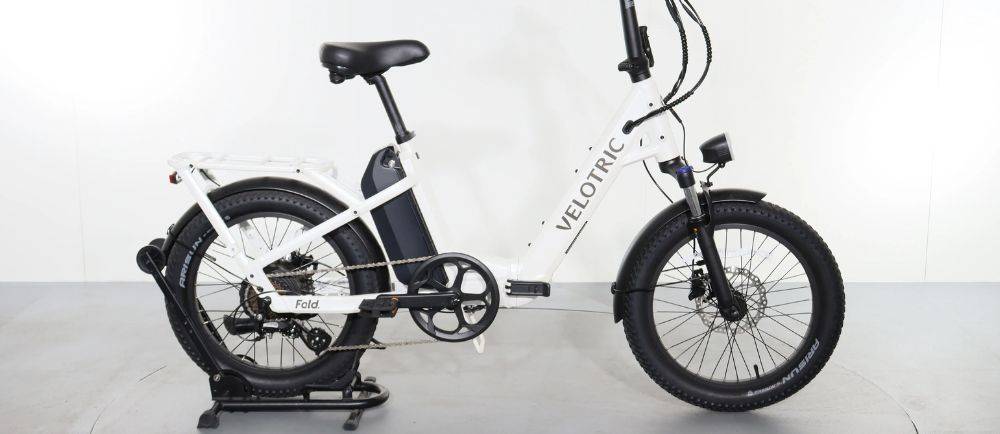
When you get an electrical problem, always check the display to see if it gives you any error codes. These help you to diagnose the problem, or at least point you in the right direction. But here are some things to check in certain scenarios.
Assist Cuts Out Mid-Ride
If the assist just stops mid-ride with no warning, check the display connector first, right where it plugs into the frame near the head tube. It's the most common spot for a wire to get pinched or a pin to work loose over time. Pop it off, look for corrosion or a bent pin, reseat it firmly, and try again.
If that doesn't fix it, do a full power cycle. It's the old IT technician's trick of turning it off, waiting 10 seconds, and turning it back on. It sounds too simple to work, but it clears a decent chunk of electronic faults because it resets the controller's fault state.
From there, check the display connector itself if you haven't already, and reset the circuit breaker on the controller if the bike has one. One that keeps tripping the moment you reset it means there's a short somewhere, not a one-off glitch.
Overvoltage Faults
If you're seeing an overvoltage-style fault on your display, try to think about how you were riding right before it happened. Were you coasting fast downhill with the motor still engaged? This can trigger an overvoltage fault. So can charging with anything other than the charger that came with the bike. If you use an incompatible charger or a third-party battery, it can push voltage past what the controller expects, tripping a protection fault.
Understanding Velotric Error Codes
Velotric error codes are split into a few groups depending on what's affected:
- The display and power system
- The controller and throttle
- The motor's internal phase and hall sensors
- The torque and cadence sensors
- The wired lighting circuit
E64 is a common one. It almost always means the sensor needs recalibrating, not replacing, so try power cycling it a couple of times before you assume the worst. A code tied to the front light usually traces back to the same connector and harness problem covered above, just showing up on a different circuit.
For the specific meaning of each code, Velotric E-Bike Error Codes Part 1 and Part 2 go through them one by one. If a code shows up while you're riding, stop, power cycle, and only get back on once it's fully cleared, not just once the screen looks normal again.
How Velotric Differs From Other Brands
SensorSwap is the thing that really sets Velotric apart. You can toggle between a torque sensor and a cadence sensor on the same bike. It's useful to flip between these modes when you're troubleshooting, too, since a "sensor fault" on a Velotric might just mean the mode that was active when it happened, not a hardware problem at all.
Most of the Velotric lineup has hub motors instead of mid-drive systems, and that narrows down where you should be looking when something's wrong. Hub motor problems tend to live in the motor, the wiring, or the wheel bearings. Mid-drive bikes wear out the chain, cassette, and derailleur faster because the motor runs through them, so you're troubleshooting the drivetrain a lot more on those. With a Velotric, you're usually looking at the motor and electronics first.
When to Call a Shop Instead
Checking connectors, power cycling, and resetting a breaker are all fine to do yourself. Opening the motor casing or the controller housing isn't. Neither is a fault that keeps coming back, no matter how many times you clear it. That's usually a sign of something failing intermittently, not a one-off glitch you can reset your way out of, and I recommend you take your Velotric electric bike to a shop that can service e-Bikes.
Buying a Pre-Owned Velotric
A bike with a display connector that's been reseated a dozen times, or a SensorSwap toggle stuck on cadence mode, looks completely normal in an online listing and often only reveals itself once you've bought the bike and started riding it. That's the part of buying used you can't shortcut on your own.
Every e-Bike on Upway gets checked for exactly this—motor, battery, and electrical system included— as part of a 50-point inspection before it's ever listed. Browse the current Velotric selection, or check the sale collection if you're comparing prices across models.
Frequently Asked Questions
What should I do if my Velotric shows an error code?
Are Velotric error codes the same across every model?
Mostly, since current models share the same underlying detection system, though the exact codes and what triggers them can shift a bit between older and newer bikes.
Can I use a third-party battery or charger on my Velotric?
Better not to. A mismatched charger or battery can push voltage beyond what the controller's built to handle, which is a common reason overvoltage codes show up in the first place.
Key Takeaways
- Not every Velotric problem is electronic. Worn brake pads and drivetrain noise are mechanical issues worth checking before you assume it's the motor or electronics.
- Most electronic faults trace back to a loose connector, an unreleased brake lever, or a sensor issue, and a power cycle clears a solid chunk of them.
- Velotric's SensorSwap feature and hub motor lineup mean troubleshooting usually starts at the motor and electronics instead of the drivetrain, unlike mid-drive-based brands.