Lectric XPeak Review: Fat-Tire E-Bike
Written by: Chris Van Leuven | July 19, 2026 | Time to read: 5 min
Read Upway’s Lectric XPeak 2.0 review to learn how it handles pavement and dirt, who it fits, and what to check before buying used.

More about the Author: Chris Van Leuven
Chris is a writer, climber, and founder of Yosemite E-Biking in Mariposa, CA. When he’s not tackling Sierra Foothills trails or scaling rock walls, he’s crafting adventure stories with his boxer, Fenster. His work has appeared in Outside, Men’s Journal, Gripped, and Best American Sports Writing.
👋 Welcome to Upway!
Table of Contents
What makes the Lectric XPeak 2.0 different?
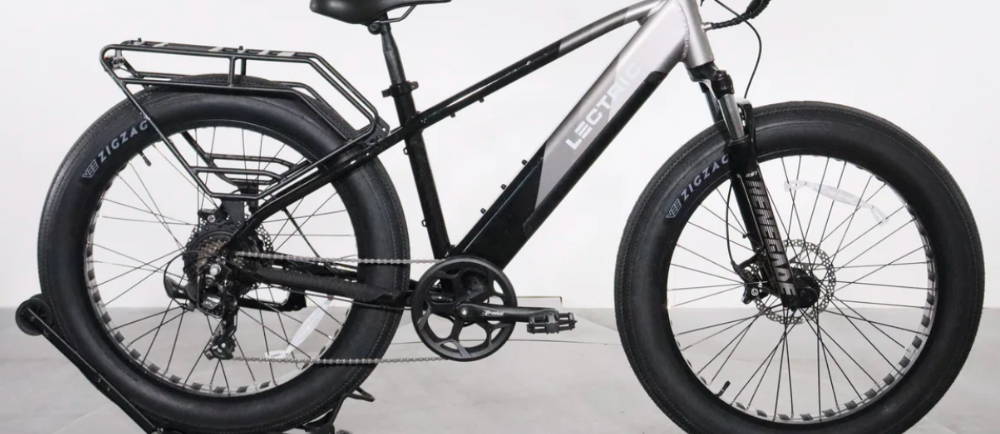
A lot of affordable fat-tire e-Bikes come from the same checklist. Big motor. Big battery. Four-inch tires. Impressive name. The XPeak 2.0 has all of that, but Lectric also spent money where I’d rather see it spent: power delivery, suspension, brakes, and the frame.
The torque sensor is a big part of the difference. It responds to how hard you’re pedaling rather than simply switching the motor on when the cranks begin to turn. That gives you more control on loose gravel, rutted roads, snow, and climbs where a sudden burst of power can break traction.
The RST Renegade suspension fork provides 80mm of travel, while the puncture-resistant 26x4-inch fat tires add grip and soften rough surfaces. A heavy bike also has to stop well. The XPeak uses hydraulic disc brakes with a 203mm front rotor and 180mm rear rotor, which is great.
Lectric offers High-Step and Step-Thru frames. The High-Step is aimed at riders from roughly 5-foot-4 to 6-foot-5, while the Step-Thru lowers the barrier for riders who don’t want to swing a leg over a tall top tube.
Battery choice depends on how far you actually ride. The standard version is rated for up to 60 miles, while the Long-Range model increases the claim to 80 miles under ideal conditions. Real range will depend on elevation, rider weight, temperature, tire pressure, cargo, throttle use, and pedal-assist level.
The XPeak is certified to UL 2849, and its removable battery is certified to UL 2271. Lectric also had the frame, fork, stem, and handlebars tested to the ISO 4210-10 eMTB standard. That doesn’t make it a downhill race bike, but it’s useful context when comparing it with off-road electric bikes that make similar claims without the testing to back them up.
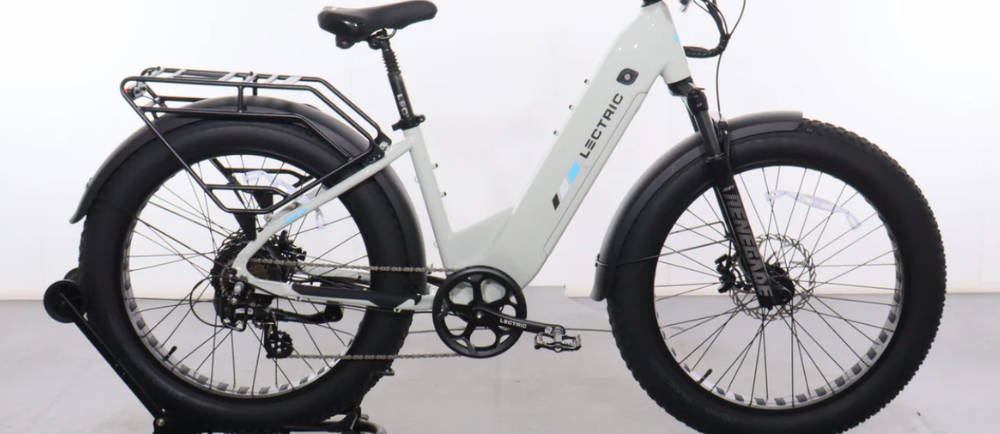
How does the Lectric XPeak 2.0 handle rough terrain?
The XPeak makes the most sense when the surface gets rough. On smooth pavement, those fat tires add weight and rolling resistance. On washboard gravel, sandy roads, and snow, they work great.
The 750W rear hub motor has enough push for paved hills, rolling dirt roads, and long gravel climbs. Lectric’s Stealth M24 setup is also quieter than the company’s earlier 750W motors.
I wouldn’t confuse it with a premium mid-drive e-MTB. A mid-drive motor uses the bike’s gears and generally feels better on steep, technical singletrack. The XPeak’s hub motor is more at home on fire roads, rail trails, ranch roads, desert tracks, and uneven backroads than in rock gardens or jump lines. That covers a lot of real riding.
Around Tahoe, it could handle mellow fire roads and rough access routes. In Vermont, it suits gravel and old roads better than it would a city commuter. Near Moab, it makes more sense on sandy backroads and campground routes than on technical slickrock. In Michigan or Minnesota, the fat tires also give it more usefulness when winter arrives.
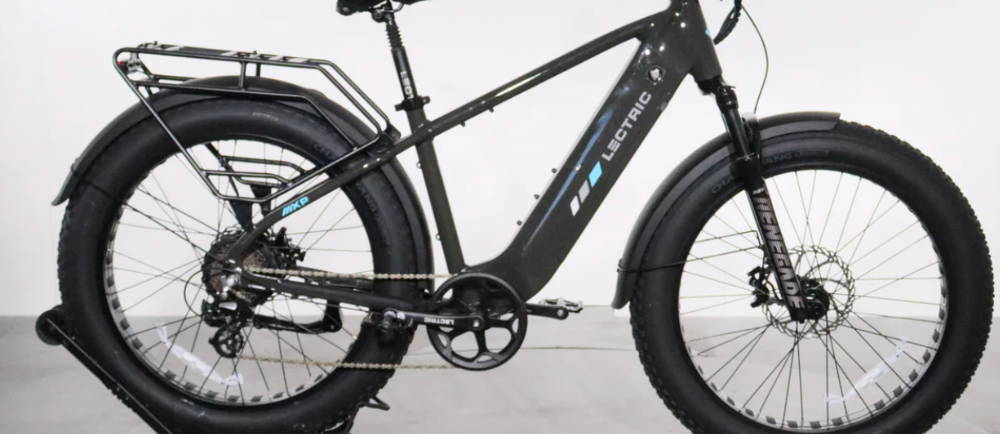
Lectric XPeak components and weight
The Shimano Altus 8-speed drivetrain is basic but familiar. You can find replacement parts without tracking down a proprietary system, and the gearing gives you options when the battery is low or the road gets steep.
The color LCD display shows speed, battery level, pedal-assist setting, and ride data, while a USB-C port can keep a phone charged during navigation. The thumb throttle is useful for pulling away from a stop or getting through a short patch where pedaling is awkward.
Weight is the obvious tradeoff. Lectric lists the XPeak at 64.5 pounds, excluding its 10.5-pound battery. You’ll notice that weight when loading it onto a rack, carrying it upstairs, or moving it through a cramped garage. Before buying, I’d make sure your bike rack is designed for both the weight and the fat tires.
Who should buy the Lectric XPeak 2.0?
The XPeak is for riders whose routes don’t fit neatly into one category. It works for gravel roads, Forest Service roads, rail trails, snow, sandy routes, rural pavement, campgrounds, and commutes where the shoulder looks like it got beaten by a snowplow.
The Step-Thru model makes mounting easier, and the High-Step gives you a more traditional diamond frame. The Long-Range battery is worth considering if you climb often, ride far, or regularly use higher pedal-assist levels.
I’d look elsewhere if nearly every mile is smooth and paved. A lighter commuter will feel quicker, easier to transport, and more efficient. I’d also look elsewhere for bike-park laps, jumps, drops, or aggressive technical singletrack. The XPeak is an off-road electric bike, but that broad label covers everything from gravel paths to downhill racing. This one lives closer to the gravel-road end.
Its strength is covering the ground between a commuter and a dedicated mountain e-Bike. You can ride to work on Friday, explore a dirt road on Saturday, and take it to a campground on Sunday without feeling like you chose the wrong bike three times.
What should you check on a used Lectric XPeak?
Dust doesn’t worry me much. Neglected parts do. A used XPeak may have spent its life commuting on pavement, riding snowy roads, or bouncing down fire roads with camping gear. Those histories leave different clues.
| Parts I’d check first | What they can reveal |
|---|---|
| RST Renegade fork | Leaking seals, scratches, clunks, or play can point to hard use or missed service. |
| Battery and charger | Confirm whether it has the standard or Long-Range battery and that the correct charger is included. |
| Fat tires | Inspect the knobs, sidewalls, plugs, sealant, and uneven wear. |
| Hydraulic brakes | Check pad life, rotor condition, lever feel, and stopping power. |
| Wheels and thru axle | Spin the wheels and check for wobbles, loose spokes, or poor rotor alignment. |
| Shimano Altus drivetrain | Shift through all eight gears and inspect the chain, derailleur, and freewheel. |
| Frame underside | Deep gouges, dents, or impacts tell you more than dust on the top tube. |
| Display and electronics | Test pedal assist, throttle, lights, USB-C port, and every display function. |
Mileage alone won’t tell you whether a used all-terrain e-Bike is a good buy. I’d rather have one that was ridden regularly on gravel and maintained than a low-mile bike that sat outside through two winters.
Buying a certified pre-owned Lectric XPeak on Upway
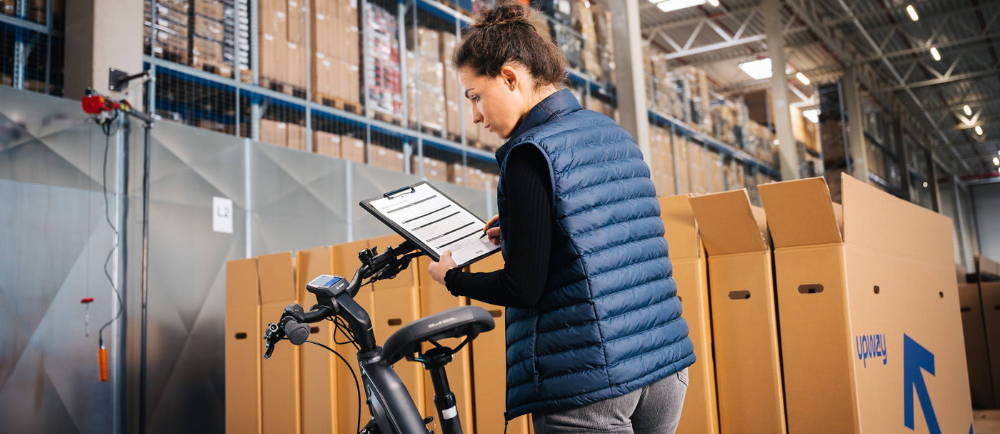
The XPeak is exactly the sort of used e-Bike where an inspection has value. Suspension, hydraulic brakes, fat tires, wheels, drivetrain parts, motors, and batteries can all become expensive if several need attention at once. That’s where Upway’s certified pre-owned inspection process gives you a better understanding of the bike before it arrives. Plus, Upway offers a 14-day return period and a 1-year limited warranty.
You can compare mileage, battery condition, frame style, model year, and cosmetic condition without trying to interpret a few dark marketplace photos. That also helps if you’re choosing between a High-Step and a Step-Thru model, or deciding whether the Long-Range battery is worth the extra cost.
I wouldn’t automatically chase the least expensive used Lectric XPeak. I’d look for the one with a clean condition report. That’s more important on a bike built to leave pavement behind.
Frequently Asked Questions
How fast does the Lectric XPeak 2.0 go?
Can the Lectric XPeak handle hills?
Is the Lectric XPeak good for commuting?
Key Takeaways
- The Lectric XPeak 2.0 is an all-terrain fat tire electric bike built for pavement, gravel roads, snow, dirt routes, rail trails, and everyday transportation.
- Its torque sensor, 750W rear hub motor, RST Renegade suspension fork, hydraulic disc brakes, and Shimano Altus drivetrain make it more controlled and serviceable than many budget off-road e-Bikes.
- When buying used, focus on battery condition, suspension, brakes, wheels, tires, drivetrain wear, frame impacts, and how the bike was stored.