Sand and salt water are two of the biggest enemies of any bicycle. Fine sand works its way into chains, bearings, gears and moving parts, while salt accelerates corrosion on metal components and electrical connections. After every beach ride, rinse your bike with fresh water and dry it thoroughly (before putting it into storage to prevent rust) and lubricate the chain before your next ride.
Can You Ride an Electric Bike on Beaches?
Written by: Kazim Ladimeji | July 14, 2026 | Time to read 6 min
Riding an electric bike along the beach sounds like the perfect day out, but not every beach allows it. The rules depend on who manages the beach, the type of e-Bike you're riding, and even which part of the beach you want to explore.

More about the Author: Kazim Ladimeji
Kazim is a UK-based cyclist and writer who discovered his passion for riding during lockdown six years ago and hasn’t looked back since. He now rides around 100 miles a week, exploring road and light gravel routes from his base in the Cotswolds, a cycling paradise. When he’s not riding or writing about e-Bike trails in the US, he’s exploring cafés, cooking, and keeping busy as a soccer dad
Electric bikes are becoming increasingly popular for exploring coastal paths, beachfront promenades, and scenic shorelines. Their extra power makes riding on sand and tackling hilly coastal routes much easier than on a conventional bicycle.
However, beach access isn't the same everywhere. Federal beaches, state beaches, and local authorities often have different rules governing where e-Bikes can be ridden, while some beaches prohibit electric assistance altogether, especially from Class 2 and Class 3 e-Bikes.
In this article, I explain where you can legally ride an e-Bike on the beach, which types of electric bike are best suited to sandy terrain, and how to ride safely on wet sand, dry sand, and rocky beaches.
👋 Welcome to Upway!
Upway is your top destination for buying and selling e-Bikes online. Discover your next e-Bike at up to 60% off retail prices, available in new or like-new condition.
Can you ride an electric bike on the beach?
Federal beaches
Federal beaches are coastline areas, national park beaches, and national seashores managed by the National Park Service. They permit Class 1, 2, and 3 electric bicycles wherever conventional bicycles can be ridden, and wherever a superintendent has specifically authorized their use.
As with traditional bicycles, e-Bikes are not permitted in designated wilderness areas.
These low-speed electric bicycles must meet the following criteria:
- Have fully operable pedals
- Have an electric motor of up to 750 watts
- Fit into one of the following classes:
Class 1 e-Bike: Motor assists only while pedalling and stops assisting at 20 mph.
Class 2 e-Bike: Motor can propel the bike without pedalling (throttle assist) and stops assisting at 20 mph.
Class 3 e-Bike: Motor assists only while pedalling and stops assisting at 28 mph.
All e-Bike operators on federal beaches should also ensure their bikes have the appropriate safety equipment, including:
- Properly fastened helmet
- Brightly coloured or reflective clothing
- Front and rear lighting
- Properly functioning brakes
If the vehicle falls outside the three-class system, it is generally considered an e-Moto and becomes subject to motorcycle law, meaning it is prohibited from riding on beaches.
State Beaches
E-Bike riding on state beaches is largely determined by local ordinances, so it is important to read local signage before riding. Typically, Class 1 and Class 2 electric bikes can go wherever traditional bicycles are permitted, but there are exceptions, and there are often greater restrictions on Class 3 e-Bikes. High-powered e-Motos and electric dirt bikes are generally prohibited from state beaches.
For example, the use of pedal assist and throttle assist is explicitly banned on The Strand, Hermosa Beach. E-Bikes may only be used there if they are pedaled manually. The Strand in Manhattan Beach has also banned e-Bike riding, although e-Bikes are permitted on the nearby 22-mile Marvin Braude Bike Trail, where a 15 mph speed limit applies.
What types of electric bikes are best for the beach?
If you are literally riding on off-road coastal areas such as sand dunes, beach trails and coastal paths, then your choice of bike and tires is important.
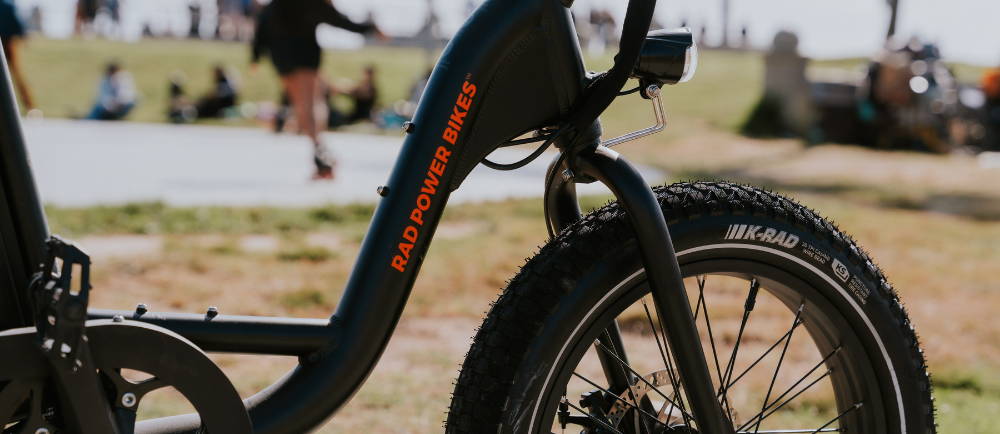
A fat-tire electric bike with its extremely wide contact surface provides the traction needed to ride on sand, loose stones and rocks while offering a much more comfortable ride over uneven terrain.
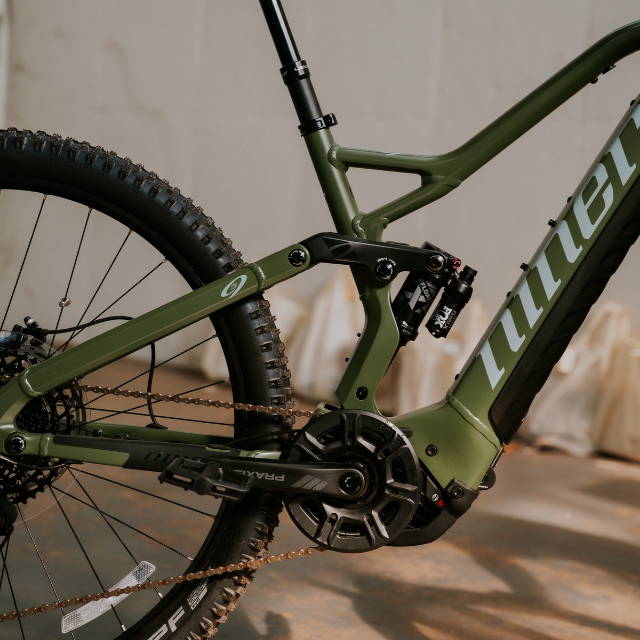
If you are riding in hilly coastal areas, I'd recommend an electric mountain bike with at least front suspension, and ideally a full-suspension e-MTB if the terrain is particularly rocky or steep. A mid-drive motor with plenty of torque and a wide gear range will make climbing much easier.
In truth, the firmer, wetter sand nearer the waterline is the part of the beach best suited to electric bikes, providing the greatest comfort and traction.
Pebbly, rocky beaches are much harder to ride because they're extremely slippery and it is difficult to maintain balance and traction.
The dry, dune-like sand further up the beach away from the sea is extremely difficult to ride through, even with fat tires, low tire pressures, good gearing and a high-torque motor.
How should I ride an electric bike on sand?
There are three types of surface you might encounter on beaches, and here are some tips on how to handle each on an e-Bike.
Firm wet sand by the water
This is much more like riding on a flat natural trail or dirt track. Reduce the pressure in your fat tires to around 15 to 20 PSI to increase the tire's contact patch with the ground and improve traction.
Assist Levels 1 to 3 should normally be sufficient and will also help conserve battery life.
Stay clear of breaking waves as salt water is highly corrosive to electrical components and the bike in general.
Dry, fluffy or grainy sand
This is where riding becomes much harder as the tires sink into the loose sand, creating much greater rolling resistance, so expect to work significantly harder. Every pedal stroke will feel like riding uphill!
Ideally, reduce your tire pressures to around 8 to 12 PSI, allowing the tires to float on top of the sand rather than digging into it.
Try to maintain your momentum because it's surprisingly difficult to get moving again once you've stopped. Avoid accelerating too aggressively as this can cause the rear wheel to spin and dig into the sand.
You'll often need a higher assist level combined with a low gear to keep moving effectively.
Pebbly, rocky beaches
I'd personally avoid riding these kinds of beaches. It is extremely difficult to maintain traction, even on fat-tire bikes, because sea-polished stones and pebbles are so slippery and often form a highly unstable riding surface.
A fat-tire e-Bike is by far your best option thanks to its much larger contact patch, but from experience I've found it's usually safe, and often quicker, to dismount and walk these sections.
Frequently Asked Questions
Why should I clean my electric bike after riding on the beach?
Can I ride an e-Moto on the beach or beach paths?
Generally, no.
High-powered e-Motos fall outside the three-class e-Bike system and are typically treated as motorcycles under state law. As a result, they are generally prohibited from beaches, bicycle paths, sidewalks, and non-motorized trails.
What is the best electric bike for riding on beaches?
A fat-tire e-Bike is the best choice for beach riding. Its wide tyres provide a much larger contact patch, allowing the turning wheel to sit more effectively on top of the sand, rather than digging in, while delivering improved traction, grip, comfort and stability.
If your ride also includes steep coastal hills or rocky trails, I'd recommend a mid-drive electric mountain bike with plenty of torque and at least front suspension.
Key Takeaways
- Whether you can ride an e-Bike on the beach depends on who manages the beach and local ordinances.
- Fat-tire e-Bikes provide the best traction and stability for riding on sand.
- Firm wet sand is the easiest beach surface to ride, while dry sand and pebble beaches are much more challenging.