Electric bikes simply have more complex components than analog bikes. The motor is filled with small mechanical pieces, and batteries are sensitive. More moving parts means that more can go wrong.
Every Strange E-Bike Noise Explained
Written by: Nick Cowie | September 4, 2026 | Time to read: 5 min
When your e-Bike starts making noises, you know something is off. Whether it’s clicking, screeching, thumping, or ticking, every noise has a reason behind it. This is what each noise means and what you should do about it.

More about the Author: Nick Cowie
Nick is a writer with seven years of experience in the cycling industry. In his free time, he enjoys swimming, Jiu Jitsu, and spending time outdoors.
It’s no secret that e-Bikes can run into problems. Sometimes in the middle of a ride, a random sound starts going off, and you have no idea where it’s coming from or what it means. All you know is that it’s not good. The truth is, there are tons of reasons that your bike can be making a noise. These noises can be the result of drivetrain issues, motor problems, brake wear, or even electronic components. With so many reasons for noises to occur, it’s important to have an understanding of all the different possibilities so you can diagnose your problem.
👋 Welcome to Upway!
Upway is your top destination for buying and selling e-Bikes online. Discover your next e-Bike at up to 60% off retail prices, available in new or like-new condition.
Table of Contents
Mechanical Problems
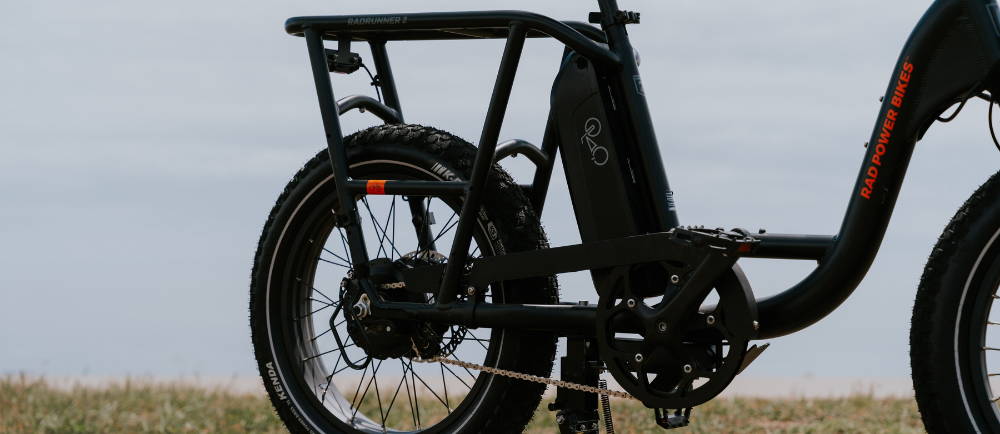
Troubleshooting an electric bike often focuses on the electronic portion. E-Bikes are still bikes, meaning that they have a drivetrain that will occasionally need maintenance. In fact, electric bikes often need more drivetrain maintenance because of the stress a powerful motor can put on the components. These noises indicate that you need to check your drivetrain and make some fixes.
- Clicking: When you hear a click on every pedal stroke, something probably needs to be tightened. It could be a loose spindle, crank arms, or loose chainring bolts. Find which of these components it is and tighten it to get back on track.
- Grinding or Crunching: A grinding noise can indicate a dry chain or one that is covered in dirt. It can also mean that your cassette is very worn out. Try cleaning your drivetrain with degreaser and applying lubricant afterward to see if it stops the problem.
- Chain Slap: If you hear loud metallic clattering, it is probably your chain slamming into the chainstay. This is called chain slap. Switch your rear derailleur’s clutch on to make the lower cage stiffer, which will absorb the shock.
Wheel and Brake Noises
When you are riding, you might be able to identify that the problematic noise happens whenever your wheel rotates. It will speed up or slow down to match the speed of the wheel, whether you are pedaling or not. These problems are centered around the assembly of the wheel.
- Scraping or Squealing: A metallic scraping sound as your wheel rotates is usually due to a warped disc rotor. It will rub against the brake pads, causing a consistent sound. A higher-pitched screech while braking means that the pads are contaminated with oil or that they are extremely worn down.
- Ping and Popping: Metallic popping sounds coming from the wheels indicate a loss of spoke tension. Bike spokes naturally lose tension, especially under the higher weight of an e-Bike. As they lose tension, they are prone to rub against each other. This problem will require your wheel to be trued and retensioned by your local bike shop.
- Thumping or Catching: If you hear a thumping noise, check your tires right away. There could be a rock or piece of debris stuck in the tire. This will create that noise against the pavement and a catching feeling. Always have a tire repair kit on hand.
Motor Sounds
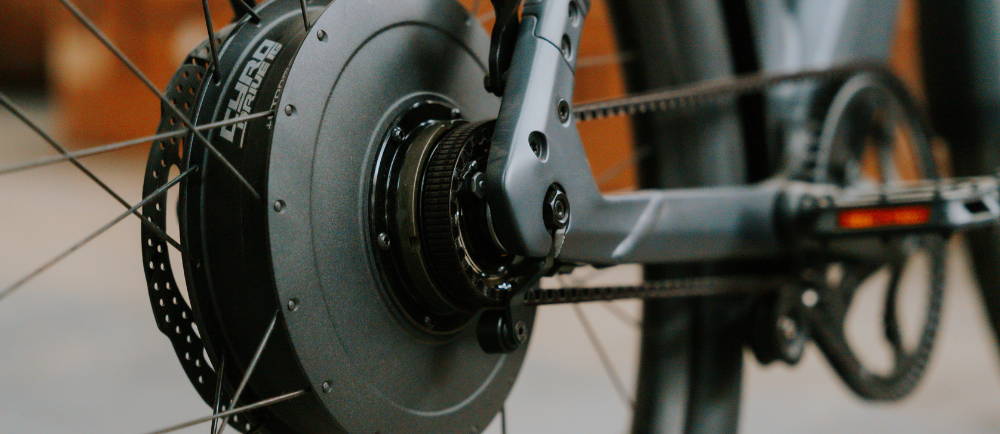
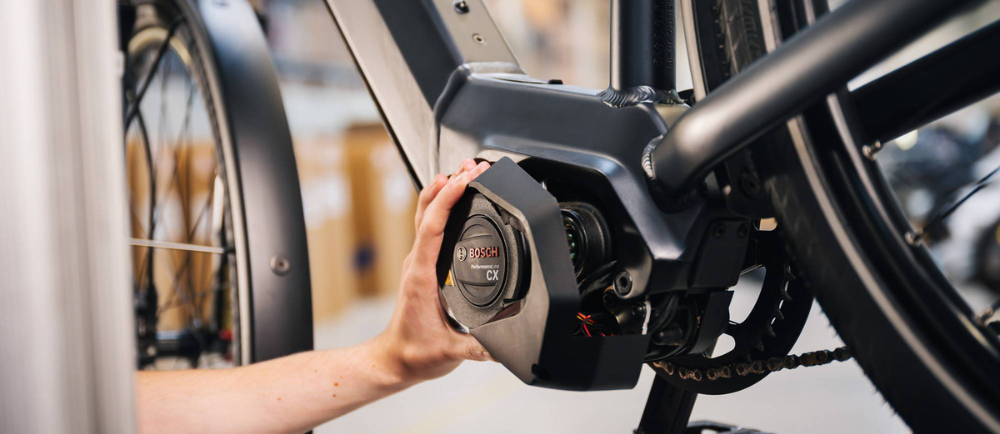
Because of the complicated nature of the motor, your e-Bike can experience issues that you don’t have to worry about with a regular bike. The motor is the driving force of your electric bike, but its complex internal workings can have problems. If the noise you are hearing goes away when you switch the motor off, you have located the issue.
- Grinding when Accelerating: When you hear this noise in a geared hub motor, it means that the nylon planetary gears are stripped or are out of grease. When it happens in a mid-drive motor, it can mean that the internal bearings have been exposed to water or that they are simply worn and failing.
- Stuttering or Chugging: This sound will often be accompanied by the feeling of the motor vibrating and jerking. It might also struggle to reach its top speed. The motor is having an electrical phase issue, which is due to loose wiring, a faulty controller, or burnt-out sensors.
- Screeching Under Load: If you notice that a high-pitched screeching occurs when you are carrying cargo, the internal belt drive is slipping or tearing. You will most commonly hear this when carrying a load up a steep climb. Stop riding and check out your motor to make sure it doesn’t fail in the middle of a climb.
💸 Want to sell your electric bike?
- In case you didn't know yet, you can sell your e-Bike to Upway and get your cash in 3 simple steps.
- Want an estimation -> It takes only 2 minutes to complete this form
Frame and Battery Issues
Heavy modular components, including the battery, can come loose during rides due to road or trail vibrations and cause rattling. The battery and motor are the two most important components to keep safe on your e-Bike, so it’s important to know what to do if one of them comes loose.
- Plastic Rattle: If you hear a hollow rattling noise when riding over bumps, your battery is probably loose. This could simply be from the loosening of the hardware holding it in or from a misaligned battery cradle. Make sure that the battery is fully locked into the frame with the key. If it is an internal battery, you can add foam padding inside the frame to create a tighter fit.
- Creaking: A loud and sharp creak when standing up is caused by dry motor mounting bolts or loose headset spacers. This creak occurs when you put all your weight downward or onto the handlebars. To fix this, the motor has to be unbolted, cleaned, and torqued to its factory specifications.
Liquid error (snippets/article.gem-604214690019-1-template line 1): include usage is not allowed in this context
Frequently Asked Questions
Why do e-Bikes have more problems than regular bikes?
Can I fix these problems on my own?
This all depends on your level of experience working on electric bikes. Only ever do what you are comfortable with rather than risking causing more damage. Tightening bolts or lubricating a drivetrain are simple things you can do without a bike shop’s help.
Are repairs expensive?
The price of a fix depends on the issue you are having. For example, truing a wheel will not be very expensiveStop riding when you have a bike problem: If your bike is making strange noises and doesn’t feel or sound right, it’s best to be safe and stop riding rather than putting yourself at risk on a potentially failing system.
E-Bikes are sensitive: We all know that batteries are both the most expensive and the most sensitive component of your electric bike, but the motor can be difficult too. With so many small parts involved, you need to be on top of its health at all times.
Consult a mechanic when in doubt: Yes, seeing a mechanic will cost you some money, but it is nothing compared to the inevitable repair costs you will run into if you ignore the problem and make it worse.
compared to replacing a battery. When you identify an issue, get a quote from a mechanic to see what you are dealing with.
Key Takeaways
- Stop riding when you have a bike problem: If your bike is making strange noises and doesn’t feel or sound right, it’s best to be safe and stop riding rather than putting yourself at risk on a potentially failing system.
- E-Bikes are sensitive: We all know that batteries are both the most expensive and the most sensitive component of your electric bike, but the motor can be difficult too. With so many small parts involved, you need to be on top of its health at all times.
- Consult a mechanic when in doubt: Yes, seeing a mechanic will cost you some money, but it is nothing compared to the inevitable repair costs you will run into if you ignore the problem and make it worse.