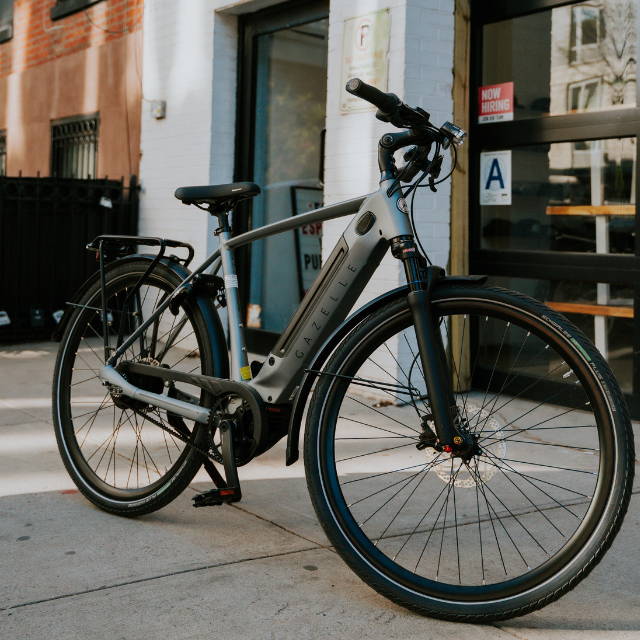
For riders whose miles are mostly paved and repetitive, Gazelle makes more sense. The brand is simply more dialed toward comfort, routine use, and cleaner day-to-day riding.
Gazelle vs Haibike E-Bikes: Comfort or Adventure?
Written by: Chris Van Leuven | May 3, 2026 | Time to read: 7 min
Compare Gazelle and Haibike e-Bikes for commuting, comfort, range, and mixed-surface riding to see which brand suits you best.

More about the Author: Chris Van Leuven
Chris is a writer, climber, and founder of Yosemite E-Biking in Mariposa, CA. When he’s not tackling Sierra Foothills trails or scaling rock walls, he’s crafting adventure stories with his boxer, Fenster. His work has appeared in Outside, Men’s Journal, Gripped, and Best American Sports Writing.

Gazelle and Haibike can end up in the same shopping comparison, but usually for very different reasons. Gazelle tends to attract people who want a cleaner, quieter, more refined e-Bike for commuting, errands, and longer paved rides. Haibike tends to attract riders who want more range for rougher roads, are willing to leave perfect pavement behind, or want a bike that feels more ready for the weekend than the average commuter.
That difference matters because these brands can overlap on price while still feeling very different once you picture daily use. One rider is trying to make city miles easier and smoother. Another wants a bike that still handles weekday transportation but doesn’t look out of place on dirt connectors, broken pavement, or a longer route that turns more adventurous halfway through. Those aren’t small differences. They change what better even means.
In this blog, I’ll look at the model pairings that help, how these brands separate once you’re riding them, where each one fits best, and where Upway comes in if you want to compare certified pre-owned e-Bikes instead of paying new-bike pricing.
👋 Welcome to Upway!
Upway is your top destination for buying and selling e-Bikes online. Discover your next e-Bike at up to 60% off retail prices, available in new or like-new condition.
Table of Contents
How do Gazelle and Haibike point riders in different directions?
Which current models are the best for comparison?
Gazelle Medeo T10 HMB vs Haibike Trekking 4
Gazelle Ultimate T10+ vs Haibike Trekking 4
Gazelle Ultimate C380 HMB vs Haibike ADVENTR 8
Ride feel: Gazelle vs Haibike?
Which brand makes more sense for commuting, mixed surfaces, and adventure use?
What should you know about long-term ownership?
Where does Upway fit in a Gazelle vs Haibike decision?
How do Gazelle and Haibike point riders in different directions?
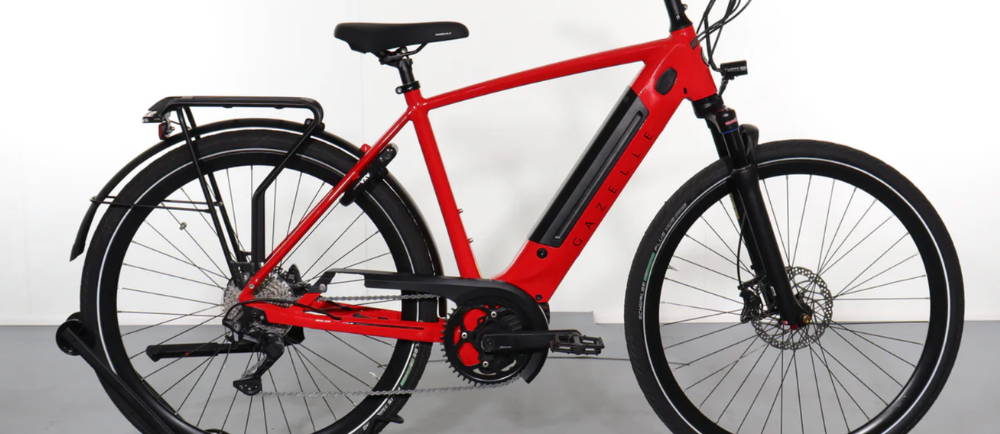
With Gazelle, the focus is clear. The brand leans hard into Dutch design, comfort, integration, and everyday transportation, and backs its frames with a 10-year warranty. Even when Gazelle makes something quicker or sportier, it still tends to feel like a bike meant to live on pavement and stay there. The line between commuter, comfort bike, and everyday rider stays pretty clear.
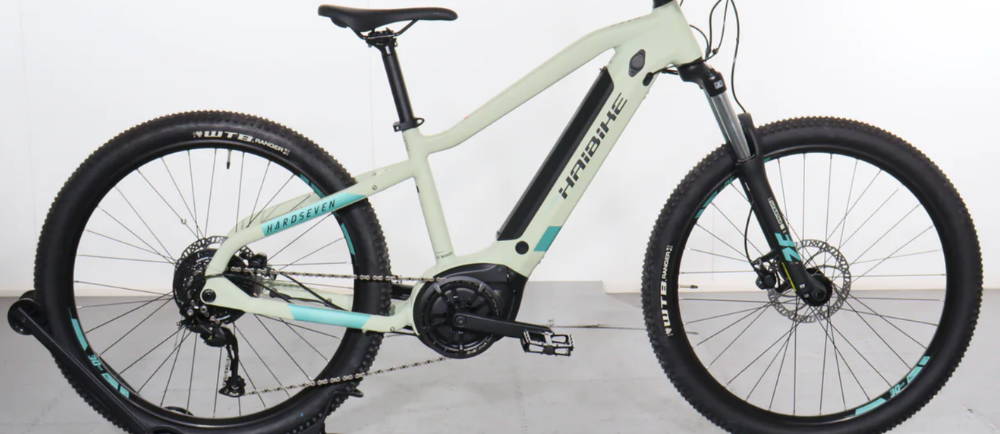
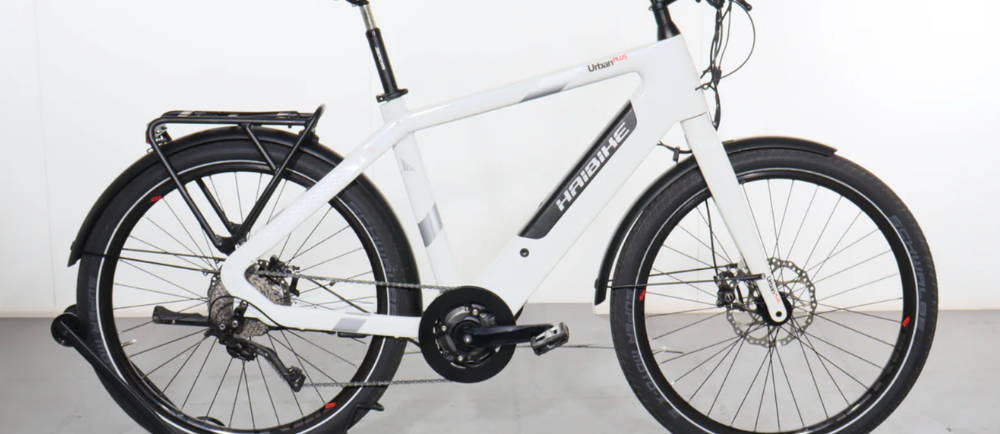
Haibike starts somewhere else. The lineup reaches into hybrids, more rugged utility builds, and e-MTBs, and even its more commuter-friendly models usually keep some of that rougher-road build. It’s not just that Haibike sells more off-road-oriented bikes. It’s that the brand’s whole posture feels less tied to polished daily pavement use and more open to whatever the route turns out to be.
So if Gazelle often feels like it’s solving daily transportation first, Haibike often feels like it’s solving versatility first.
Which current models are the best for comparison?
These comparisons aren’t perfectly neat, but they show the biggest differences fastest.
Gazelle Medeo T10 HMB vs Haibike Trekking 4
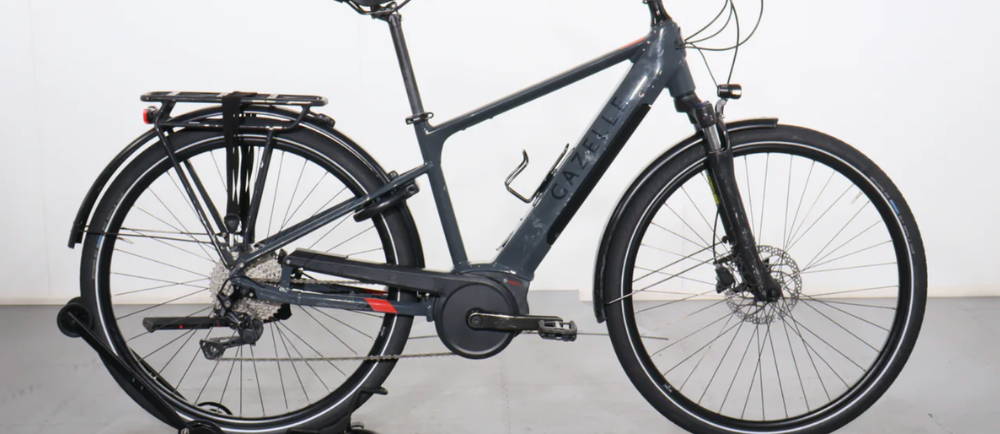
The Gazelle Medeo T10 HMB is a great entry point because it captures much of what Gazelle does well without going all the way to the premium end. Gazelle lists it with a Bosch Performance Line motor and 500Wh or 625Wh battery options, which makes it feel like a well-sorted everyday e-Bike rather than a bigger, more burly ride.
The closest Haibike answer is the Trekking 4, which uses a Yamaha PW-S2 motor with 75 Nm and a larger 720Wh battery. That difference becomes clear quickly once you picture how the bike is used. The Gazelle comes across as more polished and city-minded, while the Haibike looks better suited for longer distances, rougher terrain, and steeper climbs.
Gazelle Ultimate T10+ vs Haibike Trekking 4
The speed comparison is useful mostly because it shows where the overlap begins to change. The Gazelle Ultimate T10+ uses the Bosch Performance Line Speed, delivers 85 Nm, carries a 500Wh battery, and assists up to 28 mph. It’s a fast commuter, but still a Gazelle-fast one: integrated, comfortable, and clearly road-oriented.
Haibike doesn’t really mirror that with the same urban-speed feel. The nearest model is again something like the Trekking 4, which is less about a sleek, fast-commute identity and more about a bigger battery for broader use. That doesn’t make one better. It just means Gazelle and Haibike are solving different versions of the same question.
Gazelle Ultimate C380 HMB vs Haibike ADVENTR 8
Then there is the more premium everyday-bike question. The Gazelle Ultimate C380 HMB is one of the better examples of Gazelle’s whole approach: 75 Nm, a 625Wh battery, Gates belt drive, and a quieter, lower-maintenance setup that feels designed to stay on the road over time. Haibike’s answer is not another polished commuter.
It’s something like the ADVENTR 8, which uses the Yamaha PW-S2, puts out 75 Nm, carries a 720Wh battery, and adds full suspension with 140 mm front and rear. That comparison is useful because it shows how far apart the brands really are. Gazelle is refining the everyday ride. Haibike is expanding the meaning of everyday riding.
Ride feel: Gazelle vs Haibike?
A Gazelle feels like it wants your ride to be easier. The position is more upright and comfortable, the overall ride is quieter, and even the quicker bikes still seem built to take the edge off routine miles. That matters more than it sounds. On a bike, you ride all the time; quietness, posture, and low-fuss riding add up. Belt-drive Gazelles make that especially clear.
A Haibike more often feels like it wants your route to open up. It’s not always about outright speed. A lot of this is the way the bike looks and feels once the pavement gets rougher, the shoulder gets broken up, or the ride stops being a clean back-and-forth commute. Bigger batteries, more suspension, and heavier builds give Haibike a different kind of feel. It’s less about smoothing everything out and more about not caring quite as much when the route gets tricky.
That is the comparison that matters most on the road. Gazelle tends to take stress out of the ride. Haibike broadens the range of rides the bike feels ready for.
Which brand makes more sense for commuting, mixed surfaces, and adventure use?
For commuting, I would still lean towards Gazelle. The brand’s strengths align neatly with what many commuters want: upright comfort, cleaner integration, quieter operation, and bikes that feel purpose-built for paved transportation rather than adapted from something rougher. The Medeo T10 HMB and Ultimate C380 HMB both make that case well.
For mixed-surface riding, Haibike gets more appealing fast. The Trekking 4 already points that way with its 720Wh battery and more rugged feel, and the brand’s broader adventure and e-MTB range pushes even farther in that direction. If your rides include gravel paths, rough shoulders, dirt connectors, or just roads that aren’t especially smooth, Haibike makes more sense.
For adventure-leaning use, it gets easier. If you are imagining more suspension, rougher terrain, or a bike that can handle it when the ride stops feeling like a commute, Haibike is the more natural fit. Gazelle is very good at what it does. It just is not trying to be Haibike.
What should you know about long-term ownership?
These brands also make sense in different ways once you start thinking past the first ride. With Gazelle, a lot of the confidence comes from clarity. The lineup is easier to sort, the brand identity is more streamlined, and the 10-year frame warranty reinforces the idea that these are polished everyday bikes built for repeat use, not just showroom appeal.
With Haibike, the appeal is broader. The brand gives you more ways to stay within one ecosystem if your riding starts with commuting and then drifts toward rougher roads, bigger batteries, or true e-MTB territory. That is a real strength, even if it can make the shopping process a little less straightforward. It’s focused on simplicity versus broader specialization.
Where does Upway fit in a Gazelle vs Haibike decision?
This is a helpful Upway comparison because these brands can be tricky to see the differences in when you only look at them new. Gazelle can start to look expensive. Haibike can start to look broad.
That is where Upway helps more than another round of brand-level pros and cons. A certified pre-owned Gazelle Ultimate might suddenly look much more realistic once the price drops to as low as 60%. A Haibike Trekking 4.0, or another more rugged Haibike, might start to make a lot more sense once you compare its battery size, build, and certified pre-owned price with those of a commuter bike. In this matchup, Upway helps clarify the decision. You stop debating brand images and start comparing actual bikes that are available and in your price range.
Frequently Asked Questions
Which makes more sense for most commuters: Gazelle or Haibike?
Where does Haibike start to pull ahead?
Once the ride stops being just a commute. Rougher surfaces, larger batteries, more suspension, and a better adventure bias all point toward Haibike.
Are these brands really competing for the same rider?
Sometimes, yes, but only in certain ways. Most of the time, these brands are built around different expectations. Gazelle focuses on the everyday ride. Haibike is broadening the range of what the ride can include.
Key Takeaways
- Choose Gazelle if the priority is a more refined, comfort-forward e-Bike for commuting, errands, and longer paved rides.
- Choose Haibike if you want more battery, more ruggedness, or a bike that feels like a better fit once the route gets rougher.
- This is one of those comparisons where the exact certified pre-owned e-Bike that you’re seeing on Upway is suddenly more affordable, with savings up to 60%.