Add rider in full kit, what you carry, and bike weight. If you’re close, choose a model with more weight room, like the 330 lb or 344 lb models.
Best E-MTBs for Heavier Riders: Practical 2026 Buyer’s Guide
Written by: Chris Van Leuven | February 26, 2026 | Time to read 8 min
Best e-MTBs for heavier riders in 2026: weight limits, key specs, and model picks to choose the right e-Bike.

More about the Author: Chris Van Leuven
Chris is a writer, climber, and founder of Yosemite E-Biking in Mariposa, CA. When he’s not tackling Sierra Foothills trails or scaling rock walls, he’s crafting adventure stories with his boxer, Fenster. His work has appeared in Outside, Men’s Journal, Gripped, and Best American Sports Writing.
If you’re a heavier rider shopping for an e-MTB, you’ve probably noticed that most buying advice obsesses over motors, then totally skips the part where the bike has to hold up mile after mile when the trail gets rough, and the brakes get hot.
The good news is find the perfect e-MTB isn’t complicated. In this guide, you’ll learn how to check the maximum weight limit correctly, which specs matter for heavier riders, and available e-MTB and e-Bike options. Below, I’ll break down the weight-limit math, the most important parts, and a 2026 shortlist to compare.
If you want to compare and buy an e-MTB online, Upway is a great place to shop for certified pre-owned electric mountain bikes, but don’t forget to verify the manufacturer's weight limit before you buy.
👋 Welcome to Upway!
Upway is your top destination for buying and selling e-Bikes online. Discover your next e-Bike at up to 60% off retail prices, available in new or like-new condition.
Table of Contents
Maximum Total Weight Capacity
Max total weight capacity is the maximum weight that the electric bike can support safely. This payload combines the weight of the e-Bike, the rider in riding gear, and anything else that you carry. This matters because many modern e-MTBs weigh 50-60 lb, and that weight counts toward the overall weight.
A quick way to verify your number is: Rider weight in full kit, plus 10-15 lbs of water, food, and tools, plus bike weight.
Here are published examples in pounds so you can see how different brands approach it:
- Giant e-Bikes list a maximum permissible total weight of 344 lbs
- Cannondale’s Moterra lists a 330 lb max weight limit
- Trek Rail Plus lists a maximum total weight limit of 300 lbs
If you’re close to the limit once you add bike weight and gear, expect faster wear. But the published number is only the starting line, not the finish. Some e-Bikes have high weight ratings and still feel sketchy for heavier riders because of geometry, flexy wheels, underpowered brakes, or suspension that can’t be set up properly for your weight. The goal is headroom and a bike that stays planted when the trail gets rough.
What Heavier Riders Feel First on E-MTBs
This is where the buying decision gets real. These are the areas where heavier riders notice a difference immediately.
Brakes
On long descents, heavier riders build speed and generate more heat. That’s why hydraulic disc brakes are a must, not a nice-to-have—they give you stronger, more consistent braking with better control when you’re tired, and the trail is steep. From there, four-piston calipers are a smart upgrade because they add power and help manage heat on longer, brake-heavy runs, especially paired with larger rotors. For example, Cannondale’s Moterra 3 build lists Shimano MT520 four-piston hydraulic brakes.
Wheels and tires
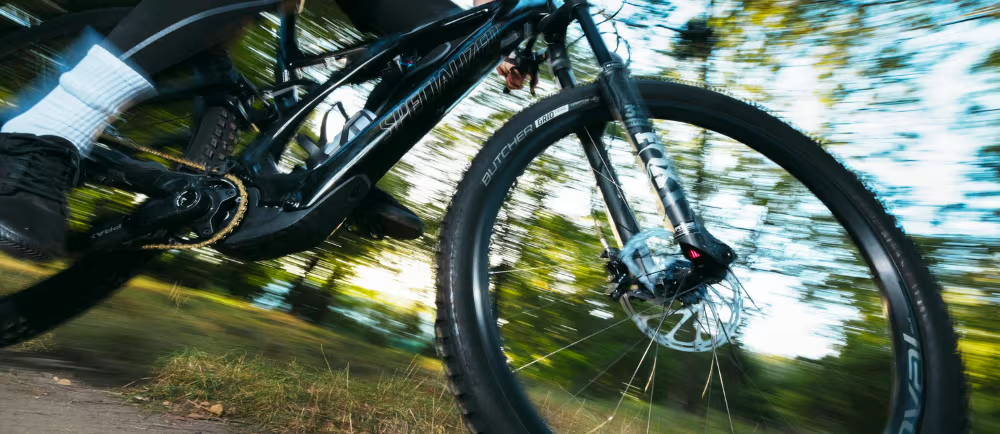
If a bike feels unstable in corners or shaky on loose descents, the tires and wheels are usually to blame. Heavier riders tend to benefit from sturdier tires, stronger wheel builds, and pressures that provide support without bouncing over every rock.
Suspension setup range
The suspension has to be tuned to your weight. If the fork and shock cannot hit proper sag without maxing out pressures, the bike rides too deep in its travel and starts to feel unpredictable when braking and cornering.
Fit
Fit is control. The right size makes body position, and braking feel natural when you’re tired. The wrong size can make a great bike feel sketchy.
Motor and Battery Specs
You don’t need the most extreme motor on paper. You need a reliable assist and enough battery to complete your normal loop without getting range anxiety.
Torque, shown as Nm
Torque is the shove you feel when you start climbing or accelerate. Two common benchmarks you’ll see on current trail bikes:
- Bosch Performance Line CX lists 85 Nm, 600 W, and 340% support as standard, with an available mid-July 2025 option to raise settings to 100 Nm, 750 W, and 400% on supported setups.
- Shimano EP801 is commonly listed at 85 Nm.
Battery size, shown as Wh
Watt-hours are a measure of the battery's output. Bigger usually means more range, but real range still changes with rider weight, terrain, temperature, tire pressure, wind, and assist level.
Best E-MTBs for Heavier Riders in 2026: Trail and Enduro Models
These are mainstream options you can actually find, service, and compare in the U.S. The goal here is not one best bike, but the right fit for your trails and your total weight.
Trek Rail Plus
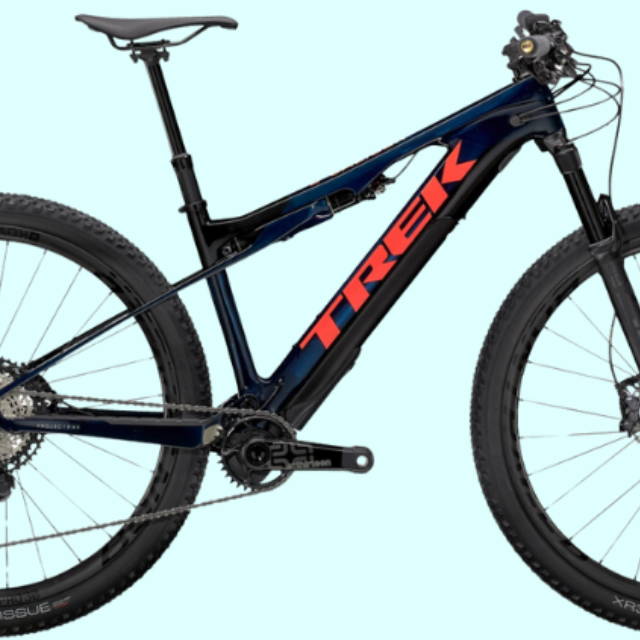
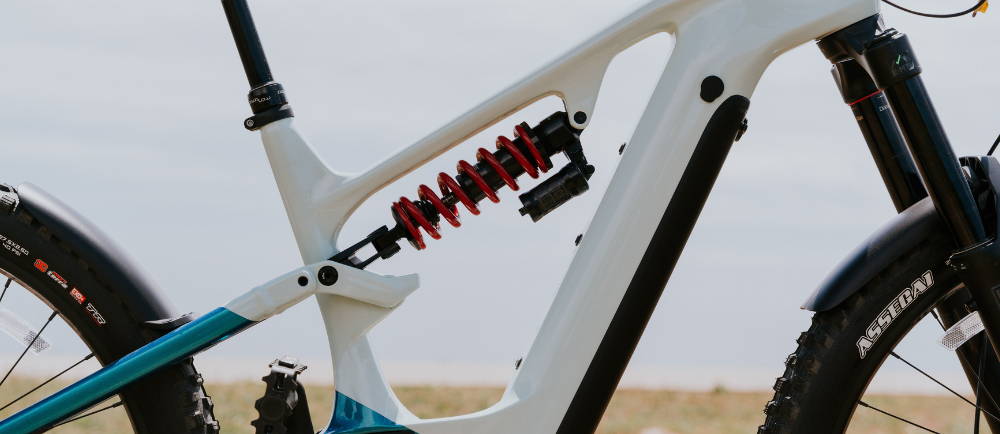
Rail Plus is the full-power, longer-travel enduro pick with a deep service ecosystem. Trek lists 160 mm of front and rear travel, an 800 Wh battery, and a Bosch system with 85-100 Nm of torque, depending on settings. Trek also lists a 300 lb max total weight for bike, rider, and cargo, so do the math honestly before you buy.
Cannondale Moterra and Moterra LT
Moterra is the versatile trail option, and Moterra LT is the longer-travel ride if your descents are steeper and more brake-heavy. A great example is the Moterra 3 with 150 mm rear travel, a 160 mm fork, a Bosch CX motor, an 800 Wh battery, and MT520 four-piston brakes. The Moterra has a maximum weight limit of 330 pounds for the rider and all equipment.
Giant Trance X E Plus
This is a well-rounded trail and all-mountain option that sits between a full-on enduro bike and a lightweight assist e-bike. Giant highlights 150 mm front travel and 140 mm rear travel, and the SyncDrive Pro motor at 85 Nm with 400% tunable support, plus an EnergyPak Smart 650 battery system. For heavier riders, Giant’s published 344 lb maximum permissible total weight stands out if you want more weight room once you add bike weight and gear.
Specialized Turbo Levo
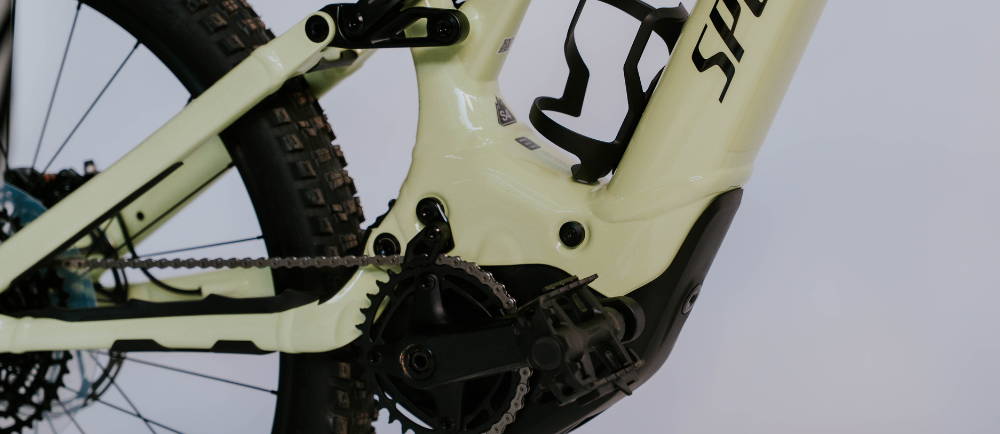
Levo is a major player for a reason: easy to find, easy to demo, easy to service. Specialized lists big battery options on current builds and strong output from its latest motor family. For heavier riders, the important note is that Specialized publishes structural weight limits by model and build level, and those limits can vary.
Ibis Oso
If you want a big-trail e-MTB feel with supportive suspension and a Bosch system, the Oso is worth looking into. Ibis lists 155 mm rear travel and 170 mm front travel, a Bosch Performance Line CX motor, and a 750 Wh battery. The maximum rider weight is 300 lbs across its line.
BULLS e-MTB
🤝 Why you can trust us for buying an e-Bike?
- Great prices: Get your next e-Bike for up to 60% off retail prices, in new or like-new conditions.
- Quality Guaranteed: Every e-Bike is rigorously certified by a team of professional mechanics, and comes with a 1-year warranty.
- Delivered to Your Door: Delivered to your home within a week. Change your mind? Return it thanks to our 14-day return policy.
🚲 We also buy e-Bikes. Click here for an estimation!
Hardtail Option: Aventon Ramblas
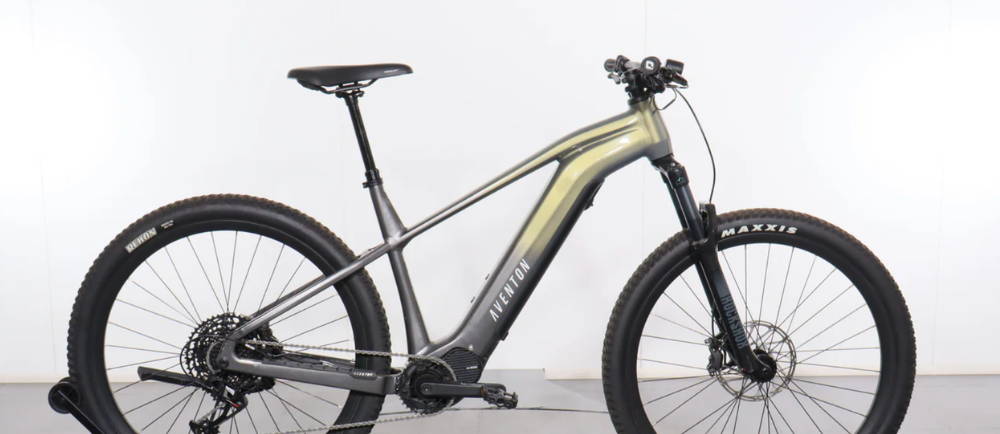
If your trails are smoother, or you want less maintenance and a lower buy-in, a hardtail can be a smart first e-MTB. Ramblas is worth calling out because it’s built with trail intent, not just an e-Bike with knobbies.
Aventon lists the Ramblas as an A100 mid-drive at 250 W sustained, 750 W peak, and 100 Nm of torque, plus a total weight limit of 300 lbs. It also comes with practical trail parts like tubeless-compatible wheels and tires, a dropper post, and a 130 mm RockShox fork on the Ramblas ADV. If you shop for Ramblas on Upway, budget for good tires early. It’s the cheapest way to make a bike feel more planted.
Higher Payload Option: Aventon Aventure
If your riding is more mixed terrain than technical singletrack, the Aventure line belongs in the conversation for heavier riders. It’s a fat-tire e-Bike with a high payload rating and a stable feel at lower speeds on dirt roads, sand, and rough terrain. It’s a beast of a bike.
Across Aventure 2 and Aventure 3, the core idea is consistent: 400 lb payload capacity, 750 W rear hub motor, and 4-inch fat tires. Aventure 3 adds a few new features, such as signals and GPS security, and lists 1188 W of peak power and up to 65 miles of range. This is not a technical singletrack weapon, but if your priority is stability and payload, it’s a practical category to shop on Upway.
Frequently Asked Questions
How do I know if a 300-lb max total weight limit is enough?
Should heavier riders start with a full-suspension or a hardtail e-MTB?
Full suspension is usually better on rocky, steep, brake-heavy trails. Hardtails make sense on smoother terrain and for simpler ownership.
What is the average lifespan of an e-Bike?
It depends on care and mileage. Batteries and wear items like pads, rotors, tires, and drivetrain parts set the timeline.
Key Takeaways
- Start with the published max total weight: Start with the published max total weight, then choose the travel and geometry that match how you actually ride.
- For heavier riders, brakes, wheels, and suspension setup range matter more than chasing peak motor numbers.
- In 2026, it’s easy to build a real shortlist: Trek Rail Plus, Moterra, Giant Trance X E Plus, Specialized Turbo Levo, Ibis Oso, BULLS, and the Aventon Aventure line for higher-payload mixed-terrain riding.