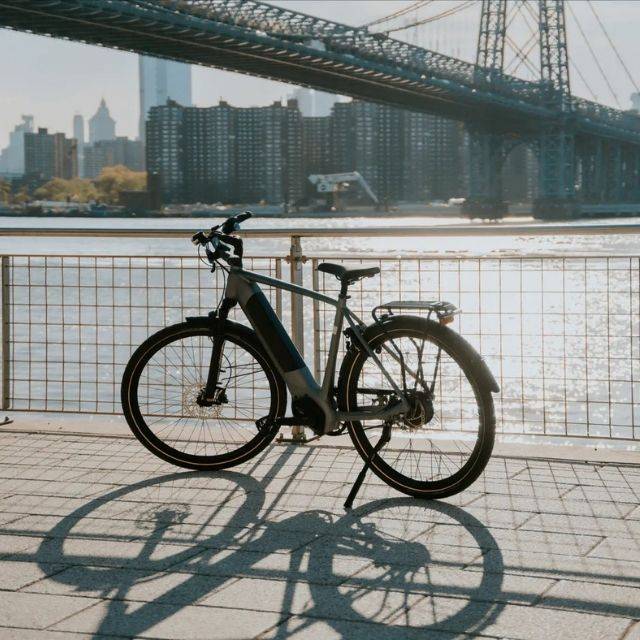
Around 100 to 400 lumens on the front is enough for well-lit city streets.
How Many Lumens Do You Need on an E-Bike?
Written by: Tom Fortune | October 26, 2026 | Time to read 5 min
More lumens isn’t always better on an e-Bike. The right light depends on where you ride, how fast you go, and how long your battery needs to last.

More about the Author: Tom Fortune
Tom is a Brit living in the French Alps. When he's not creating written and video content for various brands, he's either pedalling or snowboarding around his local mountains. E-Bikes have unlocked the potential for Tom to explore Alpine terrain and get away from the crowded bike parks. He is only too keen to share his knowledge and experience with other riders.
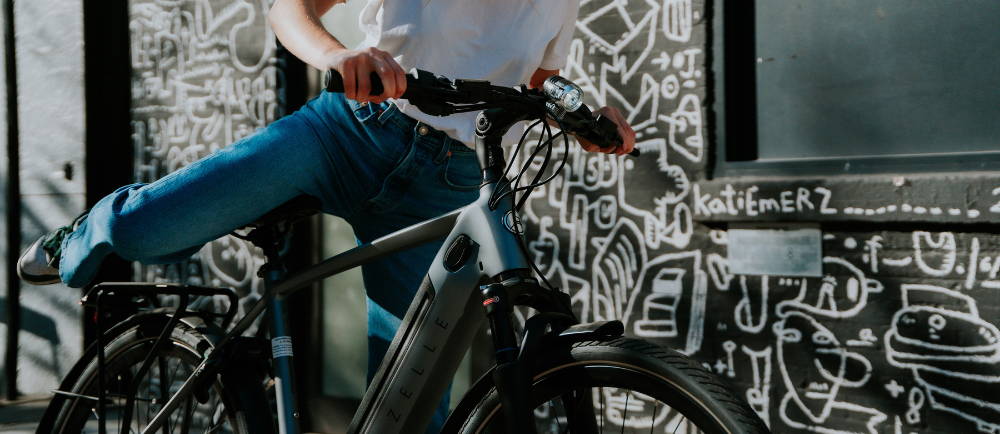
Last year I did a 24-hour electric mountain bike race with some friends. I had no idea what it would be like riding mountain bike trails in the dark. It turns out, it was a lot of fun, but I’m glad I had some decent bike lights. When you’re deep in a dark forest at 3 am, you quickly find out whether your bike lights are up to the job. On an e-Bike, you’re usually riding faster than on a regular bike, so you need to see farther ahead, too. The good news is you don’t need a stadium floodlight, just the right light for how you ride.
👋 Welcome to Upway!
Upway is your top destination for buying and selling e-Bikes online. Discover your next e-Bike at up to 60% off retail prices, available in new or like-new condition.
How Many Lumens You Need at a Glance
The right lumen rating mostly depends on how much light is already around you when you ride. Here’s a rough guide for your front light, based on most people’s riding.
| Where You Ride | Front Light | Rear Light |
|---|---|---|
| Well-lit city streets | 100 to 400 lumens | 50 to 100 lumens |
| Suburbs and mixed lighting | 400 to 800 lumens | 50 to 100 lumens |
| Dark, unlit roads | 800 to 1,200 lumens | 50 to 100 lumens |
| Trails and off-road use | 1,200 lumens or more | 50 to 100 lumens |
In the city, your front light is mostly there so drivers and pedestrians can see you. On unlit roads and trails, it helps you see road conditions ahead. That’s why the numbers jump so much for riding in places without streetlights. Many city e-Bikes and cargo e-Bikes come with integrated lights that work well on well-lit streets. Just check how bright they are before relying on them on darker roads.
We generally ride e-Bikes much faster than regular bikes, which changes what you need from your lights. A Class 3 e-Bike can assist you up to 28 mph, so potholes come up much faster than at 12 mph. If you ride a fast e-Bike on dark roads, I’d go for lights at the top end of each range.
Lumens, Lux, and Beam Pattern Explained
The lumen rating is the total amount of light a lamp puts out. The technical name for it is luminous flux. Lux is different; it tells you how much of that light lands on the road. That’s why a 600-lumen light with a good beam can beat a 1,000-lumen light that sprays light everywhere.
The beam pattern is how the light spreads, and it makes a big difference. A narrow spot beam reaches a long way down the road but leaves the edges dark. A wide flood beam lights up the sides of the trail, which helps you see roots and corners. Many road lights also have a top cut-off, like a car’s dipped headlights.
That cut-off keeps light out of oncoming drivers’ eyes, which I think is a must for road riding. Some e-Bike lights are made to the German StVZO standard, which requires this kind of anti-glare beam. US e-Bike laws focus on being visible, not lumens. If your bike didn’t come with lights, our e-Bike accessories are a good place to start.
Peak Lumens vs Real-World Light Output
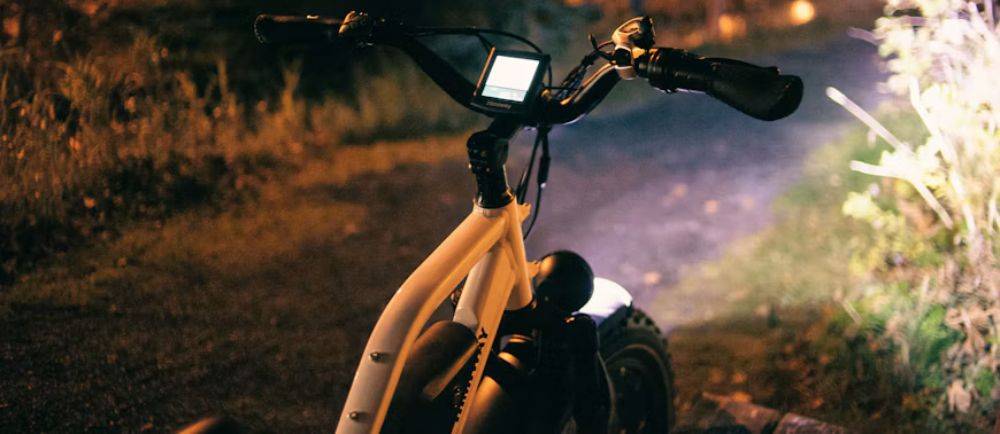
The big number on the box is usually the light’s peak lumens, which is the brightest it can go. The problem is that most lights can’t stay that bright for long. At full power, the LEDs get hot, so many lights dim after a few minutes to protect them. Lights also dim as their batteries run down, so keep them charged.
A light sold as 1,500 lumens on its brightest setting might only hold that for a couple of minutes before dropping to about 600. If you’re counting on 1,500 lumens for a long descent through a rooty forest, that dimming can easily catch you out.
Some brands test their lights to a standard called ANSI FL1, which helps when you’re comparing lights. Every light tested this way is measured the same way, so the numbers are fair to compare. There are two catches, though:
- Brightness: it’s measured right after the light is switched on, so it can still be near peak output.
- Runtime: it counts until the light fades to 10% of its starting brightness, which is far too dim to ride by.
That’s why I’d look for a review with a runtime chart, which shows how bright the light stays over time. Personally, I’d take a light that holds 600 lumens all ride over one that hits 1,500 for two minutes.
Balancing Brightness With Battery Life
One thing that most people don’t think about is that bright lights need more power. Running a light on its top setting can use several times more power than a medium setting. That’s why a lot of USB rechargeable lights only last an hour or two on full.
E-Bikes have a big advantage here, because many integrated lights run straight off the main battery. E-Bike headlights can draw anywhere from about 2 watts to over 30 watts at full power. A 10-watt light left on for two hours uses about 20 watt-hours, or around 4% of a 500 watt-hour battery. So for most riders, integrated lights won’t noticeably cut your range.
Why Your Rear Light Matters Just as Much
It’s easy to spend all your money on a front light and forget about the back of the bike. Yet your rear light helps drivers behind you spot you on dark roads. For tail lights, 50 to 100 lumens is plenty for most riding. Anything much brighter can dazzle people behind you, especially other riders on group rides.
A flashing rear light is great for getting noticed, but check the rules where you live. Some US states allow flashing lights, while others restrict them. A steady light also makes it easier for drivers to judge distance.
Mounting Options for E-Bike Lights
A good light can quickly become frustrating if it’s mounted poorly. Most front lights fit on the handlebars with either a rubber strap or a bolt-on clamp. Rubber straps are quick to swap between bikes, but bolt-on mounting systems hold firmer on rough ground. Mine uses a rubber strap, and I haven’t had any issues.
Point your front light slightly down so the brightest part of the beam hits the road ahead. If you can see the beam bouncing off road signs far in the distance, it’s probably pointing too high. Integrated e-Bike lights are usually fixed to the fork, stem, or frame, so check how much you can adjust them.
When riding trails at night, I wear a head torch that shines wherever I look, so it lights up corners before I turn. Paired with a handlebar light, it makes a big difference on a 24-hour race or any long night ride.
The seatpost or rear rack is usually the best place for your rear light, as long as nothing covers it.
Panniers, a rack bag, or a long coat can easily block it. If you use a dropper post, mount the light on the saddle rails or seat stay, not the sliding post. Also, if you have a full-suspension bike, make sure your rear wheel won’t hit it when the shock compresses. You should also check the IP Code rating, which tells you how well a light handles rain and spray.
Bike Light Laws in the US
Lighting rules vary slightly by state, but most follow the same basic pattern. You’ll usually need a white front light visible from 500 feet. You’ll also need a red rear reflector or light visible from 600 feet. These rules usually apply from dusk to dawn and whenever visibility is poor.
There’s generally no lumen rating written into US law, so how bright you go is up to you. If you ride on dark roads, though, I’d always go brighter than the legal minimum.
Choosing an E-Bike With Good Lights
If you ride after dark often, an e-Bike with integrated lights makes life much easier. No extra batteries to charge, as the lights run off the bike’s own battery. Most electric mountain bikes don’t come with lights, so you’ll need to add your own for trail riding.
At Upway, we sell certified pre-owned e-Bikes from top brands for less than new, including models with lights fitted. Each one comes with a one-year warranty, and we ship across the US.
Frequently Asked Questions
How many lumens do I need for an e-Bike in the city?
How many lumens do I need for riding on dark roads?
Aim for 800 to 1,200 lumens on the front for unlit roads.
Do e-Bike lights drain the battery?
Only a little, as a 10-watt light uses around 4% of a 500 watt-hour battery in two hours.
How bright should a rear bike light be?
Between 50 and 100 lumens is bright enough for most riding.
Key Takeaways
- Most riders need 100 to 400 front lumens in cities, 800 to 1,200 on dark roads, and 1,200+ on trails.
- Integrated e-Bike lights use very little of your main battery, but a backup light is still useful.
- A rear light of 50 to 100 lumens, mounted where nothing blocks it, matters as much as a front light.