Usually yes. Most states allow bicycles and electric bikes to use bike paths after dark provided they have the legally required lighting and reflectors. However, some local park authorities or trail managers may impose additional restrictions or opening hours, so always check local signage.
Can You Ride an Electric Bike at Night? Lighting Laws Explained
Written by: Kazim Ladimeji | July 16, 2026 | Time to read 6 min
Riding an e-Bike after dark can be a great way to commute or avoid the daytime heat, but it comes with extra legal responsibilities. While there are no federal lighting laws for electric bikes, every state requires riders to use specific lights and reflectors to remain visible and ride legally at night.

More about the Author: Kazim Ladimeji
Kazim is a UK-based cyclist and writer who discovered his passion for riding during lockdown six years ago and hasn’t looked back since. He now rides around 100 miles a week, exploring road and light gravel routes from his base in the Cotswolds, a cycling paradise. When he’s not riding or writing about e-Bike trails in the US, he’s exploring cafés, cooking, and keeping busy as a soccer dad
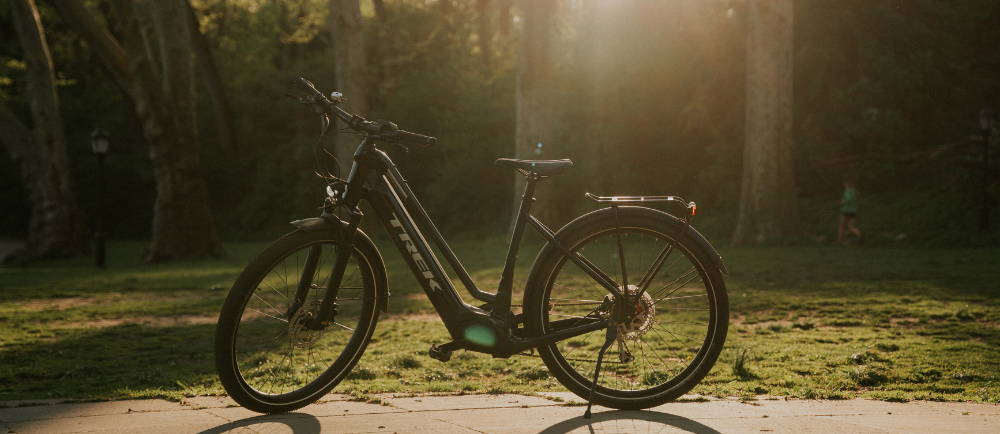
Electric bikes can legally be ridden at night throughout the United States, provided they meet the lighting and equipment requirements of the state you're riding in. Because most Class 1, Class 2, and Class 3 e-Bikes are treated like conventional bicycles, they generally follow the same lighting laws as standard pedal bikes.
Although the basic requirements are remarkably similar across the country, there are important differences between states regarding light brightness, reflector placement, and visibility distances. Riders should also be aware that local municipalities may impose additional rules, particularly on sidewalks and shared-use paths.
In this article, I explain the US lighting laws for riding electric bikes at night, compare requirements across several states, and highlight the equipment you need to stay both legal and visible after dark.
👋 Welcome to Upway!
Upway is your top destination for buying and selling e-Bikes online. Discover your next e-Bike at up to 60% off retail prices, available in new or like-new condition.
Is there a federal law around riding electric bikes at night?
There are no federal laws or regulations governing riding electric bikes at night on roads, bike paths, or trails. Any laws and regulations governing riding electric bikes after dark are set by individual states, municipalities, and state park authorities.
Can you ride an electric bike at night?
Yes, you can ride an electric bike at night, but it must be equipped with the appropriate lighting and reflective equipment required by the state where you are riding. Class 1, Class 2, and Class 3 e-Bikes are typically treated like conventional bicycles and are therefore subject to the same lighting requirements as standard bicycles. Night can be the busiest time for couriers and so be sure to check out our guide for the best messenger bikes for courier work which gives some good tips on bike choice and lighting options.
What are the lighting laws for electric bikes?
There is no federal standard for bicycle lighting, so requirements are set by each state. After researching numerous state vehicle codes, I found that the following equipment is consistently required across most jurisdictions.
When riding at night, electric bikes should have:
- A white front light
- A red rear reflector or rear red light (often with a built-in reflector)
- Side reflectors or reflective material to improve visibility from the side
Generally, if your electric bike has this minimum set of equipment, you'll meet the requirements in most states. However, there are subtle differences regarding reflector placement, visibility distances, and light brightness.
For example:
California Electric Bike Lighting Laws
- White front light visible from 300 feet
- Red rear reflector or rear light visible from 500 feet when illuminated
- White or yellow reflector on each pedal, shoe or ankle visible from 200 feet
- White or yellow reflector on each side forward of the bicycle's center, and a white or red reflector behind the center
Massachusetts Electric Bike Lighting Laws
Massachusetts does not require side reflectors, although they are strongly recommended to improve visibility at junctions.
Required equipment includes:
- White front headlight visible from at least 500 feet
- Rear red reflector visible from 50 to 300 feet when illuminated by vehicle headlights
- Rear red light visible from 500 feet, which may be used in addition to the reflector
Delaware Electric Bike Lighting Laws
Delaware has some of the most demanding visibility requirements I've come across.
Electric bikes must have:
- White front headlight visible from 500 feet
- Rear red light or reflector visible from 600 feet
- Side reflectors or reflective material
I recommend checking your own state's lighting requirements before riding after dark. If you can't find specific rules for electric bicycles, follow the lighting requirements for conventional bicycles, as they are usually identical.
Frequently Asked Questions
Can I ride on bicycle paths at night?
Can I ride my electric bike on sidewalks at night?
There are no federal rules governing sidewalk riding, but many states allow cities to introduce their own restrictions. For example, some municipalities ban sidewalk riding altogether during certain hours of the night. Georgia, for example, prohibits sidewalk riding between 9:00 pm and 6:00 am in some locations.
Always check local ordinances before riding an electric bike on sidewalks after dark.
Do I need brighter lights than the legal minimum?
Not necessarily, but it's a good idea. The legal minimum is just that, a minimum. I regularly ride on unlit roads and rural lanes, and I use a brighter-than-minimum front light and a rear light, and this significantly improves both my visibility and my ability to spot hazards.
Key Takeaways
- State laws generally require a white front light and a red rear reflector or rear light when riding after dark.
- Lighting requirements vary between states, particularly regarding visibility distances and reflector placement.
- Local authorities may introduce additional restrictions on riding at night, particularly on sidewalks and shared-use paths.