It can be, depending on the ride. For short or light use, it works. For long alpine rides, a bigger battery is more comfortable.
How Far Can an E-MTB Travel On a Single Charge in the Mountains?
Written by: Tom Fortune | March 31, 2026 | Time to read 5 min
Range claims always look great on paper. The reality in the mountains is very different.
More about the Author: Tom Fortune
Tom is a Brit living in the French Alps. When he's not creating written and video content for various brands, he's either pedalling or snowboarding around his local mountains. E-Bikes have unlocked the potential for Tom to explore Alpine terrain and get away from the crowded bike parks. He is only too keen to share his knowledge and experience with other riders.
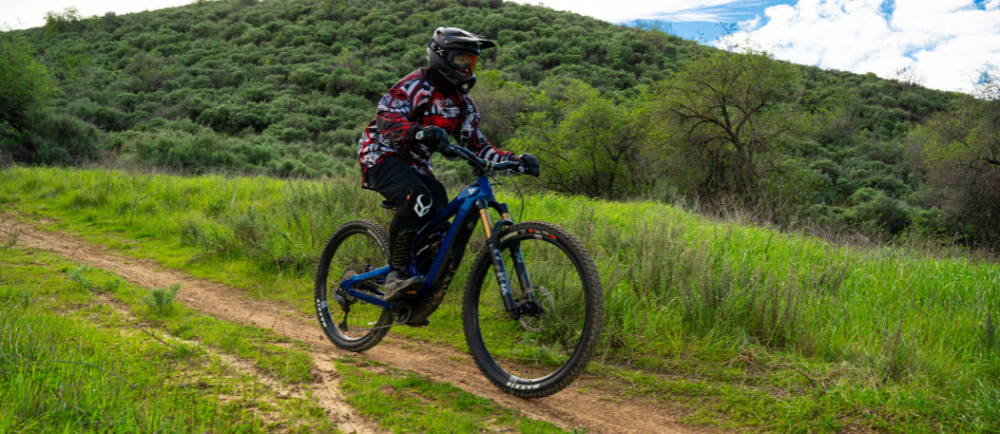
The first time I really paid attention to e-MTB range was on a ride here in the French Alps. It was one of those long days where you keep adding “just one more climb,” and everything feels fine until you glance down at your battery and realise it has dropped a lot faster than expected.
I began the ride feeling relaxed. The bike's battery was decent, and on flat ground, I wouldn’t have worried. But after a few long climbs and heavy use of “Trail” and “Boost” modes, the percentage dropped quickly.
On the return, I was very aware I didn’t have as much power as I’d thought. I ended up pedaling a heavy e-MTB without assistance uphill to get home; I really felt like I’d earned that beer! I learned a lot about range on an electric mountain bike that day. In this blog, I'll share my wisdom with you.
👋 Welcome to Upway!
Upway is your top destination for buying and selling e-Bikes online. Discover your next e-Bike at up to 60% off retail prices, available in new or like-new condition.
What actually affects e-MTB range?
There is no single number that answers how far an electric mountain bike can go. Too many variables are involved, especially in the mountains.
Battery capacity
Battery capacity is the starting point. Most modern electric mountain bikes use lithium-ion batteries ranging from 500 Wh to 750 Wh, with some newer models going even higher. Some systems, like Bosch PowerTube batteries, are designed to balance capacity and weight for off-road riding.
A 500 Wh battery can be enough for shorter rides, but if you are riding in the mountains, a 625 Wh or 750 Wh battery gives you a much better chance of getting home without panting and wishing you’d used “Eco” mode a bit earlier in the day.
You may also see references to voltage (like 48V batteries) and amp hours, but for most riders, watt-hour capacity is the easiest way to compare range.
Elevation and terrain
This is the biggest factor, and the one most people underestimate.
Electric mountain bikes use far more energy going uphill than on flat ground. Long, sustained climbs in the mountains will drain even large e-Bike batteries surprisingly quickly, especially if you spend a lot of time in higher assist modes.
Loose terrain, technical trails, and constant gradient changes reduce efficiency compared to smooth surfaces.
Motor systems and efficiency
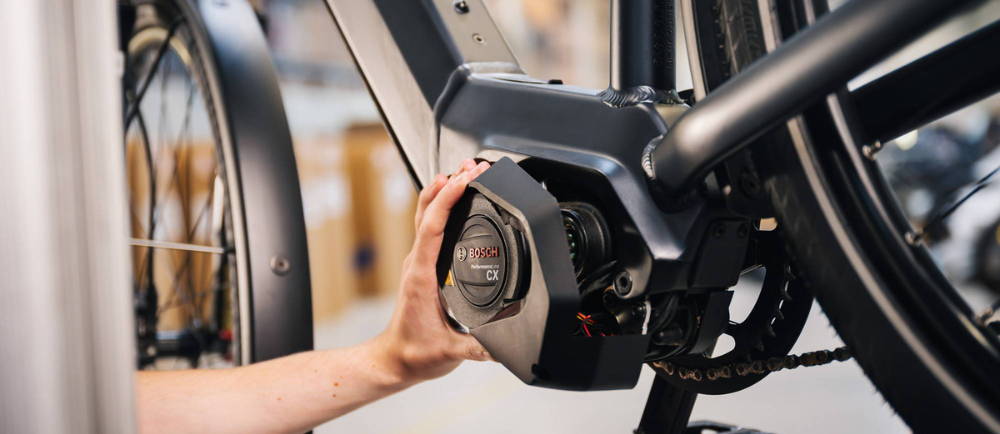
Most electric mountain bikes use mid-drive motors because they are better suited to mountain biking.
Systems like:
- Bosch Performance CX - Used by brands such as Cube, Trek, Cannondale, and Focus.
- Shimano EP8 - Used by brands such as Orbea and Mondraker.
- Brose motor systems - Used by Specialized and some Bulls e-MTBs.
…are designed to deliver efficient power through the drivetrain.
These motors are efficient but use more energy when:
- You ride in higher assist modes.
- You climb steep terrain.
- You accelerate frequently.
How you use the motor matters as much as the motor itself.
Rider weight and riding style
Rider weight affects range, especially when climbing. A heavier rider or a loaded backpack makes the motor work harder and use more power.
You also need to be aware of your riding style. If you pedal efficiently and don’t use your higher assistance modes too much, you’ll get more range.
Tire pressure, tire type, and rolling resistance
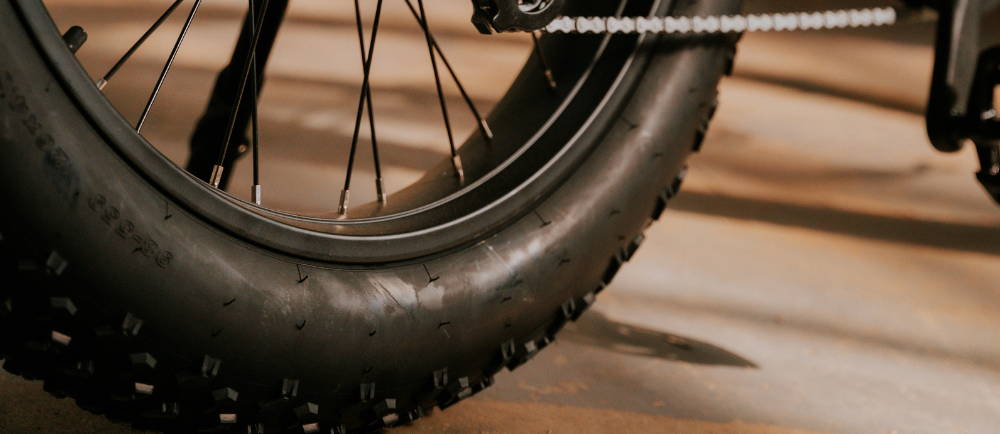
Tire pressure also affects range. Running lower pressure for better grip on technical terrain is great for control, but it increases rolling resistance and drains your battery faster. Another thing that increases rolling resistance is your tire choice. Knobbly tires are great for traction, but make your riding less efficient. This is why electric mountain bikes will never match the range of commuter electric bikes.
Weather conditions
Cold weather can reduce battery performance, sometimes quite noticeably. If you are riding in colder alpine conditions, you may see less range than you would on a warm day. But you can buy thermal insulating covers to protect your battery from the cold.
So, how far can you actually go?
In the mountains, it is better to think in terms of elevation and ride time, not just distance.
Here are realistic expectations for a typical electric mountain bike:
- 500 Wh battery: About 20–40 miles (30–65 km), depending heavily on elevation and assist level
- 625–750 Wh battery: About 30–60 miles (50–100 km) in mixed mountain terrain
- Heavy climbing + high assist: range can drop significantly below these numbers
In terms of climbing:
- Expect roughly 3,000 to 6,000 feet (900–1,800 m) of elevation gain on a full charge, depending on how you ride.
These are realistic, not maximum, ranges for mountain riding.
How to get more range from your e-MTB
You do not need to ride in the lowest assist mode all the time, but small changes make a big difference.
- Use lower assist modes on easier terrain.
- Save higher modes for technical climbs.
- Keep a steady cadence rather than surging.
- Check tire pressure before longer rides.
- Plan your route with elevation in mind.
Over time, you get a feel for how your bike uses energy, and you naturally start managing it better. You can also get more range by carrying spare batteries or range extender batteries if your bike allows it, but don’t forget that this increases weight, so there is a bit of a trade-off. If you’re going on very long rides, you might want to take a charger with you, in case you find somewhere to plug in.
How a refurbished bike allows you to ride further
This is one area where buying refurbished really makes sense.
Higher battery capacity and better motor systems quickly push up the price of a new electric bike. That is why many riders end up compromising when buying new.
With refurbished bikes on Upway, you can often step up to:
- A larger battery (625 Wh or 750 Wh instead of 500 Wh)
- A more efficient motor system like Bosch Performance CX
- Better overall components
For riding in the mountains, that extra battery capacity is not just a nice-to-have. It gives you more freedom to ride without constantly worrying about getting back. Upway has a great collection of refurbished e-MTBs right now. You can filter bikes according to size, brand, price, colour, year, and more. On top of this, you get safe and secure shipping and an excellent warranty.
Frequently Asked Questions
Is 500 Wh enough for mountain riding?
Do bigger batteries always mean better range?
Yes, but how you ride still makes a difference. A larger battery gives you more margin, not unlimited range.
Does rider weight really make a difference?
Yes, especially on climbs. More weight means more effort from the motor and higher energy use.
Key Takeaways
- The range on an electric mountain bike depends on terrain, elevation, and how you ride.
- Battery capacity is important, but it is only part of the picture.
- In the mountains, climbing is what drains your battery the most.