Yes, if it gets you riding consistently. You still build skills; you get more reps and more fun per week.
What’s the Best E-MTB for Beginners in 2026? Buyer’s Guide
Written by: Chris Van Leuven | February 26, 2026 | Time to read 8 min
Best beginner e-MTBs in 2026: what to buy first, which features matter most, real model examples to shop, and how to buy with certified pre-owned options on Upway.

More about the Author: Chris Van Leuven
Chris is a writer, climber, and founder of Yosemite E-Biking in Mariposa, CA. When he’s not tackling Sierra Foothills trails or scaling rock walls, he’s crafting adventure stories with his boxer, Fenster. His work has appeared in Outside, Men’s Journal, Gripped, and Best American Sports Writing.
The ideal e-MTB for newcomers is a mid-drive electric mountain bike that fits your weight and size and is reliable when you’re fatigued. The right e-MTB for beginners has consistent pedal-assist, confident braking, and a solid geometry. It’s not about having the most powerful motor or the biggest battery. Control outweighs power.
In this blog, I’ll show you what matters on day one with an electric bike, how to test ride without getting lost in specs, and real beginner-friendly bikes to compare. If you want to skip the showroom time-suck, Upway is a convenient way to browse many certified pre-owned e-MTBs in one place, compare brands and specs, and enjoy big savings.
👋 Welcome to Upway!
Upway is your top destination for buying and selling e-Bikes online. Discover your next e-Bike at up to 60% off retail prices, available in new or like-new condition.
Table of Contents
The beginner-friendly build recipe
For most new riders, the easiest e-MTB to learn on is a trail e-MTB, not a long-travel enduro machine, and not a pro-level XC build. A strong beginner setup usually includes full suspension (but hardtails are also great) with trail-focused travel, 29-inch wheels for smooth rollover and stability, hydraulic disc brakes you can trust on long descents, and a mainstream mid-hub drive system from a reputable brand that offers service and support.
That combination of specs keeps showing up because it works. It makes climbs easier, descents smoother, and keeps buying options practical.
Hardtail or full suspension for your first e-MTB?
If your trails are smoother, a hardtail can be the smartest first buy; for example, I ride a hardtail. It’s simpler, lower maintenance, and it teaches clean line choice. And they’re frequently more affordable. If your terrain is rocky, loose, steep, or brake-intensive, full suspension is usually better because it keeps the bike riding more smoothly and more in control. But I ride a hardtail with a high-end suspension seatpost; I also use a suspension dropper post, but I generally ride hilly fire roads, not singletrack.
Most beginners progress more quickly on a trail-focused full-suspension electric mountain bike. It smooths out the trail enough that you can concentrate on braking, cornering, and body positioning instead of bouncing all over the place.
Five decisions that matter for beginner e-MTB riders
- Assist feel, not peak power. Beginners do best with an assist that ramps smoothly rather than surging. You want help that lets you clean climbs without getting yanked forward the moment you touch the pedals. The Bosch Performance Line CX shows up so often because it’s widely supported and built for sustained trail use, and Bosch lists it at up to 85 Nm of torque.
The Bosch Performance Line CX provides strong assist on climbs, quick response, and good control on technical terrain. Out of the box, it’s typically listed at 85 Nm torque, 600 W peak, and up to 340% support, and Bosch also notes a mid-July 2025 update (via the Flow app) that can let riders boost performance settings—up to 100 Nm / 750 W / 400% on supported setups.
Your fastest improvement comes from multiple reps. And ride the lower modes longer than you think you need to. - Braking confidence is what “safe” feels like. A lot of beginner wobbly moments come from panic braking, over-braking the front on loose terrain, or carrying speed you cannot control. On an e-MTB, you often end up doing more laps, which means more braking, which means brakes matter more than most first-time buyers expect.
If you want an extra margin for traction mistakes, systems like Bosch eBike ABS Pro are aimed at stability and control when traction gets tricky. Bosch e-Bike ABS Pro is an anti-lock braking system for e-MTBs that helps prevent wheel lockup when you brake hard on loose or rough trails. It smooths out panic stops and adds stability—especially up front—so you stay in control instead of skidding. - Tires are the cheapest confidence upgrade. Tires are the least glamorous purchase and one of the biggest feel upgrades. Wider, grippier tires, even tubeless (which I prefer), give better cornering and better braking traction. If you buy used, I'd often refresh the tires first.
- Fit and handling beat any “best motor” list. A great motor cannot fix a wrong-size frame. If you’re between sizes, decide whether you want a more stable feel or a more agile feel, then set the bike up to match. Bar height, lever position, and dropper post height all change how safe the bike feels on descents.
- Buy a battery for your real loop. Range is always a sliding scale: Rider weight, terrain, temperature, tire pressure, and assist level change everything. The right battery is the one that finishes your usual ride without stress, not the one that looks heroic on a marketing sheet.
Beginner picks: three smart starting points and real model examples
Instead of chasing one magic “best beginner e-MTB,” I like shopping by starting point. Pick the style that fits your terrain and your style, then compare bikes inside that lane.
Starting point 1: The stable full-suspension trail rig
This is the best all-around start for most beginners: Composed geometry, predictable tuning, and a deep service ecosystem. A good example of the current “big-brand trail e-MTB” direction is the Specialized Turbo Levo family. On higher-end builds, Specialized lists big power numbers, including a 111 Nm motor and an 840 Wh battery on its Turbo Levo 4 Pro.
Beginners rarely need that much output, but the appeal is real: Stable handling and a well-supported platform.
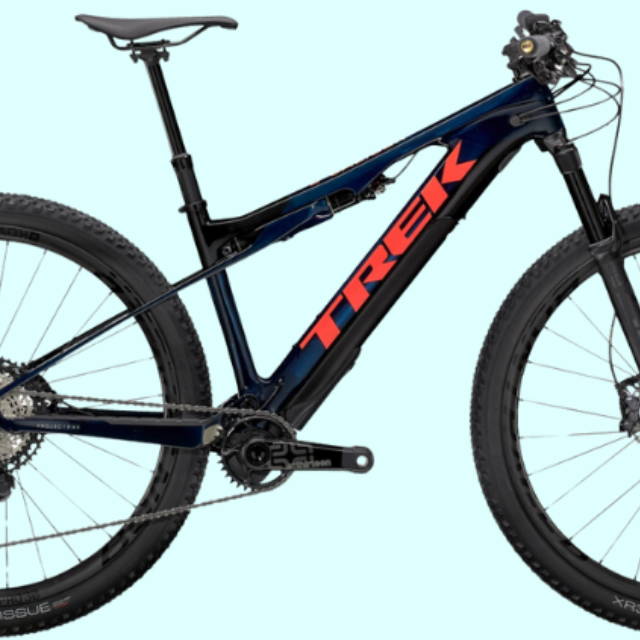
Other mainstream service-network options in this same “start here” zone often include the Trek Rail, the Giant Trance X E Plus, and the Cannondale Moterra line.
Trek’s Rail platform is a full-power, long-travel enduro e-MTB built for big descents and repeat laps. The current Rail+ is centered around the Bosch Performance Line CX and an 800Wh battery, with geometry and suspension tuned for pedaling back up efficiently, plus compatibility with burly setups (e.g., forks up to 170mm).
Giant Trance X E+ (Trance X E Plus)
This one sits in the trail/all-mountain lane: 150mm front / 140mm rear travel, a flip chip to tweak handling, and Giant’s SyncDrive Pro motor rated at 85Nm with modifiable support. The battery is listed as EnergyPak Smart 650, and the controls are designed to be clean and simple on the bar/top tube.
Cannondale Moterra line (Moterra / Moterra LT / Moterra SL)
Cannondale breaks its Moterra model into three distinct versions:
- Moterra: Versatile trail e-MTB with Bosch CX and an 800Wh option, plus “easy to live with” details like simpler battery removal and practical mounts.
- Moterra LT: The longer-travel bruiser at 170/165mm for rougher, faster descending.
- Moterra SL: The lighter-feeling option built around Shimano EP801 and a 600 Wh battery (more “nimble trail” than “monster-truck enduro”).
Shimano EP801 is Shimano’s high-end STEPS e-MTB mid-drive motor (the “drive unit” at the cranks) used on trail/enduro electric mountain bikes. It’s known for a natural pedal feel, strong assist (up to 85 Nm), and tunable support modes via Shimano’s E-Tube app, with tight integration with Shimano drivetrains and controls.
Starting point 2: The hardtail that teaches you
Hardtails can be a fantastic first electric mountain bike if your trails are not extremely chunky, or you want less maintenance and a lower buy-in. They reward clean technique and line choice.
A value-oriented example that gets discussed a lot is the Aventon Ramblas. Aventon lists it with a 750 W peak motor, 100 Nm of torque, and a 708 Wh battery.
If this lane fits your trails, you can often get a lot of fun for the money on Upway, especially if you budget for great tires.
Starting point 3: The lighter-feel option for riders who hate heavy bikes
If weight is what intimidates you, a lighter-assist e-MTB can feel much closer to a normal trail bike. You give up some peak shove, but you gain a more natural rhythm and handling.
A good example is the Trek Fuel EXe line. Trek describes it with a TQ motor at 50 Nm and a 360 Wh battery.
This category is often a sweet spot for newer riders who want an electric mountain bike that still feels like a mountain bike first.
A practical test-ride checklist
Use this in a parking lot and on one short climb.
- Start with slow-speed control. Can you roll slowly and stay balanced, and can you restart on a slight incline without wobbling?
- Then check the assist smoothness in a low mode. Does it ramp predictably, or does it feel punchy and hard to manage?
- Now braking. Can you brake with one finger without panic-gripping, and does the lever feel consistent rather than vague?
- Finally, cornering feel. Does the bike settle when you lean it a little, or do the tires feel vague and nervous?
- If any of those fail, it’s not the right first bike, even if the spec sheet is impressive.
Buying smart on Upway
If you’re shopping online, the goal is to narrow the options. Pick your starting point first, then compare inside that space. A beginner-friendly path is to start with electric mountain bikes, choose hardtail, fat tire, or full suspension, then filter by motor family, battery size, and budget.
Two Upway safety nets that matter when you’re new: Upway has a 14-day money-back guarantee, and it has limited warranty coverage.
If you want real trail time before committing long term, Upway Flex is a great subscription option and offers e-Bikes from $79 to $239 a month, with a 3-month minimum. Pick up at Redondo Beach.
Frequently Asked Questions
Is it worth getting an electric mountain bike?
What are the negatives of e-Bikes?
The trade-offs are real: More weight, more complexity (battery, motor, wiring), higher replacement costs for parts, and more maintenance if you ride hard or in wet, muddy conditions. Range can also vary a lot based on rider weight, terrain, temperature, tire pressure, and assist mode.
Are e-MTBs taking over?
They’re becoming normal in a lot of places, especially where Class 1 access is common, and riders want more laps in a limited time. In some trail systems, e-MTBs are a big part of the weekday mix—but access still varies by land manager and trail system
Key Takeaways
- The best beginner e-MTB is one that fits you and is a hardtail or full-suspension electric mountain bike with predictable assist, confident brakes, and tires you can trust.
- Choose a motor system you can service, and spend more time in lower assist modes as you get used to it.
- If you’re shopping used, Upway’s great prices, return policy, and warranty framing can reduce the risk, and Flex can help when you need trail time to decide.
There is more to Explore
Visit below articles for more info about electric bikes