It's a Class 3 e-bike, so pedal assist continues up to 28mph.
Yamaha CrossCore E-Bike Review
Written by: Tom Fortune | August 16, 2026 | Time to read 5 min
Yamaha’s been building engines for 70 years, just not usually ones you pedal. The CrossCore RC is what happens when that experience gets pointed at a commuter bike.

More about the Author: Tom Fortune
Tom is a Brit living in the French Alps. When he's not creating written and video content for various brands, he's either pedalling or snowboarding around his local mountains. E-Bikes have unlocked the potential for Tom to explore Alpine terrain and get away from the crowded bike parks. He is only too keen to share his knowledge and experience with other riders.
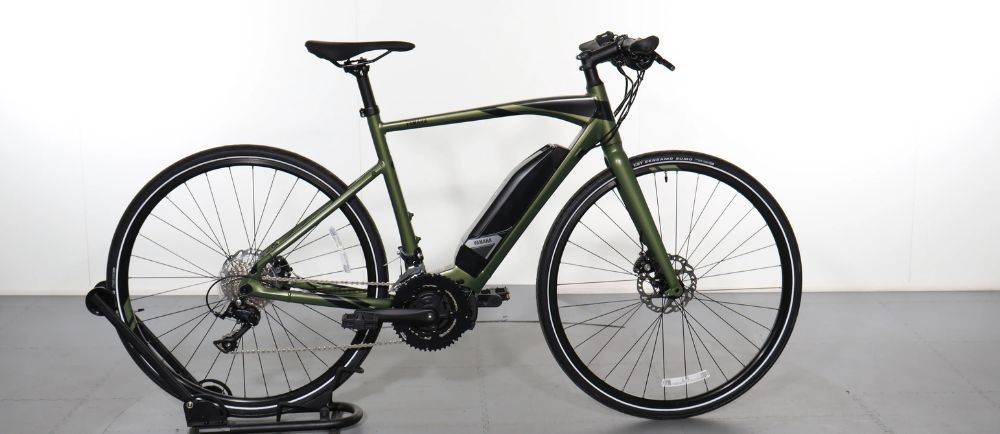
Nobody can say that Yamaha isn’t a diverse company; it has become a household name by making motorcycles, generators, jet skis, pianos, and snowmobiles. But they also make some pretty good electric bikes. The CrossCore RC is a daily commuter bike, powered by a Yamaha-designed mid-drive motor instead of sourcing from another supplier like Bosch or Shimano. Launched in 2022, this Class 3 bike is for riders who want a natural pedaling feel rather than lots of power— here’s all you need to know.
👋 Welcome to Upway!
Upway is your top destination for buying and selling e-Bikes online. Discover your next e-Bike at up to 60% off retail prices, available in new or like-new condition.
Yamaha CrossCore RC Specs
| Spec | Detail |
|---|---|
| Motor | Yamaha PWSeries ST, mid-drive, 250W nominal / 500W peak, 70Nm torque |
| Battery | 500Wh, removable, integrated into the frame |
| Class | Class 3, 28mph top assisted speed |
| Drivetrain | Shimano 9-speed |
| Brakes | Shimano hydraulic disc |
| Fork | SR Suntour NEX E25, 2.5 inches of travel |
| Weight | 52 lbs |
| Price new | $3,099 |
How It Rides
The Yamaha CrossCore is extremely quiet, which is a nice feature for something you’re going to use to get to work on every day. Power comes on gradually, so there’s no jerking or lurching, which fits a bike built for city streets.
How well an e-Bike climbs hills depends heavily on its torque. The CrossCore’s 70Nm is good but not class-leading. The upright riding position and 52-pound weight both work against you a little on a steep gradient compared to a lighter, more aggressive bike. It's not a weak climber; it's just not its strongest point.
The upright position is comfortable for commuting, easy to see traffic over, but not built for tucking into a headwind. Rough pavement comes through a bit firmer than you might expect, due to the aluminum frame and a fork. These smooth out small bumps, but are not great for harsh impacts. So, you might want to think about the typical surface you ride on before buying.

Motor and Battery
The PWSeries ST uses Yamaha's Quad Sensor System, which reads cadence, torque, wheel speed, and pedal input to figure out how much help to give and when. It has five modes: Automatic, plus ECO+, ECO, Standard, and High. Automatic mode reads the terrain and adjusts everything on its own, shifting assistance up or down without you having to touch a button.
Its 70Nm of torque doesn't sound huge next to some 85 or 100Nm mid-drives, but it's enough for typical street riding and moderate hills.
The 500Wh battery charges in about 4 hours and can be removed from the frame if you'd rather charge it at a desk than wrestle your bike inside all the time. Yamaha's official range estimate runs from 60 to over 100 miles, which is what you’d expect to get in Eco mode on flat ground with a light rider. If you ride in mixed conditions and in higher assistance levels, expect a lot less, just like with any other e-Bike.
Things to Know Before You Buy
Yamaha's motors have a strong reliability record, rarely needing warranty work. That kind of goes with the fact that Yamaha is an established company that's been building all sorts of things for decades before it touched an e-Bike. Reliability is one of the strongest arguments for this bike.
The flip side of that reliability is availability. Yamaha's own e-Bike lineup in the US has been smaller and less consistent than those of brands with a bigger dealer network, so parts and service aren't as readily available as they are for a Trek or Specialized. It’s worth checking with a local shop that they can deal with a Yamaha e-Bike before assuming servicing will be simple.
Who Should Buy the Yamaha CrossCore RC?
- Commuters who want a natural, bike-like pedaling feel over maximum power should seriously consider this electric bike, as the motor is tuned for exactly that.
- Riders who want the biggest torque numbers or steepest hill-climbing performance available will find better options elsewhere. 70Nm gets the job done on typical streets, but it's not the class leader.
- Anyone who values a proven, reliable motor system, as Yamaha's reliability reputation is one of the strongest arguments for choosing a Yamaha CrossCore RC.
Alternatives Worth Considering
The Yamaha Wabash RT shares the same motor and battery in a gravel-oriented frame, worth a look if you prefer light trail riding more than city commuting.
Bikes from brands with larger US dealer networks may not have the motor pedigree of Yamaha, but they may offer easier long-term service and parts access, which might be more important depending on where you live.
Find a Yamaha CrossCore RC on Upway
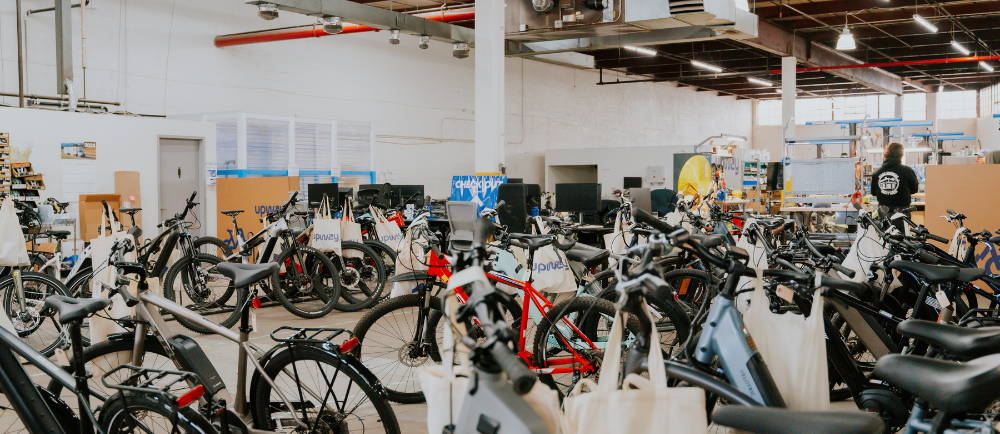
A reliable motor doesn't mean much if the battery or electronics haven't been checked properly on a used bike. Every e-Bike on Upway goes through a 50-point inspection covering the motor, battery, and electrical system before it's ever listed. Browse the current used electric city bikes on Upway or check the sale collection to compare current options.
Frequently Asked Questions
How fast does the Yamaha CrossCore RC go?
How much torque does the CrossCore RC's motor have?
The PWSeries ST motor delivers up to 70Nm of torque, with a nominal power output of 250W and a peak power output of 500W.
Is the Yamaha CrossCore RC good for hills?
It handles moderate hills fine, though the 70Nm torque figure and 52-pound weight aren't built for steep grades the way a lighter, higher-torque mid-drive would be.
Key Takeaways
- The CrossCore RC runs Yamaha's own PWSeries ST mid-drive motor, known across dealers for a notably low failure rate compared to other e-bike motor brands.
- It's built for easygoing, natural-feeling commuting instead of maximum power or hill-climbing performance, with a 500Wh battery and a claimed range of 60 to over 100 miles depending on conditions.
- Parts and service can be harder to find than for brands with a bigger US dealer network, so it's worth checking locally before buying.