The 4.0 and 5.0 handle XC trails and gravel well, but the 110mm hardtail setup reaches its limits on technical singletrack or enduro terrain.
Specialized Turbo Tero E-Bike Review
Written by: Tom Fortune | June 7, 2026 | Time to read 5 min
The Turbo Tero has a reputation for being able to do everything. That’s mostly true, but there are things Specialized doesn’t tell you upfront.

More about the Author: Tom Fortune
Tom is a Brit living in the French Alps. When he's not creating written and video content for various brands, he's either pedalling or snowboarding around his local mountains. E-Bikes have unlocked the potential for Tom to explore Alpine terrain and get away from the crowded bike parks. He is only too keen to share his knowledge and experience with other riders.
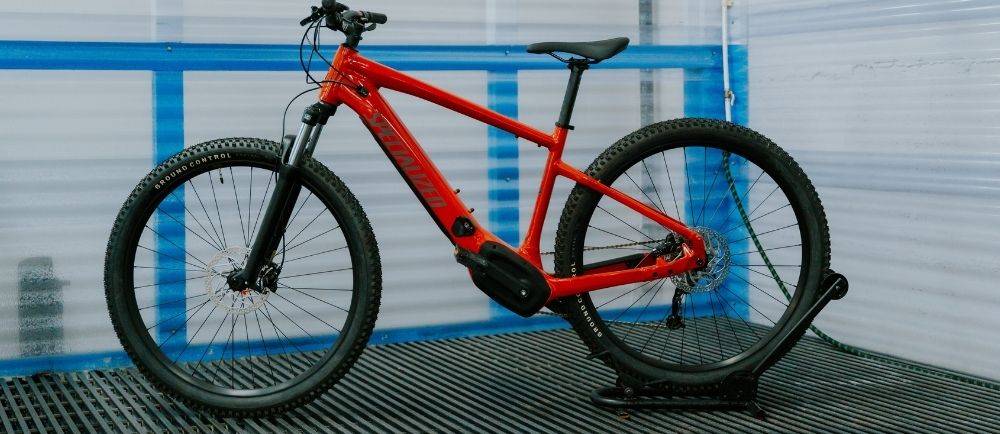
Specialized calls the Turbo Tero a “go-anywhere” e-Bike. That’s marketing speak, but in this case, it’s not too far off the truth. Forest roads, gravel paths, and city streets, it handles all of them pretty well. But you need to understand that it isn’t an all-out trail bike. Before you hand over the money, there’s a lot worth knowing about the Specialized Tero electric bike below.
👋 Welcome to Upway!
Upway is your top destination for buying and selling e-Bikes online. Discover your next e-Bike at up to 60% off retail prices, available in new or like-new condition.
What Is the Specialized Turbo Tero, Exactly?
It’s a hardtail crossover e-MTB. So, you get mountain bike geometry, 29-inch wheels with knobby Specialized Ground Control tires, 110mm of front suspension travel, and a mid-drive motor. It also has mounts for fenders, a rear rack, and a kickstand, and it’s rated to pull a thru-axle trailer.
That combination tells you exactly what Specialized was going for. It’s a bike for people who ride everywhere and don’t want two bikes in the shed. It’s a great commuter, handles XC trails and gravel well, and will be fine if you load it up for a weekend trip. Whatever you do, don’t expect it to be a hero on technical singletrack. The geometry is upright, the travel is modest, and there’s no rear shock. So, you’re better off sticking to forest roads and moderate trails.
Worth noting: the Tero X is a different bike entirely, with full suspension and trail-focused geometry. This review covers only the standard hardtail.
In a special video review, the Upway team goes hands-on with the Specialized Turbo Tero 5.0! Check it out below for a more in-depth look at such an excellent electric bike available on Upway at a huge discount:
The Lineup: Which Tero Is Right for You?
There are three model versions, and if you’re thinking of buying one, make sure you get the right one for your needs; the gap between the trim levels could catch you out.
Turbo Tero 3.0 is the entry point. Specialized 2.0E motor at 50Nm, 530Wh battery, SR Suntour XCM32 fork with 110mm of travel, Shimano BR-MT200 hydraulic disc brakes, Shimano Alivio 9-speed drivetrain. Weight is around 23kg. It’s the only trim available in both high-step and step-through frames, in S, M, and L.
Turbo Tero 4.0 is where the spec steps up considerably. This version has the Specialized 2.0 motor with 70Nm and a battery capacity of 710Wh. It also comes with a dropper seatpost, unlike the 3.0. Available in S, M, L, and XL.
Turbo Tero 5.0 sits at the top of the hardtail range. It has the Specialized 2.2 motor at 90Nm, the same 710Wh battery, and the best brakes, fork, and drivetrain in the lineup.
The EQ-spec models (“EQ” means “equipped”) include integrated fenders, racks, and lights, but are primarily a European thing. Most North American buyers need to add those separately.
How It Rides
On tarmac, the Tero is comfortable and composed. The upright position works well for keeping an eye on traffic, and riding on paved roads is pleasant.
Get onto gravel or forest roads, and the Tero comes into its own. The torque-sensing motor, wide tires, and 110mm of front travel make riding on loose surfaces manageable rather than sketchy. Many owners have said they were more impressed than they expected while riding off-road.
On moderate trails, the 4.0 and 5.0 do well. Having a dropper post here makes a real difference, as you can drop it out of the way for steeper descents, then put it back up again for flat roads and climbs. The 3.0 doesn’t have one, and that absence becomes tedious on anything with a bit of gradient. Once you’ve ridden with a dropper seatpost, you won’t want to go back.
That said, there’s a ceiling. The 110mm fork lacks confidence in chunky rock gardens or aggressive descents. Green and blue grade trail riding is the limit (depending on where you ride); I wouldn’t ride this in my local Alpine terrain.
The Motor, Battery, and App
The 3.0’s 50Nm motor may be enough for you if you ride in flatter areas. But some people find it frustrating, as it can feel underpowered when the bike is loaded with gear. Also, some people say that at low speeds, power delivery isn’t always smooth. Noise is another thing owners note; several have described a noticeable rattle under load, which is not what you want from a premium brand, even though the 3.0 is the entry-level version.
Step up to the 4.0 or 5.0, and you’re dealing with a different motor entirely. Both are custom-tuned in partnership with Brose and use a torque sensor, so assistance scales with how hard you’re pedaling rather than how fast you’re pedaling. You’ll notice the difference on hilly terrain. The 70Nm 4.0 motor pulls cleanly and quietly, and the 710Wh battery gives you excellent range. Specialized quotes 68 miles or 5 hours in Eco mode for the 530Wh unit in the 3.0, and the 710Wh unit could give you around 5 to 6 hours in mixed conditions.
One consistent gripe across all models is the charging port. It’s magnetic, which seems convenient, but it can be fiddly to seat properly. It is also low on the left side of the frame, so you’re bending awkwardly every time you plug in or remove the battery. Small thing, but it’s worth knowing about as these things add up.
The Specialized app is great. Bluetooth-connected, it lets you tweak the assist modes, lock the motor remotely, run diagnostics, and install firmware updates wirelessly.
Things to Know Before You Buy
- Motor noise on the 3.0. Louder than the 4.0 and 5.0, and some owners report a rattle under load. Not every 3.0 has this issue, but it comes up often enough to consider.
- No kickstand on the 3.0 as standard. A 23kg bike with no kickstand is annoying. Specialized sells one separately, but it feels like a bike of this type at this price should have one.
- Charger port position. Low on the left side of the frame, every time. Minor, but could be tedious for some.
- Relatively high price. These are expensive at full price, but most owners think the quality is worth it.
Who Should Buy the Turbo Tero?
- Mixed road, gravel, and light trail riders will get the most out of the 4.0 or 5.0.
- If you commute during the week and ride off-road at weekends, the 4.0 covers both well.
- Budget-conscious riders who stick mainly to road and gravel, the 3.0 makes sense at its current sale price.
- Heavier riders or anyone regularly carrying gear should go 4.0 minimum; the 3.0's motor will feel it.
- Technical trail or enduro riders should look at the Tero X or the Levo range instead.
For most people, the 4.0 is the one to go for. The motor and battery upgrade over the 3.0 are significant, and the dropper post alone justifies a good chunk of the price difference. The 5.0 makes sense if you're spending serious time off-road and want the best the hardtail lineup has to offer.
Find a Turbo Tero on Upway
At full retail, the Tero 4.0 and 5.0 are a big ask. Buying certified pre-owned on Upway, however, takes a decent chunk off that. In fact, the Specialized Tero is one of Upway’s best-selling electric bikes!
Every e-Bike undergoes a 50-point mechanical inspection before it’s listed, and any battery with a capacity below 80% is replaced before sale. There’s a one-year warranty on the frame, motor, and electrical system, and a 14-day return window if it’s not right for you. Delivery is fast and secure, and your bike arrives mostly assembled.
Have a look at the current Specialized selection on Upway.
Frequently Asked Questions
Is the Specialized Turbo Tero good for trail riding?
What is the difference between the Tero and the Tero X?
The standard Tero is a hardtail; the Tero X has full suspension, a mullet wheel setup on most sizes, and more trail-focused geometry.
Do I need the Specialized app to use the Tero?
The bike works without it, but registering through the app is what activates the lifetime frame warranty and unlocks motor tuning and anti-theft features.
Key Takeaways
- The Turbo Tero is a hardtail crossover e-MTB for riders who mix road, gravel, and light trail riding.
- The 4.0 is the sweet spot in the range, with a meaningful step up in motor, battery, and components over the 3.0.
- Upway’s certified pre-owned Specialized listings are worth checking before paying full retail.